
 By Nila Kartika Wati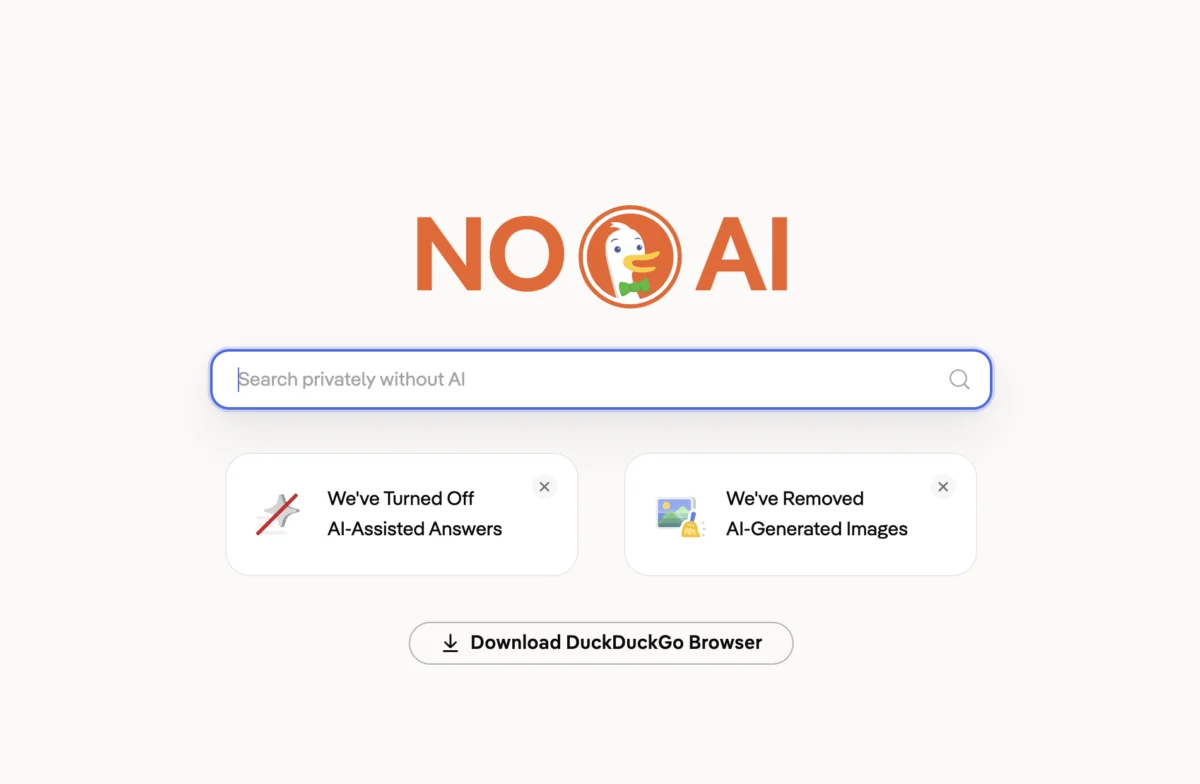
In the digital age, Google has been synonymous with the internet itself. For over two decades, the search giant’s simple, minimalist interface served as the primary gateway to the vast expanse of the web. However, the release of Google’s sweeping overhaul to its search engine has triggered an unexpected, and perhaps historic, consumer backlash. As Google pivots toward an AI-first, conversational future, a growing segment of the population is voting with their clicks, migrating to privacy-focused alternatives like DuckDuckGo in a search for a more traditional, human-centric browsing experience.
The Paradigm Shift: Google’s Conversational Overhaul
At its most recent I/O developer conference, Google unveiled a fundamental transformation of its flagship product. The company announced that its search box would no longer merely index the web, but would instead serve as a conversational engine. Through a feature branded as "AI Overviews," Google now attempts to anticipate user intent, autocompleting complex queries and providing synthesized summaries before a user even glances at a traditional link.
This move aims to evolve Google from a navigational tool into an intelligent assistant capable of handling multi-step queries through a new "AI Mode." While Google maintains that these features are intended to streamline the user experience, the reaction from the broader internet community has been immediate and, at times, scathing. Critics argue that this shift represents a "force-feeding" of AI, effectively sidelining the open web in favor of proprietary, machine-generated answers that may be prone to inaccuracy.
A Chronology of the Discontent
The friction between Google and its user base did not emerge in a vacuum. The roots of this tension can be traced back to the broader debate over the role of generative AI in search.
- 2023: During a landmark antitrust trial, DuckDuckGo CEO Gabriel Weinberg testified that Google’s exclusive default search contracts—which effectively blocked competitors from browser distribution—had stifled competition for years.
- May 19, 2026: Google officially announces its comprehensive search overhaul, signaling the end of the "blue links" era and the dominance of AI Overviews.
- May 20–25, 2026: The immediate aftermath sees a sustained spike in downloads for rival search engines, specifically DuckDuckGo, as users express frustration with the lack of an "opt-out" mechanism for AI features.
- Memorial Day Weekend 2026: While traffic typically dips during holiday weekends, DuckDuckGo observes a continued trend of user acquisition, suggesting that the migration is not merely a transient reaction to news headlines but a sustained shift in user behavior.
The Data: Measuring the Exodus
The statistics provided by DuckDuckGo, bolstered by independent third-party analytics, paint a compelling picture of a user base seeking a return to simplicity. Between May 20 and May 25, DuckDuckGo reported that U.S. app installs increased by an average of 18.1% week-over-week. The momentum was even more pronounced on iOS, where install rates saw a 33% average increase, peaking at a staggering 69.9% on May 25.
Beyond mere installations, users are actively seeking out "AI-free" environments. Visits to noai.duckduckgo.com—a dedicated portal that strips away all AI-assisted features and generative content—saw an average growth of 22.7% week-over-week.
Independent data from the app analytics firm Apptopia corroborates this trend. Their research noted a 29% increase in average daily downloads in the United States and a 12% increase globally during the same timeframe. These numbers, while still small relative to Google’s massive global market share, indicate a shift in sentiment among power users and those who value control over their information stream.
The Conflict: Control vs. Convenience
At the heart of this conflict lies a fundamental disagreement over the "ideal" search experience. Google’s leadership views AI as the natural evolution of information retrieval. VP of Search Elizabeth Reid recently highlighted in a blog post that AI Mode has already surpassed one billion monthly users, with query volume doubling every quarter. To Google, the data shows that users are embracing these features.
Conversely, critics and smaller competitors argue that Google is prioritizing a machine-led experience that complicates simple tasks. For example, the viral difficulty of searching for the word "disregard" in the new AI-heavy interface became a flashpoint for critics, who felt that the engine was "over-thinking" a basic query.
"Google is force-feeding AI with no way to opt out," said DuckDuckGo CEO Gabriel Weinberg. "As a result, their results are getting worse, not better. We want to be the place that puts users in charge and allows them to decide how much or how little AI they want."
DuckDuckGo’s Dual Strategy: Privacy and Choice
DuckDuckGo finds itself in a unique position. While it has traditionally positioned itself as a privacy-first, "no-tracking" engine, it has also integrated its own suite of AI tools. However, the company’s approach is fundamentally different from Google’s.
DuckDuckGo offers Duck.ai, a portal that provides access to various large language models—including Anthropic’s Claude, Meta’s Llama, and OpenAI’s GPT—without requiring user accounts or data retention. By stripping IP addresses and deleting conversations within 30 days, the company aims to offer the utility of AI without the trade-off of privacy erosion.
"Not only do we respect user choice, but also user privacy," Weinberg noted. "Everything you do in DuckDuckGo is private; we don’t collect search histories or chats, and nothing is used for AI training."
Kamyl Bazbaz, DuckDuckGo’s chief communications and policy officer, emphasized that the company’s "AI Image Filter"—which allows users to scrub AI-generated images from their search results—is one of its most popular features. This suggests that the issue for many users is not the technology itself, but the lack of agency.
Implications for the Future of the Web
The current standoff between Google and its departing users raises profound questions about the future of the internet. If search engines move exclusively toward AI synthesis, what becomes of the "open web"? Publishers have expressed deep concern that AI Overviews will diminish traffic to original sources, as users are increasingly satisfied with the summary provided by the search engine, never bothering to click through to the actual article.
Furthermore, the "black box" nature of AI responses poses risks for accuracy. When a search engine provides a direct, synthesized answer, the burden of verification shifts from the user to the algorithm. If those algorithms hallucinate or provide biased data, the integrity of the information ecosystem is at stake.
Google’s response remains steadfast: they are building the next generation of the internet. They point to the sheer scale of their adoption metrics as proof that their vision is aligned with consumer demand. However, the rise of "AI-free" alternatives suggests that for a significant minority—and perhaps a growing majority—the value of the human-curated, link-based web remains unmatched.
As this "Great Search Migration" continues, the industry will be watching closely to see if Google makes concessions, such as providing a toggle to turn off AI Overviews. Until then, the rise of DuckDuckGo serves as a poignant reminder that in the technology sector, convenience does not always equate to contentment. For many, the "best" search engine is not the one that knows the most, but the one that listens the most—and, crucially, knows when to step aside.
 Sagoh
Sagoh  Iffa Jayyana
  Lina Hope