
 By Nana Wu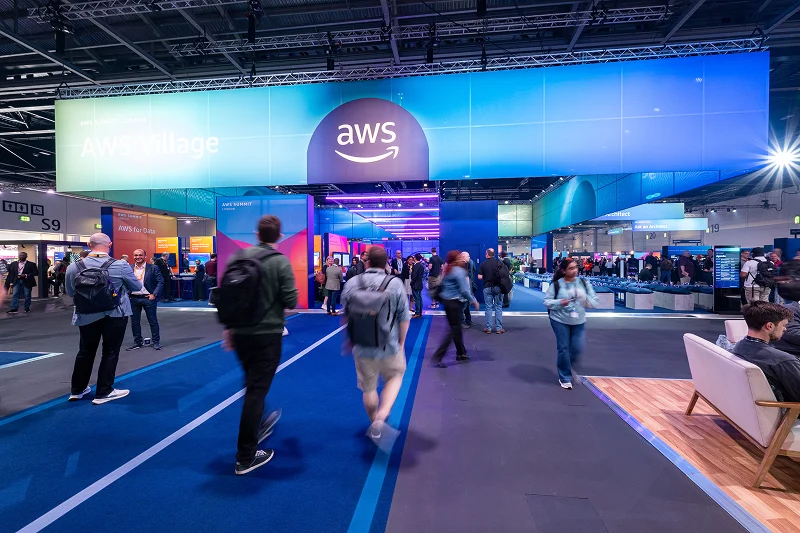
The annual AWS Summit in New York City has long served as a bellwether for the cloud computing industry, acting as the primary stage where Amazon Web Services (AWS) unveils the tools destined to shape the enterprise technology landscape for the coming year. This year’s gathering at the Javits Center is no exception, serving as a high-velocity forum for developers, architects, and business leaders to dissect the latest in agentic AI, infrastructure modernization, and automated cloud governance.
While the physical halls of the Javits Center are currently buzzing with the energy of thousands of builders, the impact of the announcements made this week extends far beyond the Manhattan skyline. As AWS continues to pivot toward an AI-first operational model, the company has begun to codify exactly what it means to be an "AI-native" organization, moving from theoretical experimentation to proven, high-scale productivity metrics.
Main Facts: The New Frontier of AWS
The core of this week’s news centers on the evolution of software development lifecycles. Dr. Swami Sivasubramanian, VP of Agentic AI, and Chet Kapoor, VP of Security Services and Observability, are leading the charge in demonstrating how AWS is embedding intelligence directly into the developer experience.
The most significant takeaway from this year’s summit is the transition from "AI as a feature" to "AI as an operational framework." AWS has unveiled a series of capabilities across its developer tools, AI infrastructure, and security suites that aim to solve the "productivity paradox"—the phenomenon where organizations adopt AI tools but struggle to see a commensurate increase in output due to fragmented workflows.
Chronology of the Week’s Developments
The summit kicked off with a deep dive into the internal engineering data from Amazon’s own teams. The findings were not merely anecdotal; they represented a massive, cross-departmental study of how Amazon’s own "frontier teams" are leveraging AI to compress project timelines that previously took months into mere weeks.
- Monday: The focus was on the release of the "How frontier teams are reinventing AI-native development" report. This document provided a granular look at how teams within Amazon are restructuring their workflows to accommodate agentic AI.
- Tuesday: The keynote address emphasized the integration of agentic capabilities into existing developer tools, focusing on the reduction of cognitive load for software engineers.
- Wednesday: The spotlight shifted to FinOps, with the preview release of the AWS FinOps Agent, addressing the critical industry need for automated, intelligent cloud cost management.
- Thursday/Friday: The summit concluded with technical deep-dives into the security implications of autonomous AI agents, setting the stage for future releases in the latter half of the year.
Supporting Data: The Productivity Paradigm
Perhaps the most compelling evidence presented this week is the data surrounding the Amazon Bedrock inference engine rewrite. Originally projected as a 12-to-18-month project requiring a staff of 30 developers, the project was successfully completed by a team of six engineers in just 76 days.
This is not an isolated success. Across structured pilots with Amazon Stores teams, AWS observed a median productivity gain of 4.5x in normalized deployment velocity. In extreme cases, high-performing teams saw productivity increases exceeding 10x.
These aren’t just vanity metrics; they represent tangible changes to the business. For instance, the "Perfect Order Experience" feature cycle—which previously required two weeks—is now being shipped in a single afternoon. Similarly, the WW Grocery team has slashed the time required for design document creation from five days to a few hours. These metrics suggest that the primary bottleneck in modern software development is no longer coding, but the manual overhead—the "toil"—that surrounds the act of creating software.
The Five Pillars of Frontier Engineering
To achieve these results, AWS has distilled its internal successes into five actionable practices for teams looking to adopt an AI-native approach:
- Invest in Agent Context: Before writing a single line of production code, teams must invest in the infrastructure of intelligence. This includes building steering files, establishing strict coding standards, and maintaining structured repositories that agents can parse effectively.
- Accept the "Restructuring Slowdown": AWS acknowledges that shifting to AI-native development requires a fundamental change in workflow. There is an initial performance dip as teams reconfigure how they work, but organizations that push through this phase realize exponential gains.
- Maintain a Steady Backlog: Agentic AI thrives on parallelization. By keeping a consistent, well-scoped backlog of tasks, teams allow agents to function without constant human hand-holding or context-switching.
- Make Intent Explicit: AI agents are only as good as the instructions they receive. AWS emphasizes the use of structured specifications to define intent before code generation begins, reducing the likelihood of "hallucinations" or logical errors.
- Shift Testing Left: By integrating testing into the earliest stages of the agentic workflow, code is validated as it is written. This allows agents to self-correct before the code ever reaches the deployment pipeline.
Official Responses and Strategic Implications
Beyond the developer experience, the launch of the AWS FinOps Agent (Preview) represents a significant strategic pivot in how AWS manages its relationship with the financial side of enterprise IT.
Traditionally, cloud cost management was a reactive, manual process—finance teams would generate spreadsheets, and engineering teams would scramble to identify which resources were idle. The AWS FinOps Agent automates this loop. By querying AWS costs, generating automated reports, and surfacing optimization recommendations from the AWS Cost Optimization Hub and AWS Compute Optimizer, the agent acts as an autonomous advisor.
Crucially, the agent does not just report; it acts. It can open Jira tickets for engineering teams when rightsizing opportunities are found and even perform root-cause analysis on cost anomalies, posting findings directly to Slack. This transition from "reporting" to "remediating" is indicative of the broader "agentic" shift AWS is championing across its entire portfolio.
Implications for the Future
The implications for the broader tech industry are profound. If these productivity gains are replicable outside of Amazon, we are looking at a fundamental shift in the economics of software development. The traditional "man-month" calculation—the idea that project duration is tied to headcount—is being challenged.
However, AWS is careful to frame this as a beginning. The current productivity gains are focused on velocity, but the next phase of the conversation, as promised by Swami Sivasubramanian, will tackle the more complex issues: release management, security operations, and the long-term lifecycle management of software.

For organizations attempting to structure their own AI adoption, the lesson of the AWS Summit is clear: AI is not a magic wand to be waved at existing, broken processes. It is a tool that requires the underlying workflow to be redesigned to accommodate the speed and autonomy of the agents.
Staying Connected
For those unable to attend the summit in person, the resources provided by AWS remain the best way to stay informed. The keynote livestream, featuring Dr. Swami Sivasubramanian and Chet Kapoor, offers a comprehensive overview of these shifts.
As we look toward the remainder of 2026, the focus will undoubtedly remain on these agentic workflows. Whether it is in cost management, security, or core application development, the message from the Javits Center is that the barrier to entry for high-scale, high-velocity software development is lower than ever—provided you are willing to let the agents take the wheel.
For builders looking to stay engaged, the AWS Builder Center remains the primary hub for contributing solutions and finding community-driven resources. As the ecosystem continues to evolve, the ability to synthesize these new, autonomous tools into existing architectures will likely become the defining skill set for the next generation of cloud architects.
The era of manual, linear software development is reaching its sunset. In its place, a new, agentic, and highly automated paradigm is rising—one that promises to make the "impossible" project timelines of the past the new industry standard for the future.
 Neng Nana
  Suro Senen
  Lina Hope