
 By Lina Hope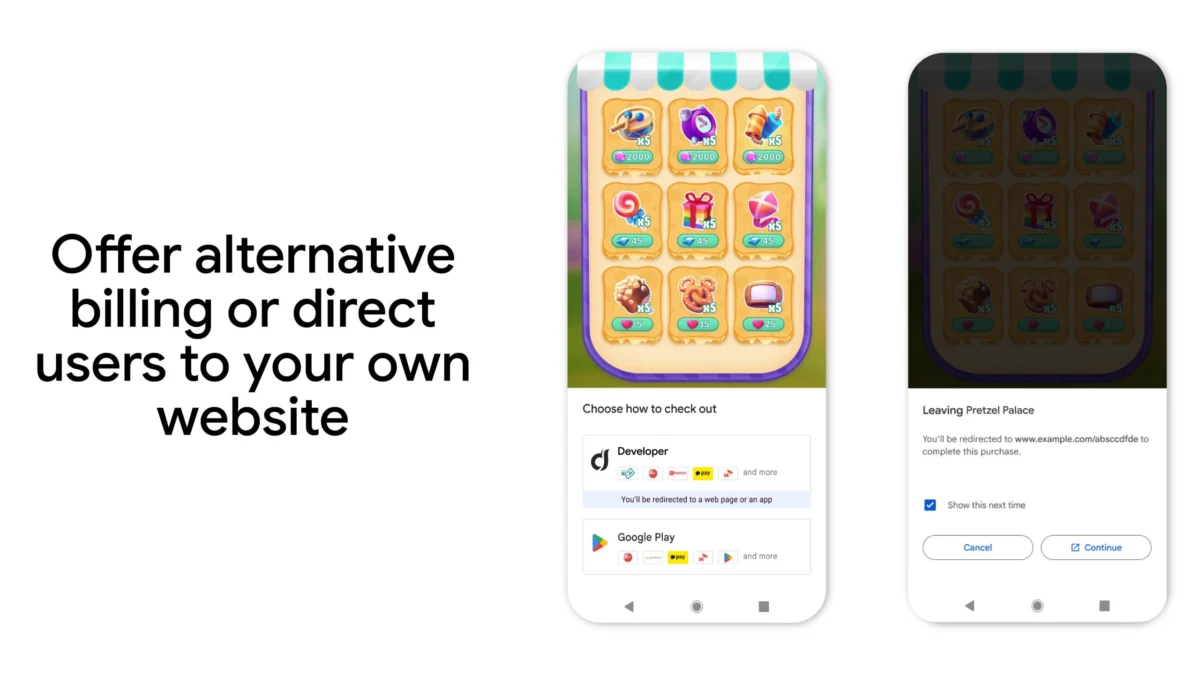
In a monumental shift that signals the end of the long-standing “30 percent era,” Google has begun the global rollout of a new, complex billing architecture for its Android ecosystem. This strategic pivot, designed to address the fallout from Epic Games’ high-stakes antitrust battle, marks the most significant change to the Google Play Store’s economic model since its inception. By moving away from a flat-fee structure toward a nuanced, “decoupled” system, Google is attempting to balance the demands of regulators, the grievances of developers, and the preservation of its own platform integrity.
While the legal ink on the final settlement regarding Google’s alleged monopoly over Android app distribution has yet to fully dry, the tech giant is clearly not waiting for a court-mandated final order to begin restructuring. The transition, which began in mid-2026, aims to redefine the relationship between the platform holder and the developers who drive the Android experience.
The Core Transformation: Moving Beyond the 30 Percent
For over a decade, the standard “Apple-Google tax” of 30 percent on digital goods and services was the industry’s rigid status quo. Under the new regime, Google is effectively dismantling this uniformity. The updated structure relies on a “decoupled” model, where the fee for listing an app on the Play Store is separated from the fee for utilizing Google’s proprietary payment processing system.
This decoupling is not a simple price cut; it is a sophisticated incentive structure. The actual percentage deducted from a developer’s revenue now hinges on a multifaceted rubric:
- The Install Baseline: Whether the user’s first installation of the application occurred before or after the implementation of the new fee schedule.
- Revenue Tiers: A tiered approach that rewards smaller developers while scaling up for larger enterprises.
- Billing Choice: Whether the developer opts into Google Play’s integrated billing system—which carries a 5 percent surcharge—or utilizes third-party payment processors and direct-to-web linking.
For high-earning applications—defined as those generating over $1 million annually—the standard cut for new in-app purchases is now set at 20 percent, while subscription-based services see a lower 10 percent rate.

A Chronology of Conflict and Compliance
The road to these changes is paved with years of legal volatility. The friction began in earnest when Epic Games, the developer of Fortnite, launched a multi-front legal assault against both Google and Apple, alleging that their respective app store policies constituted illegal monopolistic behavior.
- 2020–2023: The Litigation Phase: Epic Games formally challenged the 30 percent fee and the mandatory use of proprietary billing systems. The subsequent trial revealed the inner workings of Google’s “Project Hug,” a series of deals intended to keep major developers within the Google Play ecosystem.
- March 2026: The Strategic Announcement: Facing mounting pressure from the European Union’s Digital Markets Act (DMA) and the US courts, Google announced its intent to “decouple” its billing and distribution fees, offering a roadmap for a more competitive marketplace.
- June 2026: The Initial Rollout: Google began the technical implementation of the new billing infrastructure, providing developers with updated documentation and new API hooks to support alternative payment methods.
- Late 2026–2027: The Global Phased Deployment: A staggered rollout schedule is currently underway. Regional deployments are occurring in waves, with full global parity expected to be achieved by September 30, 2027.
The “Games Level Up” and “Apps Experience” Programs
Recognizing that a one-size-fits-all model might drive top-tier developers away, Google has introduced the "Games Level Up" and "Apps Experience" programs. These initiatives function as a “premium tier” for developers who adhere to Google’s rigorous technical standards.
To qualify for these lower rates, developers must demonstrate excellence in platform integration. This includes:
- Cross-Platform Parity: The app must provide a seamless experience across tablets, smart TVs, and Android Auto.
- Technical Optimization: Developers must meet strict benchmarks for memory management, startup time, and crash-rate frequency.
- Security and Integration: Apps must support Google-recommended features, including secure cloud saves and phishing-resistant sign-in protocols.
By tying fee reductions to these technical benchmarks, Google is essentially creating a “performance-based tax.” It incentivizes developers to build high-quality, stable applications that enhance the overall value of the Android ecosystem, effectively turning the fee structure into a tool for platform quality control.
Supporting Data and Economic Implications
The financial implications of this change are profound. For a developer earning $5 million in annual subscription revenue, the shift from a flat 30 percent fee to a 10 percent subscription fee—even when accounting for potential additional billing costs—represents a massive windfall.

However, analysts note that the complexity of the new system creates an "administrative burden." Developers must now decide between:
- The "Easy Path": Using Google Play’s billing system (which includes a 5 percent surcharge) and enjoying seamless integration.
- The "Independent Path": Implementing a third-party payment gateway or linking users to an external website, thereby avoiding the 5 percent surcharge but assuming the responsibility for customer service, fraud protection, and payment infrastructure.
Internal industry surveys suggest that smaller developers are likely to stick with Google’s billing to avoid the overhead of payment security compliance, while larger, well-resourced studios are already moving to integrate their own billing solutions to capture the margin previously lost to the “Google tax.”
Official Responses and Industry Sentiment
Google’s official stance, as communicated through its developer blog, frames this change as a proactive commitment to ecosystem health. "We are evolving our business model to ensure the Android platform remains an open and vibrant space for developers of all sizes," a Google spokesperson noted during the announcement.
Conversely, critics—including members of the Coalition for App Fairness—argue that while this is a step in the right direction, it remains a “half-measure.” They contend that by tying the lower rates to Google’s own technical requirements, the company is still exerting undue influence over how developers build their software.
“Google is merely changing the shape of the cage,” one industry advocate remarked. “They are using the threat of higher fees to force developers to maintain the standards Google wants, rather than allowing a truly open market to dictate the terms.”

Future Implications: What Comes Next?
The ripple effects of this policy shift will be felt for years. As we approach the September 2027 deadline for full global implementation, three key trends are likely to emerge:
- Market Fragmentation: We will likely see a split in how apps are monetized. Gaming apps, which have historically been the most profitable for platform holders, will likely lead the charge in adopting third-party billing to reclaim that 5 percent margin.
- Regulatory Scrutiny: Regulators in the EU and the UK are watching closely. If Google’s “Apps Experience” requirements are found to be a thinly veiled attempt to favor their own services or stifle competition, they may face further antitrust inquiries.
- The Rise of “Developer Experience” (DX) Platforms: As the billing landscape becomes more complex, a new market for third-party middleware is emerging—companies that help developers navigate the maze of global app store fees, ensuring they stay compliant with Google’s requirements while maximizing their net revenue.
In conclusion, the “Great Decoupling” represents a fundamental transition in the digital economy. Google is moving from being a simple landlord of the app store to a complex architect of a multi-tiered marketplace. For developers, the next 18 months will require a total re-evaluation of their financial and technical roadmaps. For consumers, the hope is that this increased competition leads to better-optimized apps and more diverse, transparent pricing models. Whether this will satisfy the courts remains to be seen, but one thing is certain: the era of the flat 30 percent fee is officially, and irrevocably, a relic of the past.
 Raul Delapena Setiawan
  Siti Muinah
  Asro
Asro 