
 By Nana Muazin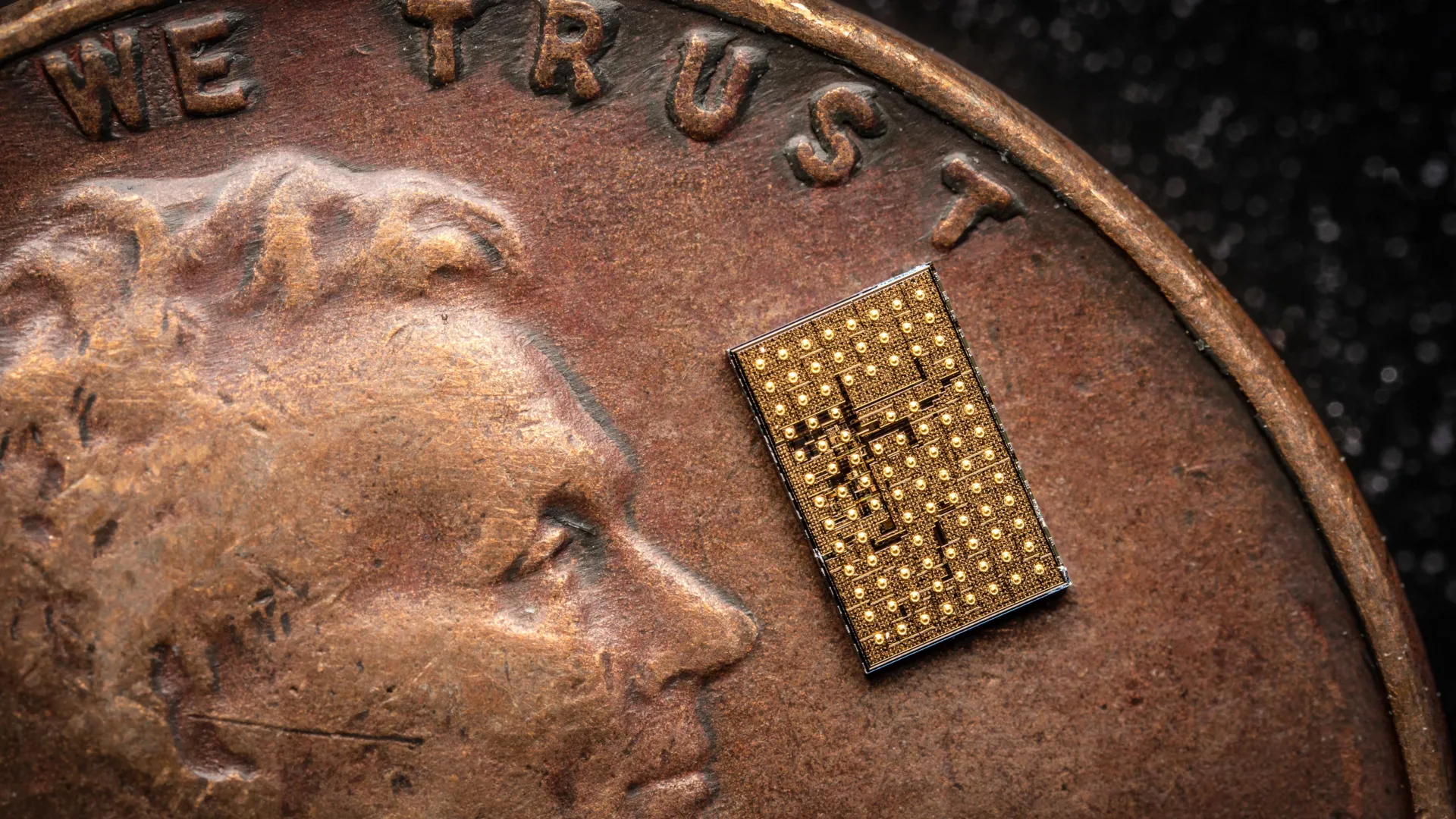
As the digital age accelerates, the insatiable demand for high-performance computing—driven by generative AI, cloud-based infrastructure, and large-scale data analytics—has placed an unprecedented strain on global power grids. At the heart of this challenge is a silent, often overlooked bottleneck: the efficiency of power delivery within data centers. Engineers at the University of California San Diego have recently unveiled a breakthrough in chip architecture that promises to revolutionize how graphics processing units (GPUs) consume energy, potentially slashing waste in some of the world’s most power-hungry facilities.
The research, published in Nature Communications, details the development of a hybrid power converter chip that moves away from traditional magnetic-based components in favor of piezoelectric resonators. By successfully converting 48-volt power sources down to the 1-to-5-volt range required by processors with a record-breaking 96.2% efficiency, the UC San Diego team has opened a new frontier in sustainable computing hardware.
The Core Dilemma: Voltage Conversion in the Age of AI
Modern data centers are architectural marvels, yet they operate on a fundamental engineering tension. Electricity is typically distributed throughout these massive facilities at 48 volts to minimize transmission losses. However, the sensitive silicon at the core of a GPU or CPU operates at a significantly lower voltage, usually between 1 and 5 volts.
To bridge this gap, engineers rely on DC-DC step-down converters. These devices act as the "gatekeepers" of energy, stepping down the voltage to ensure that delicate circuits receive precisely the amount of power they need to function without frying. While this process sounds straightforward, it is fraught with inefficiencies. As computing power grows more compact and demand increases, the energy lost as heat during this conversion process—known as "conversion loss"—has become a significant operational cost and an environmental burden.
For decades, the industry has relied on inductive converters, which utilize magnetic components like inductors to manage this energy flow. While these components have been incrementally improved for years, they are now hitting a "technological wall." The physics of inductors suggests that further miniaturization or efficiency gains are increasingly difficult to achieve, creating a ceiling for how much power can be delivered to modern, high-density chips.
A Chronology of Innovation: Moving Beyond Magnetics
The path to this discovery began with a recognition that the conventional approach to power management was approaching its practical limits. Patrick Mercier, a professor in the Department of Electrical and Computer Engineering at the UC San Diego Jacobs School of Engineering and the study’s senior author, noted that the industry had reached a point of diminishing returns.
"We’ve gotten so good at designing inductive converters that there’s not really much room left to improve them to meet future needs," Mercier stated. This realization prompted his team, including lead author and Ph.D. student Jae-Young Ko, to explore alternative physical phenomena that could store and transfer energy.
The Shift to Piezoelectrics
The team’s investigation focused on piezoelectric resonators—small devices that store energy through mechanical vibrations rather than magnetic fields. Piezoelectric materials have long been recognized for their high energy density and potential for efficiency, but they have historically struggled with stability and power delivery when faced with the wide voltage gaps characteristic of data centers.
Over several years of iterative testing, the team moved away from pure piezoelectric designs, which often failed to scale, and toward a hybrid configuration. By integrating a piezoelectric resonator with commercially available capacitors in a specific, proprietary circuit layout, the team managed to solve the historical issues of power output and efficiency.
In their latest laboratory trials, the researchers tested a prototype chip that achieved a peak efficiency of 96.2% while handling a 48-to-4.8 volt conversion. Crucially, this hybrid design provided four times the output current of any previous piezoelectric-based converter, effectively proving that the technology could handle the heavy lifting required by modern enterprise-grade GPUs.
Supporting Data: Efficiency and Performance Metrics
The success of the UC San Diego project is quantified by a series of impressive performance metrics that challenge the status quo of power electronics:
- Peak Conversion Efficiency: The prototype reached 96.2%, a figure that, when scaled across the millions of servers in global data centers, represents a massive reduction in wasted electricity.
- Voltage Step-Down Ratio: The chip successfully bridged the gap from 48V to 4.8V, the standard range for high-end server power distribution.
- Current Density: The hybrid approach yielded a four-fold increase in output current compared to existing piezoelectric designs, making it viable for power-hungry AI accelerators.
- System Scalability: By creating multiple pathways for energy to move through the chip, the researchers reduced the thermal strain on the piezoelectric resonator, ensuring longevity and consistent performance.
These figures are particularly significant because they demonstrate that the hybrid approach does not merely trade efficiency for size. Instead, it provides a superior "power density"—the ability to provide more power in a smaller physical footprint—which is essential for the next generation of densely packed, rack-mounted server blades.
Official Responses and Expert Perspective
The research has drawn significant attention from the academic and industrial communities, particularly those involved in the Power Management Integration Center (PMIC), an Industry-University Cooperative Research Center (IUCRC) funded by the National Science Foundation.
Dr. Mercier’s perspective on the project is one of cautious optimism. While he is proud of the 96.2% efficiency milestone, he is quick to emphasize that the transition from a laboratory prototype to a commercially available chip is a complex journey. "Piezoelectric-based converters aren’t quite ready to replace existing power converter technologies yet," Mercier explained. "But they offer a trajectory for improvement. We need to continue to improve on multiple areas—materials, circuits, and packaging—to make this technology ready for data center applications."
The primary hurdle, according to the researchers, is integration. Because piezoelectric resonators rely on mechanical vibration, they cannot be soldered onto standard printed circuit boards (PCBs) using the same high-heat reflow processes used for conventional electronic components. This physical incompatibility means the entire supply chain for server assembly would need to adapt to new manufacturing standards to accommodate these components.
Implications: The Road to Sustainable Computing
The implications of this research are far-reaching. As the world becomes increasingly reliant on energy-intensive technologies like Large Language Models (LLMs) and real-time processing, the carbon footprint of data centers has become a focal point for environmental policy.
Reducing the Carbon Footprint
Every percentage point of efficiency gained in power conversion directly translates to a decrease in the electricity drawn from the grid. In a facility housing thousands of GPUs, an efficiency gain of even one or two percent could result in millions of dollars in annual energy savings and a substantial reduction in the greenhouse gas emissions associated with cooling and powering server farms.
Enabling Future Hardware
Beyond sustainability, this design provides a roadmap for the physical evolution of hardware. As processors become more complex, they require more stable and precise power delivery. By moving to a technology that is more energy-dense, chip designers can potentially pack more computing power into the same physical space, effectively slowing the "size-creep" of server hardware while accelerating performance.
Future Development Cycles
The UC San Diego team has already mapped out the next steps for their research. Future efforts will center on:
- Material Science: Testing new piezoelectric materials that offer higher thermal stability and better energy transfer characteristics.
- Circuit Refinement: Optimizing the control algorithms that manage the hybrid energy pathways.
- Advanced Packaging: Developing new, industry-compatible methods for mounting piezoelectric resonators onto standard circuit boards, which will be the "make or break" factor for mass-market adoption.
Conclusion
The work being conducted at the UC San Diego Jacobs School of Engineering represents a critical pivot point in the history of power electronics. By successfully challenging the long-standing dominance of magnetic-based converters with a hybrid piezoelectric solution, the team has not only demonstrated a more efficient way to power the chips of today but has also laid the groundwork for the infrastructure of tomorrow.
While the "piezoelectric revolution" is still in its infancy, the potential for this technology to mitigate the energy costs of our digital future is immense. As the researchers continue to bridge the gap between laboratory innovation and industrial application, the industry will be watching closely, recognizing that the key to more sustainable computing may lie in the very small, high-frequency vibrations of a new kind of chip.
 Sagoh
Sagoh  Asro
Asro  Siti Muinah