
 By Asep Darmawan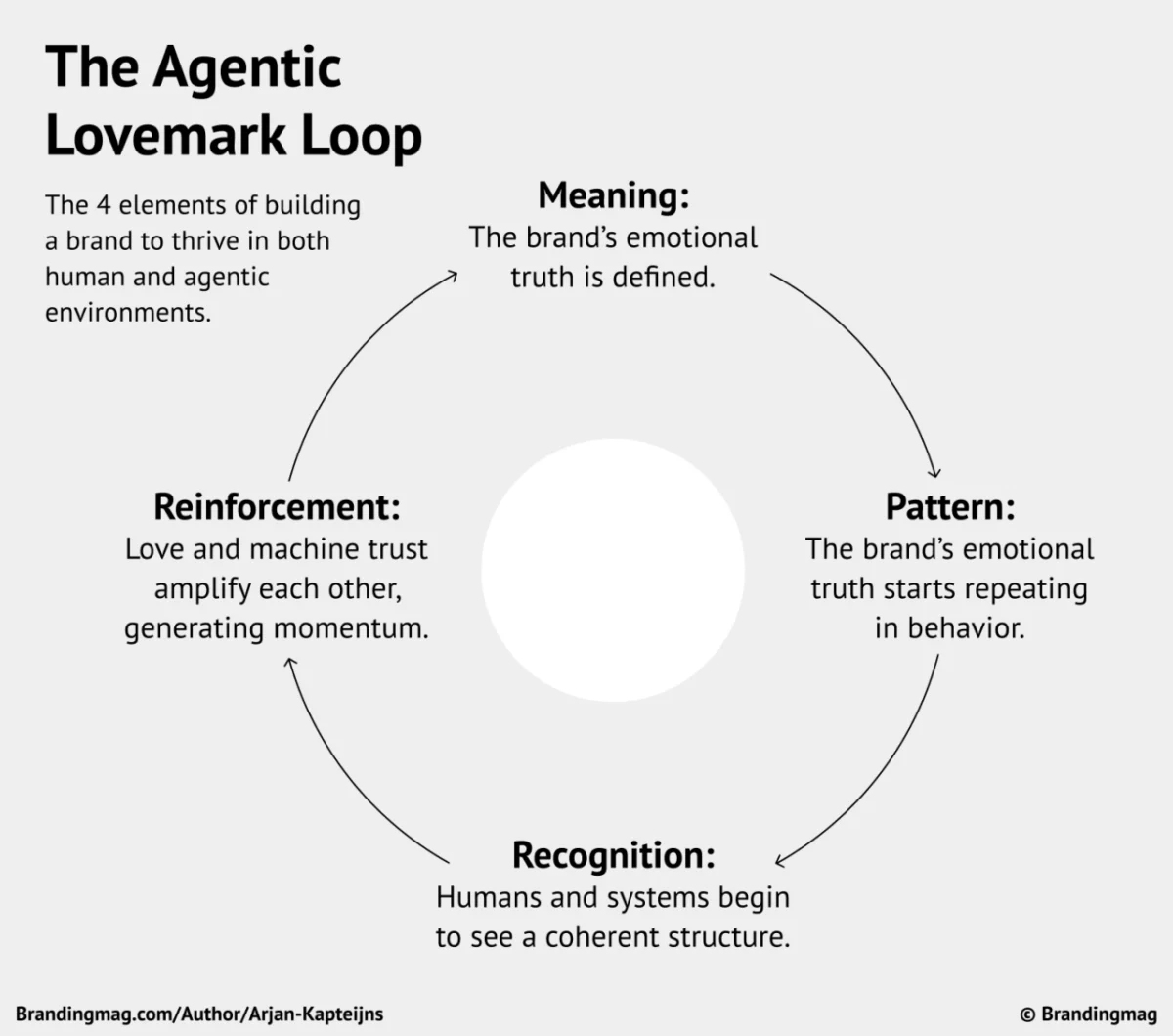
The branding industry is currently undergoing its most profound transformation since the dawn of the internet. As artificial intelligence moves from a novelty tool to a fundamental gatekeeper of consumer choice, the very mechanics of how we build, define, and maintain brand equity are being rewritten. At the center of this paradigm shift is a vital, emerging concept: the Agentic Lovemark.
This new framework, heavily influenced by Thomas Marzano’s recent manifesto, Brand Constitutions: The Legible-Lovable Standard for Building Equity in an Agentic Economy, suggests that the future of brand success no longer rests solely on human affection. Instead, it requires a dual-track strategy: a brand must be deeply lovable to humans while remaining structurally "legible" to the intelligent agents that now mediate our digital lives.
The Foundations: From Saatchi to Systems
To understand the Agentic Lovemark, one must first look at the legacy of the original "Lovemarks" concept, pioneered by Kevin Roberts during his tenure at Saatchi & Saatchi. For decades, the Lovemarks philosophy served as a beacon for marketers, arguing that brands had become too functional and cold. Roberts contended that to transcend commoditization, a brand must earn both "respect" (the rational foundation) and "love" (the emotional connection).
This philosophy was built for a human-led world. When consumers navigated the market, they were the ultimate arbiters of choice. They compared experiences, remembered interactions, and formed judgments based on subjective context. However, the rise of the "agentic economy"—where AI assistants like ChatGPT, Gemini, and specialized commerce agents curate our shopping, travel, and lifestyle decisions—has fundamentally altered the battlefield.
The New Logic: The Rise of Machine Trust
In this agentic age, the decision journey is being compressed. Stages that were once human, interpretive, and temporal are being collapsed into system-driven filters. Intelligent agents do not "feel" brand affinity; they process data, verify provenance, and recognize patterns.
Consequently, the traditional Lovemarks pillar of "respect" requires an evolution. It must now manifest as "Machine Trust." While respect remains the substance—the proof of a brand’s performance—legibility becomes the structure. If a brand is loved by humans but possesses a disorganized data footprint, ambiguous behavioral patterns, or opaque metadata, it risks being invisible to the very systems that control the modern "shortlist."
Machine trust is not a replacement for human respect; it is the translation of that respect into a language machines can verify. It is the clarity of a brand’s structural identity, ensuring that when a consumer asks an AI for a recommendation, the brand is not just a participant, but a prioritized selection.
The Agentic Lovemark Matrix: A New Strategic Compass
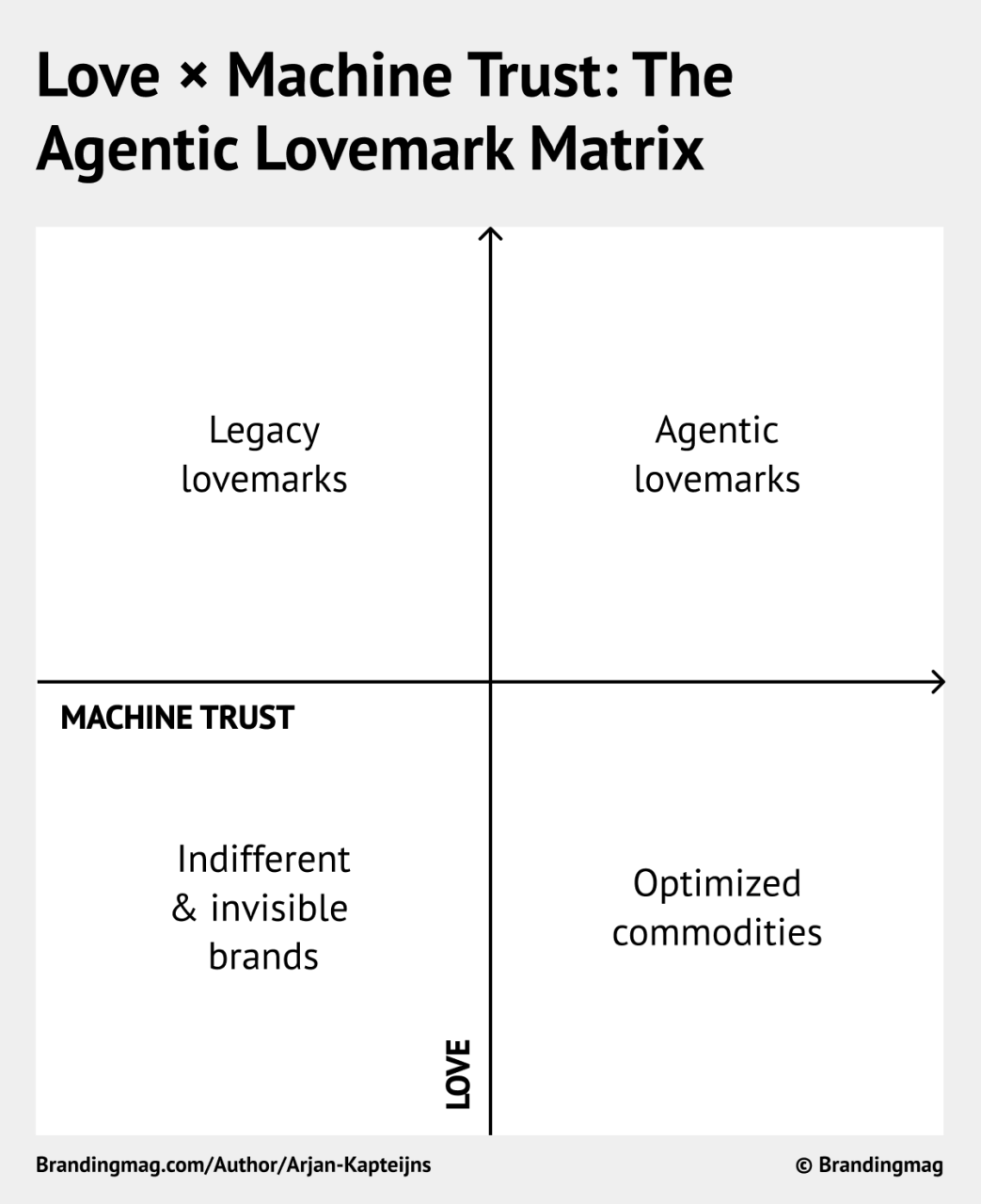
Mapping the intersection of human love and machine trust creates a new four-quadrant reality for brand managers:
- Invisible/Unknown: Brands lacking both emotional resonance and structural legibility.
- Functional/Algorithmic: Brands that are legible to machines but fail to inspire human loyalty—often easily replaced by cheaper alternatives.
- Human-Only (The Niche Trap): Brands that are deeply loved but remain digitally "dark" or disorganized, limiting their growth as agents become more influential.
- The Agentic Lovemark: The gold standard. Brands that are both emotionally resonant to humans and structurally legible to machines.
In the upper-right quadrant, emotional meaning remains human in origin, but its signals are structured enough for systems to interpret and reinforce. This represents a synthesis of "Soul and System."
Implications for the "Banana Principle"
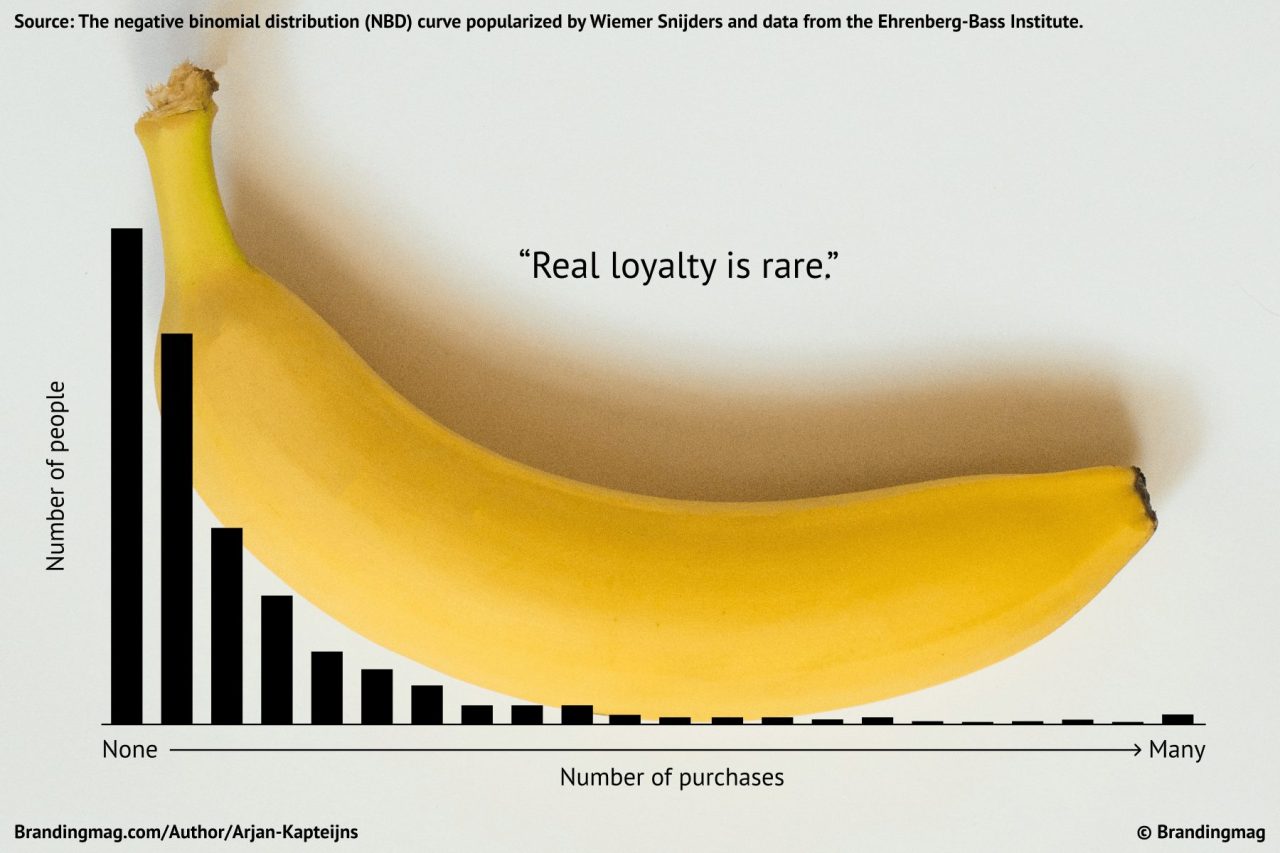
For years, the marketing world has been tethered to Byron Sharp’s "Banana Principle," which posits that loyalty is largely a statistical consequence of penetration and availability, rather than deep emotional devotion. In a world of human volatility, this was largely true.
However, the agentic age changes the math. Agents tend to stabilize preferences. By reinforcing remembered choices and removing the "micro-moments" of distraction where consumers might otherwise switch brands, agents effectively turn the "banana" on its head. In an agentic environment, emotional loyalty becomes more dependable because it is reinforced by the system’s own preference loops. The random switching behavior observed in previous decades is replaced by a more consistent, patterned cycle.
The Role of the "Brand Constitution"
If the goal is to become an Agentic Lovemark, how does a brand maintain its humanity? The answer lies in the Brand Constitution. As proposed by Marzano, this document is not a bureaucratic hurdle but an intentional codification of the brand’s cohesion.
The Constitution serves as the bridge between the myth of the brand and the metadata of the machine. It defines the:
- Organizing Idea: The guiding principle (e.g., Apple’s "Unleashing Creativity").
- Signatures: The repeated behavioral patterns that make a brand unmistakable.
- Quests: The long-term goals that align culture and strategy.
By anchoring the brand in a clear, central organizing idea, companies ensure that their emotional expression remains consistent. When an idea is truly foundational, it manifests in every interaction—from the user interface of an app to the customer service tone and the product’s core functionality. This internal cohesion is precisely what makes a brand "legible" to an agent.
The Creative Fear: Soul vs. Optimization
A visceral anxiety exists within the creative community today: the fear that in an effort to be "legible" to machines, brands will lose their soul. There is a concern that optimizing for algorithms will lead to a bland, homogenous landscape of "perfect" but lifeless content.
This fear, while understandable, stems from a misunderstanding of the task. The work of generating creative emotion must remain human. AI has no lived experience; it has never failed in a studio or navigated the messy reality of human relationships. As Dutch creative legend Aad Kuijper has noted, humans have a natural, physical allergy to anything that feels engineered or synthetic.
The solution is not to let AI generate the brand’s emotional core, but to use AI to reveal the authenticity that already exists. Creativity provides the "soul," while the system provides the "structure." The creative judgment—the ability to sense what moves people—remains an exclusively human domain.
The Agentic Loop: A Self-Reinforcing Cycle
The future of brand equity lies in the Agentic Lovemark Loop:
- Meaning: The human-centric emotional territory.
- Pattern: The behavioral signatures derived from that meaning.
- Recognition: The system identifying those signatures as stable and trustworthy.
- Reinforcement: The agent surfacing the brand, leading to more human interaction, which in turn reinforces the patterns.
This loop creates a virtuous cycle. A brand no longer has to "push" to be seen through massive advertising spend; instead, the system begins to "pull" the brand into the shortlist because the data confirms it is a preferred, trusted, and reliable entity.
Conclusion: The Path Forward
The arrival of the agentic economy does not signal the death of the Lovemark. Rather, it acts as a catalyst for its maturation. The brands that will define the next generation of commerce are those that recognize this evolution as a structural necessity rather than a technological chore.
To thrive, organizations must abandon the binary choice between "human-focused" and "machine-focused" strategies. They must embrace the "Agentic Lovemark"—a brand that possesses a soul, yet operates with the precision of a system. In a world where agents increasingly decide what we see, the brands that endure will be those that have successfully encoded their emotional truth into the very fabric of their operations. The challenge for the next generation of marketers is clear: build for the heart, but provide the roadmap for the machine.
 Azzam Bilal Chamdy
  Nana Wu
  Raul Delapena Setiawan