
 By Neng Nana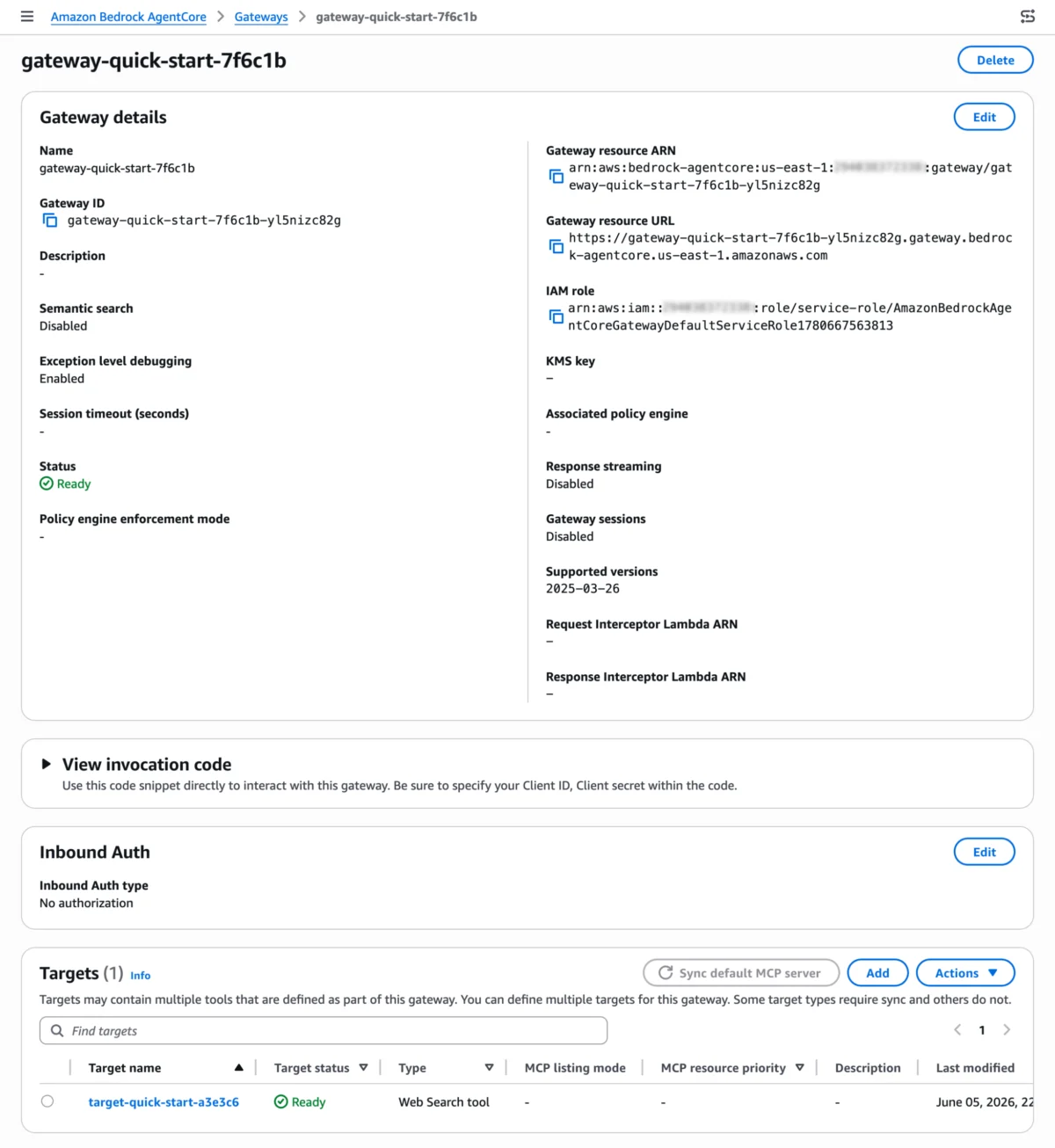
In a significant advancement for enterprise-grade generative AI, Amazon Web Services (AWS) has announced the general availability of the Web Search capability for Amazon Bedrock AgentCore. This new, fully managed tool is designed to bridge the gap between static model training data and the rapidly evolving real-world information landscape. By allowing AI agents to ground their responses in current, cited web knowledge without requiring data to leave the secured AWS perimeter, AWS is addressing one of the most pressing hurdles in corporate AI deployment: the "hallucination" of outdated or unverifiable facts.
The Evolution of Agentic Search
For years, the limitation of Large Language Models (LLMs) has been their "knowledge cutoff"—the date at which their training data ends. While Retrieval-Augmented Generation (RAG) has allowed organizations to ground models in their private data, the ability to synthesize live, public-domain information has remained fragmented and often insecure.
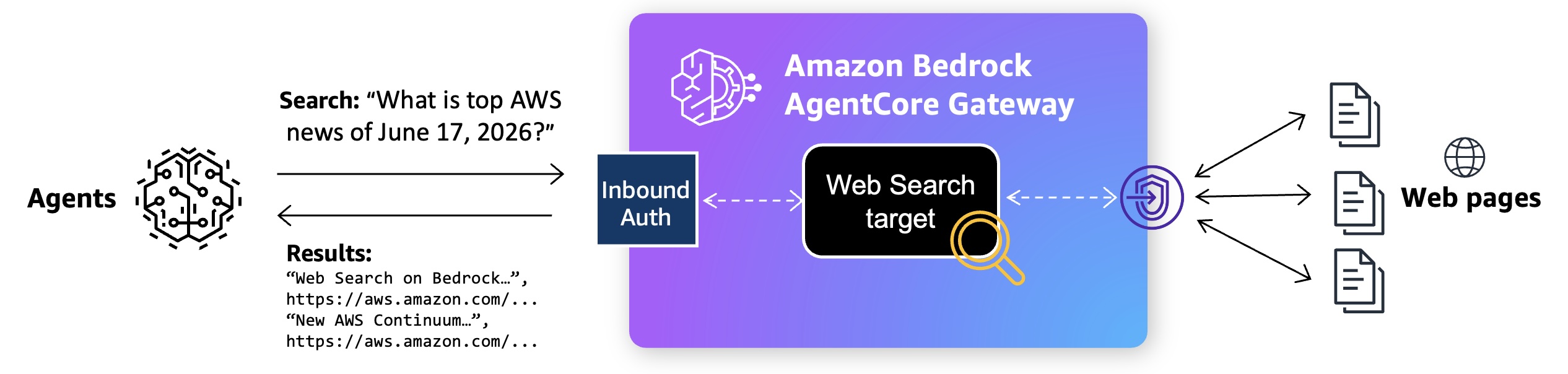
Web Search on Bedrock AgentCore changes this paradigm by leveraging the Model Context Protocol (MCP). This standardized approach allows agents to query the internet via a natural-language interface, retrieving relevant snippets, source URLs, and publication metadata. The result is a grounded, verifiable response that provides the user with transparency regarding where the information originated.
A Legacy of Search Innovation
The architecture powering this new tool is not nascent; it is the culmination of years of internal research and development. Amazon has integrated the same underlying search infrastructure that currently sustains high-traffic, mission-critical environments such as Alexa+, Amazon Quick, and the Kiro developer platform.
By combining Amazon’s massive web index with structured knowledge graph data, the system goes beyond simple keyword matching. It employs a multi-source grounding approach, allowing agents to cross-reference transient web snippets against the Amazon Knowledge Graph. This ensures that the retrieved data is not just "recent," but also vetted, leading to a higher degree of accuracy in complex reasoning tasks.
Technical Implementation: The Path to Integration
The integration process has been designed for developer efficiency, emphasizing a low-friction adoption path. The deployment workflow involves three primary stages:
1. Gateway Orchestration
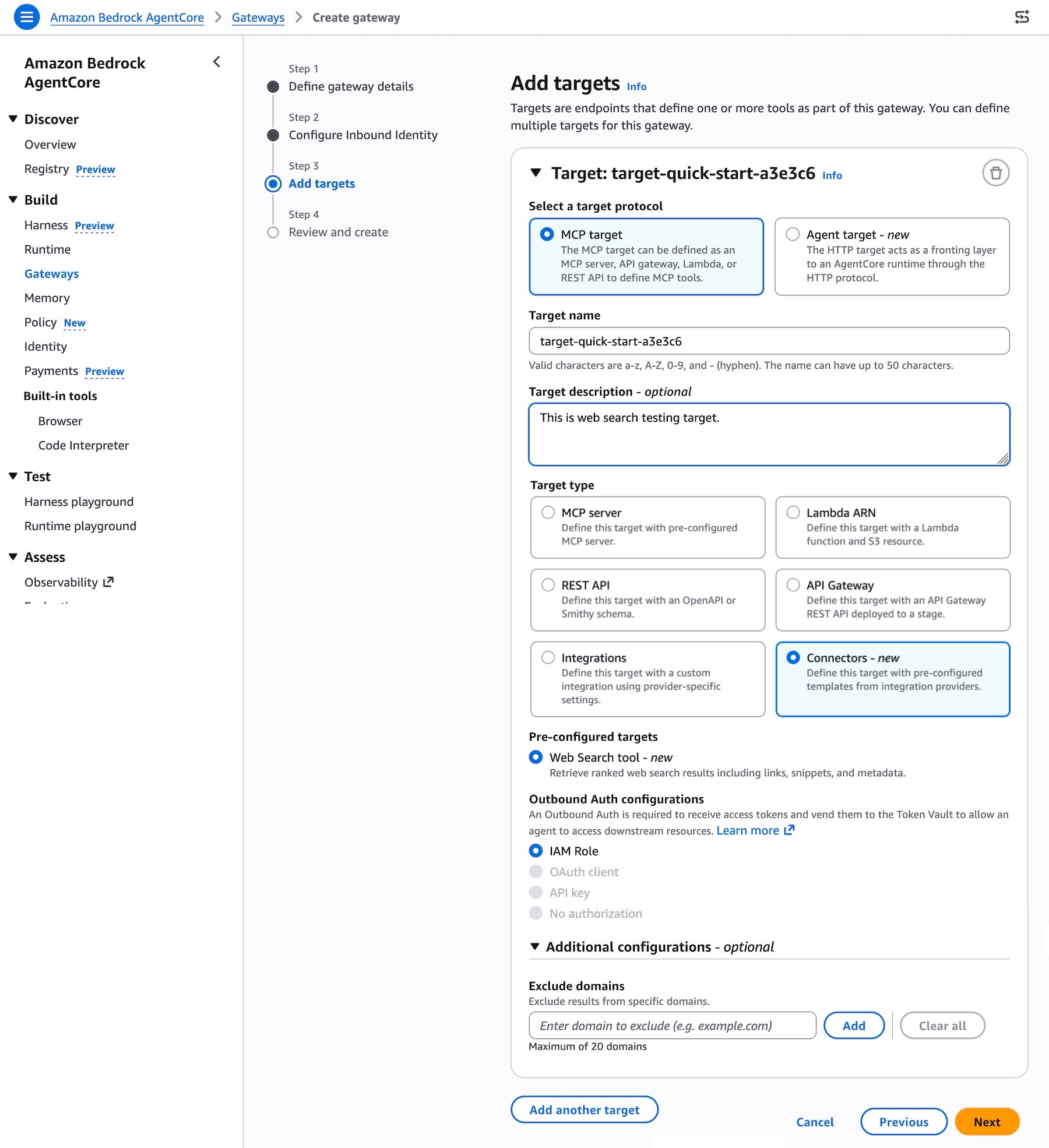
Developers start by provisioning a Bedrock AgentCore Gateway through the AWS Management Console. By selecting the "MCP target" protocol and configuring the "Web Search" connector, the agent is immediately enabled to perform real-time queries. This modularity means developers no longer need to maintain custom-built web scraping or search API infrastructure, significantly reducing the "toil" associated with maintaining agentic workflows.
2. Interaction and Debugging
Once the gateway is active, the agent can be interacted with via the command line, API calls, or the MCP Inspector. The latter serves as an interactive development environment (IDE) plugin that allows engineers to test search queries, view raw metadata, and debug the reasoning chain of the agent before moving to a production environment.

3. Security and Compliance
Perhaps the most critical aspect for enterprise users is the security posture. Because the search tool is integrated directly into the AWS environment, user prompts and retrieval queries remain within the customer’s secure AWS VPC. There is zero data egress to external, non-vetted third-party search providers, ensuring that sensitive organizational context does not leak into public search ecosystems.
Customer Perspectives: Bridging Science and Safety
The early-access phase of this technology has provided a glimpse into how diverse industries are leveraging real-time grounding to solve complex, high-stakes problems.
Benchling: Accelerating Scientific Discovery
In the field of biotechnology, the ability to synthesize current research is vital. Nicholas Larus-Stone, Head of AI Agents at Benchling, noted that the Web Search tool is a game-changer for his users. "Scientists using Benchling AI can now ask about a target they’re actively working on and get answers grounded in both their institutional data and published literature," Larus-Stone explained. By automating the retrieval of high-quality, published data, Benchling allows researchers to focus on hypothesis generation rather than manual literature reviews.
Gen Digital: Protecting the Online Reputation
For companies focused on cyber safety, the threat landscape shifts by the minute. Iskander Sanchez-Rola, Senior Director of AI & Innovation at Gen Digital, emphasized the value of timeliness. "With the Web Search tool on Amazon Bedrock AgentCore, Norton Revamp helps professionals build their online reputation with current, grounded content ideas shaped by what’s actually happening in the world today," he stated. For Gen Digital, the critical value proposition is the trust architecture—the knowledge that the search index and the query processing remain within the fortified AWS perimeter.
Strategic Implications for the Enterprise
The introduction of native web search to the Bedrock ecosystem signals a shift in the role of the enterprise AI agent. We are moving from the era of "passive assistants" to "active agents" capable of taking meaningful, researched action.
Reducing Hallucination
By mandating the use of cited sources, the Web Search tool forces agents to adhere to a standard of evidence. If an agent cannot find a supporting fact, it can be configured to state that clearly, rather than generating a plausible-sounding falsehood.
Regulatory and Governance Alignment
Enterprises operate under strict data residency and privacy regulations. By keeping the search process "in-house," AWS allows companies to maintain an audit trail of every external query performed by an AI. This satisfies compliance officers who might otherwise block AI adoption due to concerns over data leakage to search engine providers.
Cost-Effectiveness and Scalability
AWS has opted for a straightforward, usage-based pricing model: $7 per 1,000 queries. By removing the need for third-party subscriptions to search APIs and the overhead of maintaining internal infrastructure, the cost of implementing agentic search is not only lower but also highly predictable. The availability of $200 in free-tier credits for new customers further lowers the barrier to experimentation.
Future Roadmap and Availability
As of June 2026, the Web Search tool is generally available in the US East (N. Virginia) region, with plans to expand to other global regions in the coming quarters. AWS has indicated that the roadmap includes deeper integration with private knowledge bases, potentially allowing for hybrid search—where the agent concurrently scans both private internal documentation and the global web index to provide a unified, comprehensive answer.
Conclusion: The Next Phase of AI Maturity
The integration of Web Search into Amazon Bedrock AgentCore represents a maturing of the generative AI market. It is a move away from the "hype" of model size and toward the "utility" of model reliability. By providing a secure, high-performance, and deeply integrated search capability, AWS is effectively enabling developers to build the next generation of AI-driven tools that are not only intelligent but also informed by the pulse of the real world.
For organizations that have been hesitant to deploy AI due to concerns over accuracy or data exposure, the Bedrock AgentCore update provides a clear, actionable path forward. As we look toward the remainder of 2026, it is likely that this tool will become a foundational component of the modern enterprise tech stack, setting the standard for how agents interact with the vast, chaotic, and ever-changing information of the internet.
 Suro Senen
  Lina Hope