
 By Ammar Sabilarrohman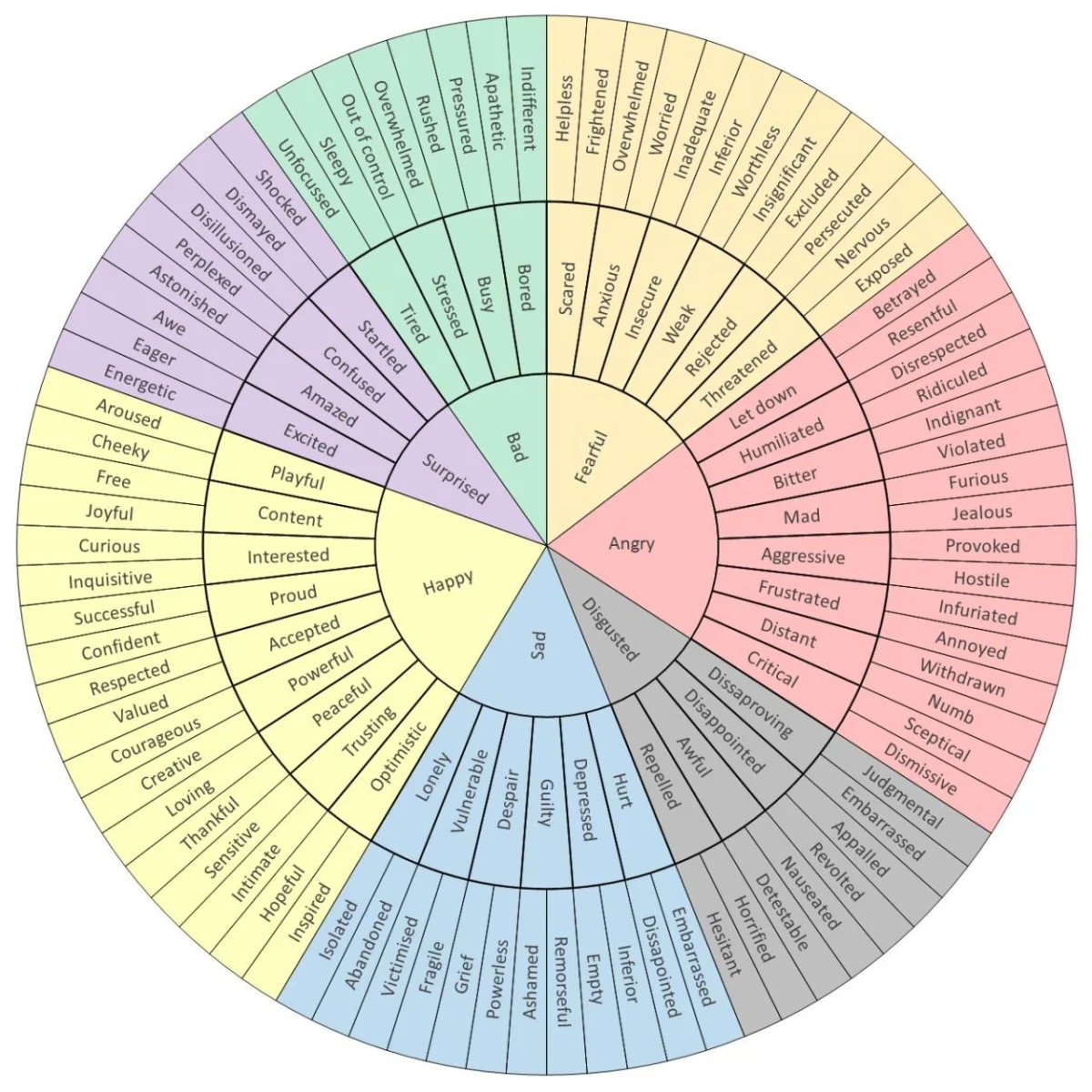
In the contemporary digital economy, the disconnect between what a company assumes about its users and the reality of user behavior represents one of the most significant risks to product success. For years, the prevailing wisdom in product design and marketing was simple: if you want to know what a user wants, ask them. However, as the field of User Experience (UX) research matures, experts are uncovering a startling truth: what people say, feel, think, and do are often entirely different things.
To bridge this gap, industry leaders are moving away from surface-level "validation" and toward a multi-layered approach to customer understanding. By triangulating data across various psychological and behavioral levels, organizations can move beyond "big hunches" and toward evidence-based design.
Main Facts: The Multi-Layered Reality of User Behavior
The foundational challenge of UX research lies in the "Say-Do" gap. Users are notoriously poor at predicting their own future behavior or explaining their past motivations. This is not due to dishonesty, but rather the limitations of human self-awareness and the complexities of cognitive biases.
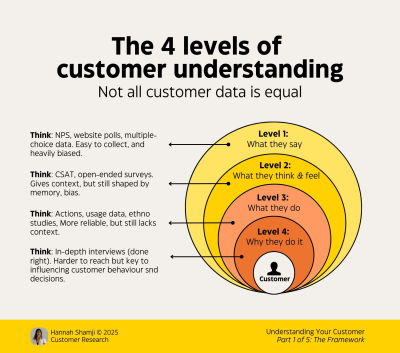
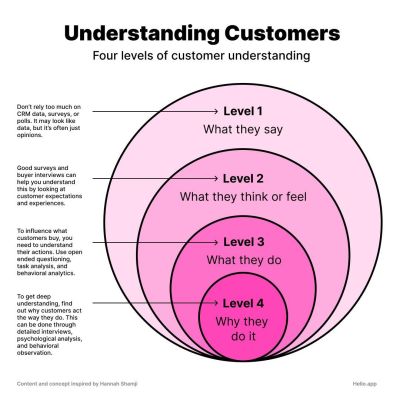
To address this, the "Four Levels of Customer Understanding," a framework popularized by researcher Hannah Shamji, provides a roadmap for deeper insight:
- Level 1: What they say. This is the surface level—direct feedback, survey responses, and interview quotes. While easily accessible, it is often the most unreliable.
- Level 2: What they think or feel. This delves into the cognitive and emotional state. It explores the internal monologue and the immediate emotional reactions a user has to an interface.
- Level 3: What they do. This is the realm of pure behavioral data—clicks, scrolls, navigation paths, and task completion rates.
- Level 4: Why they do it. The deepest level, identifying the root motivations, fears, and underlying goals that drive the behavior observed in Level 3.
By analyzing a user through these four lenses simultaneously, researchers can identify contradictions. For example, a user might say a feature is "easy to use" (Level 1) while their behavioral data shows they took three minutes to find a button (Level 3), revealing a hidden frustration (Level 2) driven by a fear of making a mistake (Level 4).
Chronology: The Evolution of UX Methodology
The journey from simple usability testing to complex behavioral diagnosis has evolved over several decades, marked by shifts in how researchers interact with participants.
The Era of "Just Asking"
Initially, product development relied heavily on focus groups and surveys. The assumption was that users were rational actors who could accurately articulate their needs. This era gave rise to the Net Promoter Score (NPS), which, while popular, is increasingly criticized by modern researchers like Vitaly Friedman for its inability to provide actionable, behavioral insights.
The Rise of the "Think-Aloud" Protocol
To get closer to the "Think" and "Feel" layers, researchers began using the "think-aloud" protocol, asking users to narrate their thought processes in real-time. While this provided more context than a post-test survey, it introduced a new problem: cognitive interference. The act of speaking while performing a task alters the performance of that task, often obscuring genuine emotional responses.
The Shift to Silent Observation and Diagnosis
Current best practices, championed by experts like Erika Hall and Nikki Anderson, advocate for a "diagnosis first" approach. Instead of asking users to narrate, researchers observe in silence, noting micro-behaviors—the hesitation of a mouse, a furrowed brow, or a repetitive scroll. Questions are reserved for the end of the session to avoid "leading the witness."
The Move from Validation to Research
Today, the industry is seeing a linguistic and philosophical shift. The term "validation"—which implies a search for evidence to support an existing idea—is being replaced by "research" and "investigation." This marks a transition from seeking confirmation to seeking truth, even if that truth is uncomfortable for the product team.
Supporting Data: The Unreliability of Language and Churn
The need for this multi-layered approach is supported by linguistic and behavioral studies.
The Ambiguity of Probability
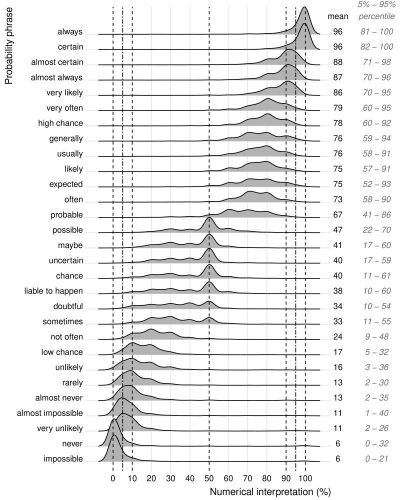
A significant study on Dutch verbal probability terms illustrates why "Level 1" data (what people say) is so treacherous. Researchers found that when users use words like "possible," "maybe," or "likely," there is almost no consensus on what those words mean numerically. For one user, "possible" might mean a 20% chance, while for another, it means 70%. Relying on these verbal nuances to make product decisions leads to a wide margin of error.
Voluntary vs. Involuntary Churn
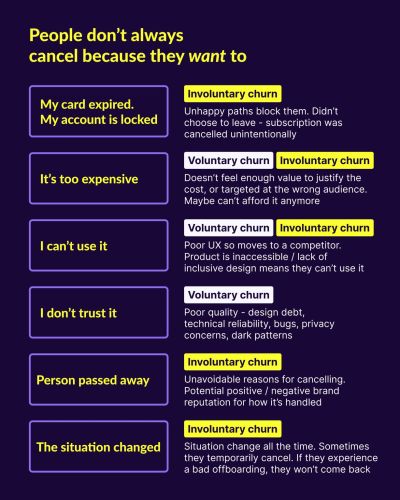
Data regarding customer churn further highlights the complexity of user behavior. Research by Emily Anderson shows that customers often cancel subscriptions for reasons that have nothing to do with their "desire" for the product. Involuntary churn (credit card expiration, technical errors) accounts for a massive portion of lost revenue. If a company only looks at "what users say" in cancellation surveys, they miss the behavioral and technical "root causes" that could be solved through better engineering rather than better marketing.
The "Spectrum of Empathy"
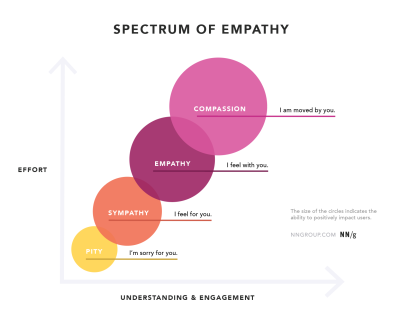
Sarah Gibbons of the Nielsen Norman Group provides a data-backed framework for emotional engagement in design. Her "Spectrum of Empathy" moves from Pity (feeling sorry for a user) to Sympathy, Empathy, and finally Compassion (the drive to take action). Data suggests that teams that operate at the "Compassion" end of the spectrum produce more accessible and inclusive designs, as they are focused on solving the user’s pain rather than just acknowledging it.
Official Responses: The Empathy Debate
The role of emotion and empathy in UX is currently a subject of intense debate among industry leaders.
The Case for Emotional Precision:
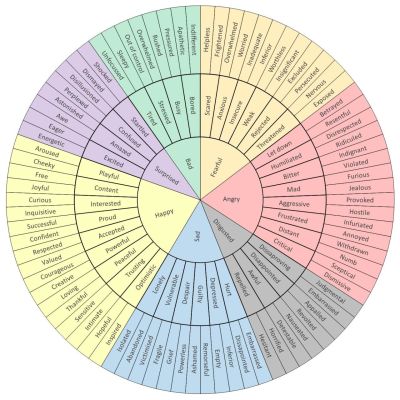
Geoffrey Roberts, creator of the "Emotion Wheel," argues that we need more precise language to describe user states. Moving beyond "good" or "bad" to specific terms like "disillusioned," "overwhelmed," or "empowered" allows designers to create more targeted solutions. This is supported by the use of "mirroring" techniques in interviews, where researchers repeat a user’s words back to them to uncover deeper layers of meaning.
The Case Against Empathy:
Conversely, some experts like Alin Buda offer a "case against empathy." Buda argues that the belief that designers must "emotionally absorb" a user’s experience is flawed. He posits that our job is to "make sense of the mess and act on it," not necessarily to feel it. In this view, too much focus on emotion can lead to "performative empathy" that doesn’t actually result in better code or more functional interfaces.
The Harm Framework:
Indi Young, a pioneer in inclusive design, suggests that we should focus less on temporary emotional responses and more on long-term "harms." Her framework categorizes potential harms into mild, serious, lasting, and systemic. This moves the conversation from "Did the user enjoy the button?" to "Does this algorithm cause systemic exclusion?"—a much deeper level of "Why" and "What."
Implications: Building a Culture of Observation
The shift toward a deeper understanding of user behavior has profound implications for how companies operate. It suggests that the most valuable insights do not come from expensive tools, but from a change in organizational mindset.
From "Validation" to "Diagnosis"
Companies must stop using user testing to "bless" their designs. Instead, they should adopt a medical model of diagnosis. This involves observing symptoms (Level 3: behavioral data) to identify the underlying pathology (Level 4: root cause).
Socializing the "Struggle"
To make an impact, UX findings must be visible. Leading organizations are moving away from 50-page PDF reports and toward "socialized research." This includes:
- Highlight Reels: Short, two-minute video clips of users struggling with a specific task, shared in Slack channels.
- "Voice of the Customer" Newsletters: Monthly updates that summarize not just what was built, but what was learned about user frustrations.
- Observation Rooms: Encouraging engineers and marketers to watch live, unedited usability sessions to build collective "compassion."
Triangulation as the Gold Standard
The ultimate implication is that no single data point is sufficient. A high NPS score is meaningless if the behavioral data shows users are failing to complete tasks. A fast task-completion time is irrelevant if the "Emotion Wheel" shows the user feels "anxious" throughout the process. Success in the modern era of product design requires the constant triangulation and reconciliation of conflicting data across all four levels of understanding.
In conclusion, understanding the customer is not about listening to what they say; it is about observing the "messy and noisy reality" of what they do. By moving beyond the surface, companies can stop chasing assumptions and start building products that resonate with the true, often hidden, motivations of their users. Without this depth, every design decision remains an expensive hunch.
 Nana Wu
  Nana
Nana 