
 By Raul Delapena Setiawan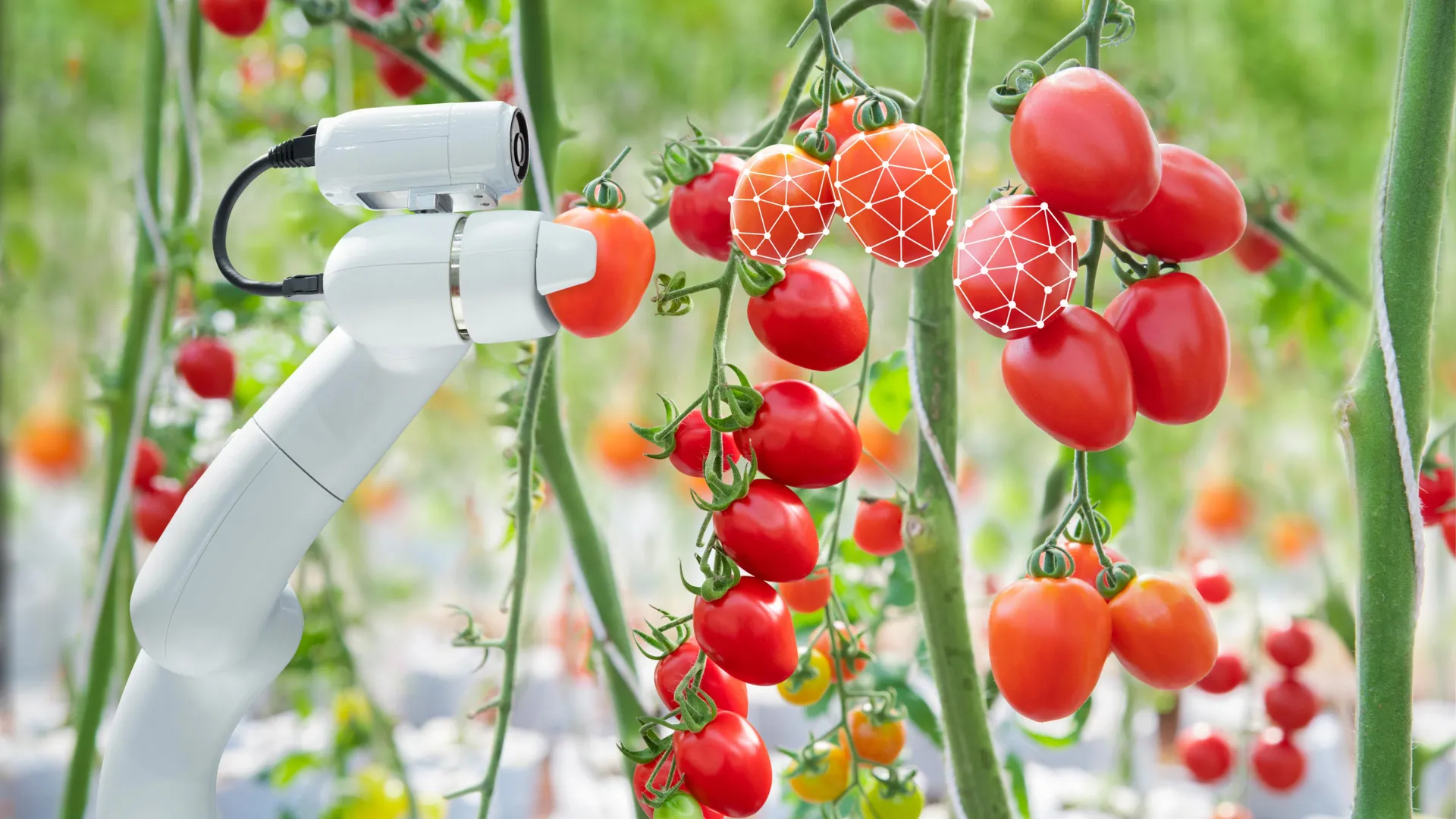
Introduction: The Looming Crisis in Global Agriculture
The global agricultural sector is currently standing at a precipice. As the population continues to swell and the demand for fresh, high-quality produce climbs, the industry is simultaneously grappling with a persistent and worsening labor shortage. The manual labor that has defined farming for millennia is becoming increasingly difficult to source, leading to crop losses, rising food prices, and a strain on supply chains.
In response, the industry has turned its gaze toward the promise of automation. While tractors and irrigation systems have long been mechanized, the delicate, nuanced work of harvesting—specifically picking fragile, cluster-grown produce like tomatoes—has remained a persistent hurdle. Robotic arms, while powerful, have historically lacked the "common sense" and spatial dexterity of human pickers. However, a breakthrough from Osaka Metropolitan University (OMU) is changing the narrative, shifting the focus from simple object detection to the more sophisticated concept of "harvest-ease."
The Technical Hurdle: Why Tomatoes Are Notoriously Difficult
To understand the significance of this technological leap, one must first appreciate the complexity of the tomato plant. Unlike root vegetables or grains, tomatoes grow in dense, tangled clusters. A robotic harvester cannot simply "grab" a fruit; it must navigate a labyrinth of foliage, brittle stems, and neighboring fruit that may still be green and unready for harvest.
Traditional agricultural robots have relied primarily on computer vision for detection—identifying where a red tomato is located in 3D space. While these systems are adept at finding the target, they often fail when it comes to the logistics of the approach. If a tomato is partially obscured by a leaf or its stem is angled in a way that risks crushing the fruit, a basic robotic system might attempt a "blind" pick, leading to damaged crops or mechanical failure.
Chronology: A New Approach to Robotic Dexterity
The research led by Assistant Professor Takuya Fujinaga of OMU’s Graduate School of Engineering represents a departure from the "blind" robotic paradigms of the past. The project’s timeline highlights a focused effort to move from raw visual recognition to cognitive decision-making.
Phase 1: Data Acquisition and Environmental Mapping
The team began by mapping the variables that complicate harvesting. By analyzing thousands of hours of high-resolution video and sensor data, they cataloged the structural impediments common in greenhouse environments. This included the geometry of stems, the density of leaf cover, and the spatial relationship between ripening tomatoes.
Phase 2: The Development of "Harvest-Ease" Metrics
Recognizing that detection was only half the battle, Professor Fujinaga developed a quantitative metric known as "harvest-ease estimation." This involved training neural networks not just to see the tomato, but to calculate the probability of a successful extraction. The system processes visual inputs to assess the surrounding environment, effectively asking the robot to "weigh the risks" before moving its mechanical arm.
Phase 3: Real-World Testing and Iterative Adjustment
The final phase of the research, recently published in Smart Agricultural Technology, involved testing the prototype in a controlled greenhouse environment. The robot was tasked with harvesting tomatoes based on the calculated ease of access. The success metrics were monitored not just for the total number of tomatoes picked, but for the efficiency of the pathing and the ability to pivot when an initial approach path was blocked.
Supporting Data: The Efficiency of Intelligence
The results of the OMU study provide compelling evidence that adding an analytical layer to robotics significantly boosts performance. In trials, the system achieved an 81% success rate—a figure that, while impressive in isolation, becomes even more significant when analyzed alongside the robot’s "recovery" behavior.
Breakdown of Success Metrics:
- Initial Approach Success: A majority of the successful harvests occurred on the first attempt, confirming the effectiveness of the pre-pick calculation.
- The "Pivot" Success: Roughly 25% of the successful picks were achieved after the system performed an adjustment. If the robot sensed that a frontal approach was blocked by foliage or posed a risk to the fruit, it dynamically recalculated its trajectory to approach from the side.
- Failure Mitigation: The system demonstrated a high capacity for "aborting" missions that would result in damage, saving the plant from unnecessary trauma and preserving the remaining crop.
This 81% success rate suggests that robotic systems are rapidly approaching the threshold required for commercial viability. While human pickers maintain a higher success rate, the consistency and tireless nature of a robotic system suggest that even an 80% success rate could be economically superior to manual labor when scaled across large-scale commercial greenhouses.
Official Responses and Theoretical Implications
Professor Fujinaga, the lead architect of this study, emphasizes that the goal is not to replace the human element entirely, but to redefine it. "This moves beyond simply asking ‘can a robot pick a tomato?’ to thinking about ‘how likely is a successful pick?’, which is more meaningful for real-world farming," Fujinaga stated during the release of the findings.
The implications of this research are twofold:
- Standardization of Agricultural AI: By establishing "ease of harvesting" as a quantitatively evaluable metric, Fujinaga has provided the industry with a universal language. Developers can now compare different robotic systems using this metric, accelerating the development cycle for other delicate crops like strawberries, peppers, and grapes.
- Cognitive Farming: The research moves the field of agricultural robotics away from "reactive" systems (which act only when a trigger is pulled) to "proactive" systems (which evaluate the landscape before acting). This is the hallmark of intelligent, autonomous systems that can function in the chaotic, unstructured environment of a farm.
The Future: A New Form of Human-Robot Collaboration
The vision for the future of agriculture, as articulated by the OMU team, is one of synergy rather than competition. Professor Fujinaga envisions a "collaborative farming" model where the labor is divided based on the cognitive and mechanical requirements of the task.
The "Easy vs. Hard" Dichotomy
In the coming decade, we are likely to see the deployment of robots that function as "high-speed pickers" for straightforward, easily accessible produce. This allows human workers to pivot their attention toward tasks that require human intuition, such as harvesting fruit from complex clusters that might require delicate, multi-step manipulation, or performing quality inspections that require a human eye.
The Economic and Environmental Impact
By optimizing the harvesting process, these robots could significantly reduce food waste. Currently, a significant portion of produce is damaged during manual harvesting, especially when labor is rushed. Robotic systems that possess the "intelligence" to evaluate the optimal approach will, by definition, treat the produce with greater care. Furthermore, as these robots become more efficient, the energy cost per unit of food produced will likely drop, contributing to a more sustainable agricultural footprint.
Conclusion: Toward an Autonomous Greenhouse
The path from a research laboratory at Osaka Metropolitan University to the rows of a global commercial greenhouse is often fraught with engineering hurdles. However, the work of Professor Fujinaga provides a clear roadmap. By prioritizing decision-making over mere detection, the team has turned the robotic arm from a clumsy tool into a calculated agent.
As we look toward the mid-21st century, the marriage of AI and agriculture will be one of the most critical developments for global stability. The "harvest-ease" metric is more than just a line of code; it is a fundamental shift in how we conceive of machine intelligence in the natural world. By acknowledging the variables, the obstacles, and the inherent messiness of biological systems, we are finally building robots that can work with nature, rather than simply trying to overcome it.
The successful integration of these technologies promises a future where the burden of repetitive, physically taxing labor is lifted from human shoulders, allowing us to focus on the stewardship and management of our food systems. With an 81% success rate as a baseline, the next few years will undoubtedly see this technology move from the pages of Smart Agricultural Technology into the fields that feed the world.
 Sagoh
Sagoh  Asro
Asro  Siti Muinah