
 By Lina Irawan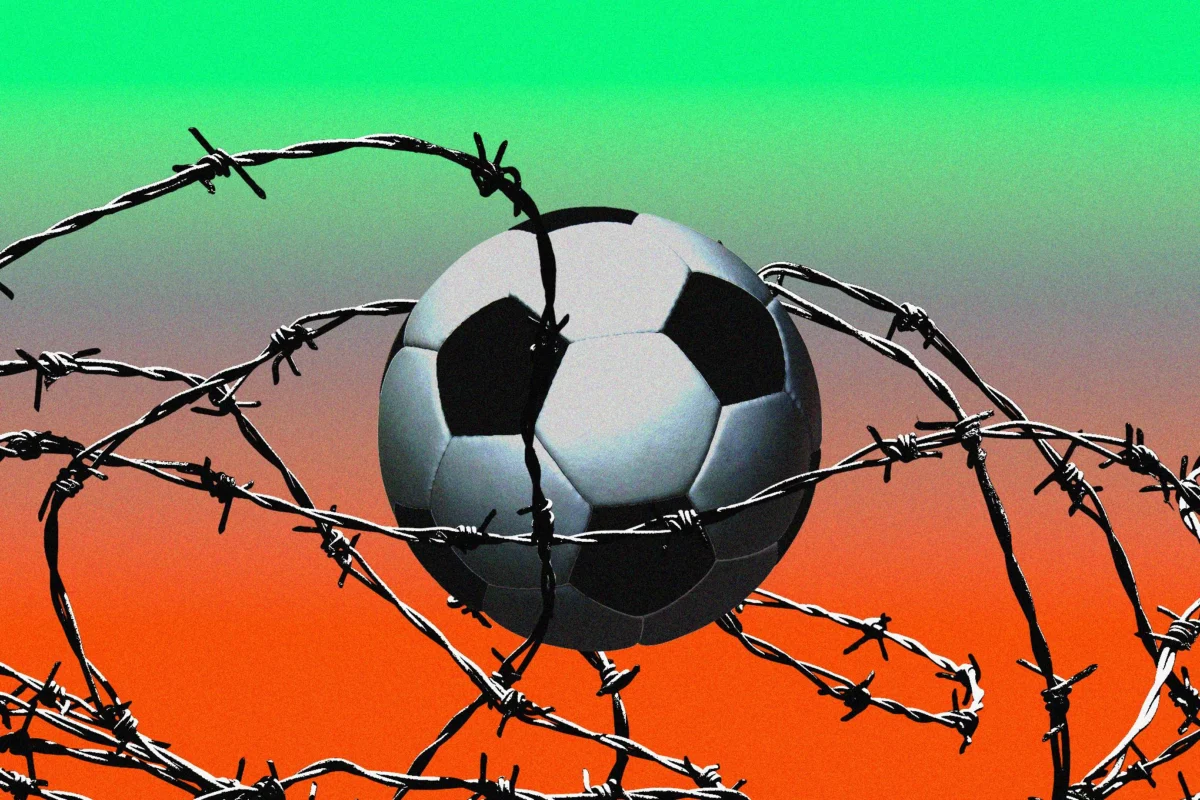
While European tourists navigate the American landscape, marveling at the novelty of ranch dressing and the kitschy sprawl of Buc-ee’s travel centers, a starkly different reality is unfolding for thousands of would-be attendees from Africa, Asia, and the Middle East. For these travelers, the 2026 FIFA World Cup—an event historically billed as a celebration of global unity—has become a masterclass in exclusion. Under the administration of President Donald Trump, stringent immigration policies have transformed the American border into a barrier for the very athletes and fans the tournament was meant to welcome.
The Collision of Sport and Sovereignty: Main Facts
The 2026 World Cup was promised to be a seamless, unified experience across North America. However, the intersection of aggressive nationalist immigration policies and the logistical demands of a global sporting event has created a geopolitical crisis. Players, referees, and spectators have found themselves caught in a bureaucratic dragnet, with visa denials and airport detentions becoming the defining features of their tournament experience.
The incidents are not isolated; they represent a systemic hardening of U.S. borders. From the denial of entry to elite athletes to the revocation of travel authorizations for fans mere minutes before boarding, the message is clear: the privilege of entering the United States for the World Cup is subject to the whims of an administration that views international visitors with profound suspicion.
A Chronology of Exclusion
The disruption began well before the opening whistle, manifesting in a series of high-profile confrontations at the border.
- Early June 2026: Iraqi striker Aymen Hussein was detained at Chicago’s O’Hare Airport for seven hours, subjected to intense questioning, and forced to undergo a search of his personal electronic devices. His photographer was summarily denied entry.
- Mid-June 2026: Somali referee Omar Abdulkadir Artan, the first of his nationality to reach such a level in FIFA history, was blocked from entering the U.S. despite already holding a valid visa. Authorities cited "vetting concerns," alleging vague associations with "suspected members of terrorist organizations."
- The Iranian Team Shuffle: Following the U.S. military’s attack on Iran, the Iranian national team was forced to relocate its training base from Tucson, Arizona, to Tijuana, Mexico, after multiple players were denied entry visas. While restrictions were partially eased just days before their match in Seattle, the disruption significantly hampered their preparations.
- The Swiss Precedent: Swiss forward Breel Embolo was famously blocked from boarding a team flight due to a 2018 criminal conviction, necessitating a frantic and uncertain scramble for an emergency visa.
- The "Last-Minute" Revocation: In perhaps the most jarring display of volatility, a Scottish visitor had his travel authorization revoked just one hour before his flight to the U.S. departed, illustrating the extreme instability of current entry protocols.
Supporting Data: A Landscape of Denial
The scale of these restrictions is tied to a December 2025 executive order that imposed stringent travel limitations on nationals from 39 countries. Haiti and Iran, both participating nations, faced near-total visa bans. Others, including Senegal and Cote d’Ivoire, were subjected to "partial suspensions."
The American Civil Liberties Union (ACLU) issued a formal travel advisory in April 2026, warning that "deteriorating human rights conditions" and arbitrary enforcement could lead to arrests, detentions, and deportation for international travelers. While a federal judge temporarily blocked the travel ban in early June, the victory was pyrrhic; by the time the legal stay was issued, the logistical damage to fans’ travel plans was already irreversible.
Furthermore, the data regarding individual fan experiences is damning. Abu Kass, head of the Jordanian fan association, reported that despite presenting 42 documents at his visa interview, he was denied. He noted that in the entirety of his network, only one Jordanian fan successfully secured a visa for the tournament.
Official Responses and Justifications
The White House and the Department of Homeland Security (DHS) have remained steadfast in their defense of these policies. DHS Secretary Markwayne Mullin has consistently prioritized national security over the cultural requirements of the tournament, even threatening to pull Customs and Border Protection (CBP) personnel from "sanctuary cities" in protest of local immigration policies.
Andrew Giuliani, executive director of the White House World Cup task force, framed these denials as a necessary security measure. Regarding the denial of referee Omar Artan, Giuliani suggested that officials had uncovered evidence of the referee communicating with "some very bad people." When pressed for details, the administration offered little, leaning on the broad, often unverifiable mandate of national security.
FIFA President Gianni Infantino has adopted a position of forced neutrality, effectively washing his hands of the diplomatic fallout. At a press conference in Mexico City, Infantino acknowledged the "unfortunate" situation with the Somali referee but urged the public to "chill and relax," claiming that FIFA lacks the jurisdictional power to influence the sovereign border policies of its host nations.
Implications: The Death of "Football Unites the World"
Jules Boykoff, author of Red Card: The 2026 World Cup, Sportswashing, and the FIFA Greed Machine, argues that the current U.S. approach represents an unprecedented departure from the norms of international sporting events. "When you bought a ticket to the Russia 2018 or Qatar 2022 World Cups, that ticket was effectively your visa," Boykoff noted. "That is not happening here."
The implications are two-fold: geopolitical and domestic. Internationally, the U.S. has signaled that its "host" status does not supersede its desire to project power through exclusionary borders. FIFA’s mantra, "Football unites the world," rings hollow against the backdrop of a divided globe, where the very act of attending a match becomes a test of citizenship and geopolitical alignment.
Domestically, the presence of Immigration and Customs Enforcement (ICE) in host cities—as hinted at by border czar Tom Homan—has created a climate of fear in immigrant communities. Todd Schulte of FWD.us observes that the administration has moved toward a "pervasive and bureaucratic" enforcement model. Rather than high-profile stadium raids, the government is utilizing racial profiling and the systematic stripping of legal status to render individuals deportable.
In response, local grassroots organizations like Houston’s "Organized Power in Numbers" (OPIN) have taken defensive measures, training community members on their rights and advising business owners on how to prevent unauthorized law enforcement access to their establishments.
The Long-Term Cost of Hostility
The 2026 World Cup was meant to be a showcase for the United States. Instead, it has become a case study in the consequences of combining international mega-events with an isolationist political agenda. By inviting the world to its shores while simultaneously closing its doors, the Trump administration has fundamentally altered the character of the tournament.
As the matches continue, the gap between the celebratory atmosphere inside the stadiums and the anxiety of the communities outside grows ever wider. For many, the "beautiful game" is being played in the shadow of a policy that fundamentally believes some people simply do not belong. As the tournament draws to its conclusion, the lingering question is not who will lift the trophy, but whether the United States can ever again effectively host an event that truly, and unconditionally, welcomes the world.
 Raul Delapena Setiawan
  Siti Muinah
  Asro
Asro 