
 By Pevita Pearce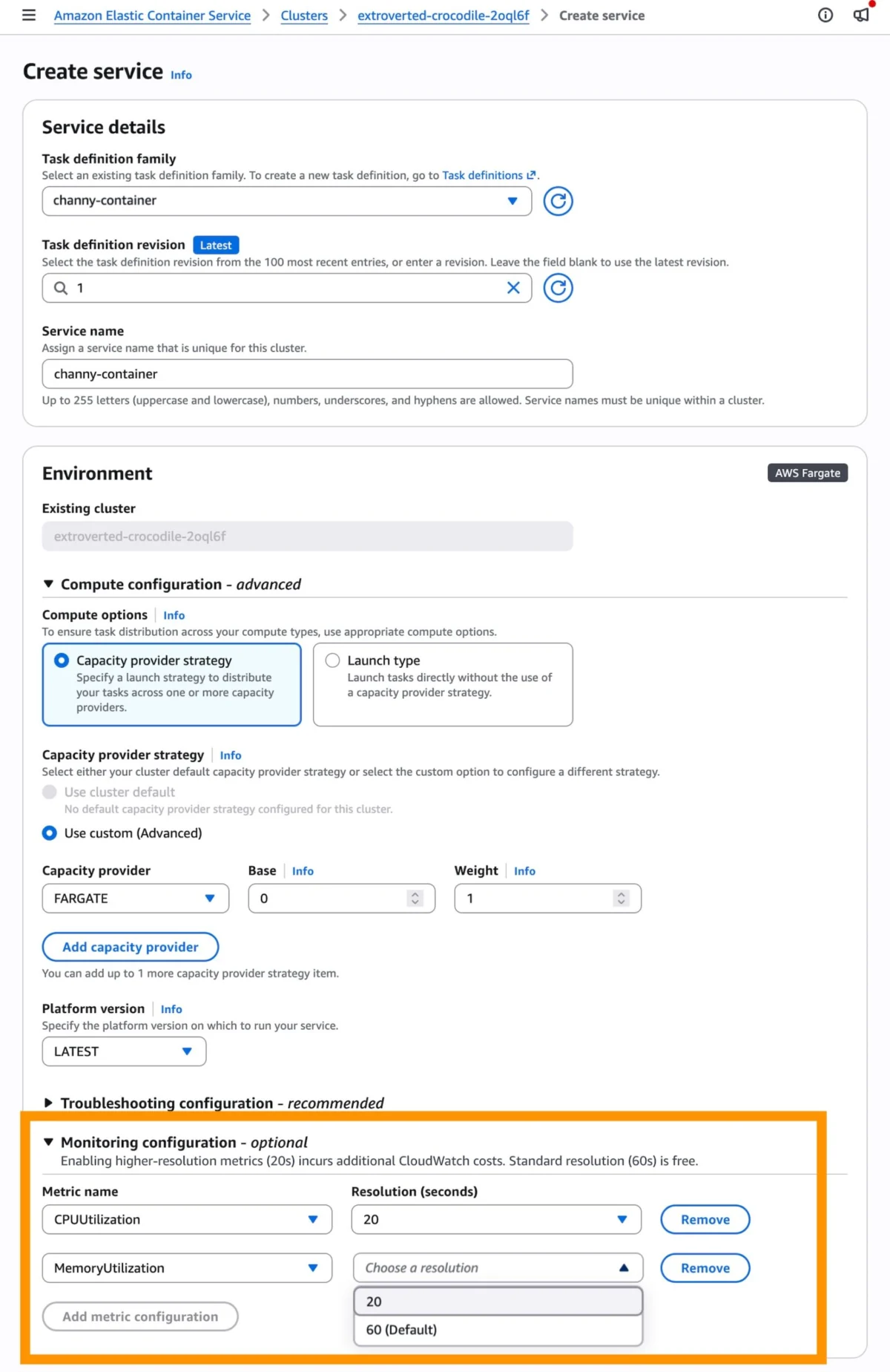
In the rapidly evolving landscape of cloud-native architecture, the ability to react instantaneously to traffic spikes is no longer a luxury—it is a baseline requirement for high-availability systems. Today, Amazon Web Services (AWS) announced a significant leap forward in this domain, introducing high-resolution metrics for Amazon Elastic Container Service (Amazon ECS) service auto scaling. By slashing the latency between a load surge and the provisioning of new compute resources, AWS is fundamentally changing how developers handle unpredictable traffic patterns.
The Core Innovation: Speeding Up the Feedback Loop
For years, Amazon ECS has provided robust auto scaling mechanisms, including predictive, scheduled, and reactive target tracking. While effective, these systems traditionally operated on a 60-second metric resolution—a cycle that, while sufficient for many applications, created a "blind spot" for services experiencing rapid, bursty traffic.
The newly launched capability introduces 20-second high-resolution metrics. By optimizing how metrics are published and consumed by the Application Auto Scaling service, AWS has effectively compressed the time it takes for an ECS service to recognize a shift in demand and initiate a corrective scale-out action.
The Numbers That Matter
The performance gains documented in AWS benchmarking tests are substantial. By shifting from standard 60-second metrics to 20-second high-resolution intervals, the time required to trigger a scale-out event plummeted from 363 seconds to just 86 seconds—a 76% improvement. More importantly, the total time to fully scale and provision new tasks dropped from 386 seconds to 109 seconds. This 3.5x increase in speed ensures that applications can handle sudden spikes in user activity with significantly less risk of performance degradation or downtime.

Chronology of ECS Scaling Evolution
To understand the significance of this release, one must look at the trajectory of Amazon ECS scaling features over the past decade:
- The Foundational Phase: Initially, ECS provided manual scaling, requiring operators to monitor load and adjust task counts via the CLI or console.
- The Era of Reactive Scaling: The introduction of Target Tracking policies allowed users to define a "desired state" (e.g., 50% CPU utilization). The system would automatically adjust the task count to maintain that metric.
- The Predictive Era: With the integration of advanced machine learning algorithms, AWS introduced Predictive Auto Scaling, allowing systems to "pre-warm" infrastructure based on historical traffic patterns, such as morning spikes or seasonal events.
- The Current Breakthrough (2024/2025): The focus has shifted from "smarter" scaling to "faster" scaling. By reducing the resolution of the telemetry data driving the scaling decisions, AWS has effectively closed the gap between observation and action.
Supporting Data: Why 40 Seconds Matters
In the world of microservices and high-frequency trading applications, 40 seconds of latency can be the difference between a seamless user experience and a cascade of 5xx errors.
When a surge occurs—such as a flash sale, a viral marketing campaign, or a sudden DDoS mitigation effort—the existing fleet of containers quickly reaches its saturation point. Under the old 60-second resolution, the system might spend nearly a minute simply confirming that the load is sustained before deciding to act. During that minute, request queuing occurs, latency increases, and user sessions may time out.
By reducing the trigger time by over 270 seconds (when factoring in total provisioning time), AWS has effectively minimized the "window of vulnerability." This allows architects to set more aggressive scaling thresholds without fearing the "oscillation effect," where systems over-react to minor, transient noise.

Official Guidance and Implementation
The implementation process for high-resolution scaling is designed to be seamless for existing users, though it requires an explicit opt-in due to the shift in CloudWatch metric costs.
How to Configure Faster Scaling
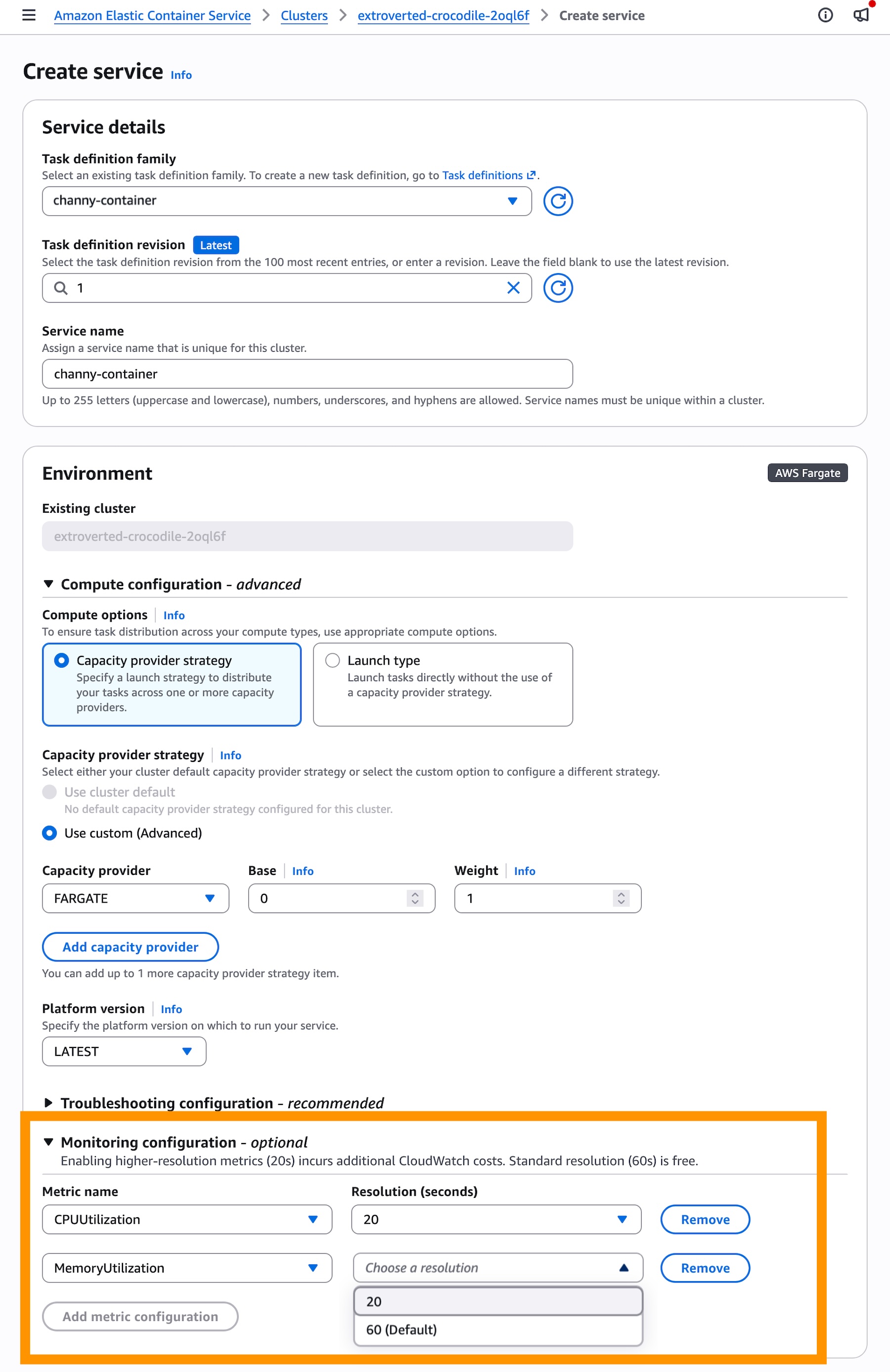
- Metric Enablement: When creating or updating a service via the AWS Management Console, developers must navigate to the Monitoring configuration section and explicitly enable 20-second resolution metrics.
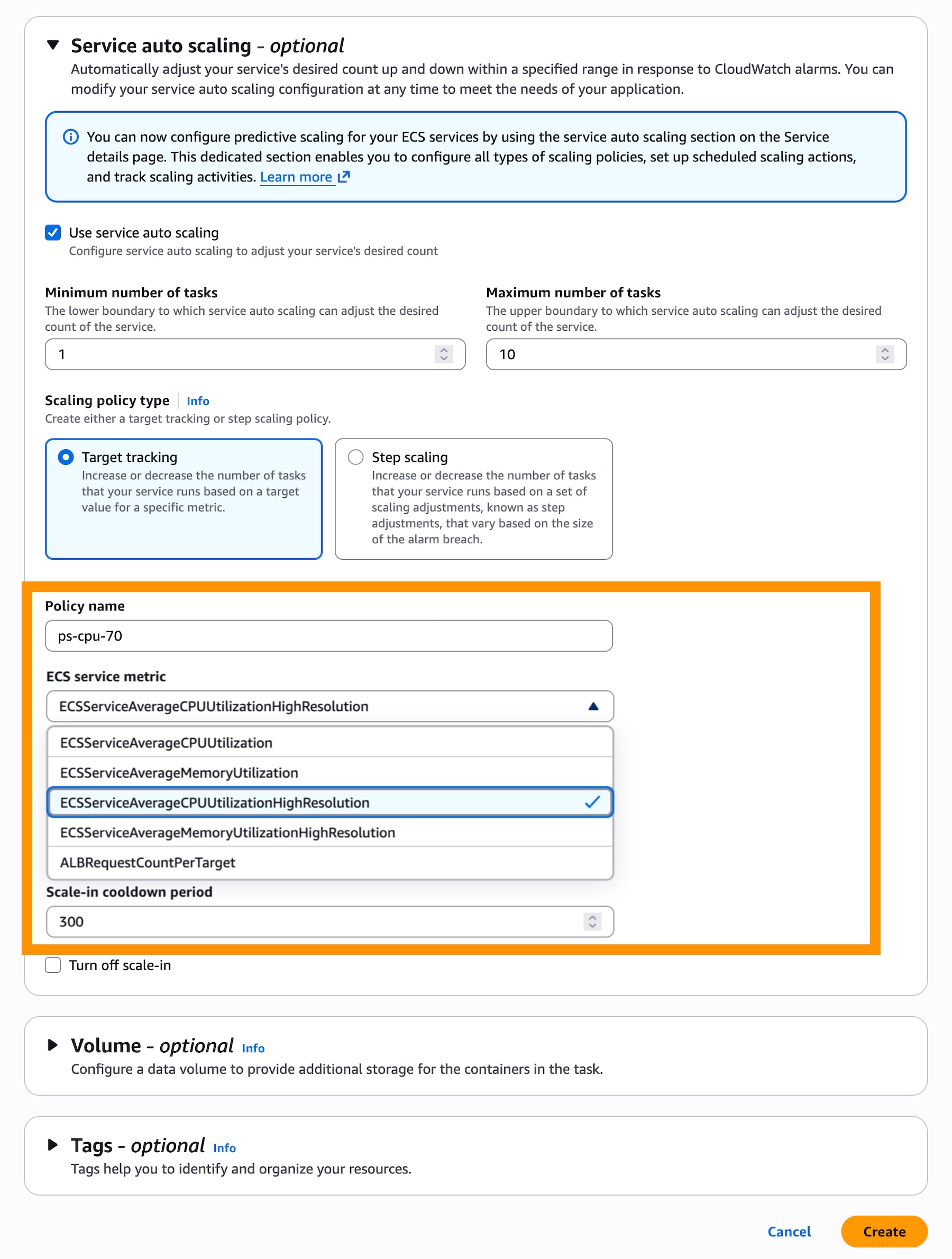
- Policy Selection: In the Service auto scaling tab, users select "Target Tracking." When choosing the metric, developers will now see new options:
ECSServiceAverageCPUUtilizationHighResolutionandECSServiceAverageMemoryUtilizationHighResolution. - Deployment: Once the policy is applied, the Application Auto Scaling engine begins evaluating these metrics at 20-second intervals rather than 60-second intervals.
AWS has ensured that this functionality is universally available across all compute backends, including AWS Fargate, ECS Managed Instances, and self-managed EC2 instances. This creates a unified experience regardless of the underlying infrastructure abstraction level.
Implications for Modern Architecture
The implications of this update extend beyond simple speed; they fundamentally alter the economics and design patterns of cloud-native applications.
1. Enhanced Cost Efficiency
While high-resolution metrics incur additional CloudWatch costs, the trade-off is often a net-positive for the bottom line. By scaling more accurately and faster, organizations can run closer to the edge of their capacity. Previously, engineers often over-provisioned their fleets to "buffer" against the 60-second scaling lag. With faster scaling, that "buffer" can be reduced, leading to lower overall compute costs.
2. Improved Fault Tolerance
In the event of a container failure, the system’s ability to detect the drop in aggregate capacity and restore the desired task count is accelerated. This improves the overall self-healing capabilities of the ECS cluster, reducing the duration of degraded performance during hardware or software-induced failures.
3. Shift in Architecture Patterns
Architects can now build services that are more "elastic" by nature. Because the scaling mechanism is now more responsive, services can be designed to handle smaller, more frequent fluctuations. This encourages a move toward "leaner" microservices that can scale up and down in near-real-time, rather than relying on large, monolithic clusters that are slow to adapt.
The Developer Experience and Feedback Loops
AWS has emphasized that this feature is a direct response to customer feedback via the AWS re:Post community. By prioritizing a feature that directly addresses the "time-to-scale" bottleneck, AWS is reinforcing its commitment to the developer experience.
For teams currently struggling with "scaling lag," the transition path is clear. The documentation provided by AWS for "Faster Auto Scaling" provides a roadmap for migrating existing policies. However, it is important for DevOps teams to perform load testing before implementing these changes in production. Because the system is now more sensitive, poorly tuned scaling thresholds could lead to "flapping"—where the system scales up and down too rapidly, potentially causing resource contention or excessive provisioning/deprovisioning cycles.
Future Outlook: The Road Ahead
This update represents the latest chapter in the ongoing maturation of Amazon ECS. As container orchestration becomes increasingly abstracted, the "secret sauce" of a platform provider lies in its ability to manage the underlying complexity of resource allocation.
Looking forward, one can anticipate that AWS will continue to leverage machine learning to further refine these metrics. While 20-second resolution is a significant milestone, the ultimate goal for cloud-native infrastructure is "predictive-reactive" hybrid models—where the system learns to scale in anticipation of a spike, but retains the high-resolution reactive capability to handle "black swan" events that predictive models might miss.
For now, developers have a powerful new tool in their arsenal. The ability to scale 3.5x faster is not just an incremental improvement; it is a fundamental shift that empowers businesses to build more resilient, efficient, and responsive applications in the cloud. As we move into an era where application performance is synonymous with business success, the high-resolution metrics for ECS will undoubtedly become a standard component of every well-architected cloud environment.
 Neng Nana
  Suro Senen
  Lina Hope