
 By Reynand Wu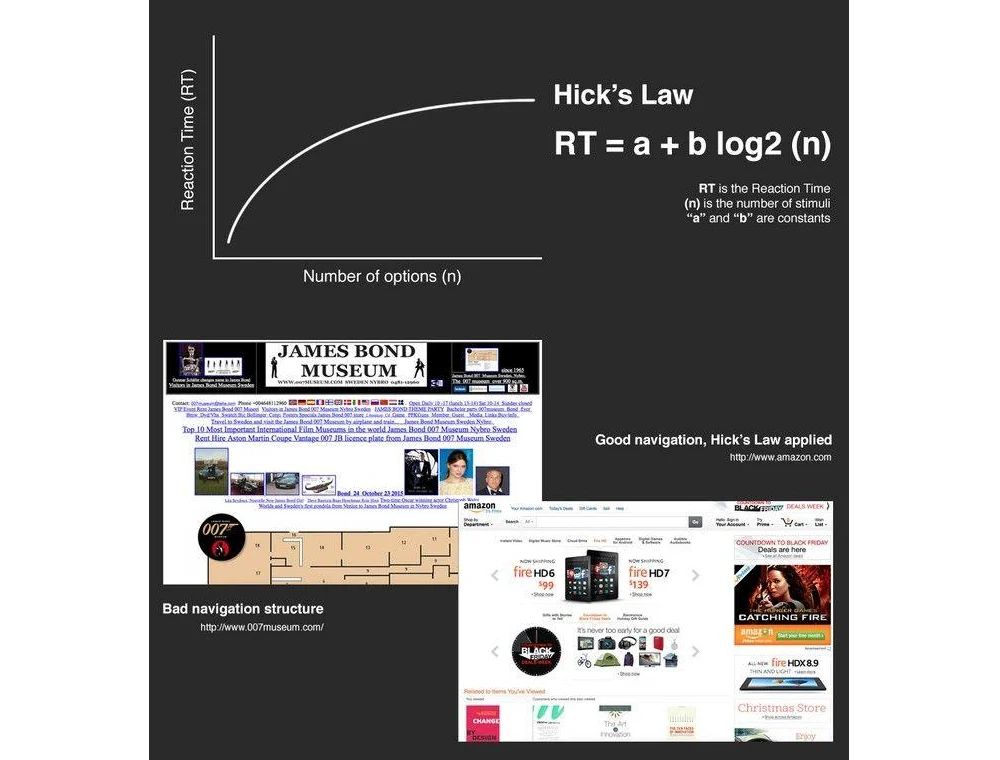
In the high-stakes digital economy of the mid-2020s, the definition of a "bad interface" has evolved. It is no longer merely a matter of "lost clicks" or aesthetic dissatisfaction; it is a systemic drain on corporate capital. As digital products become the primary touchpoint for global commerce, veteran UX designers and business analysts are sounding the alarm: friction-heavy design is costing enterprises millions in wasted engineering spend and lost market share.
Carrie Webster, a seasoned UX designer with a career spanning the mobile-first revolution to the AI era, argues that the industry has reached a tipping point. "Business leaders are shifting from viewing design as a cosmetic preference to recognizing that user experience (UX) is actually the primary engine of business survival," Webster notes. In an era where attention is the scarcest commodity, the difference between a seamless journey and a stuttering interface is often measured in billions of dollars of annual revenue.
The Core Pillars: Ten Data-Backed Truths of UX ROI
To bridge the gap between the design studio and the boardroom, industry experts point to ten clinical, data-backed pillars that prove UX is a non-negotiable financial requirement.

1. The 1:100 Rule of Engineering Insurance
The most compelling financial argument for early-stage UX investment is the "1:100 rule." Research from the IBM Systems Institute and Sugue Technologies confirms that fixing an error after a product has launched can be up to 100 times more expensive than addressing it during the initial design and prototyping phase. By the time a developer touches code, every interaction should have been validated. Correcting a fundamental navigation flaw post-launch involves paying for technical debt, lost developer hours, and the opportunity cost of users struggling with a broken flow.
2. Performance as a Design Element
Performance is the foundation of UX. The data is uncompromising: 47% of users expect a page to load in two seconds or less. A mere one-second delay can reduce conversions by 20% and customer satisfaction by 16%. For retail giants, these delays result in an estimated $2.6 billion in lost sales annually. Conversely, microscopic improvements—such as a 0.1-second reduction in load time—can lift retail conversions by 8.4%.
3. The 50-Millisecond First Impression
Psychological research indicates that users form a "gut-feeling" opinion about a website’s visual appeal in approximately 50 milliseconds (0.05 seconds). In this split second, 94% of a user’s first impression is strictly design-related. If the interface feels dated or "off," users subconsciously project that lack of quality onto the entire service, often bouncing before a single word of copy is read.
4. Hick’s Law and the Cost of Overwhelm
Stakeholders often equate "more options" with "more value," but psychology suggests the opposite. Hick’s Law states that the time required to make a decision increases logarithmically with the number of options. Top-performing sites now achieve conversion rates exceeding 11% by aggressively simplifying the user journey, while average performers struggle below 3% due to "choice paralysis."

5. White Space as a Comprehension Tool
Often viewed by non-designers as "wasted real estate," white space is actually a tool for cognitive focus. Strategic use of white space can increase content comprehension by up to 20%. By lowering the "cognitive load," designers guide the user’s eye toward critical calls to action, such as "Buy" or "Sign Up."
6. The Goal Gradient Effect
Users are more likely to complete a task if they believe they have already made progress. This "Goal Gradient Effect" is a powerful psychological lever. Digital progress bars that start at 15% (e.g., for simply creating an account) can increase onboarding completion rates by over 40%. It is a matter of managing dopamine and momentum.
7. The Legibility Lever
Proper typography—specifically line spacing and paragraph width—can increase reading speed and comprehension by 20%. When line height is set to roughly 1.5x the font size, "visual noise" is reduced. If a product is hard to read, it is perceived as hard to use, leading to immediate abandonment.
8. The Reality of Content Scanning
Modern users do not read; they scan. On a typical web page, users consume only 20% to 28% of the text, usually following an "F-pattern." Designing for scanning—using bullet points, bold headers, and concise fragments—is a tactical necessity for retention.

9. The "Magic Five" in User Testing
Massive, six-figure user studies often yield diminishing returns. The industry standard, popularized by the Nielsen Norman Group, suggests that testing with just five users typically uncovers 85% of usability problems. This allows for rapid, cost-effective iteration rather than slow, expensive post-mortems.
10. The 9,900% ROI
The most staggering statistic in the field remains the average return on investment: for every $1 invested in UX, the return is approximately $100. This is the cumulative result of increased conversion rates (which can jump by 400% with optimized UX) and drastically reduced customer support requirements.
Chronology: The Evolution of UX from "Vibe" to "Value"
The transition of UX from a secondary aesthetic concern to a primary business strategy has occurred in three distinct waves:
- The Desktop Era (Pre-2010): UX was largely synonymous with "User Interface" (UI). Design was often an afterthought, applied as a "skin" over functional engineering.
- The Mobile-First Revolution (2010–2020): As screens shrank, friction became fatal. The constraints of mobile devices forced businesses to prioritize speed and simplicity. During this period, companies like Airbnb and Uber proved that superior UX could disrupt entire legacy industries.
- The Data-Driven/AI Era (2020–Present): UX has become a discipline of analytics. Design decisions are now made using A/B testing, heatmaps, and AI-driven personalization. In 2024 and beyond, UX is no longer a static map but a living guide that adapts to individual user behavior in real-time.
Supporting Data: The Quantitative Case for Design Maturity
The business value of design is not just anecdotal; it is deeply documented in global financial indices. A landmark study by McKinsey & Company tracked the design practices of 300 publicly listed companies over five years. Their findings were definitive: companies with high "Design Index" scores saw 32% higher revenue growth and 56% higher total returns to shareholders than their industry peers.

Furthermore, internal efficiency metrics reveal a hidden ROI. When a UX overhaul shaves 30 seconds off a repetitive workflow for a team of 1,000 employees, the company reclaims hundreds of thousands of dollars in annual productivity. This "Internal ROI" is often the most significant, yet overlooked, benefit of enterprise UX investment.
Official Responses: The Industry Consensus
While some traditionalist executives still view UX as a "soft" skill, the consensus among global consultancy firms and tech giants is unanimous.
The Forrester View: Forrester Research emphasizes that better UX design can yield conversion rates up to 400%. They argue that "the experience is the product," and companies that fail to realize this are essentially leaving money on the table.
The Bain & Company "Experience Gap": A famous study by Bain & Company highlighted a startling disconnect: 80% of companies believe they deliver a "superior experience," but only 8% of their customers agree. This "experience gap" represents a massive market opportunity for firms willing to validate their designs through hard data rather than executive intuition.

The Adobe Perspective on AI: Adobe’s recent "State of Customer Experience" reports suggest that AI is not replacing UX designers but accelerating their ability to solve these ten fundamental truths. AI-driven tools now allow for real-time performance optimization and hyper-personalized interfaces that reduce Hick’s Law overwhelm automatically.
Implications: The Future of the Digital Economy
As we move deeper into the late 2020s, the line between "design" and "business strategy" has effectively vanished. The implications for the future are clear:
- UX as a Revenue Center: Companies will stop categorizing design as an expense (like office rent) and start seeing it as a revenue generator (like sales commissions).
- The Death of Intuition-Based Design: Stakeholders will increasingly demand data-backed justifications for every button placement and color choice. "I like it" is no longer a valid argument in a room governed by conversion metrics.
- The Accessibility Mandate: As global regulations tighten, UX will expand to include universal accessibility as a core financial requirement, avoiding the "legal friction" of non-compliance.
- AI-UX Symbiosis: The next generation of successful products will use AI to handle the "labor" of design—generating layouts and optimizing code—while human UX designers focus on the high-level psychological strategy and empathy required to bridge the "experience gap."
In summary, the data is in, the psychology is proven, and the ROI is undeniable. In the modern marketplace, companies that lead in design outperform their competitors by 1.7x in revenue growth. UX design is no longer a team hired to "make things look nice"; it is the research-driven discipline that ensures a digital product is a revenue-generating machine. The only remaining question for business leaders is whether they will let the facts lead their design, or if they will let their competitors do it first.
 Nana Wu
  Nana
Nana 