
 By Siti Muinah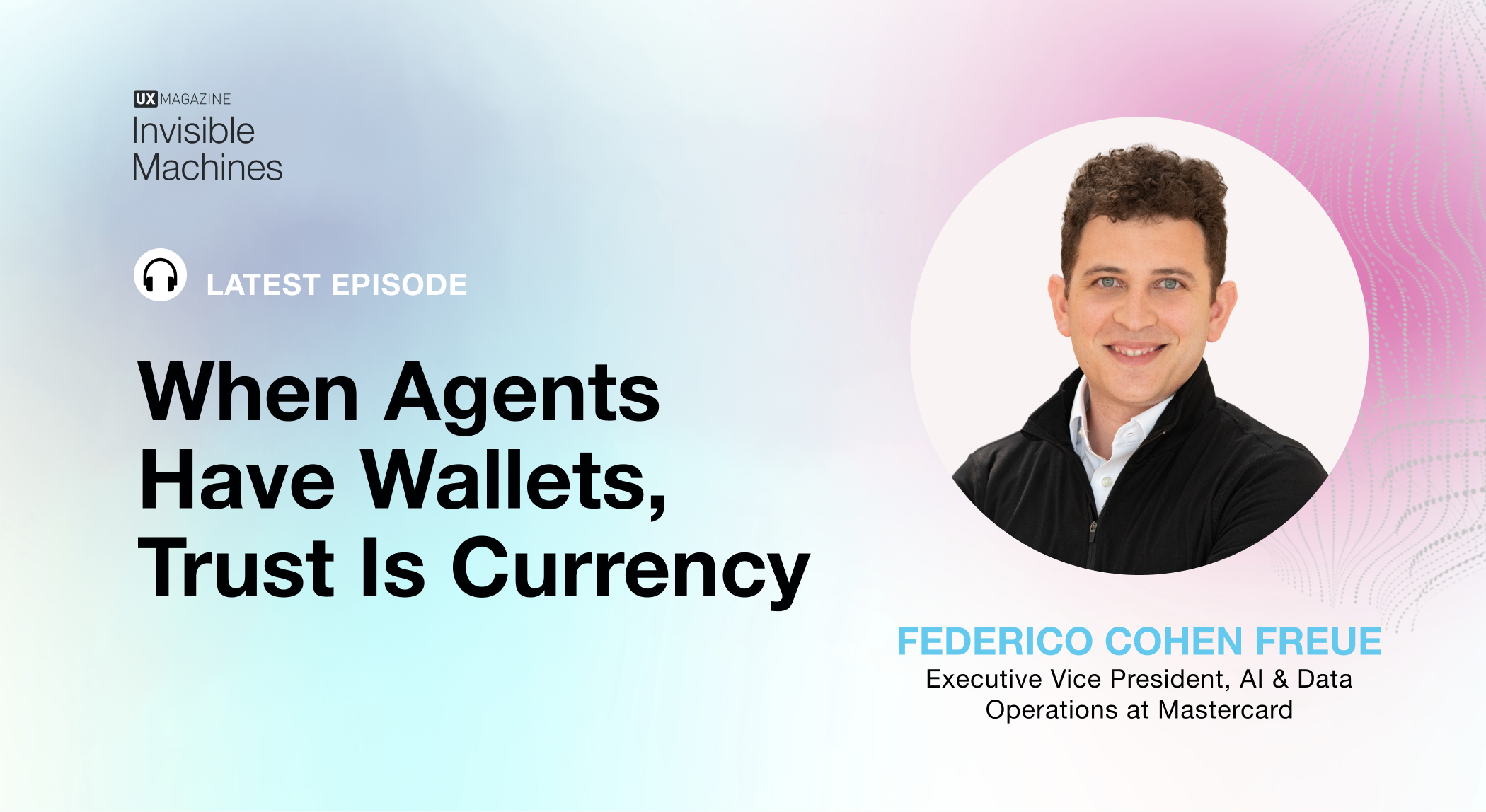
In the modern enterprise, the allure of Artificial Intelligence is often mistaken for its utility. Every day, global organizations are inundated with proposals for AI-driven automation, many of which promise revolutionary efficiency but lack the foundational integrity required for sustained success. Federico Cohen Freue, who leads the central AI and data team at Mastercard, sits at the epicenter of this technological gold rush, receiving roughly a thousand AI-related requests annually from across the global enterprise.
These requests serve as a barometer for the shifting maturity of the corporate mind. A few years ago, the primary obsession was the chatbot—a reactive, Q&A-driven interface. Today, that focus has shifted toward the "agentic" era. Organizations are no longer content with AI that merely talks; they are demanding AI that takes action, executes workflows, and operates on their behalf. However, as Cohen Freue is quick to note, the delta between wanting an agent and being ready for one is the primary source of failure in modern enterprise transformation.
The Ball Bearing Problem: Why Demos Are Not Deployments
To understand why so many AI initiatives falter, one must look past the polished surface of a prototype. Cohen Freue uses a poignant analogy: the ball bearing. If you place two ball bearings side by side, they appear identical. One may be perfectly machined to exacting tolerances, while the other is a rough facsimile. To the naked eye, they are indistinguishable. Yet, if you place the flawed component into an airplane engine, the entire system faces catastrophic failure.
In the world of AI, demos often function as these deceptive ball bearings. A visually impressive agentic demo does not necessarily signify a viable enterprise solution. The "visual experience" of a successful demo is often identical to one that is fundamentally brittle. The difference lies in the underlying engineering, the data governance, and the rigorous testing that occurs behind the curtain.
Mastercard’s strategy hinges on a philosophy of "fluency before deployment." By investing heavily in internal training, Cohen Freue’s team ensures that stakeholders understand the rigorous conditions required for AI to be "machined correctly." When employees understand the technical constraints, they become better architects of their own requests, catching potential failures long before they reach production.
A Strategic North Star: The Framework for Prioritization
With a thousand incoming ideas and a rapidly evolving technological landscape, the challenge of prioritization is immense. Many organizations fall into the trap of pursuing "innovation for innovation’s sake," leading to fragmented efforts and "pilot purgatory."
Mastercard counters this with a framework so simple it almost sounds axiomatic: AI initiatives must make commerce more secure, smarter, and more personal, and they must strengthen the Mastercard brand. This strategic lens serves as a litmus test. It is not a bureaucratic compliance checklist or a rigid guardrail; it is a shared language. When every department—from fraud detection to customer experience—uses the same criteria to evaluate potential projects, prioritization shifts from a grueling, political negotiation into a streamlined, logical conversation. If a project does not map to these core pillars, it does not proceed.
The Emergence of Agentic Payments and the New Role of Trust
Perhaps the most significant frontier for AI is the rise of agentic payments—a scenario where autonomous AI agents execute financial transactions on behalf of users. The shift toward LLM-mediated search and autonomous digital assistants has made this transition inevitable. Consumers are moving toward a future where their personal agents handle everything from travel bookings to complex, multi-vendor supply chain replenishments.
In this environment, the traditional role of the financial network is not diminished; it is elevated. Mastercard’s strategy for this era focuses on the "base case." Before chasing the glitz of algorithmic negotiation between buyer and seller agents, the firm is building the essential infrastructure:
- Agent Identity Verification: Ensuring that an agent is who it claims to be.
- Delegated Authority Frameworks: Establishing clear parameters for what an agent is permitted to do with a user’s funds.
- Acceptance Standards: Creating a rules-based ecosystem where every merchant and participant can verify the legitimacy of a transaction.
As Cohen Freue posits, "Trust is the currency of innovation." In a decentralized, autonomous future, the middleman—often criticized in the early days of fintech—becomes the most critical node in the system. By providing the infrastructure of trust, Mastercard ensures that as transactions become more dynamic and autonomous, they remain secure and reliable.
Knowledge Management: Beyond the Chatbot
A critical failure point in most enterprise AI is the "chatbot model" of knowledge management. Traditionally, organizations build a vast repository of data and wait for a user to query it. This places the cognitive burden on the employee: they must know what to ask to get the answer they need.
Mastercard is exploring an alternative: a proactive, AI-first approach to expertise. Rather than a static document repository—where seventeen versions of the same file might exist across the enterprise—the company is leaning toward the concept of a "knowledge map." This is a canonical source of truth where each concept exists as a unique node, connected to related information, and enriched with a historical timeline of changes.
From this map, the system can derive a "learning twin"—a model that understands a specific employee’s current level of expertise and identifies the most efficient path forward. It is, in essence, a GPS for expertise. It does not wait for a question; it identifies what an individual needs to know to reach their goal and delivers that knowledge in the appropriate context.
However, Cohen Freue acknowledges that this is as much a cultural challenge as a technical one. Organizations are accustomed to treating learning as a one-time onboarding event. To transition to a dynamic, ongoing knowledge process requires a cultural shift in what the organization rewards and how it defines professional readiness.
Implications: The Hierarchy of Action
The overarching lesson from Mastercard’s approach is the importance of sequence. The prevailing trend in the corporate world is to lead with "doing"—deploying agents, replacing human tasks with models, and automating processes before the underlying infrastructure is robust. This leads to the "technology problem" narrative, when, in reality, it is almost always a "knowledge problem."
If an AI agent fails, it is rarely because the model was not smart enough; it is because the system did not possess sufficient, accurate knowledge to execute the task reliably. Treating knowledge as infrastructure is the fundamental reframe required for the next phase of enterprise AI.
Key Takeaways for the Enterprise:
- Sequence Matters: Knowledge must precede action. Do not build an agent until you have mapped the domain of knowledge it needs to operate successfully.
- Define the "North Star": Establish a simple, strategic framework for prioritization that all stakeholders understand. This prevents scope creep and ensures alignment with business goals.
- Trust as Infrastructure: In an autonomous world, the value of a trusted, verified network increases exponentially. Focus on the rules of the road before accelerating the vehicles.
- Cultural Readiness: Technology often matures faster than organizational culture. Prepare the workforce to engage with knowledge and AI as a dynamic, evolving process rather than a static tool.
Ultimately, before an organization asks what its AI can do, it must first audit what its organization knows. Agents are only as effective as the foundations upon which they are built. As we move into an era of autonomous commerce, the entities that thrive will not be those that simply deploy the most agents, but those that have most effectively digitized their knowledge and secured the trust of the ecosystem.
 Ammar Sabilarrohman
  Neng Nana
  Sagoh
Sagoh 