
 By Lina Hope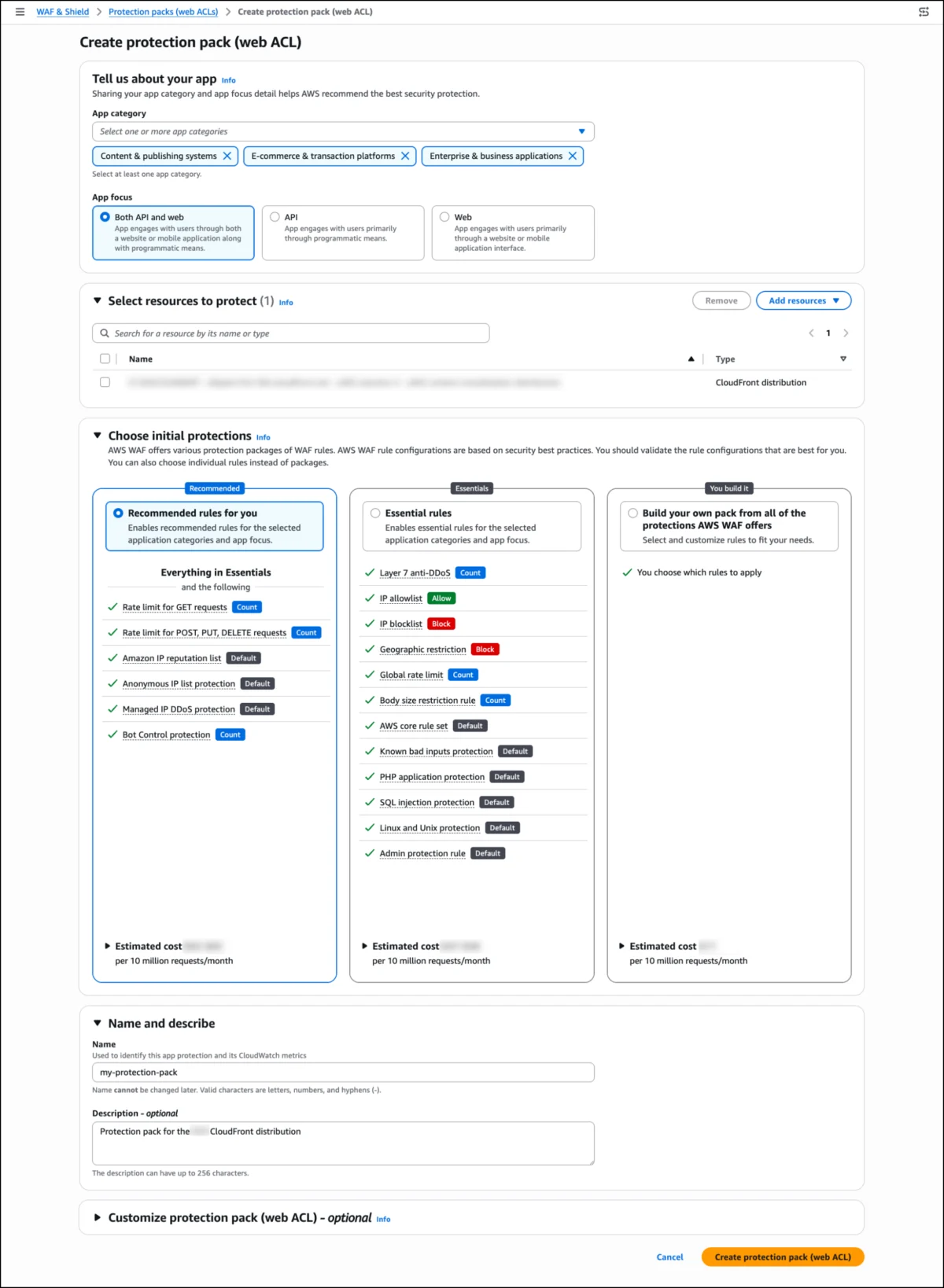
In a landmark shift for the digital economy, Amazon Web Services (AWS) has announced a transformative new capability for AWS WAF (Web Application Firewall): native AI traffic monetization. As AI-driven web crawlers increasingly dominate internet bandwidth, this tool provides publishers, content owners, and enterprises with the technical infrastructure to charge AI agents for access to their data directly at the network edge.
This development marks the end of a long-standing "free-for-all" era in AI data scraping. By leveraging blockchain-based settlement and the x402 protocol, AWS is effectively enabling a new class of micro-transactions, turning the cost burden of AI scrapers into a potential revenue stream for content creators.
The Core Problem: The Invisible Tax on Publishers
For years, the rise of Large Language Models (LLMs) has created a significant economic imbalance. While traditional search engine crawlers (such as Googlebot) provided value by indexing content and driving measurable referral traffic back to websites, the new generation of AI-specific crawlers behaves differently. These agents consume high-value content to train models or generate real-time summaries within AI interfaces, often providing no "click-back" traffic, ad impressions, or subscription conversions to the original publisher.
Recent industry data indicates that AI bot traffic now accounts for more than 50% of web traffic for many providers. Furthermore, AI-specific crawlers have surged by over 300% year-over-year. Publishers find themselves bearing the massive infrastructure costs of serving this traffic—bandwidth, compute, and latency—without receiving any compensatory value.
Until now, publishers had two limited choices: block the traffic entirely via robots.txt or WAF rules, or accept the "cost of doing business" in an AI-first world. AWS WAF’s new monetization feature closes this gap, allowing organizations to treat AI agents as commercial entities rather than passive parasites.
Chronology: From Visibility to Transactional Control
The evolution of AWS WAF from a security-only tool to a commercial gateway follows a clear trajectory:

- Phase 1: Awareness (WAF Bot Control): AWS introduced advanced Bot Control, allowing customers to see which bots were hitting their sites and providing the ability to block or rate-limit them. This gave publishers the "who" and "what," but lacked a "how" for monetization.
- Phase 2: Protocol Integration: Recognizing the limitations of legacy banking systems for micro-payments, AWS partnered with infrastructure providers to utilize the x402 protocol—a machine-readable standard for 402 "Payment Required" responses.
- Phase 3: Edge Implementation (Present Day): By integrating these payment flows directly into the AWS CloudFront edge, AWS has bypassed the need for publishers to modify their origin servers or write custom application code to handle billing.
Supporting Data and Technical Architecture
The architecture relies on the synergy between AWS WAF Bot Control and the x402 Facilitator.
How it Works:
- Classification: AWS WAF identifies the incoming agent using its database of over 650 distinct AI types (e.g., GPTBot, Claude-Web, Perplexity-Bot).
- Policy Enforcement: Using a "Protection Pack," the publisher sets a rule for specific agent tiers. If the action is set to
Monetize, the WAF intercepts the request. - The 402 Handshake: The WAF returns an HTTP 402 Payment Required response. This response is not a dead end; it contains a JSON-formatted manifest.
- Autonomous Settlement: This manifest tells the AI agent the price in USDC, the accepted blockchain networks (such as Base or Solana), and the destination wallet address. The AI agent, if configured for autonomous operation, submits a signed payment authorization.
- Verification: Once the payment is verified on-chain, the WAF allows the request to pass through to the origin, ensuring the publisher is paid before the content is delivered.
Dashboard Insights
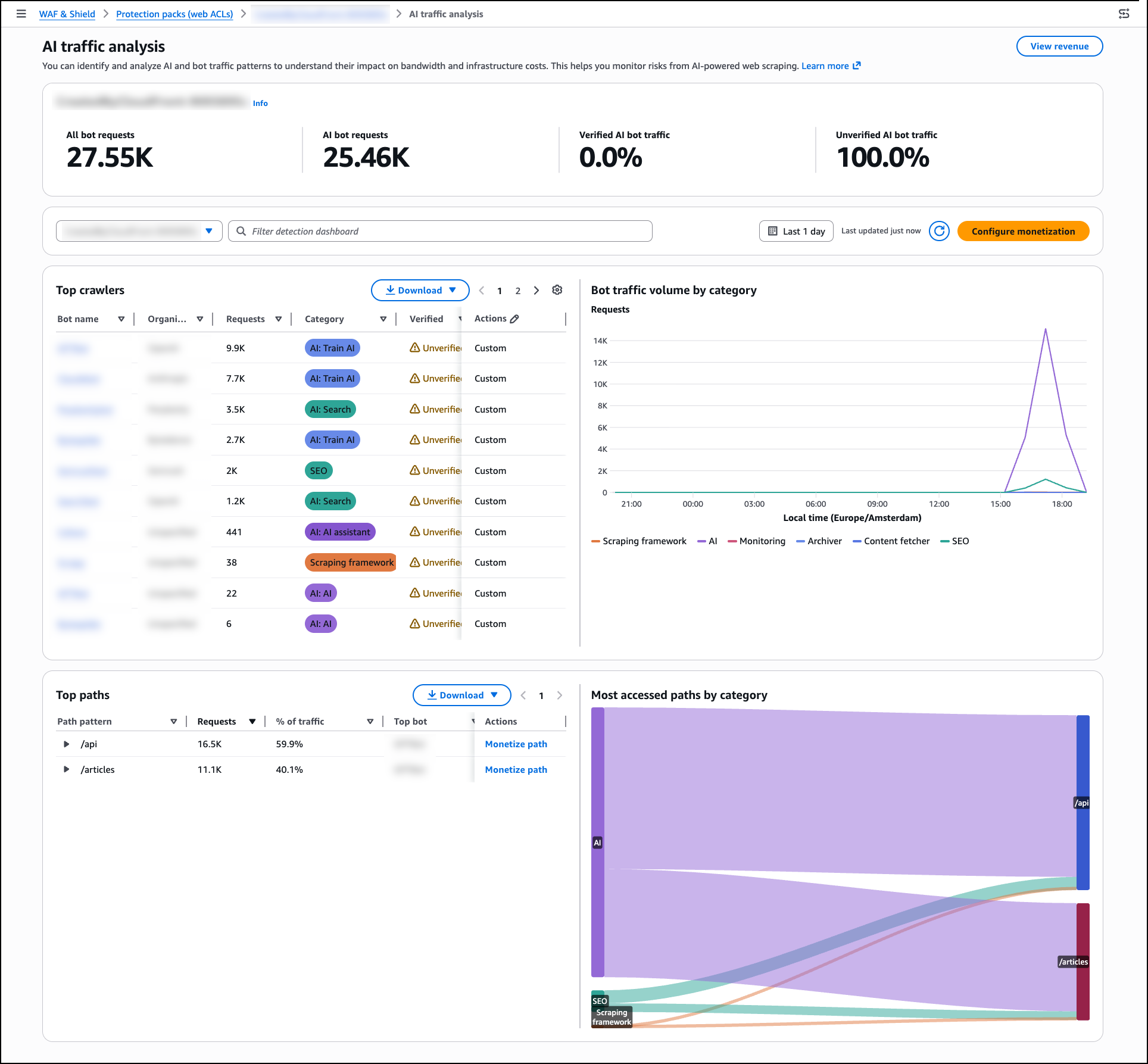
Publishers are provided with an "AI Traffic Analysis" dashboard, which offers granular visibility into:
- Total Revenue: Tracked in real-time.
- Infrastructure Impact: Metrics on bandwidth consumed and estimated monthly costs.
- Per-Path Heatmaps: Data visualization showing which specific content paths are attracting the most AI attention, allowing for dynamic, data-driven pricing strategies.
Official Perspective: The "Protection Pack" Philosophy
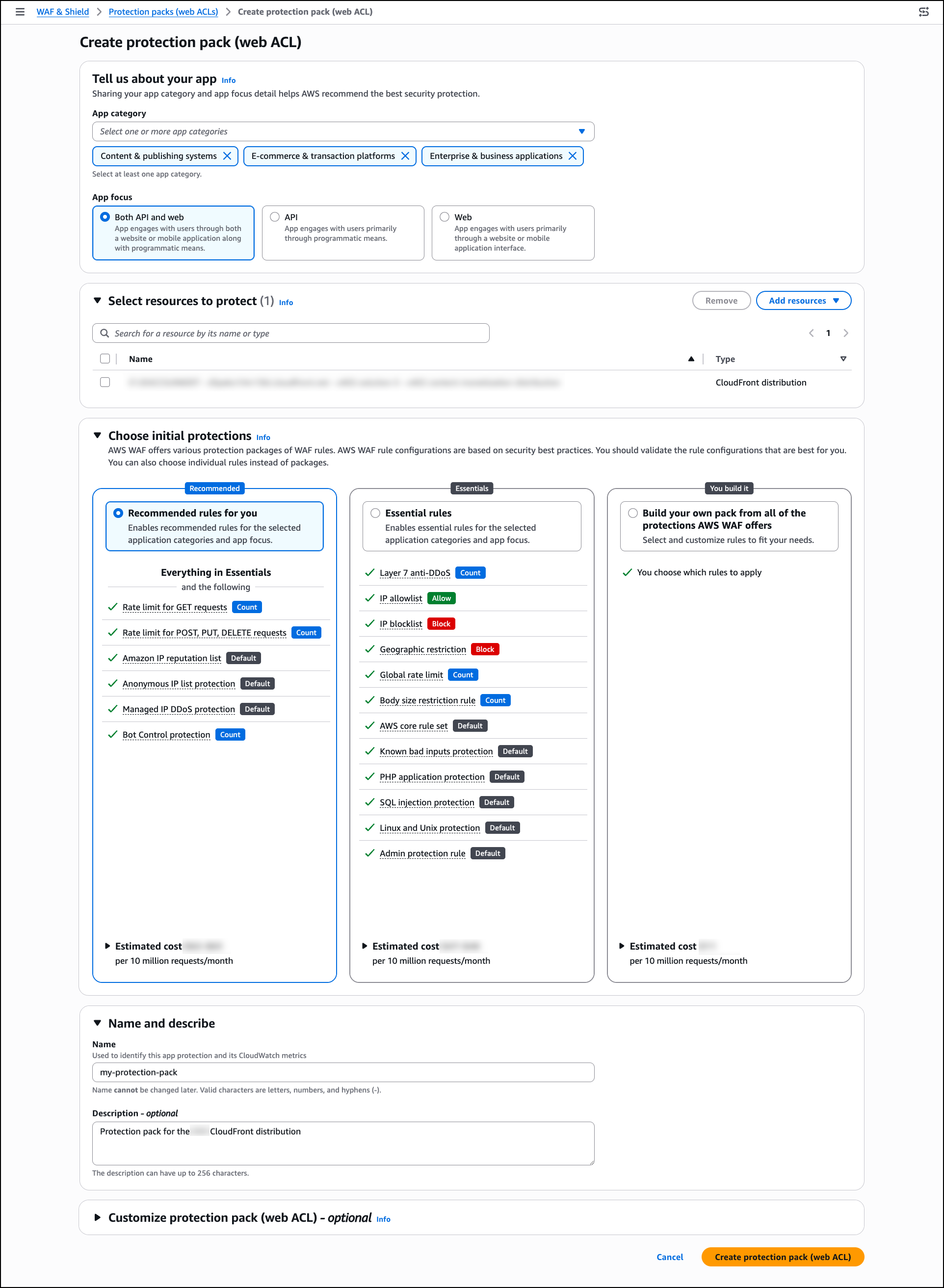
AWS has designed this feature to be low-friction. By utilizing "Protection Packs," administrators can configure complex monetization rules without needing to negotiate individual licensing agreements with every AI developer.
"The goal is to provide a standardized, scalable way for the internet to balance the scales," notes the development team. By abstracting the payment layer, AWS allows a small publisher to implement the same sophisticated charging infrastructure as a major media conglomerate.
Crucially, AWS does not act as a payment processor and does not charge a transaction fee on the revenue generated. The settlement is entirely peer-to-peer, mediated by the publisher’s chosen wallet infrastructure (such as Coinbase or self-managed nodes).
Implications for the Digital Landscape
The introduction of this tool has profound implications for the future of the internet:
1. The Death of "Free" Scraping
The era of scraping data for free is reaching a crossroads. With a standardized "402 Payment Required" response, AI companies will soon face a binary choice: either pay for the high-quality, verified data they need to train their models, or face widespread blocking. This will likely force a consolidation in the AI space, where only well-funded models can afford the cost of premium data ingestion.
2. A New Revenue Stream for Media
Publishers, who have struggled to monetize their content in the age of generative AI, now have a programmatic way to recapture value. By setting pricing per page or per request, media outlets can create a "data toll" that offsets their hosting costs and creates a sustainable business model for professional journalism and creative content.
3. Shift Toward Machine-to-Machine Payments
This is one of the first mass-market adoptions of the machine-to-machine payment protocol at scale. By using stablecoins and decentralized networks, AWS is proving that the future of web commerce isn’t just human-to-human; it’s an automated, cryptographic exchange between servers and agents.
4. Regulatory and Ethical Considerations
While this provides publishers with control, it also raises questions about the "openness" of the web. If every high-quality data source requires a payment, does this create a "walled garden" for AI that favors the largest corporations? Conversely, this tool empowers creators to regain agency over their intellectual property, a central tenet of the ongoing debate regarding AI copyright.
Getting Started: A Step-by-Step Guide
For organizations looking to implement these protections, the process is streamlined:
- Enable WAF Bot Control: Ensure the web ACL associated with your Amazon CloudFront distribution is configured with the "Common" or "Targeted" bot rule group.
- Define the Protection Pack: In the AWS WAF console, create a new Protection Pack. Define your app category and select the resources to be protected.
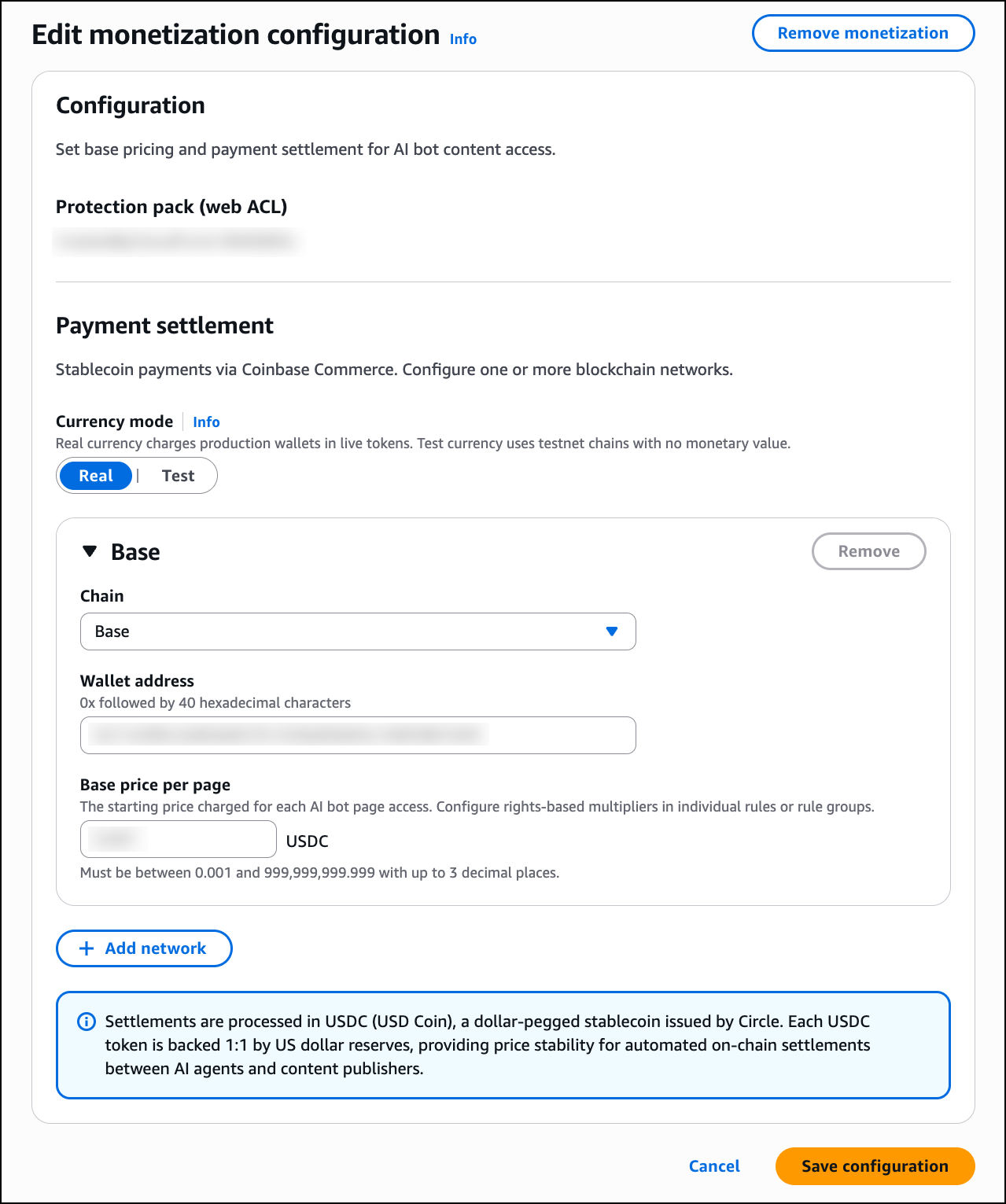
- Configure Monetization: Within the pack, define the price per page in USDC. Select the blockchain networks you wish to support.
- Test Before You Launch: Use the "Test" currency mode to simulate payments on testnets (like Base Sepolia). This allows you to verify that your wallet connections and pricing manifests are functioning without risking real capital.
- Go Live: Once validated, switch to "Real" mode. Monitor the AI Access Monetization dashboard to reconcile payments and adjust your pricing strategy based on demand.
Conclusion
The ability to charge AI agents for content access is more than a technical update; it is a fundamental reconfiguration of the internet’s value chain. As AI continues to scale, the distinction between "human-readable" and "machine-consumable" content will blur, and the infrastructure to monetize that consumption will become a standard requirement for any serious digital publisher. AWS has provided the tools; now, the market must decide the price of the information that powers the future of intelligence.
 Neng Nana
  Suro Senen