
 By Iffa Jayyana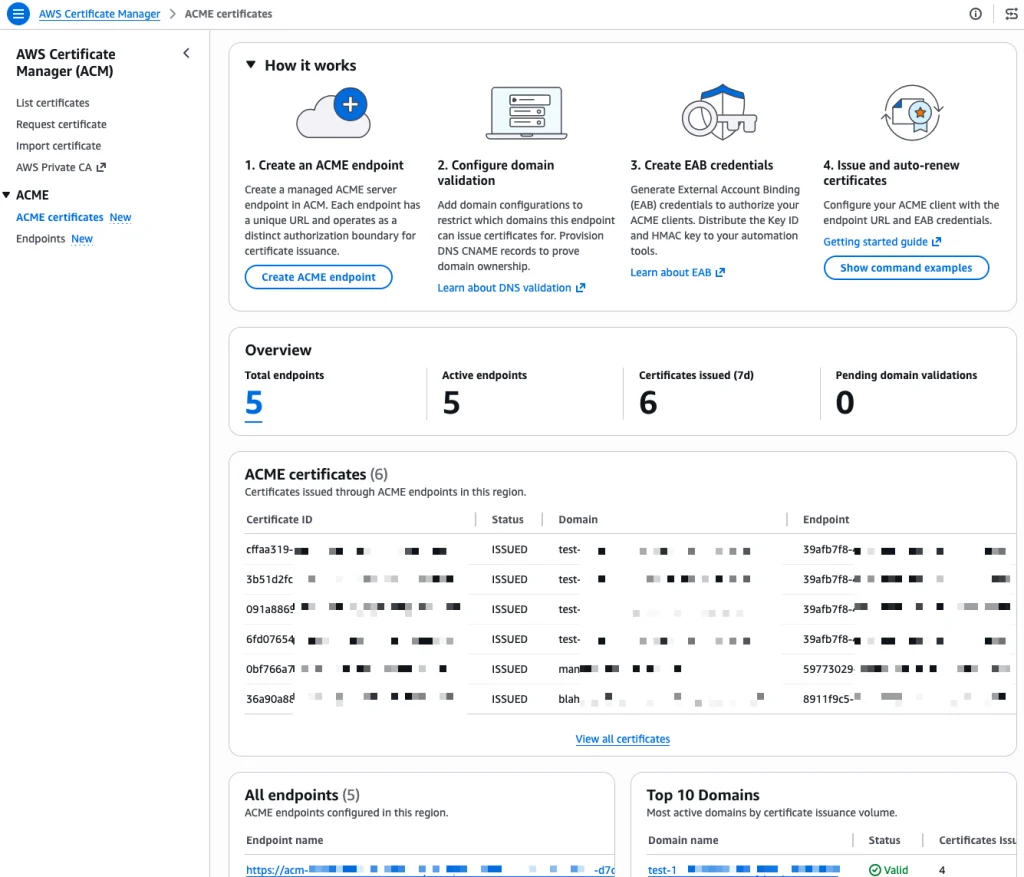
In a significant move to simplify enterprise security and address the accelerating shift toward shorter TLS certificate lifespans, Amazon Web Services (AWS) has announced the integration of the Automatic Certificate Management Environment (ACME) protocol directly into AWS Certificate Manager (ACM). This development marks a pivotal transition for PKI (Public Key Infrastructure) administrators, offering a standardized, automated, and centralized solution for managing public TLS certificates across diverse cloud environments.
The Looming Crisis of Certificate Expiry
For years, the manual management of TLS certificates has been a source of operational fragility. As organizations scale, the administrative burden of tracking expiration dates, performing manual renewals, and updating web servers becomes exponentially more complex. When a certificate expires, the consequences are immediate: services go offline, customer trust is eroded, and revenue is lost.

The industry is currently facing a "perfect storm" of regulatory pressure. The Certification Authority (CA)/Browser Forum has mandated a steady reduction in maximum certificate validity periods. Starting in March 2027, the maximum validity will drop to 100 days, with a further reduction to 47 days slated for 2029. Under these constraints, manual renewal processes are effectively dead. Organizations that do not pivot to robust, automated certificate lifecycle management are placing their operational continuity at significant risk.
Bridging the Gap: The Role of ACME
The Automatic Certificate Management Environment (ACME) protocol has long been the industry standard for automated certificate issuance. Originally popularized by the non-profit certificate authority Let’s Encrypt, ACME allows for the automated validation of domain ownership and the subsequent issuance, renewal, and revocation of certificates without human intervention.

Prior to today’s announcement, AWS users often operated in a fragmented state. While they could use ACM for certificates directly integrated with AWS services like Elastic Load Balancing or Amazon CloudFront, many had to look to external CAs to support specialized ACME-based automation workflows. This created "visibility silos," where security teams struggled to maintain a comprehensive inventory of certificates, leaving them blind to potential vulnerabilities or impending expiries across disparate systems.
A Centralized Governance Framework
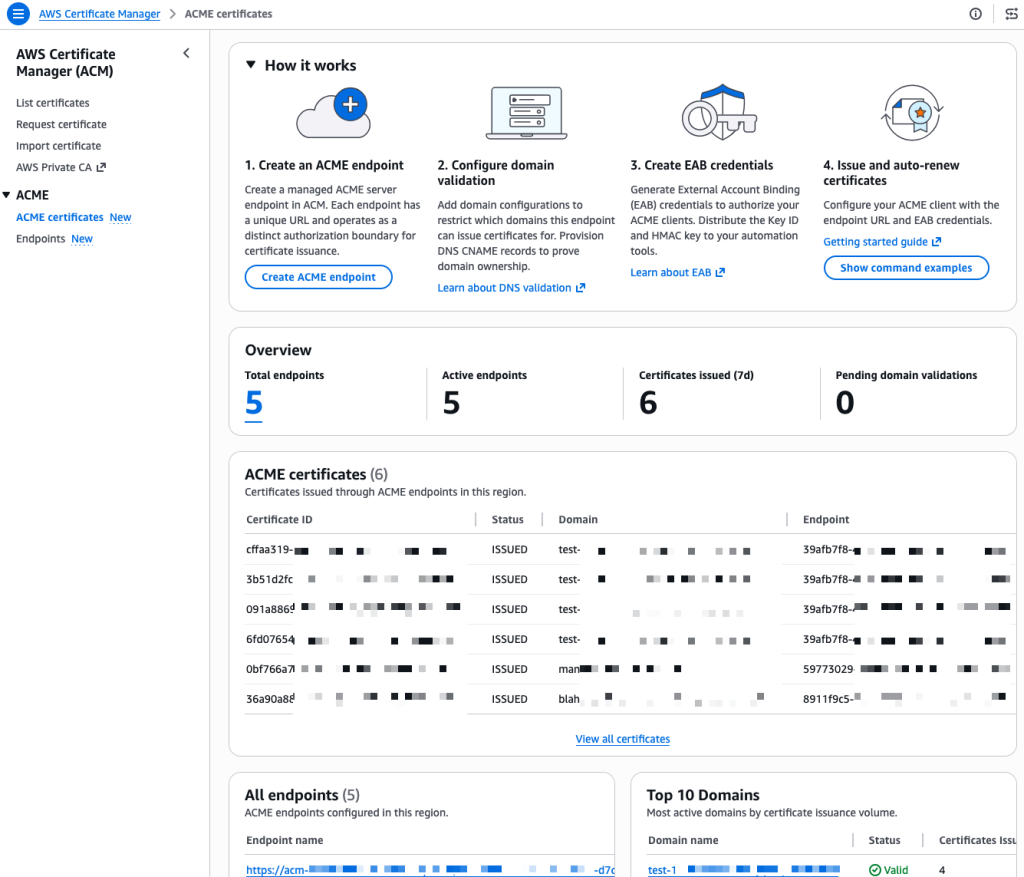
With the introduction of native ACME support in ACM, AWS has bridged this gap. The new service provides a managed ACME server endpoint that is fully compatible with existing, widely used ACMEv2 clients, including Certbot, cert-manager for Kubernetes, and acme.sh.
Key Technical Innovations
The implementation offers several features designed to satisfy the rigorous security requirements of large-scale enterprises:
- External Account Binding (EAB): By utilizing EAB credentials, administrators can securely delegate certificate requests to specific applications or teams. This creates a clear separation between those who define security policy and those who consume certificate resources.
- Granular Domain Scoping: Administrators can now define "scopes" at the endpoint level. This allows for fine-grained control over which domains and subdomains a client is permitted to request. For example, an organization can restrict a development team’s ACME client to requesting certificates only for
dev.example.com, preventing the unauthorized issuance of wildcards or core production certificates. - Unified Auditing and Compliance: Because these certificates are issued through the ACM framework, they are fully integrated with AWS CloudTrail and Amazon CloudWatch. Every issuance request is logged for auditability, and operational metrics are tracked alongside existing AWS infrastructure, providing a single pane of glass for PKI governance.
Chronology of the Development
The path to this integration reflects the broader evolution of the web’s trust model.
- Early Stages: The initial reliance on manual CSR (Certificate Signing Request) uploads to legacy CA portals.
- The ACME Era: The rise of Let’s Encrypt popularized automated issuance, but created a divide between internal AWS resources and external automated infrastructure.
- Integration Phase: AWS began enhancing ACM to better handle API-driven issuance, but the lack of a standard ACME endpoint remained a hurdle for developers using platform-agnostic tools.
- The Current Milestone: With the launch of native ACME support, AWS completes the loop, allowing the native Amazon Trust Services CAs to communicate directly with standard industry tools, removing the need for third-party middleware or fragmented management consoles.
Implications for PKI Administrators and DevOps
The move is expected to have a profound impact on how organizations approach DevOps and DevSecOps.
Reducing Operational Overhead
The most immediate benefit is the elimination of "certificate toil." By enabling automation, the risk of human error—such as misconfigured SANs (Subject Alternative Names) or forgotten expiration dates—is virtually eradicated. The ability to use standard tools like cert-manager means that Kubernetes clusters running on Amazon EKS can now natively and automatically request and rotate public certificates issued by Amazon Trust Services, ensuring that containerized workloads remain secure by default.
Enhancing Security Posture
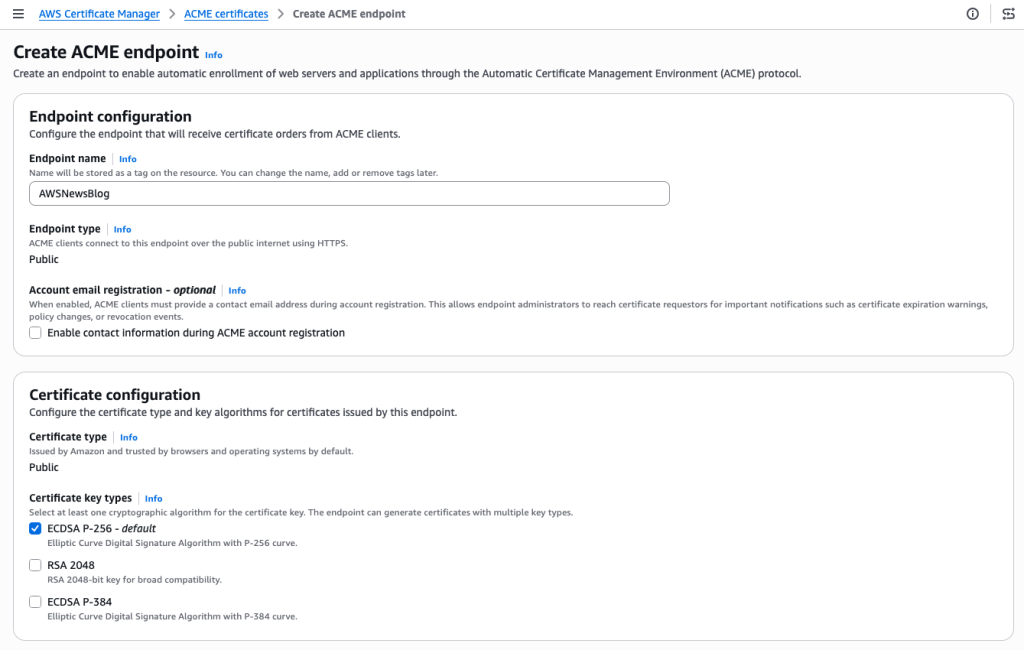
Centralized management allows for a superior security posture. PKI administrators can now enforce strict policies on key types (e.g., mandating ECDSA P-256 for performance or P-384 for higher security) across the entire organization from a central dashboard. Furthermore, the ability to automate the renewal process enables organizations to adopt shorter certificate lifespans proactively, well ahead of the 2027/2029 regulatory deadlines.
Cost-Effectiveness
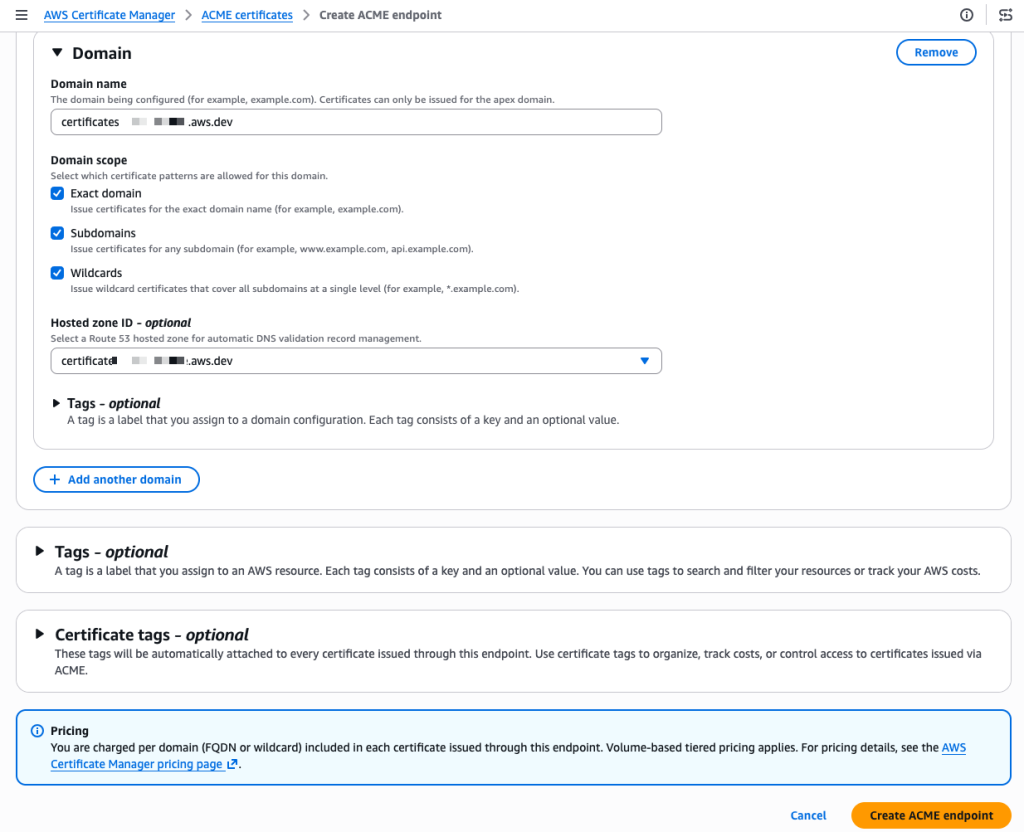
By integrating ACME directly into the existing AWS ecosystem, organizations can reduce or eliminate the need for expensive third-party certificate management platforms. The cost structure, which is tied to the number of domain occurrences at the time of issuance, allows for predictable budgeting and scaling.
Official Guidance and Implementation
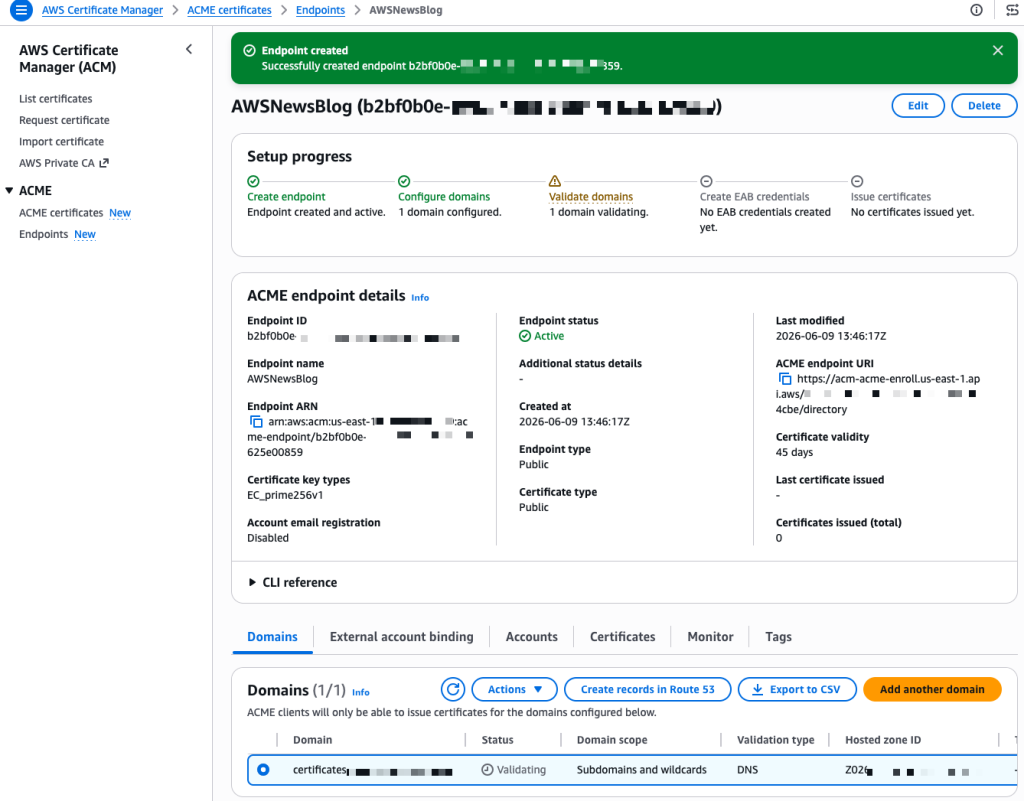
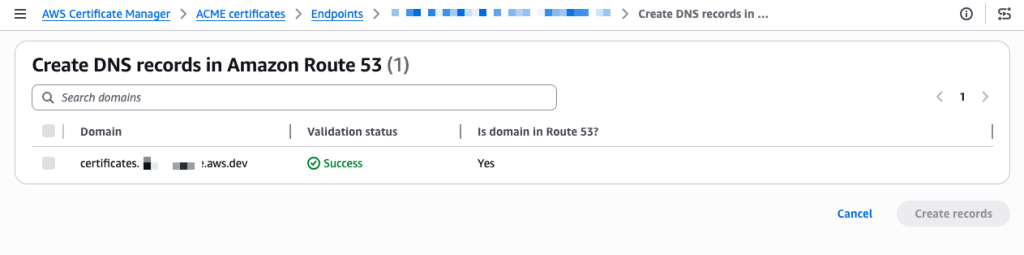
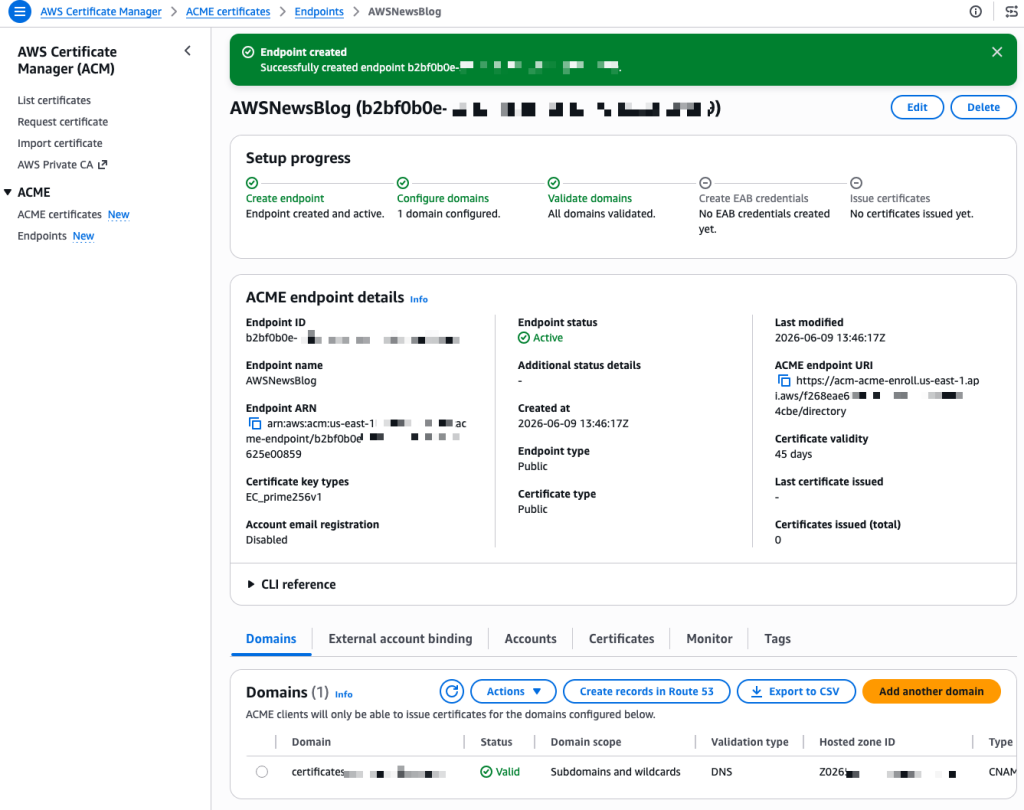
To initiate the process, administrators must create a dedicated ACME endpoint within the ACM console. This process involves selecting an endpoint type, configuring domain validation (leveraging Amazon Route 53 for seamless automation), and generating EAB credentials.
Once the endpoint is live, the setup is remarkably straightforward. By pointing a standard ACME client to the provided URL and passing the EAB credentials, developers can begin requesting certificates in minutes. The AWS documentation emphasizes that domain validation is performed only once at the endpoint level. This architectural choice is critical: it prevents application owners from needing access to sensitive DNS records, thereby adhering to the principle of least privilege.
Looking Toward the Future
As the web continues to demand faster rotation of cryptographic assets, the integration of ACME into cloud-native platforms is not just a convenience; it is a necessity. AWS’s decision to embrace this open standard underscores a shift in how the industry views infrastructure security—moving away from proprietary, walled-garden approaches toward interoperable, automated, and policy-driven systems.
For the security professional, the message is clear: the future of PKI is automated. By moving to this centralized ACME-based model, organizations can move faster, reduce their exposure to outages, and remain compliant with the increasingly stringent requirements of the global web community.
Technical Summary
- Supported Clients: Certbot, cert-manager (Kubernetes), acme.sh, and any ACMEv2-compliant client.
- Issuance Source: Amazon Trust Services.
- Supported Key Types: ECDSA P-256, ECDSA P-384, and RSA 2048.
- Automation Capability: Automatic DNS validation via Amazon Route 53 or manual CNAME verification for external DNS providers.
- Availability: Currently deployed in all commercial AWS Regions, with expansions planned for GovCloud and sovereign cloud partitions.
By providing the infrastructure to support these transitions, AWS is positioning itself to be the bedrock of secure, automated identity for the modern, multi-cloud enterprise. As organizations prepare for the 2027 mandates, this toolset provides the essential foundation to ensure that when the time comes to rotate certificates every 100 days, the process will be as silent and reliable as the infrastructure it protects.
 Neng Nana
  Suro Senen
  Lina Hope