
 By Raul Delapena Setiawan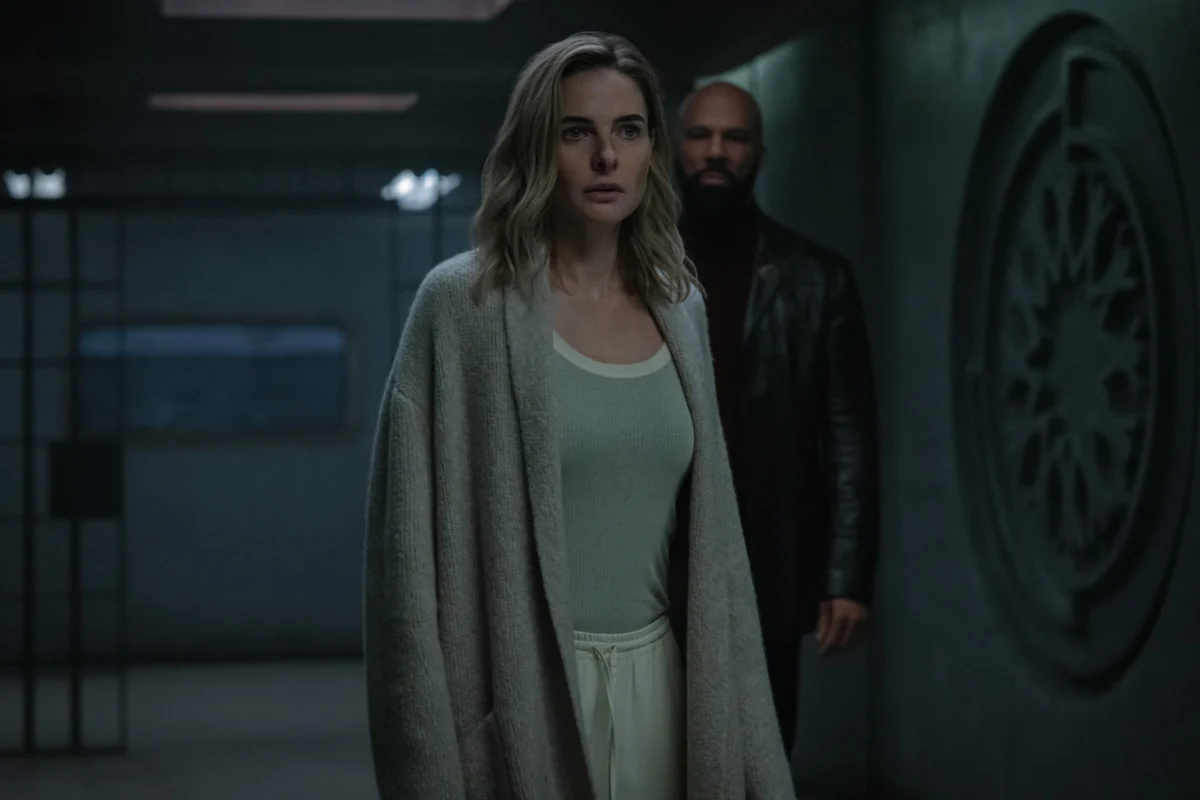
As Apple TV+’s high-concept sci-fi thriller Silo barrels toward its conclusion, the show’s production has become as labyrinthine as the subterranean world it depicts. With the series set to enter its final two seasons, showrunner Graham Yost admits that maintaining the narrative integrity of the sprawling, multi-layered epic is a Herculean task—one that occasionally leaves even the man at the helm second-guessing the timeline.
The Architect’s Dilemma: Managing a Multiverse of Narrative Threads
Silo has always been a show defined by its density. Set in a dystopian future where the last 10,000 humans reside in a gargantuan underground bunker—a vertical city where social hierarchy is physically manifested by one’s proximity to the "mines" at the bottom or the government at the top—the series has spent two seasons building a claustrophobic, intricate mystery.
However, as the show enters its third season, premiering July 3rd, the complexity has scaled exponentially. Yost recalls two specific moments during the filming of the final chapters where the "bunker’s" internal logic nearly buckled. In one instance, an actor flagged that a dialogue exchange they were about to film should have technically occurred episodes prior. In another, the Japanese localization team—meticulous in their review of subtitles—pointed out a continuity error regarding on-screen events that didn’t align with the script’s internal clock.
"Oh shit, you’re right," Yost says, recalling his reaction. For a production that relies on the precise calibration of mystery, these are not mere continuity errors; they are potential fractures in the show’s reality. "It’s a lot to keep track of," Yost admits. "But everyone is pitching in. I love this sense of collaboration. When you’re dealing with a world this fragile, you need a hive mind to keep it from collapsing under its own weight."
A Chronology of Confusion: The Dual-Timeline Pivot
The narrative stakes are higher than ever in Season 3. While previous seasons focused on the claustrophobic survival of the silo’s inhabitants, the new season expands the scope significantly. The story now toggles between the bleak, post-apocalyptic future—where the protagonist, Juliette (Rebecca Ferguson), is grappling with the revelation that her silo is merely one of many—and the "present day," which explores the origins of the world’s descent into bunker-bound isolation.
This temporal shift serves as a narrative double-edged sword. By jumping back and forth between the modern world—which looks hauntingly similar to our own—and the future, the writers have created a puzzle that spans centuries. Juliette, who has recently achieved the impossible by traveling between silos, is currently suffering from memory loss, further complicating the viewer’s (and the character’s) ability to parse truth from trauma.
The production team has had to adopt rigorous strategies to ensure that scenes, which are rarely shot in chronological order, maintain their narrative cohesion.
Supporting Data: The Mechanics of On-Set Continuity
For the cast, the challenge of shooting out of sequence requires a specialized toolkit. Alexandria Riley, who portrays the newly promoted authority figure Camille Sims, describes a daily ritual of "story time." Before the cameras roll, directors conduct intensive briefings to ground the cast in the immediate narrative arc. "It’s already a complicated story anyway, but then when shooting out of order, you do get a bit foggy," Riley explains. "We’d start the day with the director going through where we are, where we just came from, and what happens next."
The visual department plays an equally critical role. Rebecca Ferguson notes that the hair-and-makeup team has become an essential "continuity department." Because the characters bear the physical toll of the silo—scars, burns, and the general wear of underground life—the makeup team is often the first line of defense against narrative errors. "The little changes that you do have enormous ripple effects going forward," Ferguson says.
Common, who plays Camille’s husband, Robert, notes that the cast often relies on peer-to-peer support to navigate the script’s intricacies. "It is our job to know where we are, but thank God we had support," he says, adding that he and Riley held separate rehearsals specifically to track the emotional and chronological beats of their characters’ marriage.

Conversely, some cast members have chosen to remain in the dark. Jessica Henwick, who joins the ensemble as the investigative reporter Helen in the present-day timeline, adopted a "need-to-know" philosophy. "I didn’t read any scenes except my own," Henwick reveals. "Because I’m a fan of the show, I wanted to preserve that experience. I will watch Season 3 as a fan and see what happens."
Official Responses: Adapting the Source Material
The source material for Silo, the acclaimed trilogy by author Hugh Howey, has provided a roadmap, but not a rulebook. As the series moves toward its endgame, the creative team has taken liberties to modernize the story, shifting focus toward contemporary anxieties such as the rapid advancement of artificial intelligence.
Ashley Zukerman, who portrays a congressman in the "present day" segments, found that the books were actually a hindrance to his performance. "I started reading the books and realized very quickly that that wasn’t going to help, because the books are so different," he says. Zukerman chose to focus solely on the teleplays, aiming to embody a character who—like the audience—is unaware of the catastrophic future that awaits his world. "Finding a way to forget what my character wouldn’t know was the most useful tool."
This deliberate departure from the source material is part of a broader strategy to make the television adaptation a distinct entity. By elevating Juliette’s role and deepening the political machinations of the silo, Yost is aiming for a conclusion that feels earned rather than dictated by the printed page.
The Implications: A Conclusion Built on Four Seasons
The announcement that Silo will conclude with its fourth season was a calculated decision from the start. For Yost, the challenge has been fitting the vast, sprawling scope of Howey’s universe into a finite number of episodes. Filming the final two seasons back-to-back has been an exhausting but clarifying process. It has allowed the team to map out the narrative trajectory in one massive sweep, ensuring that the final pay-off lands with precision.
As the production winds down, the sentiment on set is a mixture of relief and melancholy. The physical demands of the show—particularly for Ferguson, whose character spends a significant amount of time traversing the show’s central, iconic spiral staircase—have been taxing.
"I fucking hated running up and down those stairs," Ferguson laughs, acknowledging that while she will miss the profound depth of the storytelling and the collaborative spirit of the cast and crew, she will not miss the grueling physical reality of life in the silo.
As July 3rd approaches, the audience is invited to step back into the bunker. Whether they are returning fans or newcomers to the series, they are entering a story that has been carefully, painstakingly, and sometimes accidentally crafted. It is a testament to the show’s ambition that, even with a team of writers, directors, and researchers, the complexity of Silo remains a beast that is only barely contained.
For Yost, the journey has been about more than just managing a plot; it’s been about creating a living, breathing, and terrifyingly plausible world. As the final pieces fall into place, the question remains: when the truth of the silo is finally revealed, will the residents—and the viewers—be able to handle what they find? We will find out as the spiral staircase leads us to the final, inevitable descent.
 Siti Muinah
  Asro
Asro 