
 By Lina Hope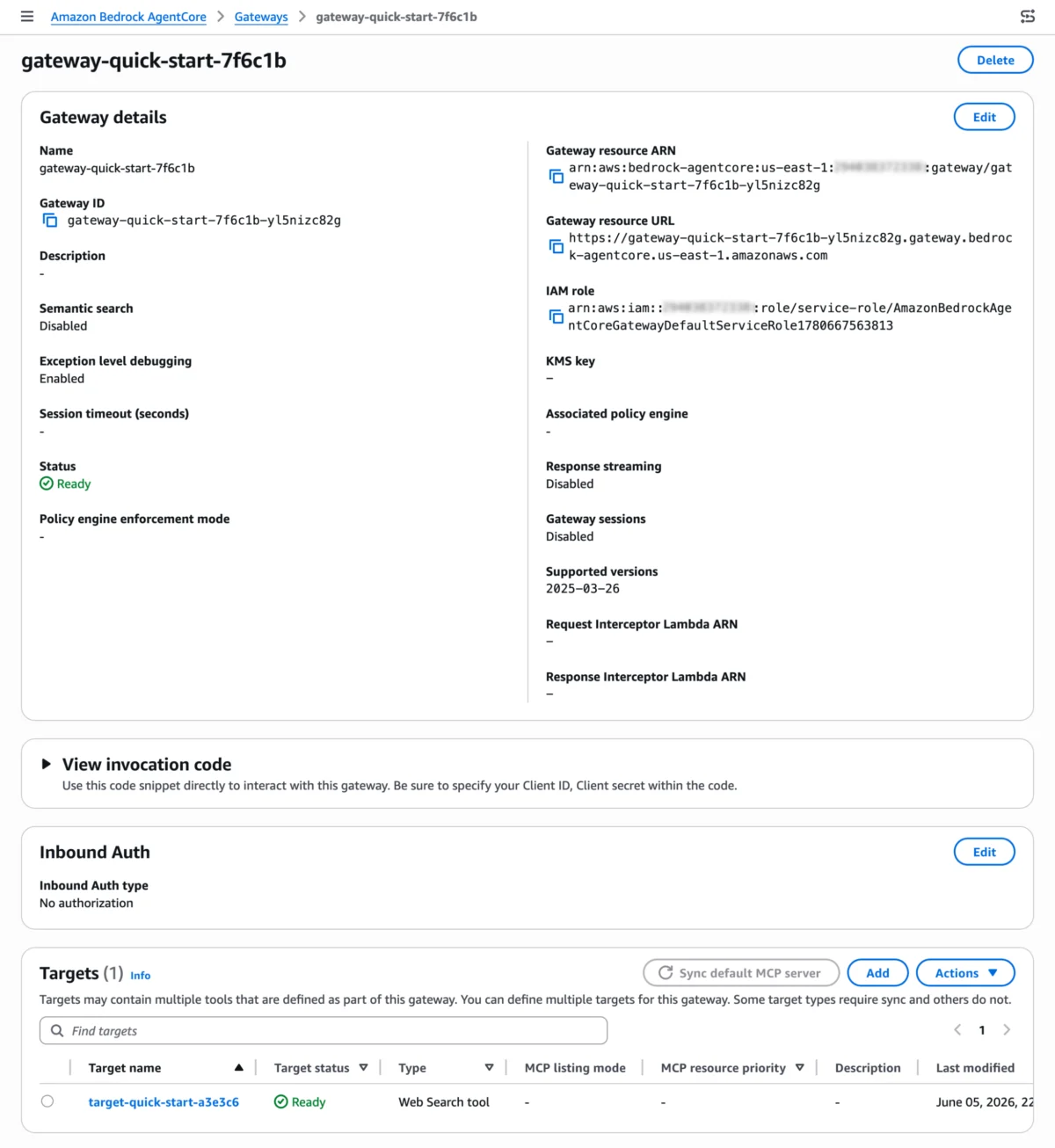
In a significant expansion of its generative AI ecosystem, Amazon Web Services (AWS) has announced the general availability of native Web Search for Amazon Bedrock AgentCore. This development marks a pivotal shift in how enterprises build and deploy autonomous AI agents, providing them with the ability to ground their reasoning in real-time, verified web information without sacrificing data security or operational governance.
By integrating this capability directly into the Bedrock AgentCore Gateway, AWS is effectively removing one of the most persistent hurdles in enterprise AI: the "knowledge cutoff" barrier. Agents can now access current, cited web data, enabling them to move beyond the static constraints of their initial training datasets.
The Core Innovation: Bridging the Gap Between Models and Real-Time Truth
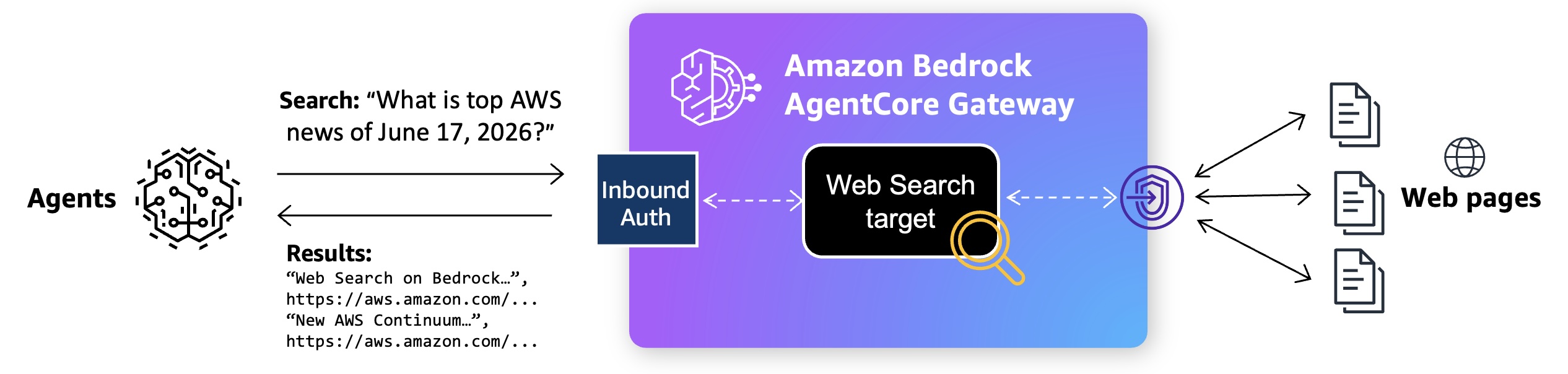
At the heart of this release is the integration of the Model Context Protocol (MCP), an open standard that allows AI agents to interact with external tools and data sources. Web Search on Bedrock AgentCore acts as a fully managed, turnkey service. When an agent receives a query that requires up-to-date context, it can trigger a search request. The service returns not just raw data, but curated snippets, source URLs, titles, and publication dates—all of which are formatted for the AI to ingest and synthesize into a grounded, reliable response.

Why Data Egress Matters
One of the most compelling aspects of this launch is the "zero data egress" promise. Traditionally, enterprises seeking to provide their AI agents with search capabilities were forced to route queries through third-party APIs. This often necessitated moving data outside of a secured environment, creating significant compliance and security risks. With this new feature, the entire search and retrieval pipeline remains strictly within the customer’s AWS environment. This architecture ensures that sensitive, proprietary, or PII-laden prompts remain protected under existing enterprise security policies.
Chronology of Development: From Alexa to Enterprise Intelligence
The release of Web Search on Bedrock AgentCore is not a sudden emergence; it is the culmination of years of R&D at Amazon. The underlying search infrastructure is built upon the same engines that power Amazon’s most advanced AI-driven products.
- Foundation Years: For years, Amazon has refined its agentic search experiences through products like Alexa+, Amazon Quick, and the developer-focused platform Kiro. These services required high-speed, low-latency, and highly accurate retrieval to function effectively.
- The Shift to Knowledge Graphs: Recognizing that raw web search can sometimes be noisy, Amazon integrated its proprietary Amazon Knowledge Graph. This allows the AgentCore service to perform "multi-source grounding," combining unstructured web data with verified, structured facts. This hybrid approach ensures that agents are not just searching the web, but validating their findings against a trusted repository of information.
- The Launch (June 2026): After a period of private preview with select enterprise partners, AWS officially pushed the feature to general availability in the US East (N. Virginia) region, marking a major milestone for the Bedrock ecosystem.
Supporting Data and Technical Architecture
The technical implementation is designed for developers who value agility. By utilizing the MCP (Model Context Protocol), AWS has ensured that the tool is interoperable and standardized.

How It Works: The Workflow
- Gateway Configuration: Developers instantiate a Bedrock AgentCore Gateway via the AWS console.
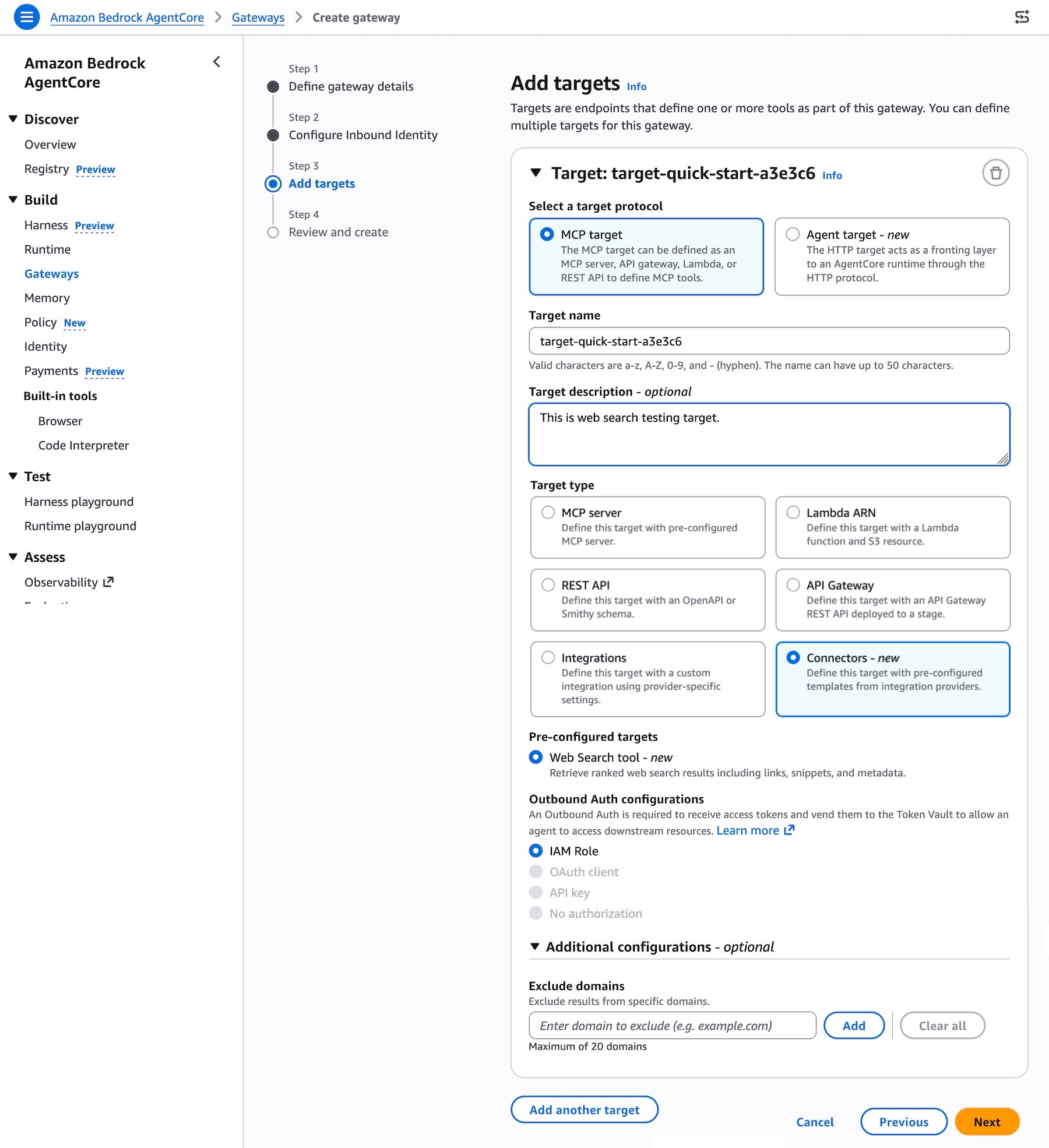
- Connector Targeting: By selecting the "MCP target" protocol and choosing "Web Search" from the list of preconfigured connectors, the integration is automated.
- Inference and Retrieval: When an end-user poses a question, the agent processes the intent, determines if external information is needed, and invokes the Web Search tool.
- Synthesis: The model receives the retrieved snippets and generates a response that cites the sources, providing the user with both the "what" and the "where."
Pricing Model
AWS has adopted a transparent, usage-based pricing strategy to lower the barrier to entry. Priced at $7 per 1,000 queries, the model allows for granular cost tracking. This predictable pricing is intended to help organizations forecast the budget for their agentic deployments without the complexity of hidden subscription tiers.
Official Responses and Industry Impact
The industry reaction has been characterized by relief from developers who previously struggled to build "search-aware" agents. Early adopters, including firms in the biotech and cybersecurity sectors, have provided testimonials that highlight the practical utility of this integration.
Benchling: Accelerating Scientific Discovery
Nicholas Larus-Stone, Head of AI Agents at Benchling, noted that the impact on R&D workflows is profound. "Scientists using Benchling AI can now ask about a target they’re actively working on and get answers grounded in both their institutional data in Benchling and published literature," Larus-Stone explained. The ability to bridge internal proprietary data with the vast expanse of published scientific literature is, according to Benchling, a "game-changer for hypothesis generation."
Gen Digital: Protecting the Digital Frontier
For Gen Digital, the priority was security and reputation management. Iskander Sanchez-Rola, Senior Director of AI & Innovation, highlighted that their "Norton Revamp" tool relies on the ability to provide users with current, grounded advice on digital safety. "What we value most," Sanchez-Rola said, "is that AWS uses its own search index and keeps queries within our trusted AWS environment." This confirms that for enterprise-grade applications, the security of the retrieval process is just as important as the quality of the search results.
Implications for the Future of Generative AI
The introduction of Web Search on Bedrock AgentCore signals a broader trend in the AI industry: the transition from "chatbots" to "agents."
The Death of the Static Model
For years, the limitation of Large Language Models (LLMs) was their training cutoff. By providing a managed tool for real-time information retrieval, AWS is helping to move the industry toward a model where AI is a dynamic participant in the workforce rather than a static repository of historical data.
Compliance-First AI
For industries like finance, healthcare, and legal, the ability to "cite sources" is not just a feature—it is a regulatory requirement. By embedding citations directly into the search results, Bedrock AgentCore provides a trail of evidence that allows human auditors to verify the AI’s claims. This transparency is essential for the adoption of generative AI in high-stakes environments.
The Role of MCP
The decision to embrace the Model Context Protocol (MCP) reflects AWS’s commitment to an open-standard ecosystem. By making their tools compatible with the broader MCP community, AWS is ensuring that developers can switch between different tools, servers, and clients with minimal refactoring. This "plug-and-play" capability is likely to accelerate the pace of innovation for developers who are tired of vendor lock-in and proprietary, closed-loop systems.
Getting Started: A Path Forward for Developers
For teams looking to integrate this into their existing infrastructure, the process is streamlined. Developers can begin by visiting the Bedrock AgentCore console.
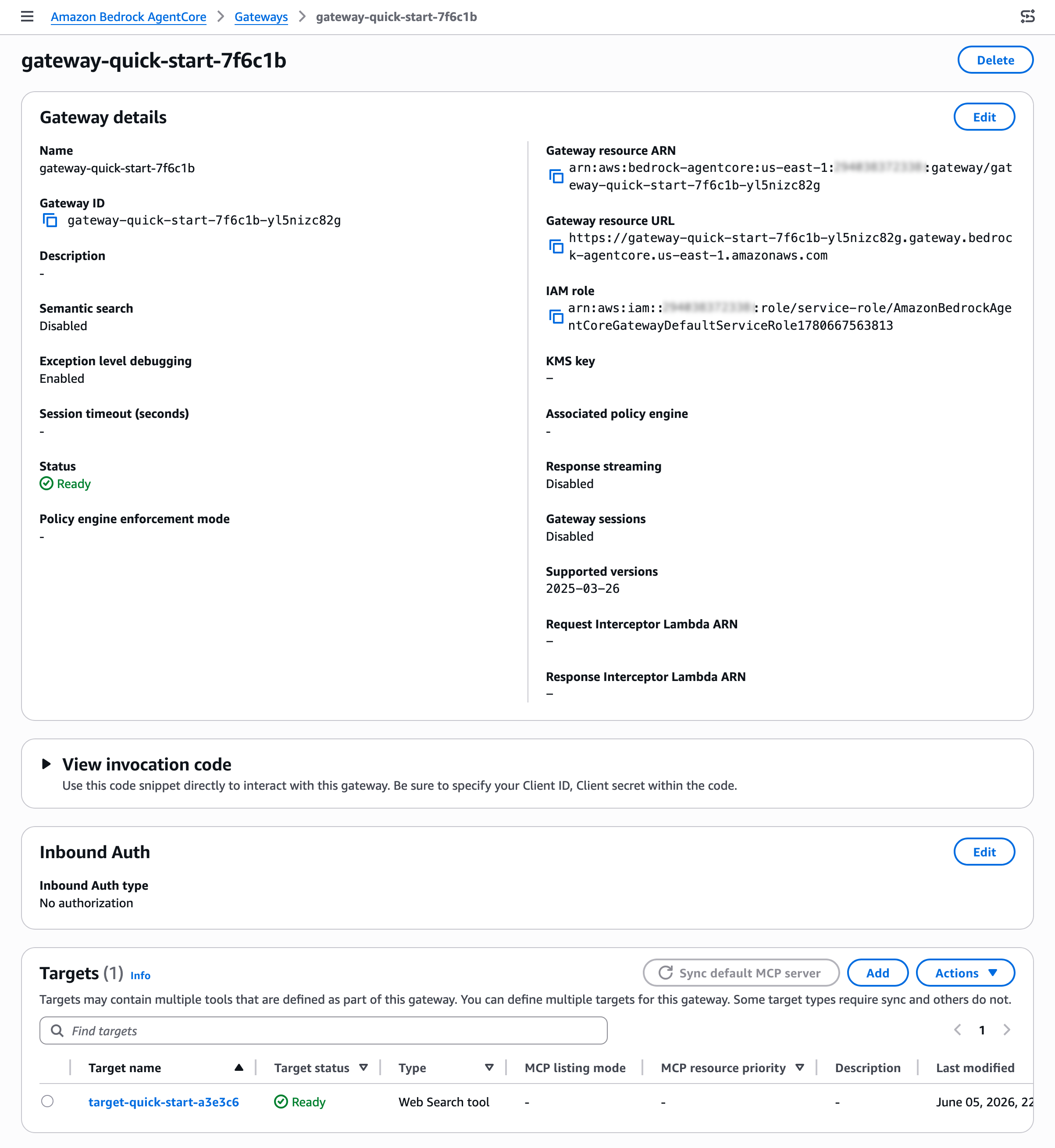
- Access: Create or update your existing Gateway resource.
- Deployment: Use the MCP Inspector to test the Web Search tool in a sandbox environment before deploying it to production.
- Refinement: Use the sample invocation code provided in the AWS documentation to integrate the search functionality into existing Python or CLI-based workflows.
As AWS continues to expand this offering to more regions, the expectation is that the "AgentCore" platform will become the primary control plane for enterprise AI agents. By combining the power of Amazon’s massive search infrastructure with the rigorous security of the AWS cloud, the company is laying the groundwork for a new generation of AI that is not only smart but also accurate, current, and—above all—secure.
For those eager to dive deeper, AWS has provided comprehensive documentation through the Bedrock AgentCore DevGuide, and developers are encouraged to share their feedback via the AWS re:Post community to help shape the future roadmap of this essential tool. With up to $200 in Free Tier credits available for new customers, the timing has never been better for enterprises to turn their static AI agents into proactive, well-informed digital assistants.
 Neng Nana
  Suro Senen