
 By Dwi Wanna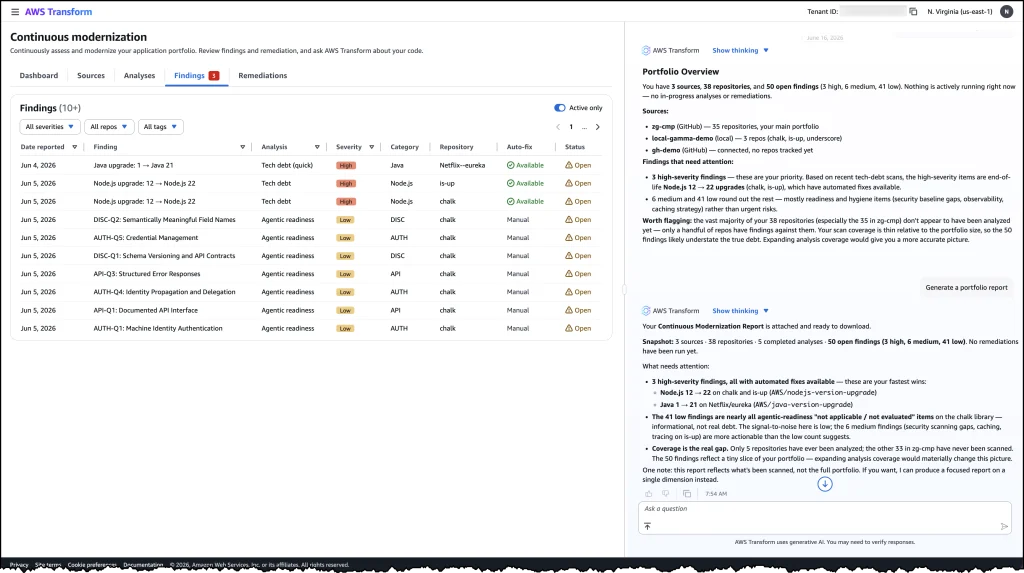
In an era where software development speed is increasingly dictated by AI-assisted coding agents, the accumulation of technical debt has shifted from a manageable annoyance to a systemic crisis for global enterprises. Recognizing this, Amazon Web Services (AWS) has announced the preview of AWS Transform – Continuous Modernization, a sophisticated, autonomous platform designed to identify, prioritize, and remediate technical debt across massive, distributed codebases.
This new capability represents a significant evolution of the existing AWS Transform suite. By automating the "undifferentiated heavy lifting" of software maintenance—such as Java version upgrades, framework migrations, and runtime patches—AWS aims to reclaim the significant portion of IT budgets currently squandered on manual codebase upkeep.
The Core Mandate: Ending the "Debt Spiral"
Engineering organizations today are caught in a difficult paradox. While AI agents allow developers to write code faster than ever, these same agents often accelerate the creation of outdated dependencies and legacy patterns. Historically, organizations have relied on a "patchwork quilt" of point-in-time tools—some for security scanning, others for dependency tracking, and still others for code quality.
The result is a fragmented view of reality. Platform teams spend weeks conducting status check-ins and manually tracking compliance, while leadership relies on subjective, self-reported metrics that often mask regressions. AWS Transform’s new continuous modernization feature seeks to replace this reactive, manual cycle with a "ground truth" model that treats technical debt as a live, observable, and remediable data stream.
Chronology of the Development
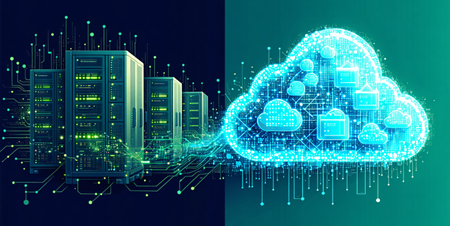
The path to this release reflects AWS’s long-standing strategy of observing customer pain points in large-scale migrations.
- Phase 1: Foundational Migration: AWS Transform initially gained traction by assisting enterprises in the high-stakes, heavy-lift environments of migrating out of on-premises data centers and into the cloud.
- Phase 2: Modernization Primitives: Recognizing that "landing" in the cloud was only half the battle, AWS introduced tooling to modernize Windows and mainframe applications.
- Phase 3: The Scaling Gap: Over the last 24 months, as customers scaled their cloud presence to thousands of repositories, the manual overhead of keeping those repositories updated became a bottleneck.
- Phase 4: Autonomous Integration: Today’s announcement of "Continuous Modernization" represents the integration of AI-driven, autonomous remediation workflows into the existing Transform framework, allowing for the first time an end-to-end lifecycle for code health.
Supporting Data: The High Cost of Stagnation
Industry benchmarks suggest that engineering organizations allocate up to 30% of their total IT budget toward maintaining existing systems rather than innovating new ones. For a company with a $100 million IT budget, this implies that $30 million is effectively locked in a cycle of upgrading legacy Java versions or swapping deprecated frameworks.
AWS’s internal research and pilot testing indicate that their new autonomous approach can reduce the time required to detect and remediate debt from weeks to hours. By shifting from periodic, project-based cleanup to a "continuous analysis" model, organizations gain:
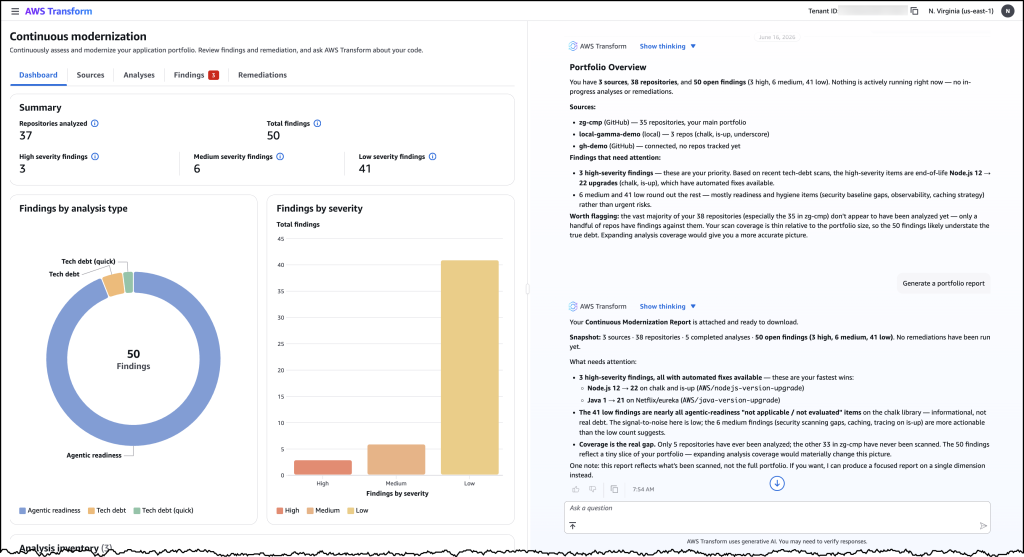
- Granular Visibility: Real-time dashboards showing exactly which components are behind baseline, categorized by severity.
- Reduced MTTR (Mean Time to Remediation): By automatically generating pull requests, the time between identifying a vulnerability or deprecated dependency and fixing it is slashed.
- Policy Enforcement: Organizations can move beyond generic standards to codify their specific "internal source" preferences—such as approved logging patterns or security headers—across the entire enterprise footprint.
Mechanics of Autonomous Remediation
The platform operates on a two-pronged mechanism: Continuous Analysis and Autonomous Remediation.

Continuous Analysis
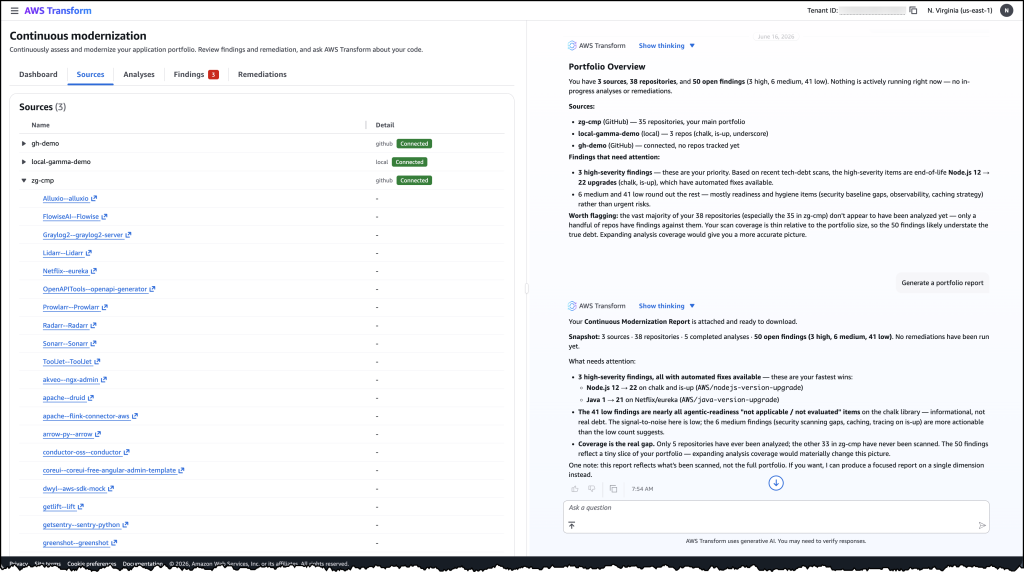
The system scans repositories against a set of configurable baselines. Unlike traditional scanners, which often report on a static snapshot, AWS Transform updates its findings as the code evolves. If a team adopts a new, non-standard library, the system flags it against the organization’s "Golden Path" almost immediately. This provides platform teams with a "single pane of glass" view, eliminating the need for manual compliance audits.
Autonomous Remediation
This is the feature’s most aggressive component. Once a finding is identified, the system doesn’t just email a ticket to a developer—it creates a functional pull request (PR). The PR includes the necessary code changes to bring the repository back into compliance.
The beauty of this system is its flexibility: the owning team can review and merge the PR as-is, modify it, or reject it. Crucially, the platform continues to monitor the repository. If the team ignores the PR, the system keeps the debt visible on the dashboard, providing leadership with accurate data on which teams are lagging behind security or architectural standards.
Integration with the Security Ecosystem
A major highlight of the release is the deep integration with AWS Security Agent. By aligning security vulnerabilities with general technical debt, AWS has effectively flattened the triage process. Previously, security flaws were often handled by an entirely different security operations (SecOps) team, creating organizational friction. By pushing these findings into the same prioritized list as library updates and version bumps, AWS encourages a "Shift Left" mentality where developers address security as part of their routine maintenance.
Implications for the Engineering Landscape
The introduction of this tool has profound implications for how engineering teams will function over the next decade.
1. The Role of the Platform Engineer
Platform engineering teams are currently overwhelmed by the need to support hundreds or thousands of developers. With AWS Transform’s continuous modernization, these teams can move away from being "police officers" who enforce standards through meetings and spreadsheets. Instead, they become "policy authors," defining the standards in the platform and allowing the tool to handle the enforcement.
2. Democratizing Maintenance
Junior developers, who often lack the context or desire to perform tedious dependency upgrades, are freed from these tasks. By automating the "dirty work," companies can boost developer experience (DevEx) and retention. When a developer receives a PR that fixes a complex, outdated dependency, they view it as a helpful contribution rather than an annoying distraction.
3. The "Campaign" vs. "Continuous" Dichotomy
The platform smartly differentiates between two types of work. Continuous mode is for the day-to-day "hygiene" of a codebase—keeping libraries fresh and patches applied. Campaign mode is reserved for massive, cross-organizational shifts, such as migrating an entire enterprise to a new framework version. By offering both, AWS acknowledges that tech debt is not a monolith; it requires different strategies for different scales.
Conclusion: A New Standard for Enterprise Software
The preview of AWS Transform – Continuous Modernization is not merely a tool update; it is a signal that the industry is entering a new phase of software maturity. As AI coding tools accelerate the output of new code, the "debt" that inevitably follows must be managed with equal speed and autonomy.
By providing a platform that treats code maintenance as a continuous, automated, and observable process, AWS is helping organizations move toward a state where technical debt is no longer a looming shadow, but a managed, predictable element of the software lifecycle. As this tool rolls out, the primary question for CTOs will no longer be "how do we find our tech debt," but "how quickly can we modernize our policies to stay ahead of the curve."
For those interested in exploring these features, the AWS Transform web application is now the primary gateway for initiation, with support for existing coding agents and infrastructure-as-code workflows, marking a significant step toward the "autonomous enterprise."
 Neng Nana
  Suro Senen
  Lina Hope