
 By Suro Senen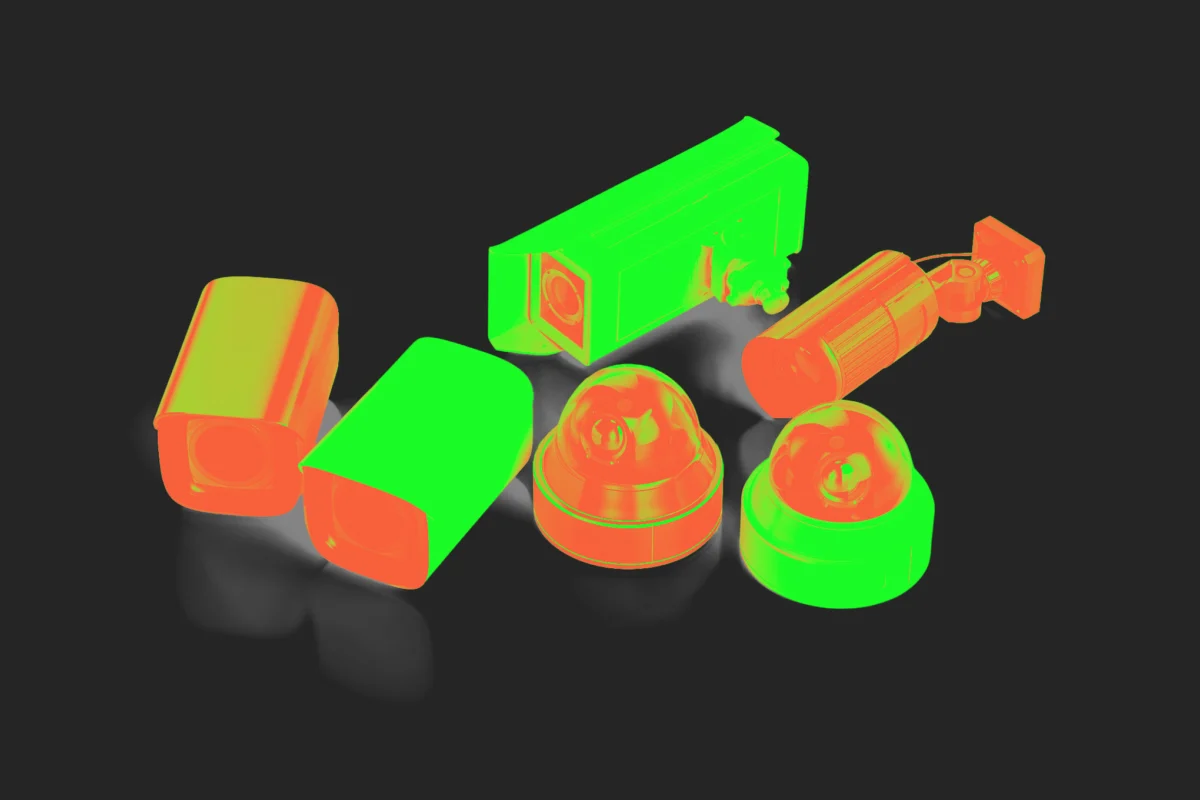
As the United States celebrates its semiquincentennial—the historic America250 milestone—and plays host to the 2026 FIFA World Cup, the nation has transformed into a stage for unprecedented global attention. From the bustling streets of New York to the urban centers of Kansas City, millions are participating in a summer of fanfare. Yet, beneath the veneer of national celebration and sporting triumph, a quieter, more pervasive reality has taken hold: the citizens of these host cities are being subjected to a level of mass surveillance that may fundamentally alter the American landscape long after the final whistle blows.
The Architecture of "Security-o-Rama"
In the months leading up to the 2026 World Cup, host cities across the U.S. have aggressively expanded their surveillance capabilities. While the focus has been on the matches, the security footprint has expanded well beyond the stadium gates. Washington, D.C., despite not hosting a single World Cup match, has become the epicenter of this new security paradigm. As the nation’s capital prepares for its Fourth of July festivities—a spectacle that has been designated a "National Special Security Event" (NSSE)—the city has adopted measures that were once reserved only for the highest-stakes political summits or the Super Bowl.
The NSSE designation, granted by the Department of Homeland Security (DHS), represents the most stringent security tier in the federal arsenal. While common for massive sporting events, this is the first time the Fourth of July has received the status. The security apparatus includes airport-style checkpoints, a total ban on civilian comforts like folding chairs and coolers, the deployment of counter-drone technology, and a heavy presence of federal bomb technicians and countersnipers.
"This is going to be ‘security-o-rama’ regardless of whether the president attends," says Jules Boykoff, a professor of political science at Pacific University and author of Red Card: The 2026 World Cup, Sportswashing, and the FIFA Greed Machine. "If the president does attend, it’s just an extra lacquering of security."
Chronology of a Security Expansion
The buildup to this summer’s surveillance state did not happen overnight. The timeline of this deployment reveals a systematic integration of federal and local assets:
- Early 2026: FEMA grants $250 million to host cities specifically earmarked for "security enhancement," leading to a nationwide spending spree on counter-drone technology and sophisticated camera arrays.
- March–May 2026: Cities like New York and Kansas City begin integrating AI-driven facial recognition software into public infrastructure, including transit buses and municipal surveillance networks.
- June 2026: Following a security breach at the White House Correspondents’ Dinner, the federal government pivots toward even more rigid "hardened" perimeters for all high-profile events.
- July 2026: The World Cup final in New Jersey is solidified as the highest-level NSSE, with federal authorities preparing for potential ICE involvement and mass data collection under the auspices of the Foreign Intelligence Surveillance Act (FISA) Section 702.
Supporting Data: The Cost of Vigilance
The financial and technical investment into this surveillance architecture is staggering. New York City, serving as a primary node for the tournament, allocated $6.5 million toward counter-drone defense systems. In Kansas City, authorities have already confiscated at least 16 unauthorized drones since the tournament’s inception.
The technology being deployed is not merely observational. Modern surveillance systems now feature tilt-pan-zoom capabilities capable of tracking individuals from miles away, augmented by thermal imaging and AI-driven behavior analysis. These systems are connected to federal "fusion centers," where local police data is synthesized with intelligence from the FBI and DHS.
Andrew Giuliani, executive director of the White House task force for the World Cup, has emphasized that the security measures are non-negotiable. He has warned attendees that the "relaxed" arrival times typical of global soccer fans are a thing of the past. "You’ll have multiple perimeter checks," Giuliani stated at an Atlantic Council event. "You’ll have checks while you get onto public transportation to make sure you’re a valid ticket holder."
The "State of Exception" and the Permanent Apparatus
The core concern for civil libertarians and privacy advocates is not just the immediate security presence, but the longevity of these tools. History suggests that when advanced surveillance technology is installed for a "temporary" event, it rarely disappears.
"The general rule with the World Cup and Olympics is that local and national police forces use the sports mega-event like their own private cash machine," Boykoff notes. "The World Cup creates a ‘state of exception’ that allows for all manner of securitization processes."
This phenomenon was observed in Paris, where AI video surveillance systems introduced for the 2024 Olympics were granted an extension through 2027. Similarly, in Kansas City, officials pushed forward with a facial-recognition bus program despite pushback from state funding authorities. While technical delays have kept the program offline, city officials remain committed to its eventual activation, arguing that the technology will aid in identifying missing persons and curbing human trafficking.
Legal and Ethical Implications
The legal justification for this massive data gathering relies on a dated interpretation of the Fourth Amendment. As attorney Anne Toomey McKenna explains, current U.S. law generally posits that there is "no reasonable expectation of privacy" in a public space. Therefore, if a police officer could theoretically see an action, a high-definition AI camera is also legally permissible.
However, the reality of modern technology renders this logic obsolete. "An officer on the street wouldn’t be able to identify every person walking by," McKenna points out. "But facial recognition technology software is very common, and it can be utilized together with the footage being collected by CCTV systems."
The blurring of lines between national security and domestic law enforcement is perhaps the most significant long-term risk. By utilizing NSSE designations, federal agencies can potentially bypass the stringent requirements of the Wiretap Act, opting instead for the more permissive standards of FISA Section 702. This creates a scenario where data collected for the "protection of the event" can be integrated into broader domestic intelligence files, effectively removing control from the citizen over how their personal data is used or stored.
Conclusion: A New Normal?
As the 2026 World Cup nears its conclusion, the United States stands at a crossroads. The infrastructure of surveillance—drones, AI cameras, facial recognition databases, and federalized local policing—is now deeply embedded in the host cities.
There is little transparency regarding the retention policies for the data captured this summer. Unlike British Columbia, which has established strict regulatory frameworks for the storage of surveillance data during its own hosting duties, the United States lacks a unified federal policy on the expiration of this surveillance.
The "security-o-rama" of America250 and the World Cup may have been designed to protect the millions of fans filling the stadiums, but it has simultaneously established a permanent apparatus for monitoring the American public. Whether this represents a temporary necessity or a permanent shift toward a more intrusive state will likely be debated for years to come. For now, the millions attending these events are living in the world’s most sophisticated, and most closely watched, test case for the future of public surveillance.
 Raul Delapena Setiawan
  Siti Muinah
  Asro
Asro 