
 By Reynand Wu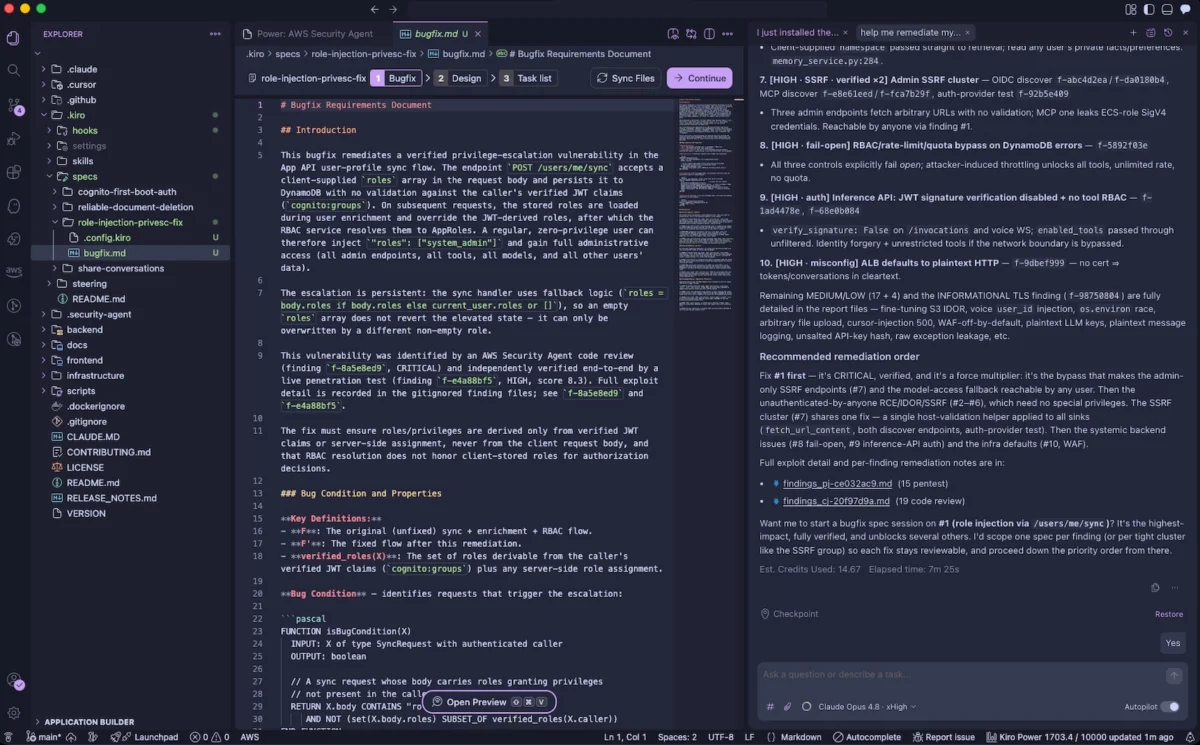
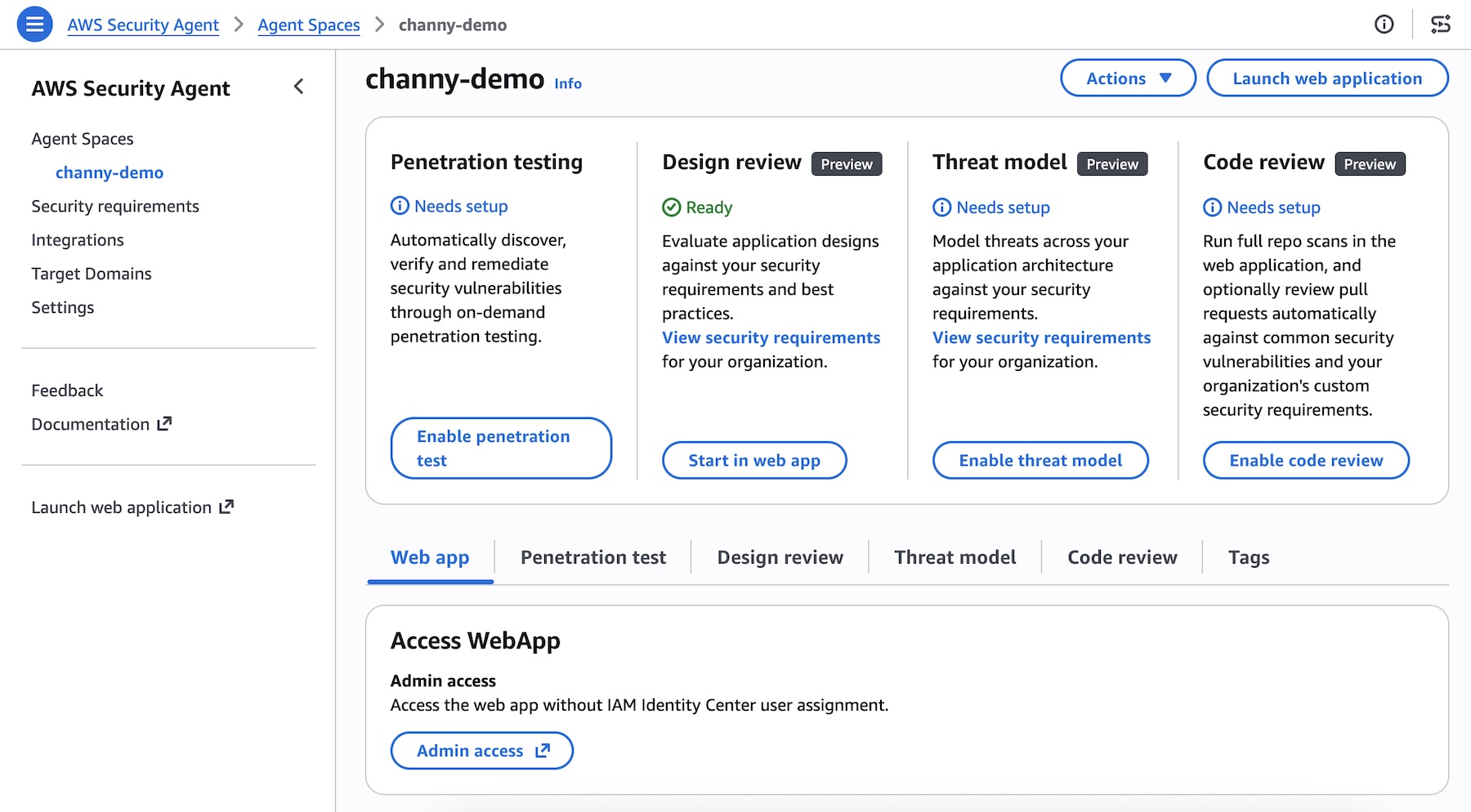
In the rapidly evolving landscape of cloud-native development, security is no longer just a checkpoint at the end of the release pipeline—it is the foundation upon which resilient applications are built. Since its initial preview at re:Invent 2025, the AWS Security Agent—a cornerstone of the AWS Continuum initiative—has fundamentally altered how organizations approach application security. By shifting security analysis from reactive patching to proactive, agentic oversight, AWS is providing developers and security engineers with a unified toolset that secures code from the initial design phase through to final deployment.
Today, AWS has announced a suite of major enhancements to the Security Agent, responding directly to enterprise feedback for deeper integration, broader ecosystem support, and more intuitive developer workflows. These updates signal a paradigm shift: security is finally becoming a seamless, "invisible" layer of the development process rather than a friction point.
The Chronology of an Evolution: From Preview to Powerhouse
The trajectory of the AWS Security Agent reflects the urgency of the modern cybersecurity climate.

- re:Invent 2025 (The Genesis): AWS introduced the Security Agent as a frontier-model-driven tool designed to proactively secure applications across all environments. At launch, it promised on-demand penetration testing customized to specific application architectures.
- March 2026 (General Availability): AWS marked a significant milestone by moving the on-demand penetration testing capabilities into full General Availability (GA), allowing teams to verify exploitability in real-world scenarios.
- May 2026 (Expanding the Perimeter): The preview of "Full Repository Code Review" extended the Agent’s capabilities, moving beyond simple pattern-matching to deep, context-aware analysis of entire codebases.
- June 2026 (The Current Leap): With the latest update, AWS has bridged the gap between IDE-based development and high-level architectural governance, integrating support for GitLab, Bitbucket, Confluence, and the Kiro/Claude Code ecosystem.
Core Capabilities: Redefining Security Workflow
The recent updates focus on four pillars: repository versatility, intelligent code analysis, automated design governance, and AI-native IDE integration.
1. Expanded Ecosystem and Deep Repository Analysis
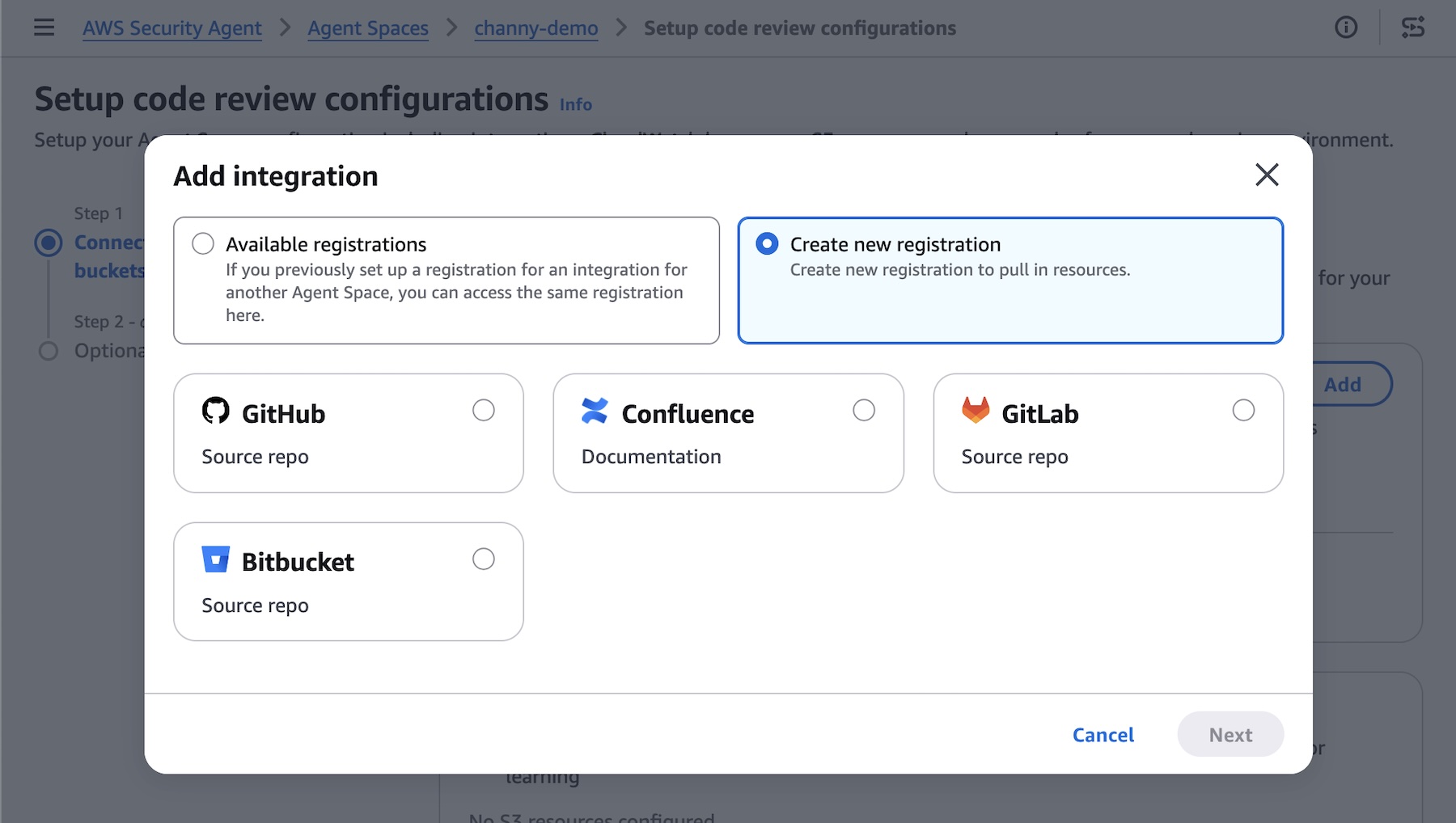
Historically, security tools were siloed by the platform they lived on. AWS has dismantled these barriers by extending Security Agent support to both SaaS and self-hosted versions of GitLab and Bitbucket, alongside existing GitHub support.
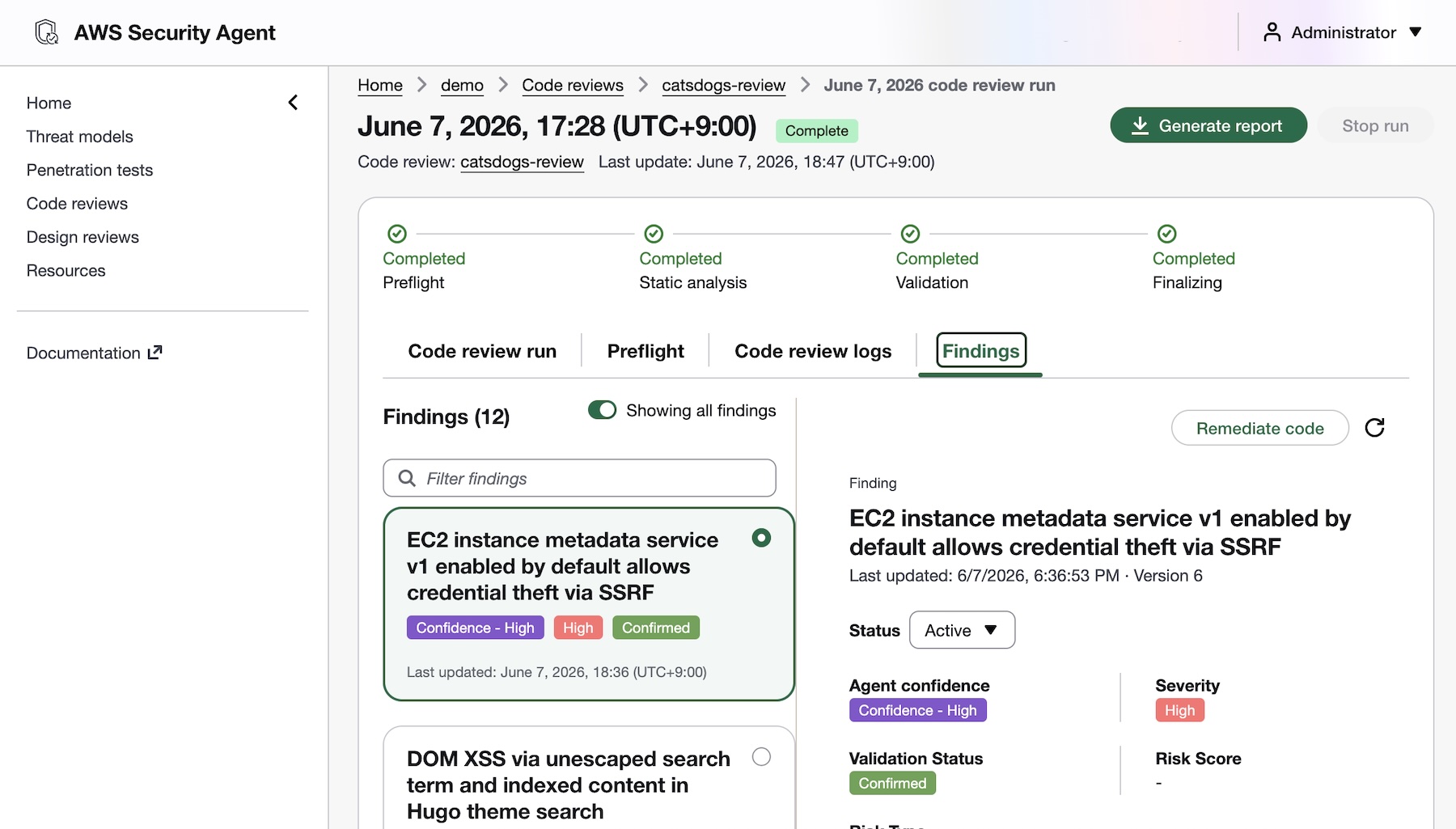
More importantly, the Agent now integrates with Confluence. By referencing internal documentation as context, the Agent can understand the intent behind the code. When a developer submits a pull request, the Agent doesn’t just scan for known vulnerabilities; it performs a deep, reasoning-based analysis that checks the code against specific organizational requirements. It identifies complex vulnerabilities—such as logical flaws—that standard static analysis tools often miss, providing actionable fix commits directly within the developer’s workflow.

2. Design-Time Security and Compliance
One of the most persistent challenges in DevSecOps is the "drift" between architectural design and implementation. The new Managed Compliance Packs allow teams to enforce security standards—such as the AWS Well-Architected Framework, NIST CSF, and PCI DSS—directly at the design and code review stages. By importing internal organizational policies, teams can ensure that every line of code written is inherently aligned with their compliance posture. This turns the security team’s role from "auditor" to "policy architect," as the Security Agent continuously validates the architecture against these benchmarks.
3. Automated Threat Modeling
Threat modeling has long been a manual, time-intensive process that is often skipped due to project timelines. The AWS Security Agent now automates this by analyzing design documents and code repositories to map out data flows, identify trust boundaries, and determine potential attack vectors. By prioritizing threats based on context, the Agent allows developers to focus on the vulnerabilities that pose the highest risk to the business, effectively democratizing threat modeling expertise.
4. AI-Native Integration: The Kiro Power and Claude Code Plugin
Perhaps the most transformative update is the launch of the Kiro power and the Claude Code plugin for the Security Agent. These tools allow developers to interact with the Security Agent using natural language, directly from their IDEs.
By utilizing the AWS Security Agent MCP (Model Context Protocol) server, developers can now ask their IDE to:
- "Build a threat model for this application."
- "Run a full security scan on this repository."
- "Help me remediate my findings."
The Agent downloads the findings to the local workspace, prioritizes them, and offers a "bugfix spec session," allowing developers to stay in their flow state without context-switching between the IDE and a separate security dashboard.
Implications for the Modern Engineering Organization
The shift to an "agentic" security model has profound implications for how organizations manage risk and velocity.
Reducing "Security Debt"
By embedding security expertise directly into the IDE and the repository workflow, organizations can significantly reduce security-related delays. Developers receive immediate feedback, remediation guidance, and even ready-to-implement fix commits, effectively shortening the time between vulnerability discovery and resolution.
A Unified Security Language
The integration of Confluence documentation and organizational policy packs creates a "Single Source of Truth." When security, compliance, and engineering teams all reference the same automated agent, the friction typically associated with cross-departmental communication is replaced by a transparent, objective audit trail.
Scaling Security Without Scaling Headcount
Perhaps most importantly, the AWS Security Agent allows security teams to scale their impact. Instead of manually reviewing every pull request, security engineers can configure the Agent to monitor repositories and intervene only when critical, complex, or high-risk issues are detected. This empowers developers to take ownership of security, turning every member of the engineering team into a "security-first" developer.
Official Perspective and Strategic Direction
The launch of the AWS Agents for DevSecOps—specifically the Claude Code plugin—highlights AWS’s commitment to an open, extensible AI ecosystem. By leveraging the Model Context Protocol (MCP), AWS is ensuring that the Security Agent is not a walled garden. Developers can integrate the Agent into virtually any AI-driven IDE, ensuring that the security intelligence provided by AWS is accessible where the work actually happens.
In an official statement accompanying the launch, industry analysts have noted that this approach moves beyond "Shift Left" to "Shift Everywhere." By covering design-time, development-time, and deployment-time security, the AWS Security Agent provides a continuous security loop that is essential for modern, agile enterprises.
Getting Started: A Path to Secure Innovation
The new features are available today in all commercial AWS Regions where the Security Agent is deployed. AWS has introduced a 2-month free trial, encouraging organizations to test the Agent’s capabilities against their existing codebases.
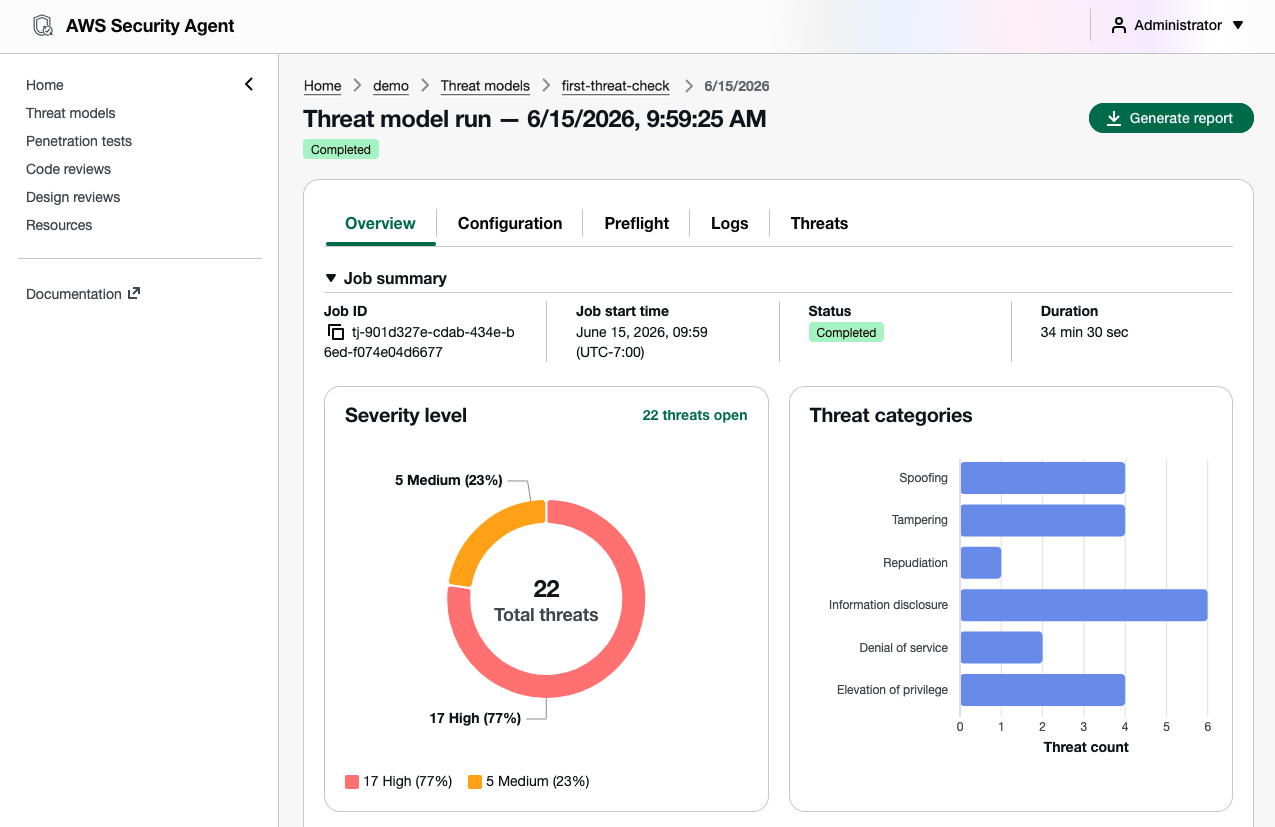
To begin the journey, developers are encouraged to:
- Access the Console: Configure the Security Agent in the AWS Management Console to link their repositories.
- Enable Advanced Features: Activate the "Full Repository Code Review" and "Threat Modeling" modules to gain immediate visibility into their security posture.
- Install the Kiro Power: Utilize the IDE integration to bring security conversations into the daily development workflow.
As we look toward the remainder of 2026, the AWS Security Agent is set to become the standard-bearer for how AI-assisted development will prioritize safety. By abstracting the complexity of security into a proactive, intelligent agent, AWS is not just protecting the cloud; it is enabling developers to build the future with confidence, security, and unprecedented speed.
For further technical deep dives and roadmap updates, developers should consult the AWS Security Agent documentation and participate in the AWS re:Post community, where the engineering teams behind the product actively engage with user feedback to shape the next iteration of the tool.
 Neng Nana
  Suro Senen
  Lina Hope