
 By Raul Delapena Setiawan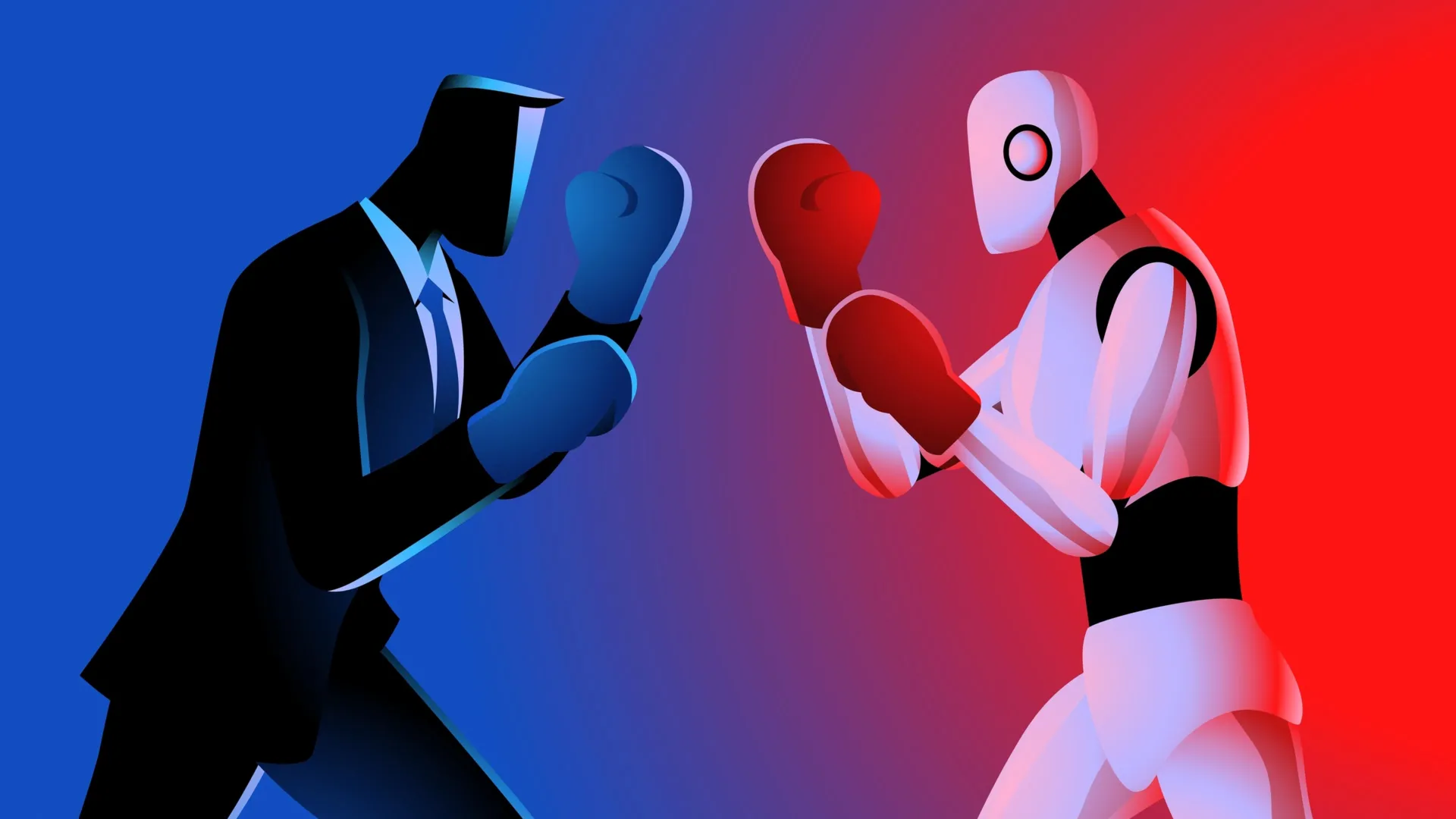
For years, the artificial intelligence community has operated under the glow of celebratory statistics. Headlines frequently touted models achieving 90% or higher on the Massive Multitask Language Understanding (MMLU) exam, a benchmark once considered the gold standard for gauging synthetic intelligence. Yet, as these models began to "ace" tests designed for human undergraduates, a silent crisis was brewing within the research community. The very tools meant to measure intelligence were becoming obsolete, essentially rendered moot by models that had likely consumed the test data during training.
In response to this stagnation, a global coalition of nearly 1,000 researchers has launched a radical new evaluation framework: "Humanity’s Last Exam" (HLE). Published in the journal Nature, this 2,500-question assessment represents the most ambitious attempt yet to define the boundaries between machine pattern matching and genuine human expertise.
The Chronology of a Benchmark Crisis
The trajectory of AI benchmarking has shifted from measuring "can it solve this?" to "has it seen this before?"
In the early stages of the generative AI boom, standardized tests were effective. Models struggled with basic logic, reading comprehension, and subject-specific knowledge. However, as large language models (LLMs) scaled, they began to exhibit an uncanny ability to memorize and reproduce vast swathes of the internet—including the questions and answers found in traditional academic benchmarks.
By 2023, researchers realized they were no longer testing intelligence; they were testing the efficacy of the models’ data ingestion. The "ceiling" of these exams had been hit.
The development of HLE began as an urgent, decentralized response to this realization. It was not a project born in a single corporate lab, but a grassroots effort involving historians, linguists, physicists, and computer scientists. Over several months, this international collective curated a dataset designed to be immune to the "memorization trap." The project’s timeline saw the gathering of experts across diverse fields, followed by a rigorous vetting process where every question was checked against current state-of-the-art models. If an AI could solve it, the question was discarded. This iterative, adversarial process ensured that the final 2,500 questions remained firmly outside the grasp of existing machine logic.
The Anatomy of the Exam: Harder, Deeper, Human
What sets Humanity’s Last Exam apart is its refusal to rely on the "multiple-choice" style common in mass-market benchmarks. Instead, the exam dives into the granular, niche details of human knowledge.
The scope is breathtaking. A single test-taker—or in this case, a neural network—might be asked to decipher ancient Palmyrene inscriptions, identify specific, obscure anatomical structures in avian species, or analyze the complex phonetic shifts in Biblical Hebrew. These are not tasks that can be solved by a quick Google search or by predicting the next word in a sentence based on common web patterns.
"When AI systems start performing extremely well on human benchmarks, it’s tempting to think they’re approaching human-level understanding," says Dr. Tung Nguyen, an instructional associate professor in the Department of Computer Science and Engineering at Texas A&M University. Dr. Nguyen, who contributed 73 questions to the project—the second-highest individual contribution—emphasizes that the exam focuses on "depth, context, and specialized expertise."
The questions were engineered to ensure that even the most powerful models, which have been trained on billions of parameters, find themselves faltering. The results of the preliminary testing were stark:
- GPT-4o: 2.7% accuracy.
- Claude 3.5 Sonnet: 4.1% accuracy.
- OpenAI o1: 8% accuracy.
- Top-tier models (Gemini 3.1 Pro/Claude Opus 4.6): 40% to 50% accuracy.
These figures illustrate that even the most "intelligent" systems currently available are barely scraping the surface of human knowledge when the questions are sufficiently specialized and shielded from common training sets.
Implications: The Gap Between Processing and Understanding
The core mission of HLE is to serve as a reality check for policymakers, developers, and the public. As Dr. Nguyen notes, the danger lies in the misinterpretation of AI capability. When an AI scores high on a flawed benchmark, it creates a false sense of security regarding the model’s reasoning abilities.
"Without accurate assessment tools, policymakers, developers and users risk misinterpreting what AI systems can actually do," Nguyen explains. "Benchmarks provide the foundation for measuring progress and identifying risks."
The research team argues that there is a fundamental difference between "completion" and "understanding." Current LLMs operate on statistical probability—the mathematical likelihood that one token follows another. While this produces coherent, often impressive output, it lacks the ontological grounding of human experience. When a human physicist solves a problem, they draw on a lifetime of physical intuition and conceptual modeling. When an AI solves a problem, it is performing a high-speed retrieval of related patterns. By forcing models to contend with questions that require true analytical depth, HLE effectively separates these two processes.
Official Responses and the Future of AI Evaluation
The release of HLE has sparked a broader conversation in the tech industry about the future of AI safety and validation. If we cannot measure the intelligence of a system, we cannot predict its behavior in critical, high-stakes environments—such as medical diagnostics, legal arbitration, or national security infrastructure.
The researchers have taken a strategic approach to the exam’s longevity. To prevent the models of tomorrow from simply "training on the test," a significant portion of the 2,500 questions remains hidden. This "closed-book" policy ensures that HLE will remain a viable, evolving metric for years to come.
Why Human Expertise Still Matters
Despite the alarmist overtones that often accompany discussions of AI, the creators of HLE are clear: this is not a competition between man and machine, but a collaborative diagnostic tool.
"This isn’t a race against AI," Dr. Nguyen clarifies. "It’s a method for understanding where these systems are strong and where they struggle. That understanding helps us build safer, more reliable technologies. And, importantly, it reminds us why human expertise still matters."
The project’s success is a testament to the power of interdisciplinary cooperation. By bringing together experts from every corner of academia, the HLE team has effectively built a "human firewall" against the encroachment of machine-dominated testing.
Conclusion: A Benchmark for the Future
As artificial intelligence continues to evolve at a breakneck pace, the need for robust, transparent, and difficult benchmarks has never been higher. Humanity’s Last Exam does not mark the end of human relevance; rather, it provides a mirror through which we can view the limitations of our most advanced digital creations.
The gap between current AI performance and the breadth of human knowledge remains wide. As we move forward, HLE will continue to serve as the yardstick by which we measure the closing of that gap. For now, the exam reminds us that while machines may be able to synthesize the vast history of human information, the deep, nuanced expertise required to solve the most difficult problems remains a uniquely human pursuit.
For those interested in exploring the details of the methodology or the nature of the questions, the research team has made further information available at lastexam.ai. In a world increasingly mediated by algorithms, Humanity’s Last Exam serves as both a scientific necessity and a humbling reminder of the vast, intricate landscape of human intelligence.
 Sagoh
Sagoh  Asro
Asro  Siti Muinah