
 By Layla Zulfa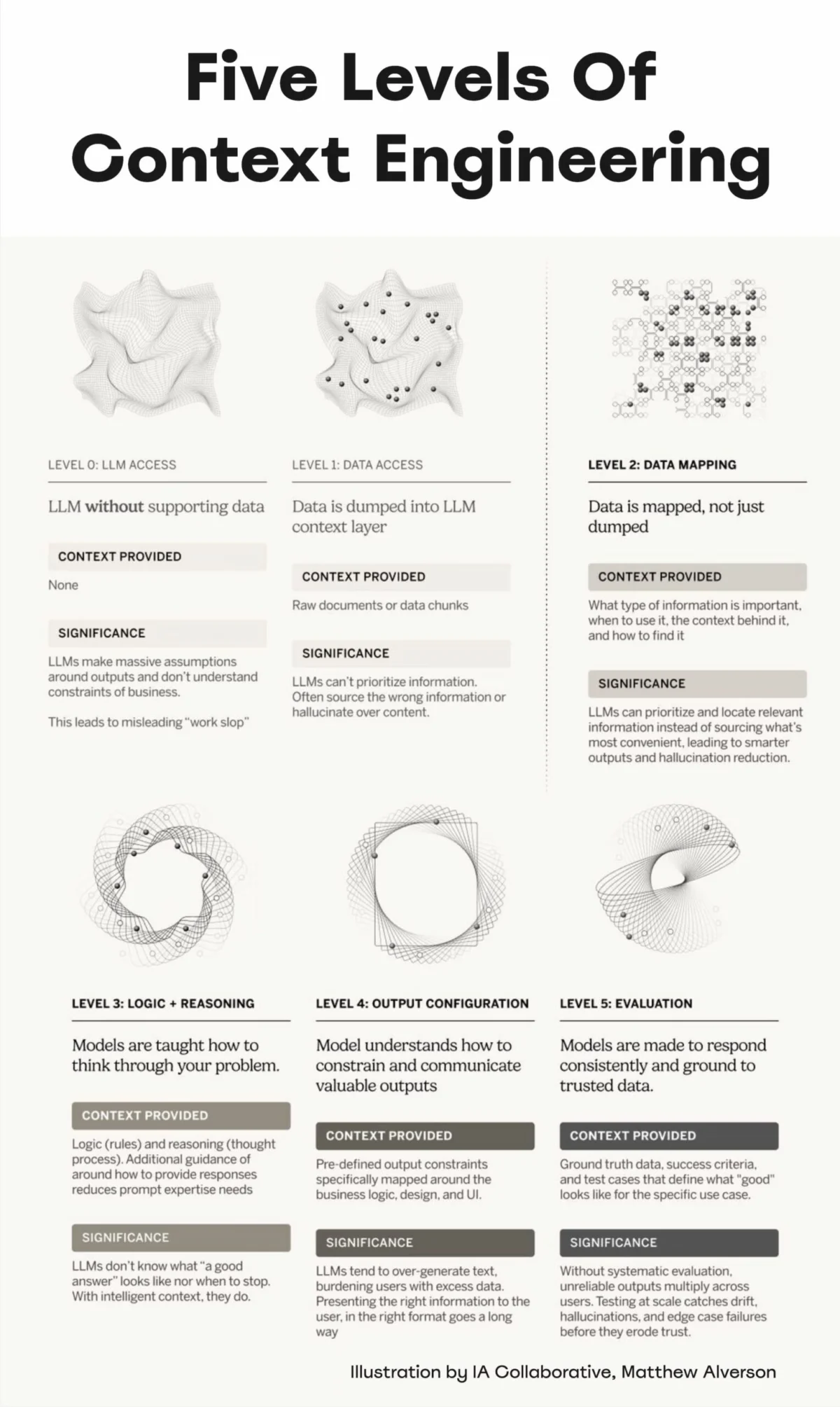
In the rapidly evolving landscape of digital product design, a new friction point has emerged: the "prototype drift." As organizations increasingly turn to Large Language Models (LLMs) and generative AI to accelerate the transition from concept to code, they are discovering that AI-generated prototypes often lack the precision, consistency, and brand-specific nuance required for production-ready work.
The root of this problem, according to industry experts, is not necessarily a limitation of the AI itself, but rather a structural deficiency in how design systems are built and documented. Recent insights from design leaders at Atlassian and pioneers in AI user experience suggest that for design systems to remain relevant, they must undergo a fundamental transformation from human-readable libraries into LLM-readable infrastructure.
Main Facts: The Shift Toward AI-Ready Design Systems
The central challenge facing modern design teams is that AI-generated outputs are only as reliable as the data and instructions they consume. Most contemporary design systems are optimized for human consumption—visual libraries in Figma or documented components in Storybook that rely on a human designer’s intuition to fill in the gaps. When an AI attempts to interpret these systems, it often "hallucinates" values, ignores accessibility requirements, or introduces inconsistencies because the underlying design logic is not explicitly documented in a format the machine can process.
To combat this, a new framework is emerging that treats Design Decisions as Infrastructure. This approach, championed by Hardik Pandya, a design leader at Atlassian, and Vitaly Friedman of Design Patterns For AI Interfaces, argues that every design choice—from spacing scales to prioritization logic—must be codified into a structured, machine-readable format.
The Three-Layer Architecture for AI Design
To achieve "AI-readiness," a design system must move beyond simple component libraries and adopt a three-layer structure:
- Spec Files (The Logic Layer): Structured Markdown files that define the "why" and "how" of design. These files include principles, accessibility rules, and usage guidelines that the AI reads before generating code or mock-ups.
- The Token Layer (The Variable Layer): A comprehensive set of design tokens (named variables for colors, typography, and spacing) that prevents the AI from inventing arbitrary values.
- Auditing and Feedback (The Quality Layer): Automated scripts and plugins, such as FigmaLint, that scan AI-generated output to catch hard-coded values, detached instances, or accessibility violations.
By providing these layers, organizations can reduce "drifts"—the tiny, compounding inconsistencies that occur when AI makes assumptions about a design system—and improve the quality of generated prototypes.
Chronology: From Static Style Guides to LLM-Readable Engines
The evolution of design systems can be traced through several distinct eras, leading to the current push for AI integration.
The Era of Static Documentation (2000s – 2010s)
In the early days of the web, design systems existed as static PDFs or "brand books." These were human-to-human documents intended to ensure visual consistency across print and digital media. They were slow to update and often ignored by developers.

The Era of Component Libraries (2014 – 2020)
With the rise of tools like Sketch and Figma, and the popularization of Brad Frost’s "Atomic Design," design systems became living libraries of reusable components. This era focused on the "hand-off" process, where designers created visual assets and developers translated them into code.
The Era of Design Tokens (2020 – 2023)
As design systems scaled, the industry adopted design tokens—platform-agnostic variables that store visual design attributes. This allowed for better synchronization between design and code but still required significant human oversight to ensure tokens were applied correctly.
The Era of AI-Ready Systems (2024 – Present)
The current era is defined by the need for "Context Engineering." As teams integrate LLMs into their workflows to generate UI code and documentation, the design system must now serve as the "ground truth" for the AI. This has led to the development of "Spec Files"—text-based documentation that acts as a prompt-augmenting library for AI agents.
Supporting Data: The Technical Foundation of AI-Ready Systems
The transition to AI-ready systems is supported by technical methodologies that prioritize structured data over visual representation.

The Efficiency of Markdown-Based Specs
One of the key findings in Hardik Pandya’s guide is the cost-effectiveness of using Markdown for design specs. Because LLMs process text tokens more efficiently than they parse complex visual mock-ups, providing a "Spec File" in Markdown is both cheaper and more accurate.
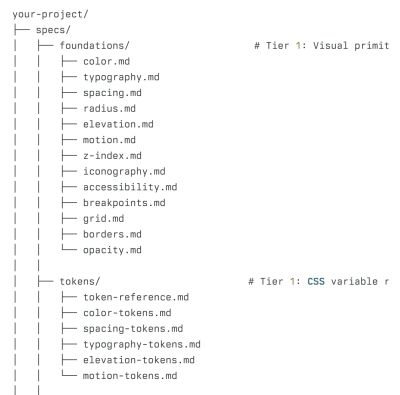
A typical spec file folder might include:
brand-principles.md: High-level guidance on tone and visual weight.spacing-rules.md: Explicit definitions of the 4pt or 8pt grid systems.component-usage/button.md: Specific do’s and don’ts for button states, including accessibility requirements (e.g., "Buttons must have a minimum touch target of 44px").
The Role of FigmaLint and Automated Auditing
Tools like FigmaLint, a free Figma plugin, have become essential for maintaining the integrity of these systems. In an audit of design systems, hard-coded values (values not tied to a design token) are the primary cause of "design debt." FigmaLint allows teams to:
- Detect detached component instances.
- Identify missing interactive states (hover, focus, disabled).
- Automatically rename layers to match the design system’s naming convention.
By running these audits, teams ensure that the data being fed into an AI is clean, which in turn ensures the AI’s output remains within the system’s guardrails.
Five Levels of Context Engineering
As highlighted in research shared by Addy Osmani and Matthew Alverson, successful AI integration depends on "Context Engineering." This involves providing the AI with different levels of information:
- Local Context: The specific task at hand.
- System Context: The overarching rules of the design system.
- User Context: The needs of the end-user.
- Institutional Context: The organization’s specific business goals.
- Global Context: General industry standards and accessibility laws.
Official Responses and Expert Perspectives
The push for more structured design systems has garnered significant support from industry veterans who see it as a necessary evolution for the design profession.
Hardik Pandya (Atlassian): Pandya emphasizes that we cannot assume AI knows how to design with accessibility or brand nuance in mind. He argues that design decisions must be treated as "infrastructure," meaning they must find a path into the spec files consumed by AI. "Better AI prototypes come from better data, but also from better human guidance," Pandya notes.
Vitaly Friedman (UX Expert): Friedman, the creator of the Design Patterns For AI Interfaces course, suggests that the role of the designer is shifting from "creator of pixels" to "curator of logic." He posits that the more deliberate and precise designers are in guiding AI, the better the outcomes will be. He warns, however, that AI cannot "magically resolve" existing design debt; it will only amplify it if the underlying system is messy.

Industry Sentiment: There is a growing consensus among product designers that the "hand-off" is being replaced by a "sync." In this new model, designers maintain the Markdown specs and token layers, and the AI handles the repetitive task of generating code and prototypes based on those rules.
Implications: The Future of Design and Technical Debt
The shift toward AI-ready design systems has profound implications for the design industry, affecting everything from career paths to the management of technical debt.
The Designer as "Decision Architect"
As AI takes over the "execution" phase of design (drawing boxes, applying colors, writing CSS), human designers will focus more on "Decision Architecture." This involves defining the principles and logic that govern how a system behaves. This shift requires designers to have a deeper understanding of information architecture, documentation, and even basic data structures.
Resolving Design Debt
One of the most promising implications of AI-ready systems is the potential to finally tackle long-standing design debt. Because AI requires clean, consistent data to function, organizations are being forced to audit and clean up their design systems. This "cleanup" has the side effect of improving the quality of the product for human developers and users as well.

The "Sync Routine" and Long-term Maintenance
Maintaining an AI-ready design system is not a one-time task. It requires a "sync routine"—a process where updates to the design system are automatically reflected in the Markdown spec files. If the specs become outdated, the AI will continue to generate prototypes based on old rules, leading to a new form of "AI-induced technical debt."
Conclusion: A Busy Future for Designers
Far from making designers obsolete, the rise of AI-generated prototypes is creating a massive amount of work in the realm of system maintenance and logic definition. As Vitaly Friedman concludes, "We’ll be busy for years to come." The challenge for the modern design team is no longer just building a system that looks good to humans, but building one that is smart enough to guide the machines.
Ultimately, the success of AI in the design process will not be measured by the sophistication of the LLM, but by the quality of the infrastructure we build to support it. By treating design decisions as infrastructure and adopting a structured, three-layer approach to documentation, organizations can bridge the gap between AI’s potential and its practical application in the real world.
 Nana Wu
  Nana
Nana 