
 By Lina Hope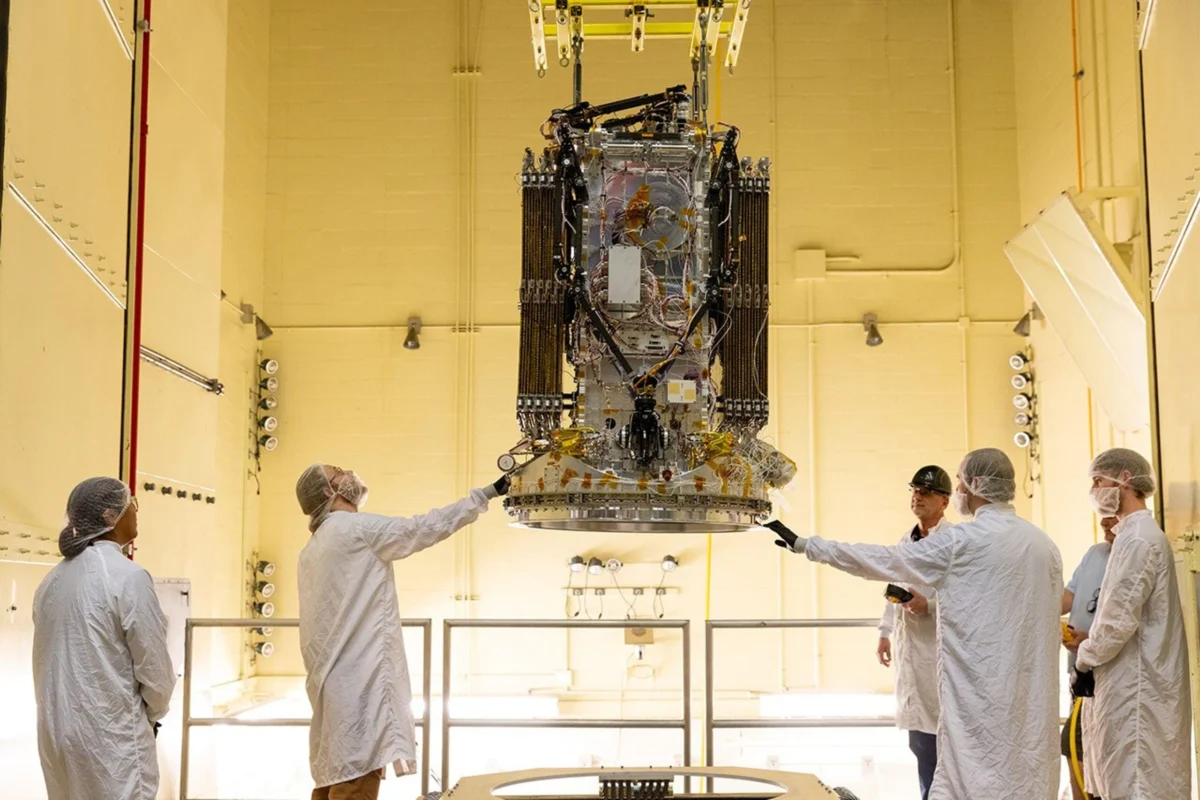
By Terrence O’Brien
Updated July 4, 2026
In the unforgiving vacuum of low Earth orbit, time is measured not in hours, but in the slow, inexorable decay of altitude. For the Neil Gehrels Swift Observatory—a legendary NASA satellite that has spent over two decades peering into the most violent corners of the universe—the clock is ticking toward a fiery end. Pushed lower by intense solar activity, the aging observatory is currently plummeting toward the dense layers of Earth’s atmosphere. However, in a feat of engineering audacity, a small space startup named Katalyst Space Technologies has launched a daring "orbital rescue" mission to save the $500 million asset from total destruction.
The mission, which materialized from concept to launch in a staggering nine months, represents a new era in space logistics: the age of satellite servicing and life extension.
The Mission: An Unprecedented Interception
The Swift Observatory, launched in 2004, was designed to detect and study gamma-ray bursts—the most powerful explosions in the cosmos, occurring billions of light-years away. For twenty-two years, it has provided humanity with a front-row seat to the early days of the universe. But Swift was never built to be serviced. It lacks a propulsion system of its own, meaning it has been at the mercy of atmospheric drag for its entire operational life.
As solar activity has increased in recent years, the upper atmosphere has swelled, dragging Swift down to a precarious altitude of just 224 miles. By October 2026, experts estimated the satellite would reach a point of no return, where atmospheric density would render its orbit unsustainable.
Enter Katalyst Space Technologies. Their "Link" spacecraft, a specialized robotic vehicle, launched this past Friday with a single, Herculean objective: rendezvous with the uncooperative, non-propulsive Swift and physically nudge it into a higher, stable orbit. The goal is to boost the observatory by approximately 150 miles, effectively buying the mission years of additional scientific life.
A Chronology of the Crisis and Response
The timeline of this rescue mission is as remarkable as the technical challenge itself.
- 2004–2025: Swift operates successfully, providing groundbreaking data on black holes, neutron star collisions, and the evolution of galaxies.
- Late 2025: NASA scientists confirm that solar-cycle-induced orbital decay is accelerating rapidly. Estimates show Swift will burn up in the atmosphere by late 2026.
- October 2025: NASA issues an urgent call for proposals to explore commercial solutions for satellite life extension.
- November 2025: Katalyst Space Technologies is selected. The company is given a near-impossible deadline: design, build, and test a docking and propulsion module in under nine months.
- July 3, 2026: The Link spacecraft clears final pre-launch checks, demonstrating that rapid-response space hardware is no longer a theoretical concept.
- July 2026: Launch of the Link mission.
- Late 2026 (Projected): Link arrives at Swift’s location to begin the complex "docking and push" maneuver.
Engineering the Impossible: The "Link" Mechanism
The challenge of docking with an object that was never intended to be touched is immense. Unlike the International Space Station, which features standardized docking ports, Swift is a smooth, complex surface of instruments and solar panels.
Katalyst’s Link spacecraft utilizes a unique three-armed robotic gripper system. These arms are designed to secure the satellite without damaging its sensitive instrumentation. The engineering team had to account for the lack of "cooperative features" on Swift—essentially, they are performing a high-speed, high-stakes game of "catch" in a weightless environment.
The $30 million contract awarded to Katalyst is, in the context of space exploration, a bargain. By investing a fraction of the original mission cost, NASA is hoping to preserve a $500 million asset that remains scientifically superior to many newer, more expensive alternatives. If successful, this mission will serve as the "proof of concept" for a new industry: orbital maintenance.
Supporting Data: Why Swift Matters
The Neil Gehrels Swift Observatory is not merely an old piece of hardware; it is a critical node in the Global Transient Network. Its unique ability to swivel rapidly toward gamma-ray bursts—detecting the flash and then alerting ground-based telescopes across the globe—has revolutionized multi-messenger astronomy.

- Total Gamma-Ray Bursts Observed: Over 1,500.
- Operational Lifespan: 22 years (original design life was 2 years).
- Current Altitude: 224 miles.
- Target Altitude: 374 miles (a 150-mile increase).
- Rescue Cost: $30 million.
- Original Mission Value: Approximately $500 million (inflation-adjusted).
The data provided by Swift has been instrumental in our understanding of how elements are formed in the universe and how massive stars collapse. Its loss would be a significant blow to the astrophysical community, which is why the urgency of the Katalyst mission is so widely supported by the scientific establishment.
Official Responses and Industry Implications
"The speed of this operation is a testament to the maturation of the commercial space sector," says an unnamed NASA liaison familiar with the mission. "Ten years ago, a project like this would have been a decade-long study. Today, we are seeing startups that can pivot, build, and deploy in months."
However, the mission is not without its critics. Some aerospace analysts point out that "orbital rescue" is a euphemism for high-risk maneuvering. If the Link spacecraft were to collide with Swift during the docking attempt, it would not only destroy the observatory but also create a cloud of space debris in a high-traffic orbital lane.
Katalyst, for its part, has emphasized that their simulations have been run millions of times. The company’s CEO noted in a press release that the "risk of inaction is 100 percent. The risk of this mission, while non-zero, is calculated and necessary for the future of sustainable space operations."
The Implications of a New Frontier
The successful rescue of Swift would fundamentally change how humanity treats its assets in space. Currently, space is treated as a "throwaway" environment—once a satellite runs out of fuel or drifts out of orbit, it is considered dead.
If Katalyst succeeds, the precedent will be set for a circular space economy. Future satellites could be designed with "service interfaces," allowing them to be refueled, repaired, and boosted by commercial fleets. This could drastically reduce the amount of space junk orbiting our planet and extend the life of multi-billion dollar observatories, communication arrays, and weather satellites by decades.
Furthermore, this mission highlights the shift toward "responsive space." The ability to launch a corrective mission in nine months proves that the barrier to entry for complex space operations is lowering. As we look toward the potential of missions to the Moon or Mars, the ability to repair hardware in situ will be the difference between a mission that survives and one that fails.
Conclusion: A Watching World
As the Link spacecraft continues its transit toward the Swift Observatory, the eyes of the scientific community and the space industry are fixed on the telemetry data. Every small correction in orbit, every ping of communication between the two machines, is being watched by engineers who know that the next few months will define the future of space maintenance.
If the rescue succeeds, Swift will continue to hunt the most violent explosions in the universe for years to come. If it fails, the observatory will serve as a final, brilliant streak of light across the night sky as it enters the atmosphere. Regardless of the outcome, the fact that we are even attempting this rescue proves that humanity has moved beyond the era of simply launching into space—we have entered the era of living, working, and maintaining our presence among the stars.
The race against the atmosphere is ongoing. For now, the Link is closing the gap, and for a small, aging observatory named Swift, there is a glimmer of hope on the horizon.
 Raul Delapena Setiawan
  Siti Muinah
  Asro
Asro 