
 By Dwi Wanna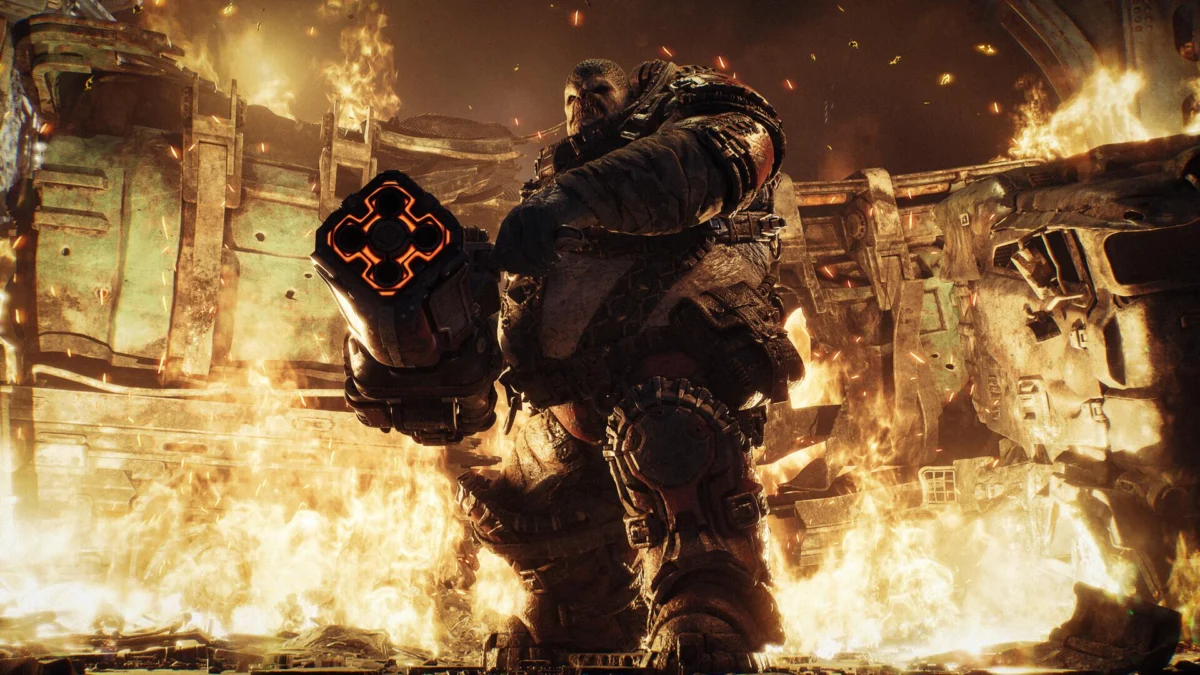
This is The Stepback, a weekly deep dive into the shifting tectonic plates of the technology and gaming industries. For more on the turbulent state of modern gaming, follow Andrew Webster.
The contrast between the spectacle of the stage and the reality of the boardroom has rarely been as stark as it was this June at the Summer Game Fest. For a few brief, breathless hours, Microsoft appeared to be the titan of old. The Xbox Games Showcase was a masterclass in nostalgia and ambition, featuring the kind of high-octane reveals—Halo, Gears of War, Fable—that defined the glory days of E3. When the curtains closed on a presentation that included surprise announcements like Persona and Crazy Taxi, the industry collectively exhaled, believing, perhaps foolishly, that the sleeping giant had finally awoken.
It was a masterful performance. It was also, as events in the following seventy-two hours would reveal, a complete fabrication.
Just three days after the glitz of the showcase, new Xbox CEO Asha Sharma issued a sobering memorandum announcing a "reset" for Microsoft’s gaming division. The memo, draped in the cold, clinical language of corporate restructuring, warned of "hard choices" ahead. What followed was a cascade of reports detailing impending layoffs, the shuttering of legendary studios, and the abrupt cancellation of projects that had only just been unveiled. Xbox, a brand that once stood as the gatekeeper of the console experience, is now being hollowed out from the inside.
A Chronology of Decline: From Innovator to Outsider
To understand how Microsoft arrived at this precarious precipice, one must look back at the trajectory of the brand over the last quarter-century. When the original Xbox launched in 2001, Microsoft was the scrappy underdog armed with the deepest pockets in the industry. It turned gaming into a cultural event, leveraging Halo: Combat Evolved to prove that console gaming could be as sophisticated and immersive as the best PC experiences.
However, the rot began to set in with the 2013 launch of the Xbox One. In a miscalculation of catastrophic proportions, Microsoft prioritized non-gaming features, positioning the console as a living-room "all-in-one" media hub rather than a dedicated gaming machine. It was a failure of vision that alienated the core audience and handed the keys to the generation to Sony’s PlayStation 4.
Despite the rebranding efforts of the subsequent Series X/S generation, the brand never fully recovered its momentum. The hardware identity became fractured, and the marketing strategy shifted from "exclusive experiences" to a vague, nebulous concept of "Xbox Everywhere." By attempting to be everything to everyone, Microsoft inadvertently made it unclear what the Xbox was supposed to be in the first place.
Supporting Data: The Cost of a Failed Vision
The financial reality behind this "reset" is staggering. According to the internal memo released by Sharma and Chief Content Officer Matt Booty, Microsoft has spent over $20 billion on content, platform development, and hardware subsidies over the past five years—excluding the colossal $68.7 billion acquisition of Activision Blizzard. Despite this influx of capital, annual revenue for the division has actually declined by nearly half a billion dollars.
The cornerstone of this strategy was Game Pass, the "Netflix for games" model that was meant to secure long-term recurring revenue. On paper, it was a sound hypothesis. In practice, it hit a wall. Microsoft had pinned its future on the expectation of reaching 100 million subscribers by 2030; currently, that number sits at roughly 30 million.
The math is unforgiving: billions of dollars in acquisition and development costs were poured into a subscription service that failed to scale at the necessary rate. The "This is an Xbox" marketing campaign, intended to expand the brand’s reach beyond the console, only served to further erode the value proposition of the hardware. When the service is available on your PC, your phone, and your TV, the necessity of owning an Xbox console becomes an increasingly difficult argument to make to the consumer.
The Leadership Transition and the "Reset"
Following the retirement of long-time division head Phil Spencer and the departure of President and COO Sarah Bond earlier this year, the mantle fell to Asha Sharma. Her arrival was initially met with a measure of cautious optimism. Coming from a non-gaming background—specifically, the CoreAI division—Sharma’s early tenure was marked by a pivot toward fan-requested features, such as enhanced backward compatibility and a move away from the polarizing "Microsoft Gaming" corporate branding.
However, the "reset" memo makes it clear that these aesthetic and policy shifts were merely rearranging deck chairs on a sinking ship. The systemic issues—namely, the unsustainable spending habits and the lack of a coherent product identity—were inherited problems that a new coat of paint could not rectify. The reality is that the bill for a decade of reckless expansion has come due, and the victims are the very people who built the brand’s prestige.
Implications: The Human Cost of Corporate Strategy
Perhaps the most tragic aspect of the current restructuring is the impact on the development studios under the Microsoft umbrella. Reports indicate that at least five studios are currently on the chopping block, including Arkane and Double Fine.
Arkane, a studio whose work on the Dishonored series fundamentally redefined the "immersive sim" genre, is now a target for closure. Double Fine, the visionary team behind the Psychonauts series, finds itself in the same precarious position. These are not just assets on a spreadsheet; they are the creative engines that define the industry’s artistic output. By discarding these teams, Microsoft is not just cutting costs—it is dismantling the institutional knowledge and creative culture that made the Xbox brand worth following in the first place.
The uncertainty surrounding these studios is palpable. While some may survive through layoffs, others face total dissolution, and a few may be forced to spin off into independent entities. In every scenario, the "Xbox" of tomorrow will be a diminished, shadow version of its former self.
What Happens Next: An Uncertain Future
As the industry looks toward the next cycle of hardware, the situation at Microsoft feels existential. The company is effectively retreating from the battlefield it once helped define. With the hardware business struggling to find a reason for existence and the subscription model failing to provide the promised growth, Microsoft is entering a phase of contraction that could see it exit the console space entirely, or at the very least, transition into a third-party software publisher.
The upcoming weeks will be defined by the fallout of these layoffs. As the talent drains from these studios, the quality of future releases will inevitably suffer, leading to a potential "death spiral" where diminished output leads to further subscriber loss, which in turn leads to further cuts.
The console gaming market is already in a state of flux, with hardware sales cooling and consumer interest shifting toward mobile and free-to-play ecosystems. If Microsoft, with all its massive resources, cannot make the console business work, it serves as a grim omen for the rest of the industry. The era of the "console wars" is not just ending—it is being liquidated.
For the loyalists who have stuck with the brand for twenty-five years, the current state of Xbox is a profound disappointment. The company that once promised to push the boundaries of what was possible in interactive entertainment is now consumed by the mundane, brutal mechanics of corporate survival. As we watch the dismantling of these legendary studios, we aren’t just witnessing a restructuring; we are witnessing the end of an era. The Stepback remains, as ever, a place to document these shifts, but the view from here has never looked quite so bleak.
 Raul Delapena Setiawan
  Siti Muinah
  Asro
Asro 