
 By Ammar Sabilarrohman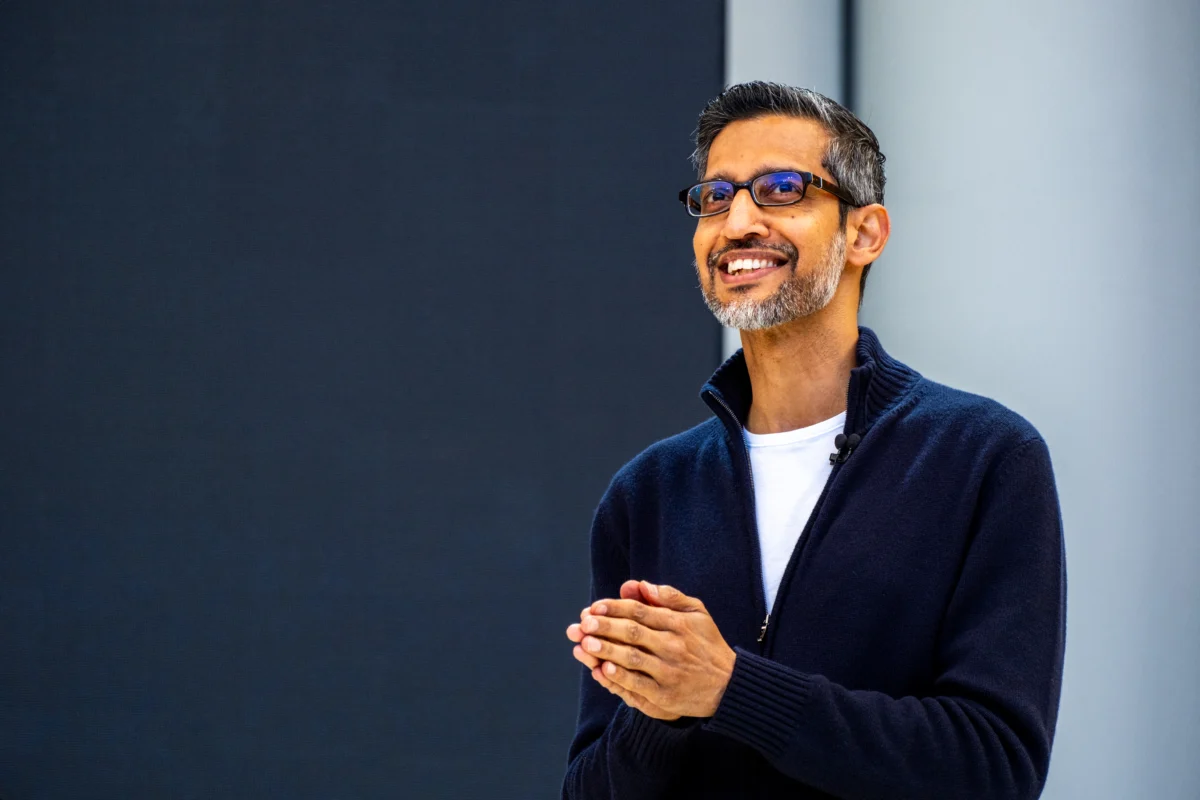
If the financial markets were looking for a litmus test regarding the sustainability of the artificial intelligence boom, Alphabet Inc. has provided a definitive answer. In a move that has sent ripples through Wall Street and Silicon Valley alike, Google’s parent company has executed a record-shattering $85 billion equity offering. This monumental capital raise does more than just bolster Alphabet’s balance sheet; it serves as a powerful signal that investor appetite for the AI revolution is not merely strong—it is voracious.
The Anatomy of a Record-Breaking Raise
The mechanics of the deal highlight the sheer scale of liquidity currently chasing AI-linked assets. Initially, Alphabet’s leadership had outlined a strategy to sell an initial tranche of $40 billion in various equity instruments. The offering was designed with precision, featuring two distinct classes of shares and a series of "depositary shares" specifically priced to democratize access for a broader range of retail and institutional investors.
However, the response from the market was immediate and overwhelming. Demand surged to such an extent that the first tranche was upsized, ultimately securing $45 billion. CEO Sundar Pichai confirmed the successful closing in a post on X (formerly Twitter) this past Monday. Perhaps the most telling indicator of the deal’s credibility was the participation of Berkshire Hathaway. The conglomerate, historically synonymous with Warren Buffett’s disciplined, value-oriented investment philosophy, stepped in to acquire $10 billion worth of the offering. This move suggests that even the most conservative of institutional giants now views the AI infrastructure build-out as a foundational pillar of future growth.
Alphabet has no intention of stopping there. The company has already signaled plans to sell an additional $40 billion worth of equity in the coming quarter, bringing the total capital injection to $85 billion. To put this in perspective, even the original $80 billion target would have eclipsed the previous record for an equity offering, held since 2010 by Brazilian oil giant Petroleo Brasileiro SA, which raised $70 billion.
Chronology of the Capital Surge
The timeline of this capital raise mirrors the aggressive acceleration of Alphabet’s AI-centric business strategy:
- Q1 2026: Alphabet reports robust financial health, posting $110 billion in quarterly revenue with high profit margins—a 22% increase year-over-year. This solid foundation provided the necessary leverage to approach the markets for a historic capital raise.
- May 2026 (Google I/O): Sundar Pichai outlines the company’s capital expenditure expectations, forecasting a spend of between $180 billion and $190 billion before the end of the year, primarily directed at AI infrastructure and data center expansion.
- Early June 2026: Alphabet officially announces the equity sale, targeting $80 billion.
- Mid-June 2026: The offering closes at $85 billion due to extreme oversubscription, marking the largest equity raise in corporate history.
- Upcoming Q3 2026: The second tranche of $40 billion is slated for market, testing the limits of continued investor enthusiasm.
Supporting Data: The Cost of the AI Frontier
It is essential to distinguish between Alphabet’s situation and the speculative nature of younger, debt-burdened AI startups. Alphabet is an enterprise juggernaut. Its ability to generate over $100 billion in a single quarter provides a cushion that few competitors can match. Yet, the company is treating the current AI landscape as an existential imperative.
The "why" behind this massive fundraising effort is laid out in the company’s multi-year investment roadmap. Pichai has framed these funds as essential to meeting the "AI opportunity" and supporting the skyrocketing demand from both enterprise clients and consumers. This is not a speculative experiment; it is a massive industrial expansion. When you consider that the company is effectively deploying nearly $200 billion in capital expenditures this year alone, the $85 billion stock sale acts as a vital bridge to maintain the company’s competitive edge in the high-stakes data center arms race.
Furthermore, the broader context of the industry is staggering. According to recent research from Goldman Sachs, nearly $8 trillion in AI-related spending has been committed over the next five years. This capital is flowing into the massive physical infrastructure—chips, power grids, and cooling systems—required to train the next generation of large language models (LLMs).
Official Responses and Strategic Vision
In his communications, Sundar Pichai has maintained a tone of focused urgency. "This is part of our multi-year investment strategy to meet the AI opportunity ahead and support the demand we’re seeing from enterprises and consumers," Pichai noted in a recent update.
The strategy is clearly divided into two fronts:
- Infrastructure Innovation: Cementing Alphabet’s dominance in the cloud and hardware space to ensure that Google remains the "backbone" for AI-powered applications.
- Market Credibility: By utilizing equity rather than just debt, Alphabet is ensuring that it maintains a clean balance sheet, allowing it to navigate potential economic volatility while keeping its R&D engines running at full capacity.
Analysts have noted that by inviting Berkshire Hathaway and other institutional heavyweights into the fold, Pichai is successfully aligning the interests of the "old guard" of finance with the "new guard" of tech.
Implications for the Broader IPO Pipeline
The success of this sale acts as a bellwether for the rest of the AI sector. With companies like Anthropic preparing to file for an Initial Public Offering (IPO), the market was concerned about whether public investors possessed the "stomach" to continue funding high-burn-rate AI firms. Alphabet’s success has effectively cleared the path.
1. The Anthropic Catalyst
Anthropic’s impending IPO is now viewed through a much more optimistic lens. If Alphabet can raise $85 billion, the appetite for pure-play AI companies like Anthropic—which is positioned as a primary challenger to OpenAI—appears to be at an all-time high.
2. The SpaceX and OpenAI Horizon
The market is currently bracing for the potential IPO of SpaceX, which is expected to smash previous records for valuation. Furthermore, the persistent rumors surrounding a potential OpenAI public offering suggest that the sector is shifting from private venture capital reliance to public market maturity. The "AI IPO pipeline" is no longer theoretical; it is becoming the central engine of the upcoming market cycle.
3. The Question of Market Absorption
Despite the optimism, a critical question remains: Can the public markets continue to absorb this level of supply? The $7.8 trillion figure cited by industry analysts is not just a projection; it is a requirement. If companies are to achieve the technological milestones promised to shareholders, they will need constant access to capital.
The risk is not just the cost of capital, but the sustainability of growth. If the ROI on the massive AI infrastructure spend takes longer than anticipated to materialize, the enthusiasm shown by investors in the Alphabet deal may begin to wane. Investors are currently betting that the AI build-out is a "winner-takes-most" scenario, and they are willing to pay a premium to be on the winning team.
Conclusion: A Defining Moment for Modern Finance
Alphabet’s $85 billion equity sale is more than just a financial transaction; it is a historical marker. It signals that the AI revolution has reached a stage of "industrialization." We are moving past the era of slide decks and experimental prototypes into an era of massive, capital-intensive infrastructure deployment.
For the individual investor, the implication is clear: the AI boom is not slowing down; it is scaling up. However, the reliance on public markets to fund this transition means that the volatility of the AI sector will increasingly be tied to the health of the broader economy. As we look toward the IPOs of companies like Anthropic and the ongoing developments at OpenAI, the market will continue to look to giants like Alphabet to set the tone. For now, the verdict is in: the markets are hungry, and Alphabet has provided the feast.
 Sagoh
Sagoh  Iffa Jayyana
  Lina Hope