
 By Lina Hope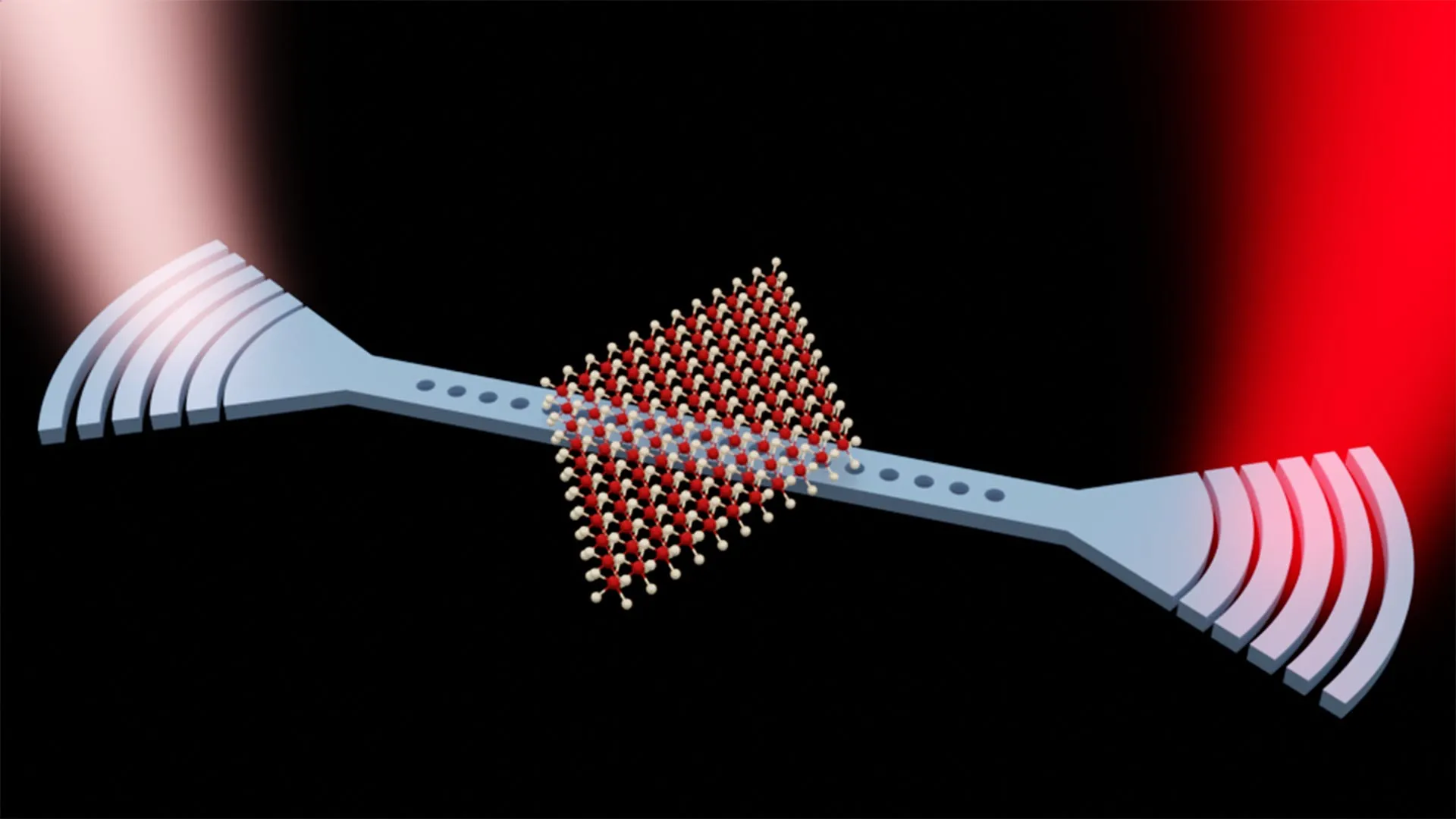
Eighty years after the University of Pennsylvania unveiled the Electronic Numerical Integrator and Computer (ENIAC)—a machine that occupied an entire room and heralded the birth of the digital age—the institution is once again positioning itself at the vanguard of a computational revolution. While the legacy of J. Presper Eckert and John Mauchly remains cemented in the history of electron-based processing, contemporary scientists are looking past the silicon-and-electron paradigm. A team of researchers led by Bo Zhen, the Jin K. Lee Presidential Associate Professor in the Department of Physics and Astronomy at Penn, has unveiled a breakthrough that could fundamentally shift how we power artificial intelligence: the transition from electrons to light.
The Legacy of the Electron: A Chronology of Modern Computing
To understand the magnitude of this shift, one must first look at the trajectory of modern computing. When ENIAC began its operations in the mid-1940s, it relied on thousands of vacuum tubes to switch currents, performing calculations that would have taken humans weeks in mere seconds. This reliance on the movement of electrons—subatomic particles possessing both mass and a negative electrical charge—became the blueprint for every smartphone, laptop, and server farm in existence today.
The decades that followed were marked by "Moore’s Law," the observation that the number of transistors on a microchip doubles roughly every two years. As transistors shrank, the industry packed more power into smaller spaces. However, this miniaturization has hit a physical "thermal wall." As electrons are forced through increasingly dense circuits, they collide with atomic structures, generating heat and encountering resistance. This resistance manifests as energy loss, a bottleneck that has become the primary obstacle in the path of the next generation of massive AI models.
Today, as AI systems require the processing of trillions of parameters, the energy consumption of data centers has become a global environmental concern. The "electronic bottleneck" is no longer just a performance issue; it is a sustainability crisis.
Why the Electron Has Reached Its Ceiling
The fundamental challenge with electrons lies in their physical nature. Because they possess mass and charge, moving them through a medium is inherently "expensive" in terms of energy. Every time a bit of data is processed, heat is shed, and energy is dissipated. This is the antithesis of the efficiency required for modern AI, which demands massive throughput with minimal latency.
"Electrons are effectively heavy, charged vehicles traveling through a congested city," explains one industry observer. "Every stop-and-go signal—every logic gate—creates friction."
In contrast, light—specifically photons—offers a different set of properties. Photons have zero rest mass and are charge-neutral. They can travel at the speed of light, and because they do not interact with one another or the environment in the same way electrons do, they can carry vast amounts of information with virtually no heat generation. For decades, this has made photonics the undisputed champion of long-distance communications, such as fiber-optic internet cables.
However, photonics has historically faced a paradox: because photons are charge-neutral and barely interact with their environment, they are famously difficult to "switch." In computing, the "switch"—the ability to turn a signal on or off to represent a 1 or a 0—is everything. If light cannot be easily switched, it cannot perform logic.
The Breakthrough: Exciton-Polaritons and the Marriage of Light and Matter
The research team at the University of Pennsylvania, led by Bo Zhen, has effectively bridged this gap by creating a "middle ground" between light and matter. Published in the journal Physical Review Letters, the study outlines the creation of a quasiparticle known as an exciton-polariton.
How the Technology Works
The team achieved this by integrating light with an atomically thin semiconductor material. Within this structure, photons become strongly coupled with the material’s electrons. The result is the exciton-polariton—a hybrid particle that possesses the high-speed, low-loss benefits of light while retaining the interaction capabilities of matter.
"Because they are charge-neutral and have zero rest mass, photons can carry information quickly over long distances with minimal loss, dominating communications technology," says Li He, co-first author of the study and currently an assistant professor at Montana State University. "But that neutrality means they barely interact with their environment, making them bad at the sort of signal-switching logic that computers depend on."
By creating the exciton-polariton, the team has essentially forced light to behave like an electron when it needs to be "switched," while allowing it to return to its photonic nature for transmission.
Supporting Data: Efficiency at the Atomic Scale
The most striking aspect of the Penn research is the sheer efficiency of the process. In their demonstration, the researchers achieved all-light switching using only 4 quadrillionths of a joule of energy. To put this into perspective, this is a fraction of the energy required to power a single, microscopic LED light for a nanosecond.
This level of efficiency is critical because existing photonic AI chips often fail at the "nonlinear activation" stage. In current experimental setups, light is used to move data, but when the system needs to make a decision (a nonlinear activation operation), it must convert the light back into an electrical signal. This "electro-optic conversion" is slow, energy-intensive, and negates the speed advantages of using light in the first place.
By utilizing exciton-polaritons, the Penn team demonstrated that they can perform these switching operations entirely within the optical domain. By eliminating the conversion step, the system stays "in the light" from input to output.
Implications for Artificial Intelligence and Beyond
The potential applications of this technology are far-reaching, particularly for the rapidly evolving field of generative AI.
1. Radical Energy Reduction
Large-scale AI training, such as that required for Large Language Models (LLMs), is currently limited by the power density of data centers. If photonic computing can reduce the energy required for switching operations by orders of magnitude, it could enable the training of models currently considered "too expensive" or "too large" for existing hardware.
2. Real-Time Edge Processing
Many AI applications, such as autonomous vehicles or high-speed visual surveillance, require immediate processing of camera data. Currently, visual information (light) must be converted into digital data (electricity) before it can be processed. A photonic chip could, in theory, process this visual information directly, allowing for near-instantaneous decision-making without the latency inherent in digital conversion.
3. The Quantum Frontier
While the primary focus is currently AI, the ability to control light at such a fundamental level has implications for quantum computing. Quantum systems rely on the manipulation of particles in states of superposition, and the ability to link light and matter with the precision demonstrated by the Zhen Lab provides a potential hardware platform for future quantum logic gates.
Official Perspectives and Future Challenges
The research, which involved contributions from Zhi Wang and Bumho Kim, was supported by the US Office of Naval Research and the Sloan Foundation. This backing underscores the strategic importance of the work; in an era of geopolitical competition over semiconductor supremacy, photonic computing is viewed as a "leapfrog" technology.
However, the team is the first to acknowledge that scaling this from a laboratory breakthrough to a commercial chip is a formidable challenge. Manufacturing atomically thin semiconductor materials with the precision required for mass production is a hurdle that the semiconductor industry is still navigating. Furthermore, integrating these materials into the existing CMOS (Complementary Metal-Oxide-Semiconductor) fabrication processes—the industry standard—will require significant investment and engineering innovation.
"We have proven the physics works," says Professor Bo Zhen. "The next step is engineering the systems to integrate these polaritonic switches into a robust, scalable architecture."
Conclusion: A New Era of Light
As we look back at the 80-year legacy of ENIAC, the transition from electrons to photons feels like a natural evolution. Just as the vacuum tube gave way to the transistor, and the transistor gave way to the integrated circuit, we may be on the cusp of the "Photonic Era."
By mastering the exciton-polariton, the researchers at the University of Pennsylvania have not only solved a fundamental problem of logic switching—they have provided a roadmap for a future where computers are not just faster, but fundamentally cleaner and more efficient. As AI continues to push the boundaries of what is possible, the ability to manipulate light at the atomic scale may well prove to be the most critical infrastructure development of the 21st century.
The light at the end of the tunnel, it seems, is not just a metaphor—it is the very hardware that will power the next century of human discovery.
 Sagoh
Sagoh  Asro
Asro  Siti Muinah