
 By rifanmuazin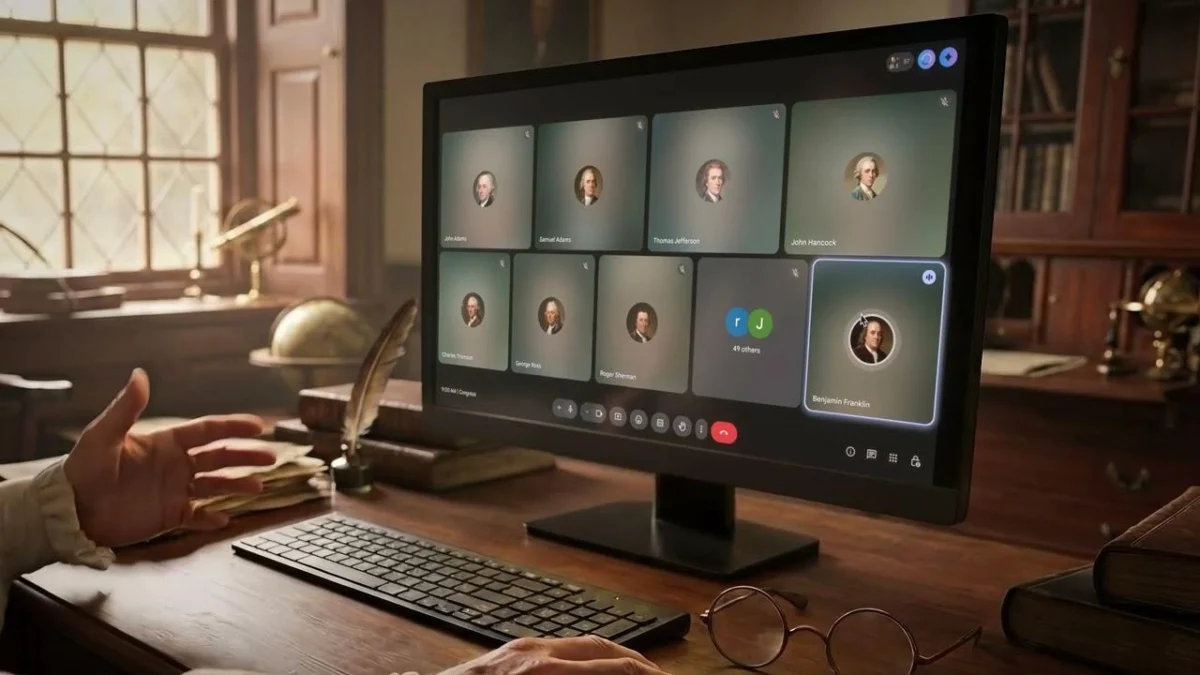
In the landscape of modern advertising, tech giants frequently attempt to bridge the gap between historical gravity and contemporary utility. However, Google’s latest promotional campaign for Google Workspace—a high-concept, AI-focused commercial—has ignited a firestorm of criticism. By attempting to reframe the birth of the United States through the lens of Gemini and cloud-based collaboration tools, Google has inadvertently sparked a debate about the limits of brand messaging, the role of AI in creative work, and the dangers of trivializing historical milestones.
Main Facts: The "1776" Pitch
The commercial, which began airing in anticipation of the Independence Day holiday, operates under the cheeky premise: "Group project, but make it 1776." The minute-long spot depicts the Founding Fathers—Thomas Jefferson, Benjamin Franklin, and John Adams—not as revolutionary political architects working in the candlelight of a tense, burgeoning nation, but as modern-day office workers tethered to Google Workspace.
The narrative arc is straightforward:
- Collaboration: Ben Franklin texts Thomas Jefferson to check on a draft.
- Digitization: Jefferson uses an AI-powered camera feature to transcribe a handwritten scroll into a Google Doc.
- Iteration: Franklin and Adams enter the document in "suggestion mode" to refine the language.
- Automation: Gemini, Google’s generative AI, is used to schedule meetings and take notes during a Google Meet call.
- Creative Assets: The team employs an image generator to create a "Great Seal" for the United States—ultimately settling on an image of a turkey, a humorous nod to Benjamin Franklin’s real-life preference.
The climax of the ad features the Founders asking Gemini for strategic advice: specifically, whether they should grant King George III "edit access" to the Declaration of Independence. The spot concludes with fireworks, suggesting that modern productivity tools were the missing ingredient in the American Revolution.
A Chronology of the Backlash
The commercial’s reception was swift and overwhelmingly negative. The trajectory of the criticism follows a clear path:
- The Immediate Reaction: Upon its release on YouTube and social media platforms, the ad was met with immediate "cringe" factor. Viewers took to X (formerly Twitter) and Reddit, noting that the juxtaposition of existential political struggle with corporate office jargon felt jarring and tone-deaf.
- Professional Commentary: By July 4th, tech and media critics—most notably Terrence O’Brien of The Verge and Angus Johnston, a history professor at CUNY—began to dissect the ad’s failures. The narrative moved from "this is corny" to "this is historically and intellectually insulting."
- The Philosophical Critique: Influential voices on platforms like Bluesky argued that the ad failed because it fundamentally misunderstood the nature of human collaboration. Rather than showing how AI aids in drafting, the ad suggested that AI is the drafting process, effectively stripping the agency from the historical figures it intended to celebrate.
- Mainstream Media Coverage: Outlets like TechCrunch picked up the story, highlighting the disconnect between Google’s polished marketing department and the public’s perception of AI as a tool that, at present, often lacks the nuance required for high-stakes human endeavor.
Supporting Data and Context
To understand why this specific ad failed where other "historical mashup" commercials have succeeded, one must look at the current state of consumer trust in AI.
Recent surveys indicate that while AI adoption is growing, a significant portion of the population remains wary of its impact on intellectual property, historical accuracy, and the quality of human communication. According to a recent Pew Research Center study, roughly 52% of Americans say they are more concerned than excited about the increased use of artificial intelligence in daily life.
Furthermore, Google’s own history with AI integration has been turbulent. The rollout of the "AI Overviews" feature in Google Search, which occasionally provided hallucinated or dangerous advice, left a lingering skepticism in the public consciousness. By placing Gemini in the hands of the Founding Fathers, Google inadvertently reminded consumers of the AI’s propensity for error, prompting critics to ask: Would you trust an algorithm to draft the most important document in American history?
Official Responses and Corporate Strategy
As of this writing, Google has not issued a formal apology or retraction for the commercial. However, industry insiders suggest that the campaign was designed to be "lighthearted" and "relatable" to a younger, Gen-Z demographic that is comfortable with generative AI.
The marketing strategy behind the ad was clearly aimed at positioning Google Workspace not just as a business tool, but as a "creative partner." By using the Declaration of Independence as a canvas, Google intended to signal that its tools are capable of handling high-level, complex collaborative projects.

However, in the world of corporate communications, the "tonal miss" is a costly error. Experts in brand identity argue that when a company takes a deeply held, serious subject—like the founding of a country—and attempts to turn it into a punchline for a software feature, the brand equity is diminished. Instead of appearing innovative, the brand appears detached from reality.
The Implications of "AI-Wash"
The fallout from this campaign highlights a broader trend often referred to as "AI-washing." This occurs when companies force AI into every aspect of their marketing, regardless of whether the technology actually solves a problem or enhances the product’s value proposition.
1. The Erosion of Human Agency
The most significant implication of the ad is the subtle message that the Founding Fathers’ genius was, in some way, augmented or replaced by a prompt-based system. By showing Gemini suggesting edits and taking notes, the ad risks diminishing the historical reality of the intense, argumentative, and deeply human debates that actually formed the American government.
2. The Limits of "Cringe" Marketing
The ad serves as a case study for future marketing campaigns: there is a fine line between a self-aware joke and a trivialization of history. When a brand ignores the socio-political context of its chosen setting—for example, by ignoring the fact that the Founding Fathers were operating in a world that excluded women and enslaved people—the "joke" falls flat. Critics were quick to point out that had the Founders asked Gemini about these issues, the algorithm would have been forced to grapple with the uncomfortable realities of history, a depth of inquiry the ad was clearly not equipped to handle.
3. The Future of AI in Professional Tools
Ultimately, the campaign underscores a pivotal moment for Google. The company is currently engaged in an "arms race" with competitors like Microsoft (via OpenAI) to become the default interface for the digital workforce. However, as this ad demonstrates, the battle is not just about computing power or model efficiency; it is about cultural alignment.
If Google wishes to win the trust of professionals, it must move away from marketing that treats AI as a panacea for all human history and towards messaging that emphasizes the supportive role of AI. The "Founding Fathers" spot failed because it positioned AI as the protagonist. For AI to be successfully integrated into the professional lexicon, it must remain the tool, not the architect.
Conclusion
Google’s foray into 1776 was intended to show off the versatility of Google Workspace and the intelligence of Gemini. Instead, it provided a cautionary tale about the dangers of tone-deaf advertising in an era of AI skepticism.
The negative reaction to the campaign—the "corny" and "dumb" descriptors used by critics—is not merely a rejection of a television spot; it is a signal that the public is becoming increasingly protective of their historical narratives and increasingly critical of the ways in which corporations utilize generative AI. As we move forward, brands must ask themselves not just if they can use AI in their marketing, but whether they should—and more importantly, whether doing so respects the intelligence and sensibilities of the audience they are trying to reach.
The Declaration of Independence was a product of human courage, debate, and profound intellectual risk. To suggest it was a "group project" solved by a chatbot is, perhaps, the ultimate irony of the digital age.
 Raul Delapena Setiawan
  Siti Muinah
  Asro
Asro 