
 By Asep Darmawan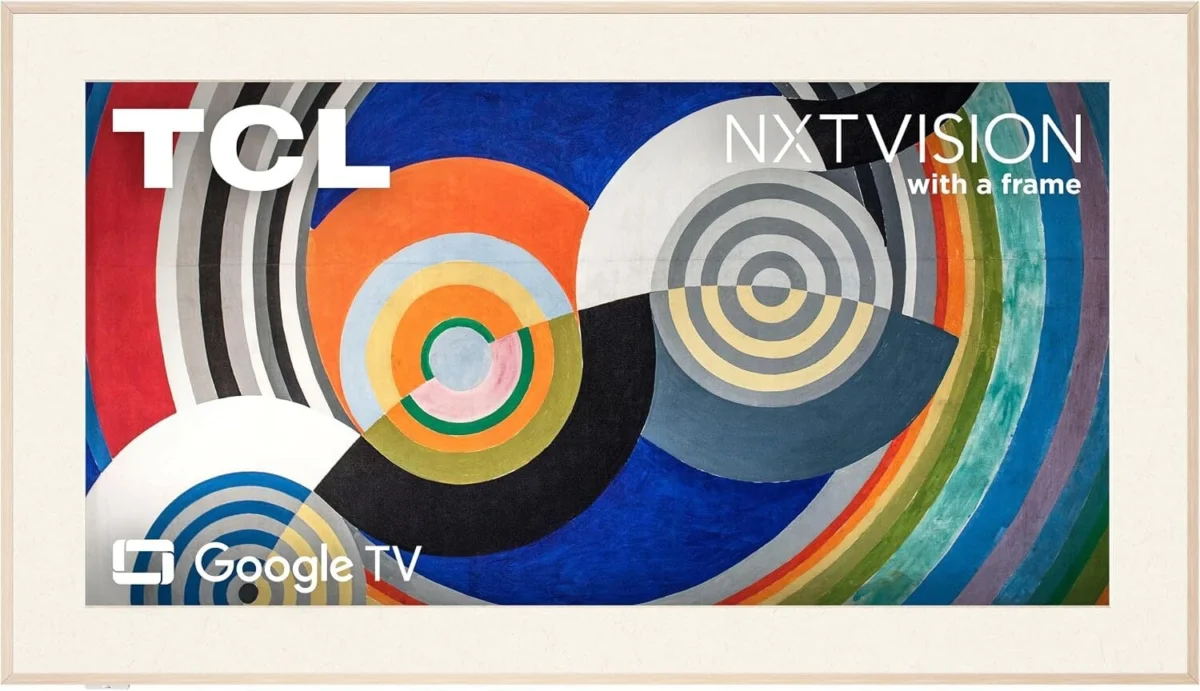
By Daniel Oropeza | July 6, 2026
For years, the "lifestyle television" category—a segment defined by aesthetics as much as technical performance—was dominated by a single, monolithic entity: the Samsung Frame. When it first launched, the concept of a television designed to disappear into a room’s décor by mimicking a gallery-quality picture frame felt like a niche curiosity. Many tech critics, myself included, dismissed it as a novelty. Yet, as the market evolved, so did the consumer appetite for home electronics that don’t look like black holes in the center of a living room.
Enter the TCL Nxtvision (formerly branded as the Nxtframe), a direct challenger that has arrived with aggressive pricing and specs that give the industry incumbent a run for its money. As of July 2026, the Nxtvision is seeing significant price cuts across its entire lineup, signaling that the era of the high-priced lifestyle display may be coming to an end.
The Core Facts: A New Challenger Enters the Ring
The shift in the market is now quantifiable. TCL has officially repositioned its Nxtframe line under the "Nxtvision" moniker, and the retail response has been immediate. The most notable deal currently live is for the 55-inch model, which has seen its price slashed by 40%, dropping from a standard MSRP of $999.99 to a highly competitive $595.99.
The discounts extend across the board, making high-end aesthetic technology accessible to a wider demographic. The 85-inch class model, a massive centerpiece for any home theater, is currently retailing for $1,399.96, down from its original $1,997.99. These figures represent the lowest price points ever recorded for the series, according to major price-tracking analytical tools.
Key Specifications of the Nxtvision Series:
- Display Technology: QLED 4K with anti-glare, matte-finish screens.
- Refresh Rate: 120 Hz native with a 144 Hz Variable Refresh Rate (VRR) capability.
- HDR Support: Full compatibility with Dolby Vision, HDR10+, and HLG.
- Software: Google TV interface.
- Design: 1.1-inch ultra-slim profile with a flush-mount wall bracket.
Chronology: The Evolution of the "Art TV"
To understand why this launch is significant, one must look at the timeline of the "Art TV" trend.
2017-2020: The Samsung Monopoly
Samsung introduced the Frame, effectively creating a sub-market for "lifestyle" displays. During these formative years, the technology was expensive and the selection was limited. Samsung leaned heavily into its proprietary Tizen OS and the "One Connect Box"—a clever external hub that allowed users to hide all their messy HDMI and power cables in a cabinet, leaving only a single, thin "invisible" cable running to the TV.

2025: The Market Widens
As the patent protections on the "frame-style" aesthetic began to loosen and the manufacturing cost of thin-panel QLED technology plummeted, other manufacturers took notice. The demand for home interior customization post-pandemic accelerated the need for screens that didn’t detract from minimalist or mid-century modern design aesthetics.
August 2025: TCL Unveils the Nxtframe
TCL formally announced its intent to enter the space. The initial announcement was met with skepticism regarding whether a budget-friendly brand could replicate the high-end "art" experience.
July 2026: The Price War Begins
The current wave of discounts marks the first time a major competitor has challenged Samsung’s dominance with both a lower entry price and more open software support (Google TV).
Supporting Data: Performance vs. Aesthetic
The Nxtvision does not just compete on price; it holds its own in technical performance. While the Samsung Frame is often criticized for its reliance on Tizen OS—which some power users find restrictive—the Nxtvision’s adoption of the Google TV platform offers a significantly more robust library of streaming applications and better integration with smart home ecosystems.
Furthermore, the Nxtvision’s inclusion of Dolby Vision is a major differentiator. Samsung has historically refused to support Dolby Vision on its televisions, opting instead for its own HDR10+ standard. For consumers who own large libraries of content mastered in Dolby Vision, the TCL provides a better viewing experience out of the box.
Comparative Value Analysis
| Feature | Samsung The Frame | TCL Nxtvision |
|---|---|---|
| Panel | QLED | QLED |
| OS | Tizen | Google TV |
| HDR | HDR10+ | Dolby Vision, HDR10+ |
| Cable Management | One Connect Box | Rear-mounted ports |
| Average Street Price | Higher | Significantly Lower |
Official Responses and Industry Outlook
Industry analysts have noted that TCL’s strategy is a direct play for the "middle-market" consumer who wants the look of a luxury device without the "lifestyle tax." In recent statements, TCL representatives have emphasized the "democratization of design," arguing that technology should adapt to the home, rather than the home adapting to the technology.
Conversely, Samsung has remained tight-lipped regarding specific competitors, focusing its marketing on its long-standing partnerships with global art museums and its proprietary "Art Store." However, the sheer volume of these retail discounts suggests that both companies are preparing for a fierce holiday season in late 2026, where the primary battleground will be the living room wall.

Implications: What This Means for Your Home
For the average consumer, the entry of the Nxtvision into the market has two major implications.
1. The Death of the "Ugly TV" Era
The most important implication is that we are witnessing the end of the bulky, industrial-looking television. As companies like TCL prove that you can build a slim, art-focused display at an affordable price point, other manufacturers (including LG, Hisense, and Sony) will likely be forced to incorporate design-first aesthetics into their mid-range models. If you’ve been holding off on a new TV because you dislike how they look when turned off, that barrier to entry has officially been lowered.
2. The Trade-off: Convenience vs. Aesthetics
It is vital, however, to address the primary trade-off. The Samsung Frame’s "One Connect Box" is a masterclass in cable management. Because the Nxtvision keeps all its ports on the back of the panel, the installation process requires more planning. If you want the "slick" look where no wires are visible, you will likely need to route your HDMI and power cables through the wall, which may require a professional installer or a basic DIY kit.
However, the significant cost savings—often amounting to several hundred dollars—provide the consumer with a healthy budget to hire that professional or purchase a high-quality, in-wall cable management system.
Final Verdict
The TCL Nxtvision is not merely a "budget" alternative; it is a feature-rich, high-performance display that leverages Google TV and superior HDR format support to challenge the status quo. Whether you are a dedicated cinephile looking for a 144 Hz VRR gaming display or a casual viewer who wants a digital canvas that displays Van Gogh in the afternoon and Netflix at night, the current price point makes the Nxtvision an exceptionally compelling proposition.
As of July 2026, if you are looking to upgrade your home entertainment setup, the Nxtvision series has effectively shifted the market from a luxury purchase to an accessible lifestyle upgrade. With 40% off the 55-inch model, the barrier to entry has never been lower. Just be prepared to manage your cables properly to achieve that "art frame" illusion.
 Layla Zulfa
  Asro
Asro  Reynand Wu