
 By Muslim
In a landmark shift for the digital economy, Amazon Web Services (AWS) has unveiled a groundbreaking capability within its AWS WAF (Web Application Firewall) suite: AI traffic monetization. This new feature empowers content publishers, digital media entities, and enterprise web owners to finally capture value from the automated AI agents and large language model (LLM) crawlers that have come to dominate the modern internet. By facilitating direct, edge-based payments for web access, AWS is effectively rewriting the rules of engagement between content creators and the developers of artificial intelligence.
The Problem: The Great AI Value Drain
The digital landscape is undergoing a structural transformation. Recent industry data indicates that AI bot traffic now accounts for more than 50% of total web traffic for many publishers. Furthermore, AI-specific crawlers—automated scripts designed to scrape data for model training or real-time query responses—have seen their activity grow by over 300% year-over-year.
For years, the "deal" of the internet was simple: publishers provided content, search engines indexed it, and in return, users were directed back to the publisher’s site, driving page views, ad impressions, and potential subscription conversions. However, the rise of generative AI has disrupted this virtuous cycle. AI agents ingest, summarize, and synthesize content directly within their own interfaces, frequently providing answers without ever directing the user back to the source.
Publishers have been left footing the bill for the infrastructure costs required to serve this high-volume traffic while receiving little to no commercial benefit. Until now, publishers had limited options: they could block bots entirely—potentially losing out on being "known" by the latest AI systems—or they could tolerate the "drain" on their resources. AWS WAF’s new monetization capability closes this gap, moving the conversation from defensive blocking to economic participation.
A Chronology of the Shift
The transition toward this monetization model began with the maturation of AWS WAF Bot Control. Initially designed as a security tool to protect websites from malicious scraping and credential stuffing, Bot Control provided the granular visibility needed to distinguish between legitimate human users, benign search crawlers, and aggressive AI agents.
- Early Stages (The Visibility Era): AWS WAF provided the fundamental telemetry for customers to realize the extent of their AI bot traffic, revealing the disparity between traffic volume and actual user engagement.
- The Regulatory and Ethical Push: As copyright disputes and concerns over "data scraping" intensified globally, publishers began demanding more control over how their data is consumed.
- The Technical Leap (June 2026): AWS integrated the x402 payment protocol, effectively enabling the infrastructure to request and receive payment at the "edge"—the point closest to the user—without requiring a request to ever reach the publisher’s origin server. This bypassed the need for complex, latency-heavy application-level billing integrations.
Supporting Data: The Impact of AI Crawling
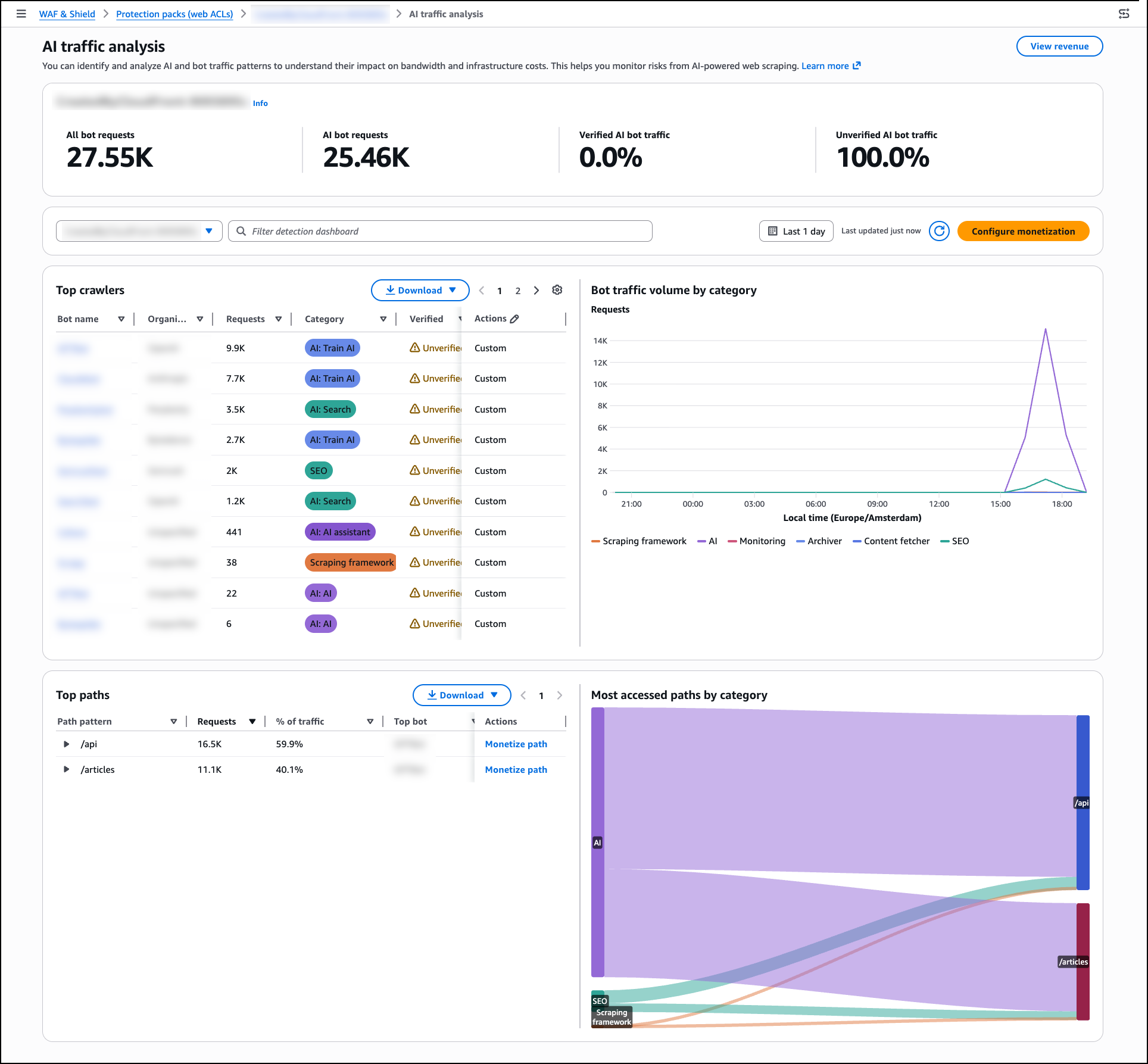
The economic strain of AI bots is not merely anecdotal. According to metrics surfaced by the new AWS WAF AI Traffic Analysis dashboard, the infrastructure cost of supporting non-value-added bot traffic is substantial.

The dashboard provides a breakdown of four critical traffic categories:
- All bot requests: The total volume of automated traffic.
- AI bot requests: Traffic specifically from generative models and agents.
- Verified AI bot traffic: Traffic from known, authenticated entities (e.g., GPTBot, Claude-Web, Perplexity-Bot).
- Unverified AI bot traffic: Unidentified or malicious crawlers.
With over 650 distinct AI bot types already categorized by AWS WAF, the data suggests that publishers can now identify which models are "costing" them the most in terms of bandwidth and server load. By visualizing per-path heatmaps, site owners can pinpoint exactly which content is most valuable to AI companies, allowing for precise, data-driven pricing strategies.
How It Works: The Mechanics of Edge Monetization
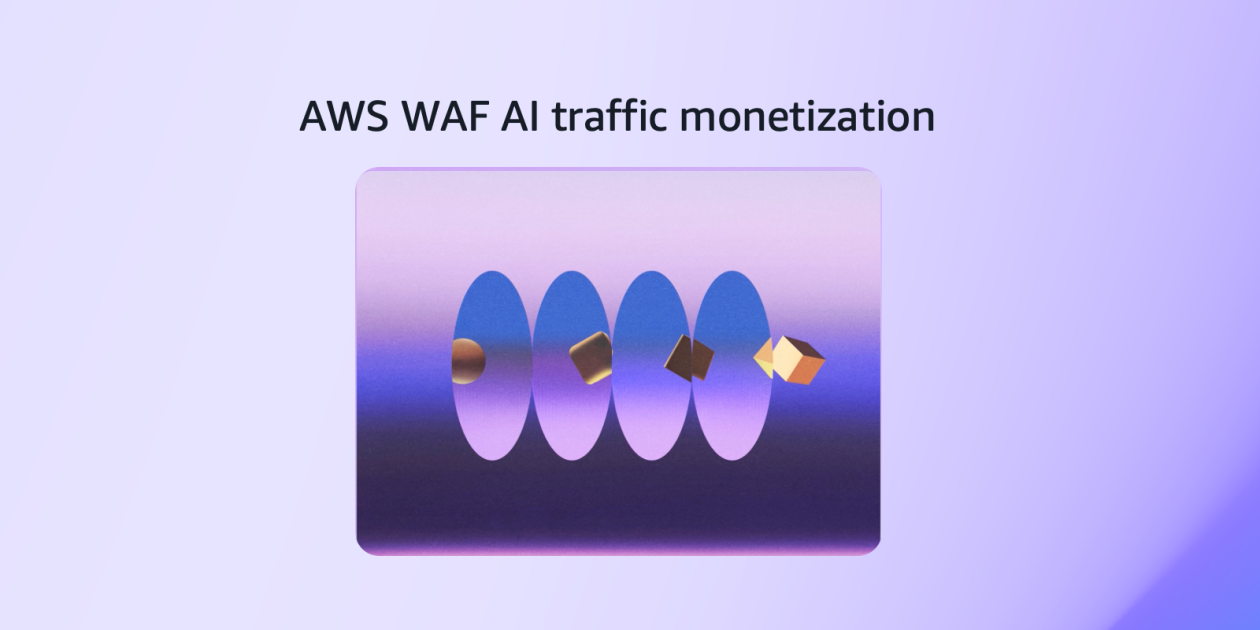
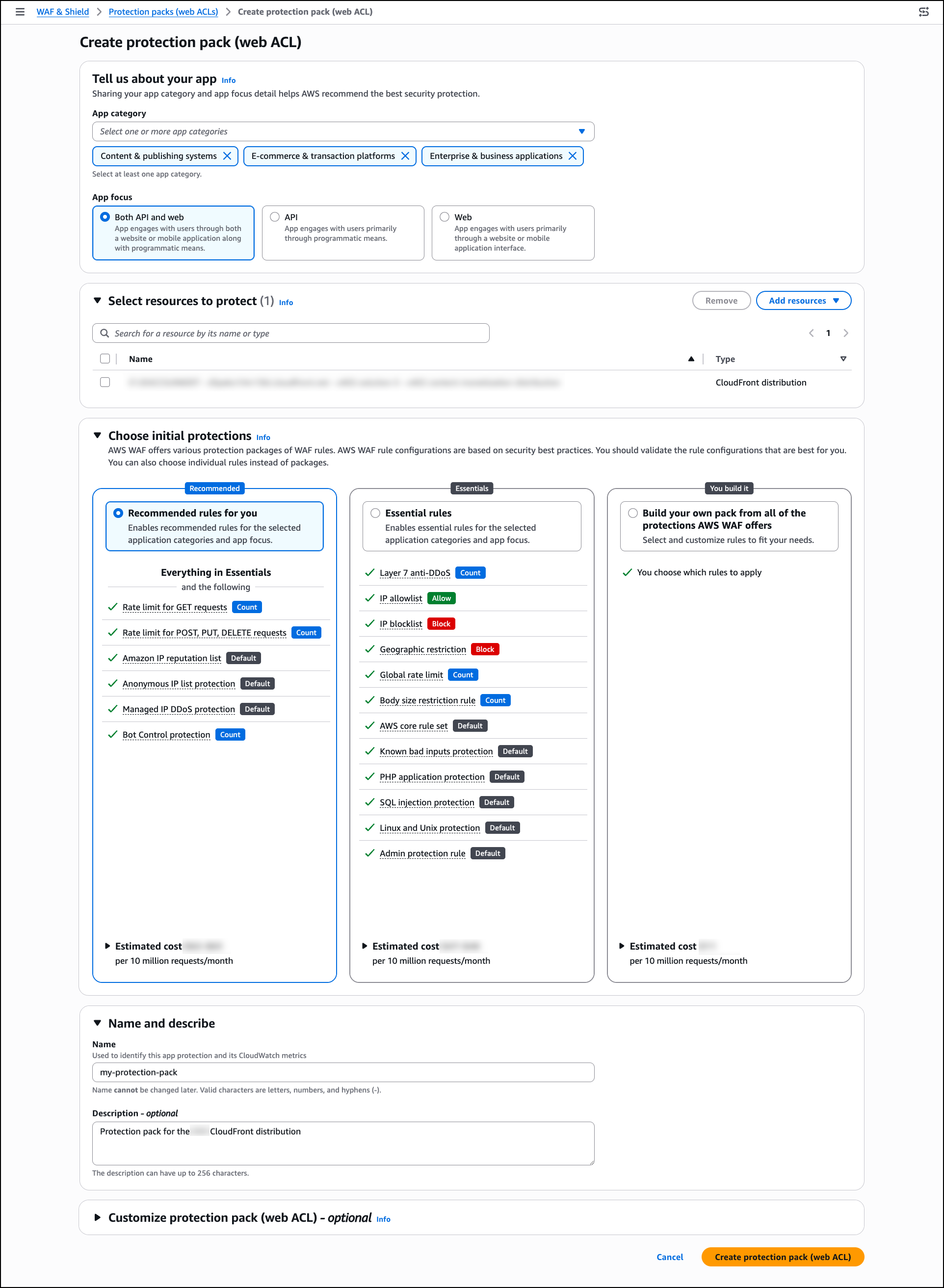
The implementation of this system is designed to be low-friction for the publisher. It leverages the "Protection Pack" model, where a user defines content paths and assigns monetization policies.
The x402 Protocol and Blockchain Settlement
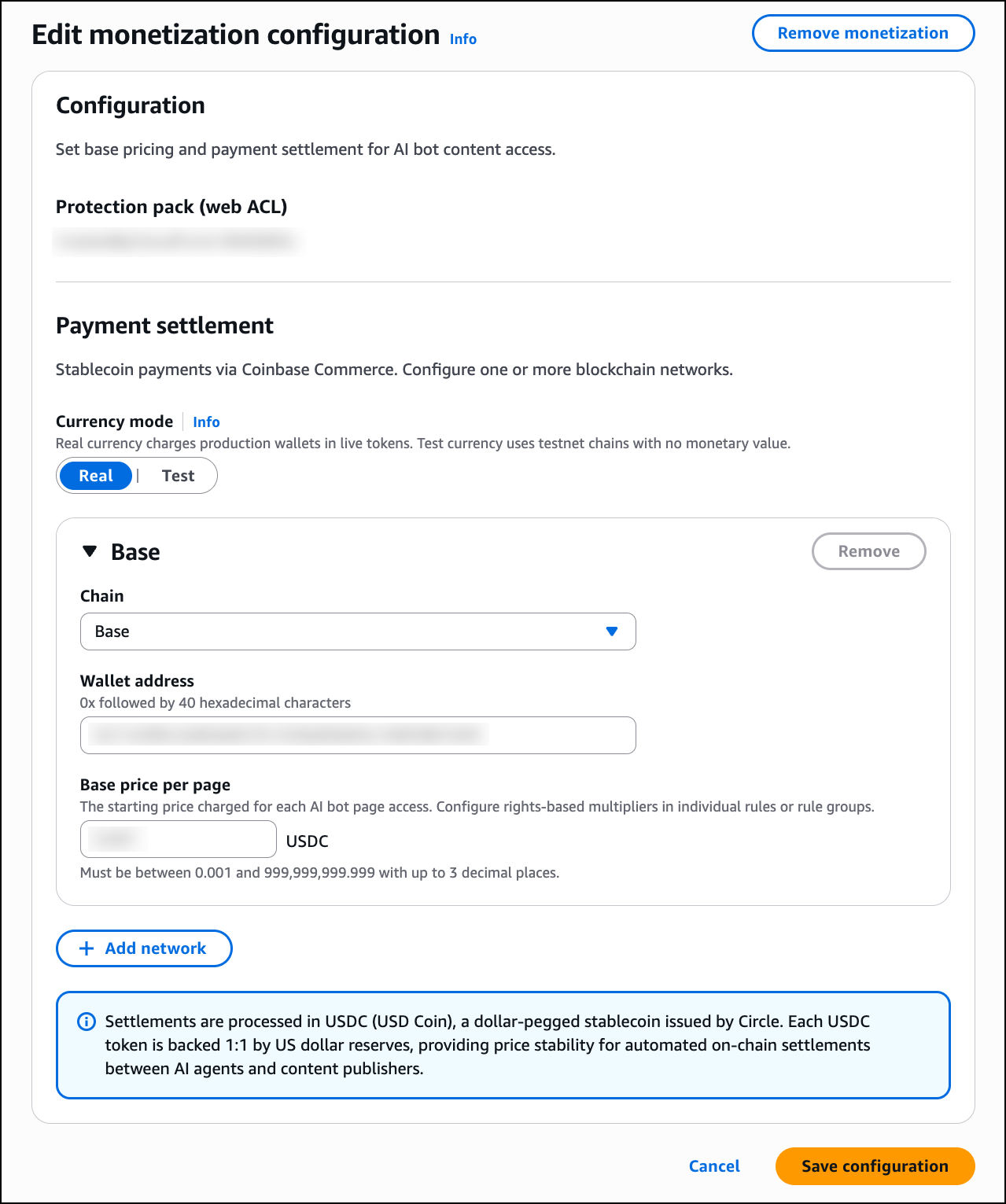
The core of the monetization engine is the x402 Facilitator, powered by Coinbase. When an AI agent hits a protected path, the WAF returns an HTTP 402 "Payment Required" status code. This response includes a JSON-based price manifest, which specifies:
- The price in USDC (USD Coin).
- The supported blockchain networks (e.g., Base or Solana).
- The destination wallet address for the publisher.
This machine-to-machine transaction happens in milliseconds. Once the AI agent’s runtime submits a signed payment authorization, the WAF verifies the transaction and grants the content access. This eliminates the need for manual licensing agreements or the building of a bespoke payment processing backend.
Flexibility and Control
Publishers are not forced into a "take it or leave it" scenario. For each agent tier, administrators can choose from a range of actions:
- Monetize: Enforce the 402 payment flow.
- Allow: Grant free access (e.g., to preferred partners).
- Block: Deny access entirely.
- Count/Challenge: Monitor without charging or use a CAPTCHA to verify human-like behavior.
The inclusion of a "Test Mode" is particularly noteworthy, allowing publishers to simulate payment flows on testnets like Base Sepolia before committing to real-money transactions.
Official Responses and Strategic Implications
The release has sent ripples through both the web development and AI development communities. While AWS has not taken a middleman fee, the ecosystem-wide adoption of this standard could redefine the "value" of web content.
"The goal is to provide a standardized, scalable way for publishers to recoup the costs associated with the AI revolution," said a representative close to the development. By moving the payment layer to the edge, AWS is positioning itself as the infrastructure layer for the "Paid Web."
Implications for the Future of the Internet
- The Rise of Micro-payments: The reliance on stablecoins for these transactions suggests that micro-transactions, long promised as the future of the internet, are finally becoming technically viable through automated machine-to-machine settlement.
- Data Licensing as a Default: If a significant portion of the web adopts this model, AI companies will no longer be able to assume that "public" means "free to ingest." This could lead to a two-tiered internet: a free, human-centric web and a premium, machine-readable web.
- Publisher Empowerment: Smaller publishers, who previously lacked the legal or technical weight to negotiate with massive AI labs, now have a simple, "plug-and-play" mechanism to extract revenue from their intellectual property.
Challenges and Considerations
Despite the technical elegance of the solution, challenges remain. The primary hurdle is the adoption of the x402 protocol by AI developers. While the system is designed to be autonomous, it requires AI crawlers to "opt-in" to the payment flow. If major AI labs refuse to pay, publishers will be forced to choose between blocking these crawlers—which may impact their visibility—or accepting the status quo.
Furthermore, the volatility of blockchain networks and the reliance on stablecoin wallets introduce a layer of financial management that many content creators may not be prepared for. However, as integration with Stripe and other traditional payment processors looms on the roadmap, the barrier to entry is expected to decrease further.
Conclusion
The introduction of AI traffic monetization via AWS WAF is more than just a new feature—it is an acknowledgement of a permanent change in how information is accessed and consumed. By treating AI agents as commercial entities rather than passive users, AWS is handing the power back to the creators. Whether this leads to a more equitable digital ecosystem or a fragmented web remains to be seen, but one thing is clear: the era of "free" data scraping is rapidly coming to an end. Publishers now have the tools to ensure that if their content is being used to build the future of intelligence, they are at least being compensated for the privilege.
 Neng Nana
  Suro Senen
  Lina Hope