
 By Evan Lee Salim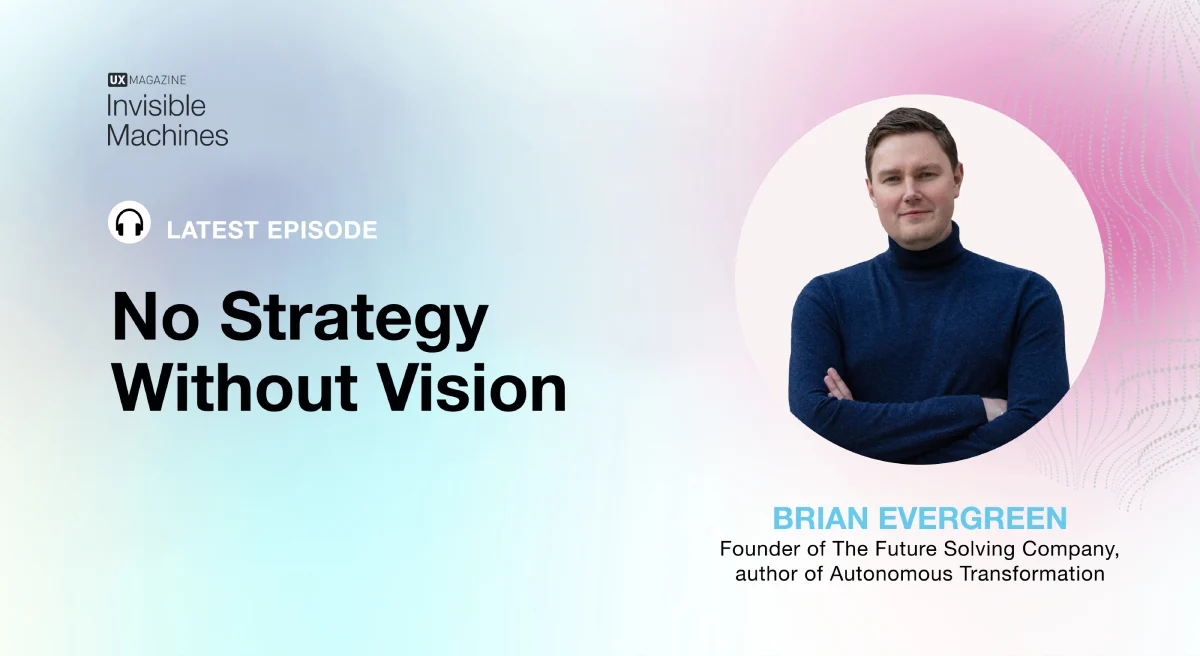
The modern executive’s approach to Artificial Intelligence has become a ritual of performative competence. It usually follows a predictable, polished trajectory: first, the procurement of a glossy slide deck to establish “AI literacy” in the boardroom; second, a frantic pivot toward a list of use cases; and finally, the inevitable vendor shortlist.
But according to Brian Evergreen, founder of The Future Solving Company and author of Autonomous Transformation, this process is not strategy at all. It is a procurement exercise built for a world that ceased to exist the moment generative and agentic AI moved from the lab to the enterprise. In a recent appearance on the Invisible Machines podcast, Evergreen argued that while organizations are experts at buying known solutions, they are fundamentally ill-equipped to build the future.
The core of the problem, Evergreen posits, is that today’s corporate procurement machinery—built on Requests for Proposals (RFPs), analyst quadrants, and feature matrices—is designed to purchase products, not to pioneer new market structures.
The Mirage of the Vendor Bake-Off
For decades, the standard playbook for enterprise innovation has been to identify a problem, define the requirements, and solicit vendors to fill the gap. This "science fair" approach assumes that the problem is a known commodity—a "SKU" that can be bought off the shelf.
However, agentic AI introduces a paradigm shift that makes the traditional checklist obsolete. In a landscape where software capabilities evolve mid-flight through model updates, a feature matrix is not just stagnant; it is actively misleading.
“The trouble starts when literacy becomes permission to sprint,” Evergreen explains. Executives race to purchase technology before they have defined the future they are trying to inhabit. By focusing on "parity" with competitors or checking boxes on a vendor’s capability list, firms are often optimizing for the status quo. In the world of agentic systems, where AI can operate autonomously to achieve goals, the "missing capability" you worry about today might be released as a minor update by your vendor next week. Consequently, the time spent on rigorous procurement cycles is often time spent on a roadmap that will be irrelevant by the time of implementation.
Chronology of a Failed Strategy: From Blockbuster to Modern Stagnation
To understand why current AI strategies often result in "busy, intelligent, and hollow" plans, one must look at the history of technological disruption.
Evergreen points to the collapse of Blockbuster as the ultimate cautionary tale. Long before streaming became the industry standard, Blockbuster had a functional, credible streaming pilot. Yet, the organization failed to pivot because the innovation was treated as a threat to the existing "late-fee" economic model. The technological barrier wasn’t the problem; the organizational alignment was. Because Blockbuster’s primary customer-of-record was the franchisee—not the end-user—leadership chose to protect a dying model rather than embrace a future that would cannibalize their primary revenue stream.
Conversely, the Bell Labs of 1952 offers a roadmap for true breakthrough innovation. Faced with the realization that their inventions were becoming antiquated, leadership enacted a radical exercise: they forced themselves to act as if the entire telephone network had been destroyed. By mandating a rebuild from scratch, informed by modern science and economics rather than legacy infrastructure, they sparked a generation of innovation.
The lesson is clear: Breakthroughs do not occur by tweaking the edges of an existing system. They occur when leadership is willing to convene the necessary talent to envision a new reality, independent of the constraints that currently bind them.
The "Future Solving" Framework: A New Methodology
Evergreen distinguishes between "problem solving" and "future solving." Problem solving is an exercise in subtraction—trimming waste, optimizing existing value, and patching holes. Future solving, by contrast, is an exercise in appetite. It asks: What do we want to exist that does not exist yet, and what must become true for that reality to manifest?
The Necessary Conditions Map
Rather than a mood board, the output of this process should be a "map of necessary conditions." This involves identifying the specific tools, data contracts, organizational incentives, and policy shifts required to achieve a vision.
For instance, consider Morgan Stanley’s early efforts to establish a governed knowledge layer. Instead of dumping unstructured PDFs into a model, they focused on ownership, freshness, and accountability. This wasn’t just a technical upgrade; it was a foundational shift in how the organization viewed its intellectual property.
Evergreen argues that a vision must be visceral. If it can be summarized as "we will be more profitable," it is a scoreboard, not a vision. A true vision is something that can be pictured in a room: a clinician who remains focused on the patient while AI handles the documentation, or an advisor who provides real-time, high-trust insights. If the workforce cannot "feel" the outcome, they will not support the change once the pilot phase concludes.
Supporting Data: Why Friction Isn’t the Enemy
A recurring theme in the discourse around enterprise AI is the obsession with reducing friction. Product teams are trained to make paths concrete—to reduce the number of clicks, to simplify states, and to provide clear acceptance criteria.
While this is effective for incremental improvements, Evergreen warns that "friction is inexhaustible without a north star." If you do not have a clear, compelling destination, you will always find more friction to optimize. When a vision is compelling enough, however, it acts as a steamroller. When employees are enrolled in a future they genuinely desire, they will clear the obstacles in its service.
Robb Wilson, CEO of OneReach.ai, adds that adoption metrics can be deceptive. A high volume of usage for the "wrong future" is still a failure. If an organization measures success by how many employees are using a new AI tool, but that tool is merely digitizing an obsolete process, the organization is simply moving faster in the wrong direction.
Official Responses and Strategic Implications
The implications for leadership are stark. If an organization does not take the time to author its own future, a platform company will do it for them by default.
Key Takeaways for the C-Suite:
- Stop the Procurement Sprint: Do not initiate an RFP until you have clearly defined the future state you are aiming to create. A vendor bake-off is a tool for purchasing, not for design.
- Define "What Must Be True": If you want to achieve an autonomous, high-value AI state, what infrastructure, data hygiene, and cultural shifts must happen first? Work backward from that vision.
- Language is Strategy: A vision must be communicable and visceral. If your strategy relies on abstract jargon, it will fail to gain the organizational momentum necessary to overcome legacy inertia.
- Prioritize Architecture Over Features: In an age of rapidly evolving agentic systems, the ability to integrate and own your data layer is more valuable than any specific feature set a vendor offers today.
Conclusion: The Case for Authorship
The future of the enterprise is not discovered by measuring the present more accurately. It is authored by those who have the courage to name it in language that humans can carry, who map the necessary truths, and who only then engage with the machinery of agents, models, and roadmaps.
As Brian Evergreen suggests, real AI strategy is not a vendor bake-off on the deck of a ship whose heading no one has agreed upon. It is a design challenge of the highest order. Until organizations shift their focus from buying the "latest" to defining the "next," they will remain trapped in the architecture of their own obsolescence, optimizing for a world that has already slipped away.
 Ammar Sabilarrohman
  Neng Nana
  Sagoh
Sagoh 