
 By Siti Muinah
In the hyper-competitive landscape of digital marketing, there is an enduring, uncomfortable truth: what worked yesterday is likely to fail tomorrow. As consumer attention spans fragment and inboxes become increasingly saturated with noise, the margin for error has vanished. For founders and growth marketers, the difference between a stagnant brand and a market leader is rarely a single “big idea.” Instead, it is the quiet, systematic, and relentless pursuit of marginal gains.
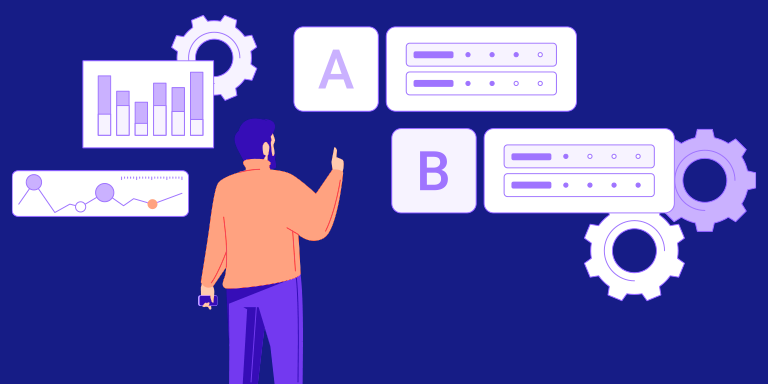
This is the era of A/B testing—not as a secondary "nice-to-have" task, but as a non-negotiable operational standard. By moving away from subjective hunches and toward data-driven experimentation, businesses are unlocking double-digit revenue growth without increasing their acquisition spend by a single cent.
The Core Mandate: Why Optimization Outperforms Intuition
Most entrepreneurs obsess over the top of the funnel, pouring capital into new lead generation, social media ads, and influencer partnerships. While growth is vital, many ignore the most lucrative asset they already possess: their existing email list and current website traffic.
The Shift in Market Dynamics
The digital landscape has fundamentally changed. Data from Omnisend’s 2024 analysis reveals that average open rates climbed from 22.9% in 2022 to 25.1% in 2023. While this 2% gain may seem modest, it represents a massive shift in engagement efficacy. This success was not accidental; it was the direct result of brands leaning into rigorous segmentation and continuous A/B testing.
When these optimizations are applied to automated flows—the "silent sales force" of e-commerce—the results become exponential. Automated emails, such as welcome sequences and abandoned cart recovery, are currently delivering 52% higher open rates and 332% higher click-through rates compared to standard broadcast campaigns. Even more compelling, these flows boast a staggering 2,361% higher conversion rate. However, these figures are only achievable when those flows are treated as living, breathing experiments that undergo constant refinement.
Chronology of a Winning Strategy
Successful optimization follows a specific evolutionary path. It is rarely a "set it and forget it" process. Instead, it moves through distinct stages of maturity.
Phase 1: Establishing the Baseline (The "Gut-Check" Era)
In the early days of a startup, most communication is based on the founder’s intuition. You send an email because you think the copy sounds compelling. At this stage, the goal is simply to build a baseline of performance data. You are not yet optimizing; you are observing.
Phase 2: Variable Isolation
Once you have enough volume to draw statistically significant conclusions, you move into the phase of isolation. This is where you stop testing the entire email at once. You begin to test one specific variable—such as the subject line—against a control group. By isolating one element, you gain clear insights into what moves the needle.
Phase 3: The Compound Growth Loop
As your database grows, you enter the phase of continuous optimization. You are no longer asking "what works?" but rather "what works better for this specific segment?" During this phase, you integrate testing into your weekly operational cadence. Every send becomes a data point that informs the next, creating a virtuous cycle of compounding gains.
Supporting Data: The Math Behind the Margin
To understand why A/B testing is a financial imperative, one must look at the compounding nature of small improvements.
The 5% Effect
If a brand has an email list of 50,000 subscribers, a 5% increase in open rates might lead to an additional 2,500 people seeing your offer. If your click-through rate subsequently improves by 10%, that brings hundreds of additional users to your landing page. When compounded across an entire funnel, these micro-lifts can result in an extra $5,000 or more in monthly recurring revenue (MRR) without the cost of a single new lead.
The Power of the Subject Line
The subject line is the gatekeeper of your brand. Research indicates that 43% of recipients decide to open an email based solely on the subject line. More alarmingly, 69% of users will mark an email as junk or spam based on a poor subject line, which severely damages your sender reputation and long-term deliverability. Personalized subject lines have been proven to boost open rates by as much as 26%, underscoring the necessity of using customer data to inform your messaging.
High-Impact Elements for Strategic Experimentation
To implement an effective testing regimen, founders must focus on the high-leverage areas that drive the most significant user behavior changes.
1. Subject Lines: The First Impression
The goal here is simple: maximize the open rate. Test curiosity-based lines versus benefit-driven ones. Experiment with the use of emojis, bracketed content (e.g., [New Guide]), or even direct questions to pique interest.
2. CTA (Call-to-Action) Optimization
Once the reader is inside the email, the CTA is the bridge to conversion. Test the copy (e.g., "Get My 20% Off" vs. "Shop Now"), the button color, and the placement. A button that creates a sense of urgency often outperforms one that suggests a passive action.
3. Sender Identity
Who is the email coming from? Testing a generic "Company Name" against a "Founder Name" (e.g., "Jane from Company") can significantly humanize your brand and increase trust, leading to higher long-term engagement.
4. Behavioral Segmentation
Blanket emails are becoming relics of the past. Start testing segments based on purchase history, browsing behavior, or engagement levels. A message tailored to a "VIP" customer should look and sound different from one sent to a "Window Shopper."
Official Perspectives: The Professional Framework
Industry experts and top-tier platforms like Omnisend emphasize that the most common mistake in A/B testing is a lack of structure. To avoid "guessing," marketers should adopt a standardized scientific method:
- Formulate a Hypothesis: Move away from "Let’s try blue." Move toward "We believe adding a social proof element to the CTA will increase clicks by 15%."
- Isolate the Variable: Never test a new subject line and a new layout simultaneously. If you do, you will never know which change caused the performance shift.
- Define Success Metrics: If you are testing a subject line, your primary metric is the open rate. If you are testing a CTA, your metric is the click-through rate. Do not conflate the two.
- Sample Size Significance: Avoid the "false positive" trap. Most professional email platforms recommend testing with at least 1,000 recipients per version. For smaller lists, utilize a "20/20/60" split: send the two test versions to 20% of your list each, wait for a clear winner, and then send the winning version to the remaining 60%.
Implications for Future Growth
The long-term implication of consistent A/B testing is the creation of a "Competitive Intelligence Library." Over time, your team will accumulate a body of knowledge regarding exactly what your audience responds to—the specific tone, the timing, the visual cues, and the offers that drive them to purchase.
This data is portable. A winning subject line strategy discovered in an email campaign can be repurposed for SMS marketing, Facebook ad copy, or landing page headlines. This is how lean, agile startups manage to out-perform larger, better-funded competitors. They do not just have more money; they have more intelligence.
The Bottom Line
In a landscape where customer acquisition costs (CAC) continue to rise, the ability to maximize the value of your existing audience is the ultimate competitive advantage. You do not need a complete overhaul of your marketing strategy to see results. You need a commitment to the "Small Wins" philosophy.
By automating your flows and rigorously testing every touchpoint, you transform your marketing from a series of educated guesses into a high-performance, revenue-generating engine. For those ready to scale, platforms like Omnisend provide the infrastructure to move fast, segment effectively, and optimize every interaction.
Start small, test often, and let the data dictate your path to growth.
Special Offer for Foundr Readers:
Ready to turn your email marketing into a conversion machine? Omnisend is offering an exclusive 50% discount for the first three months to our readers. Use code FOUNDR50 to start testing smarter today.
 Dwi Wanna
  rifanmuazin
  Asep Darmawan