
 By Neng Nana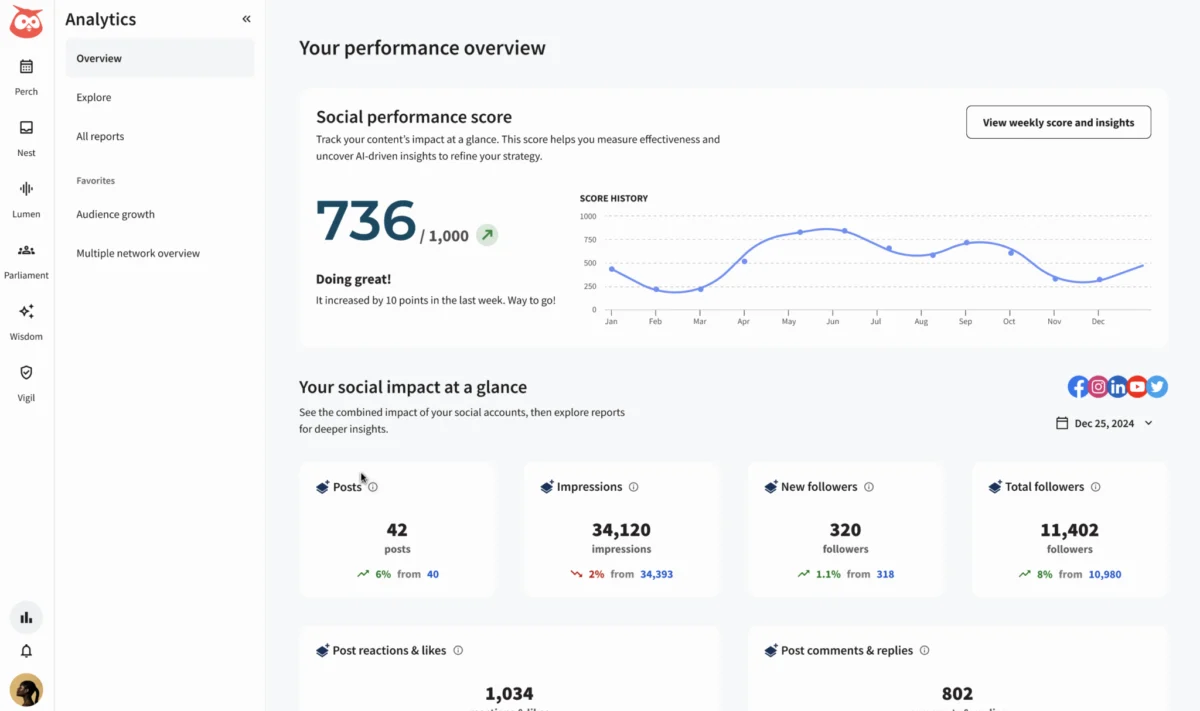
In an era where digital presence is synonymous with business viability, the ability to translate "likes," "shares," and "comments" into tangible revenue is the ultimate litmus test for a marketing department. With global social commerce projected to exceed $1 trillion by 2028, the pressure on marketing teams to prove the financial efficacy of their efforts has never been higher. Yet, a staggering 68% of marketers report significant anxiety when tasked with presenting social media Return on Investment (ROI) to executive stakeholders.
This guide explores the mechanisms, methodologies, and strategic imperatives required to measure, report, and optimize social media ROI in a complex, multi-channel landscape.

The Core Concept: Defining Social Media ROI
At its fundamental level, social media ROI is the ratio of value generated against the investment made. It is the bridge between creative content strategy and the corporate balance sheet. The classic formula remains the bedrock of this assessment:
ROI = ((Value Generated – Costs of Investment) / Costs of Investment) x 100

However, for modern enterprises, "value" is no longer just immediate sales. It encompasses a spectrum of outcomes, including brand sentiment, customer lifetime value (CLV), organic traffic growth, and reduced customer acquisition costs. By assigning estimated monetary proxies to non-monetary metrics, teams can present a holistic view of how social channels contribute to long-term business health.
The Chronology of Measurement: Why Social ROI is Evolving
Historically, ROI was measured using "last-click" attribution—a model that credited the final touchpoint before a purchase. In the social media age, this is increasingly obsolete.

- The Awareness Phase: A user discovers a brand through a viral video or a thoughtfully curated carousel. No sale occurs, but a brand impression is registered.
- The Consideration Phase: The same user engages with a series of posts, reads a whitepaper, or interacts with a Q&A session.
- The Conversion Phase: The user performs a search (or clicks an email link) and makes a purchase.
If companies rely solely on last-click models, social media is frequently undervalued. Modern strategies now utilize multi-touch attribution and assisted conversion models, which recognize the cumulative role social media plays in guiding a prospect through the entire customer journey. Recognizing that B2B sales cycles can span months, leading organizations now track social influence across multiple quarters rather than isolated daily snapshots.
Supporting Data: The Case for Social Investment
The data is unequivocal: social media is a primary engine for modern business growth. With nearly 5.75 billion users projected worldwide by 2026, social channels have become the most effective tool for demand generation.
- Financial Growth: Statista reports that social commerce is expected to generate $908.5 billion in 2026, marking a 10.7% year-over-year growth.
- Sales Influence: Approximately 46% of marketers report that active social media presence directly correlates with improved sales performance.
- Budget Protection: For enterprise teams, the ability to demonstrate that social media is not merely an expense, but a revenue-generating asset, is critical to protecting departmental budgets during periods of fiscal scrutiny.
The Five-Step Framework for Calculating ROI
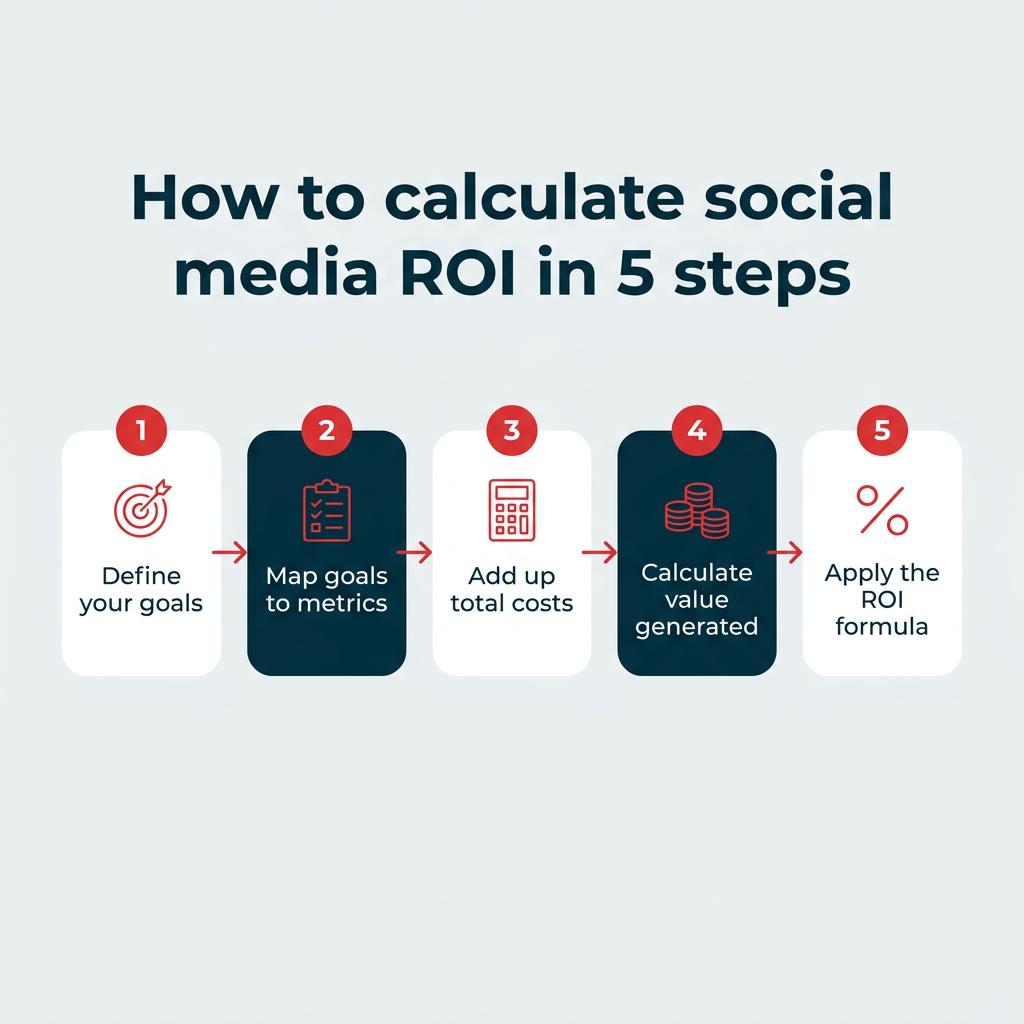
To move from ambiguity to clarity, marketing teams should adopt a rigorous, five-step approach to ROI calculation.
1. Define Clear, Tiered Goals
Before crunching numbers, define what success looks like. Are you driving top-of-funnel brand awareness, middle-of-funnel engagement, or bottom-of-funnel conversion? As noted by industry experts, goals should be revisited quarterly to ensure they align with broader organizational shifts and the evolving social landscape.
2. Map Metrics to Stages
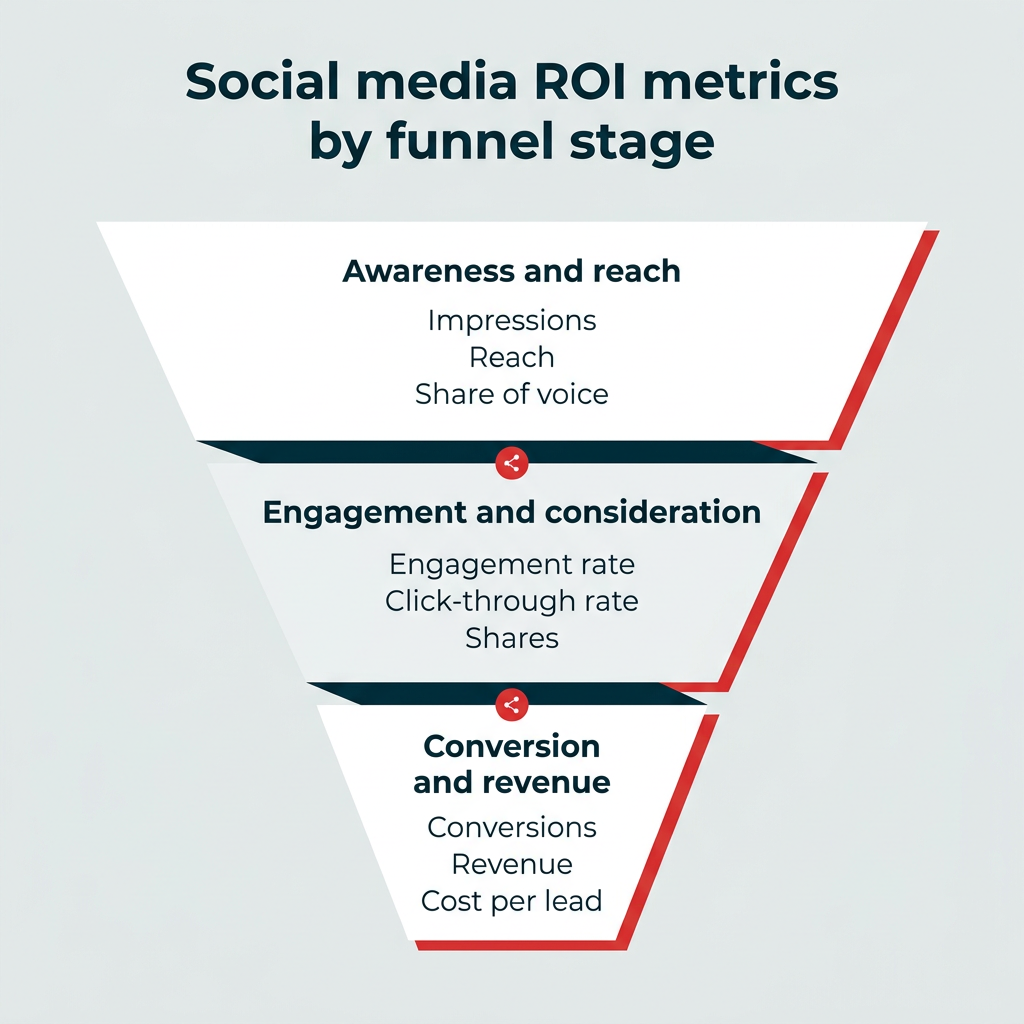
Different goals require specific KPIs. Use the following alignment to ensure your reporting is relevant:
- Awareness: Impressions, Reach, Share of Voice, Follower Growth.
- Engagement: Click-through rates, Saves, Shares, Video Completion Rates.
- Conversion: Revenue attributed to social, Cost per Lead (CPL), Return on Ad Spend (ROAS).
3. Aggregating Total Costs
A common error in ROI calculation is ignoring hidden costs. To reach an accurate figure, your "Costs" variable must include:
- Ad spend (paid media).
- Content production (tools, software, photography, videography).
- Personnel costs (time spent by social teams, designers, and copywriters).
- Platform subscriptions and management tools.
4. Quantifying Value
This is the most challenging step. For direct sales, the value is clear. For non-monetary value, apply proxies:
- Follower Growth: Use the average customer lifetime value (CLV) to estimate the future potential of new followers.
- Engagement: Assign an estimated dollar value per engagement based on historical conversion rates of past campaigns.
5. Application of the Formula
Once costs and value are calculated, apply the formula. A positive percentage indicates success. If the result is negative, it is a clear signal to audit the strategy, pivot content formats, or refine audience targeting.

Overcoming Roadblocks to ROI Measurement
The road to accurate measurement is often obstructed by data silos. Each platform—LinkedIn, Instagram, TikTok—maintains its own isolated analytics dashboard. Without a unified management platform, marketers spend more time manually gathering data than acting on it.
Furthermore, the rise of "Dark Social"—traffic that cannot be attributed to a specific source because it happens in private channels like DMs or private groups—requires marketers to look at broader correlation data. By utilizing UTM parameters, teams can tag URLs to track exactly which posts drive traffic to the website, effectively illuminating the "dark" areas of the customer journey.

Implications: Strategic Optimization
Once the math is done, the strategy must be refined. Continuous improvement is the hallmark of a high-performing social team.
The Power of A/B Testing
Social media is a living laboratory. By running A/B tests on content formats (e.g., Reels vs. Carousels), posting times, and creative hooks, teams can identify what resonates. For instance, recent industry experiments have shown that static carousels often outperform short-form video in specific niches, proving that the highest-effort format is not always the highest-ROI format.

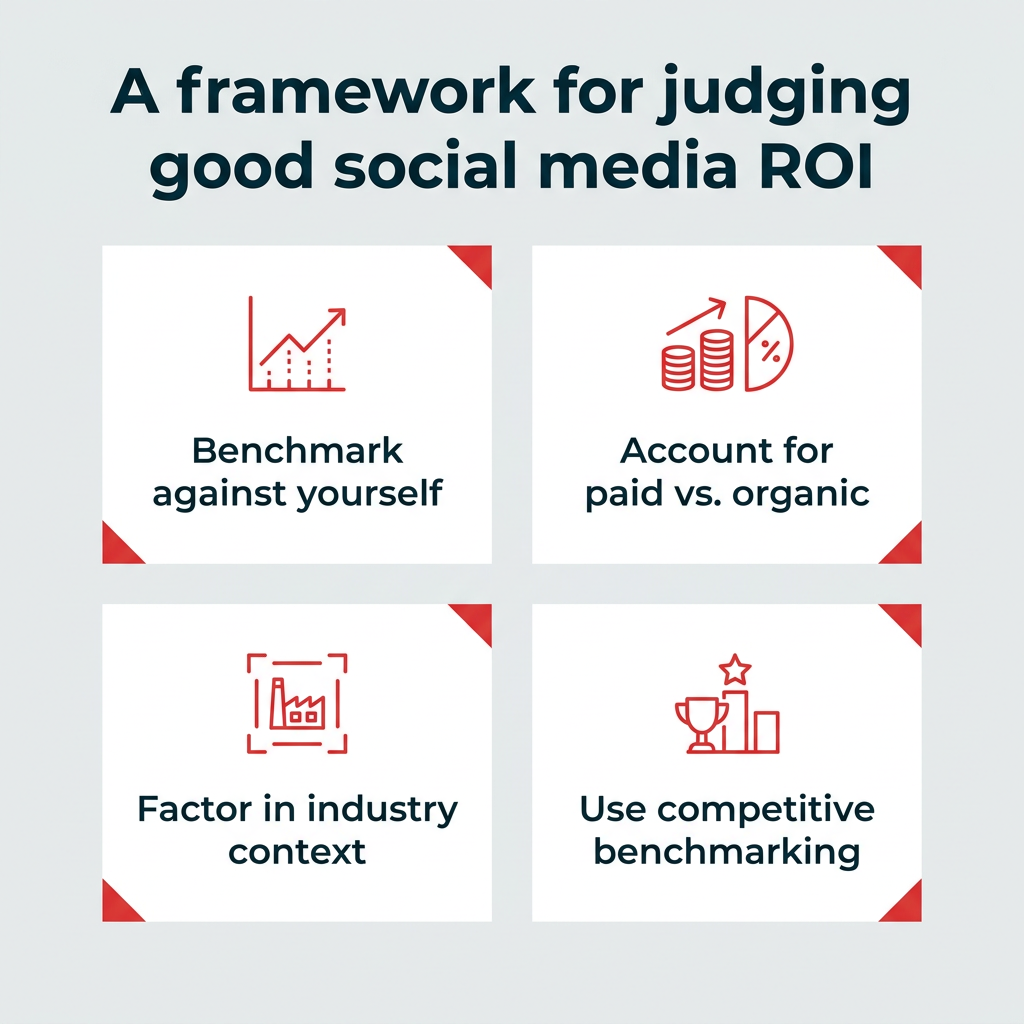
Competitive Benchmarking
Do not measure your success in a vacuum. Use analytics tools to monitor your competitors’ top-performing posts and trending hashtags. Understanding how your share of voice compares to the industry average provides a baseline that allows for more realistic goal-setting.
The Role of Integrated Technology
For enterprise-level organizations, a unified platform is no longer a luxury—it is a necessity. Solutions like Hootsuite allow teams to connect social data to Google Analytics or Adobe Analytics. This integration allows marketers to see how a specific post leads to a sign-up or a purchase, effectively bridging the gap between social media activity and bottom-line revenue.

Reporting to Stakeholders: Speaking the Language of Leadership
When presenting ROI to executives, avoid "vanity metrics" like raw follower counts. Instead, frame your report around:
- Business Impact: Connect social growth to revenue, lead generation, or cost savings.
- Trends Over Time: Focus on the trajectory of performance rather than single-day spikes.
- Actionable Insights: Conclude every report with a "what’s next" section—how the data will inform the strategy for the upcoming quarter.
Conclusion
Social media ROI is not a static number, but a dynamic story of how your brand interacts with the world. By aligning clear goals with precise tracking, leveraging multi-touch attribution, and utilizing unified analytics tools, marketers can transform social media from an abstract engagement channel into a predictable, scalable revenue engine. The goal is not just to prove that social media works—it is to optimize how it works to drive sustained, long-term business success.
 Reynand Wu
  Muslim
  Nila Kartika Wati