
 By Suro Senen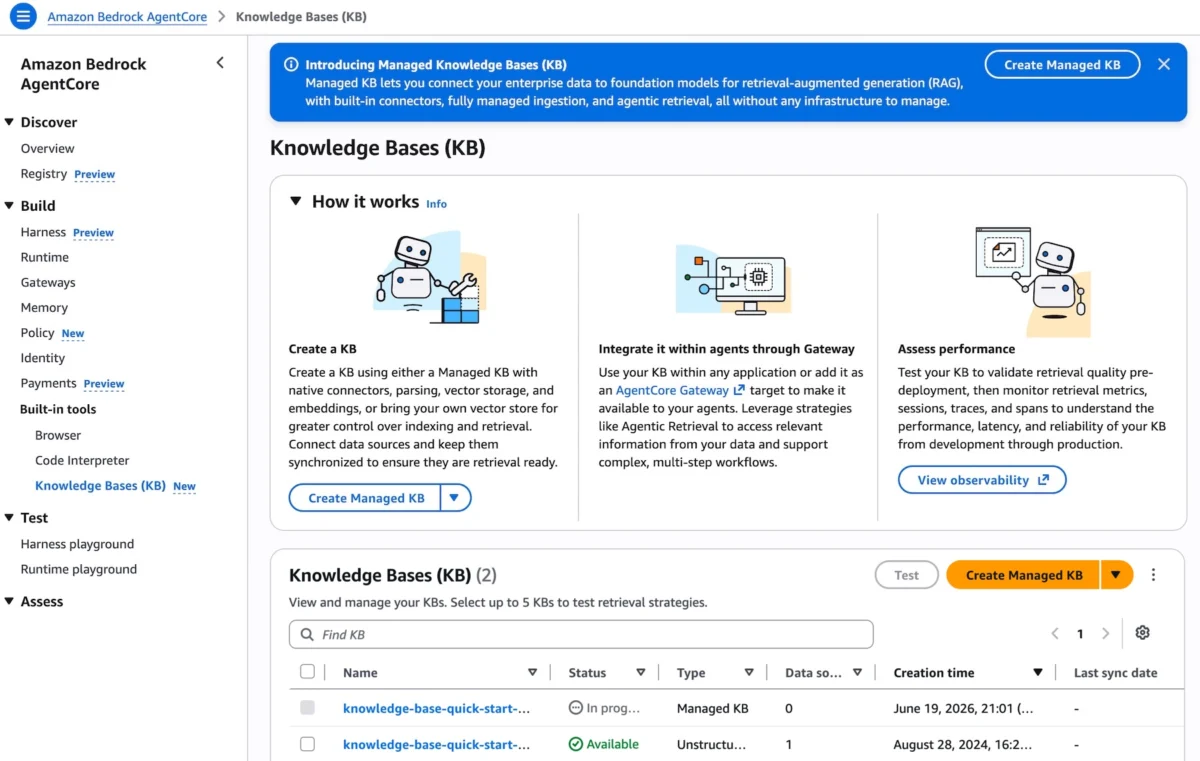
In a major leap forward for enterprise-grade generative AI, Amazon Web Services (AWS) has unveiled Amazon Bedrock Managed Knowledge Base. This new service is designed to alleviate the heavy operational burden currently facing developers who are tasked with integrating proprietary corporate data into Large Language Model (LLM) applications. By abstracting the complex infrastructure required for Retrieval-Augmented Generation (RAG), AWS is enabling organizations to deploy sophisticated, data-aware AI agents in a matter of minutes rather than weeks.
The State of Generative AI: The RAG Dilemma
As businesses race to capitalize on generative AI, the primary challenge has shifted from simply accessing a foundation model to ensuring those models are grounded in private, enterprise-specific data. RAG, the industry-standard architecture for achieving this, involves a multi-step process: data ingestion, chunking, embedding, vector storage, retrieval, re-ranking, and finally, generation.
Until today, developers had to manually architect and maintain these disparate components. They were required to select embedding models, manage vector databases, optimize re-ranking algorithms, and implement complex orchestration logic to ensure that an AI agent could reliably retrieve the right information. This "undifferentiated heavy lifting" has been a significant barrier to entry, often resulting in brittle pipelines and inconsistent retrieval accuracy.
Chronology: Building Toward the Managed Future
The release of Bedrock Managed Knowledge Base follows a period of rapid iteration within the AWS ecosystem.
- Early 2024: AWS introduced the original Knowledge Bases for Amazon Bedrock, providing a foundation for RAG.
- Late 2024–Early 2025: The rise of "Agentic AI" saw developers demanding more autonomous, multi-step reasoning capabilities, moving beyond simple Q&A.
- Mid-2026: Recognizing the complexity of managing these agentic workflows, AWS began developing a more holistic, "managed primitive" approach.
- June 16, 2026: The official announcement of Amazon Bedrock Managed Knowledge Base, integrating seamless connectors and "Smart Parsing" to automate the RAG lifecycle.
- June 19, 2026: AWS finalized documentation and console updates to streamline the onboarding experience for global developers.
Core Innovations: Smart Parsing and the Agentic Retriever
Amazon Bedrock Managed Knowledge Base introduces three primary innovations that distinguish it from previous iterations of RAG tooling:
1. Smart Parsing for Accurate Ingestion
Data quality is the cornerstone of effective AI. Often, enterprise data exists in messy, unstructured formats—PDFs, complex spreadsheets, and internal wikis. The new "Smart Parsing" capability automatically determines the optimal ingestion strategy for any given file type. By combining layout analysis, table extraction, and semantic chunking, it eliminates the need for manual preprocessing. This automated approach drastically reduces the time spent on data engineering, allowing developers to focus on the high-level logic of their AI agents.

2. The Agentic Retriever
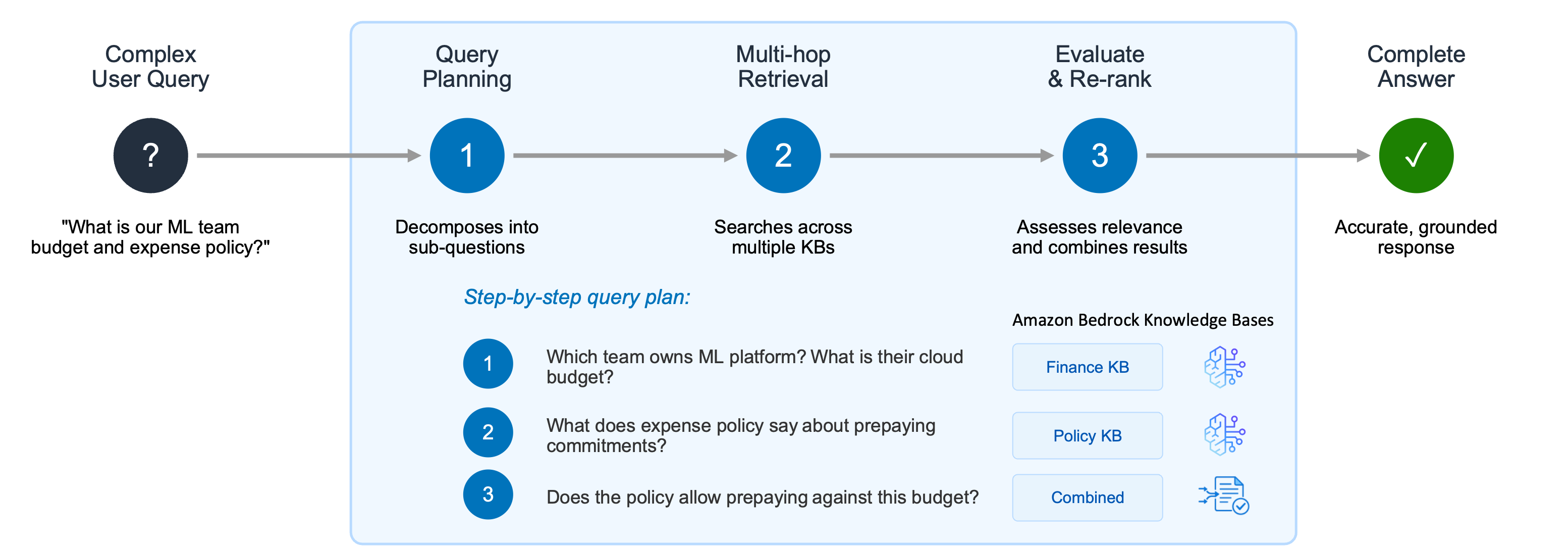
Traditional search often fails when faced with complex, multi-layered queries. For example, asking an agent to reconcile an expense policy with a specific project budget requires multiple logical steps. The new Agentic Retriever solves this by decomposing complex questions into a structured plan. It performs multi-hop retrieval, evaluates intermediate findings, and stops only when it has gathered sufficient evidence to provide a grounded, accurate response. This effectively replaces the need for custom-built orchestration code, which has historically been one of the most error-prone parts of AI application development.
3. Model Agnosticism and Flexibility
While AWS provides a high-performing set of default models—including embeddings and re-rankers—the platform remains strictly agnostic. Developers are not locked into a specific stack. If a project requires a specific fine-tuned embedding model or a high-performance foundation model, they can swap these components in and out without re-engineering the underlying data infrastructure.
Integration via AgentCore Gateway
Perhaps the most significant development for enterprise architects is the integration with the Amazon Bedrock AgentCore Gateway. By treating the Managed Knowledge Base as a native target, AWS has simplified the integration process into just a few lines of code.
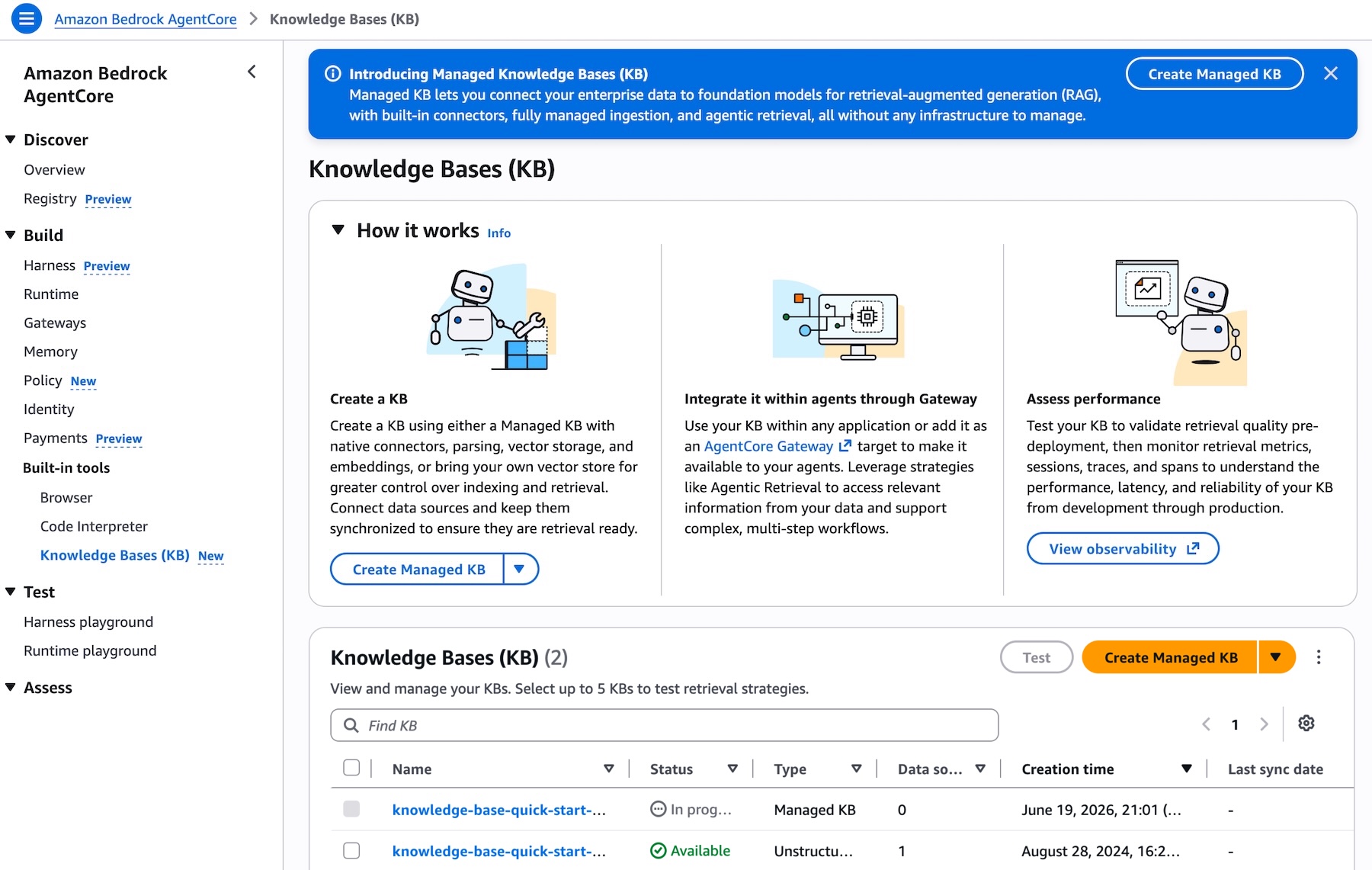
The service exposes the Model Context Protocol (MCP), ensuring that these knowledge bases are immediately compatible with popular industry frameworks such as LangChain, CrewAI, LlamaIndex, and LangGraph. This ensures that organizations can build their AI agents using their preferred tools while leveraging AWS’s robust, managed backend for security, observability, and permission management.
Official Perspective: The Shift to Business Outcomes
In the official release communication, AWS emphasized the shift from "infrastructure management" to "business outcomes."
"Organizations building agentic AI applications need secure, reliable, and up-to-date access to enterprise-wide data to deliver accurate, fast, and trusted outcomes," stated Daniel Abib, an AWS technical lead. By abstracting the complexity of RAG, AWS is positioning itself not just as a model provider, but as an orchestration layer for the entire enterprise AI lifecycle. The emphasis is on "trust"—by providing observability and evaluation metrics via the AgentCore dashboard, AWS is giving enterprises the visibility they need to deploy AI in regulated, high-stakes environments.
Implications for the Enterprise
The release of this service has several profound implications for the technology landscape:
1. Democratization of Advanced AI
By removing the requirement for deep expertise in vector databases and semantic search algorithms, AWS is lowering the barrier to entry. Smaller development teams can now build applications that rival the capabilities of larger, well-funded organizations.
2. The End of "RAG-in-a-Box" Complexity
Many enterprises have spent the last 18 months building custom, bespoke RAG engines. This move by AWS signals a shift toward standardized, managed primitives. Companies may now choose to migrate their custom pipelines to the Managed Knowledge Base to reduce maintenance costs and improve reliability through AWS’s native scaling.
3. Focus on Security and Compliance
With built-in IAM role automation and simplified permission management, the Managed Knowledge Base addresses one of the biggest hurdles in enterprise AI: data governance. Being able to define exactly which users and agents have access to which parts of the knowledge base is critical for adoption in industries like finance, healthcare, and legal services.
4. Cost Optimization
The pay-as-you-go pricing model, based on storage and retrieval volume, allows for granular cost control. This aligns with the broader AWS strategy of enabling "experimentation without risk." Companies can start small, scale their data ingestion as needed, and pay only for the compute cycles used during retrieval.
Getting Started and Future Roadmap
Amazon Bedrock Managed Knowledge Base is currently available in major AWS Regions, including US East (N. Virginia), US West (Oregon), Asia Pacific (Sydney, Tokyo), and Europe (Dublin, Frankfurt, London), as well as AWS GovCloud (US-West).
For developers eager to start, the process is streamlined:
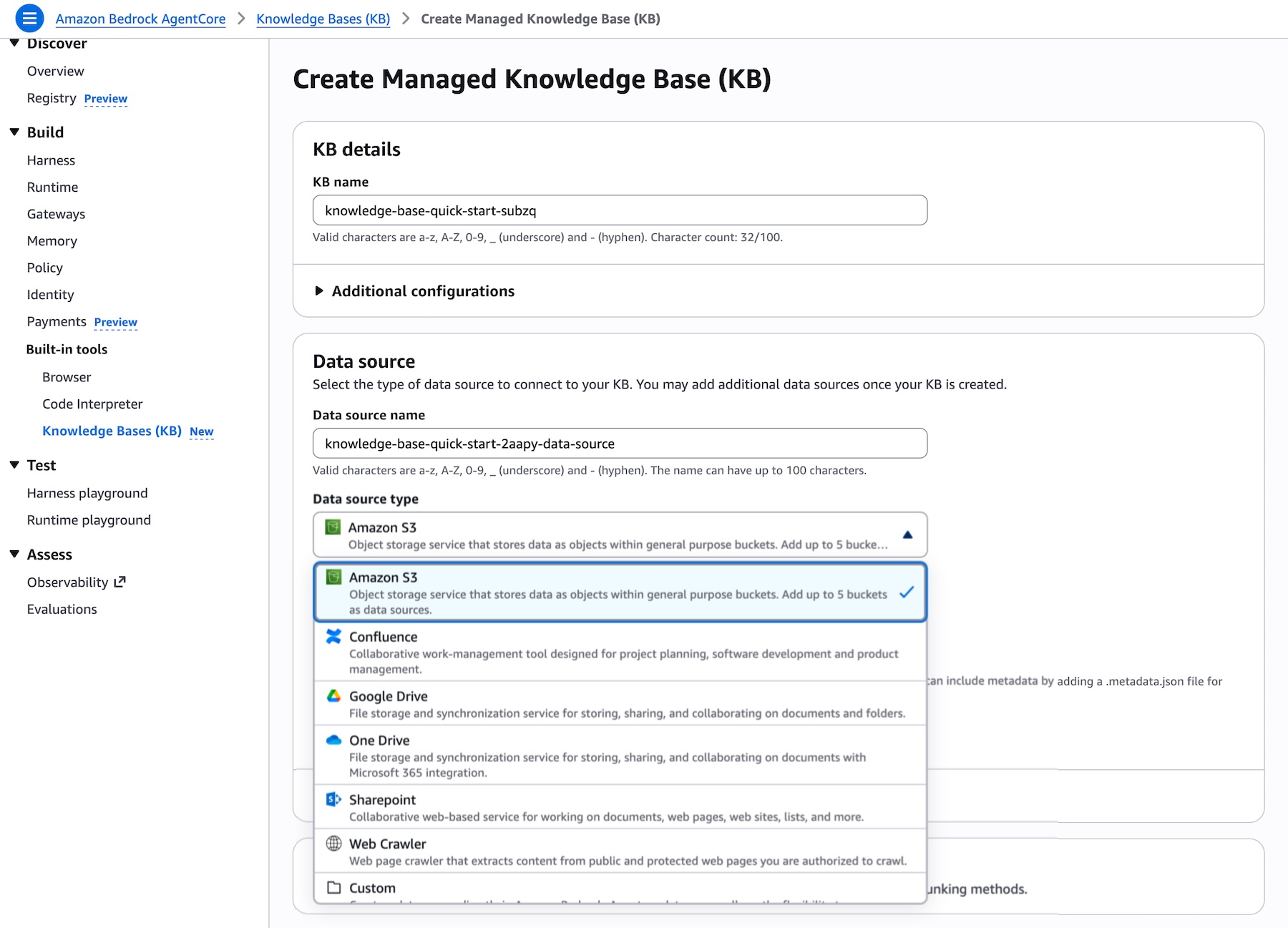
- Navigate to the Bedrock console.
- Select "Create Managed KB."
- Connect to existing data sources via the intuitive dropdown (S3, Confluence, SharePoint, Google Drive, etc.).
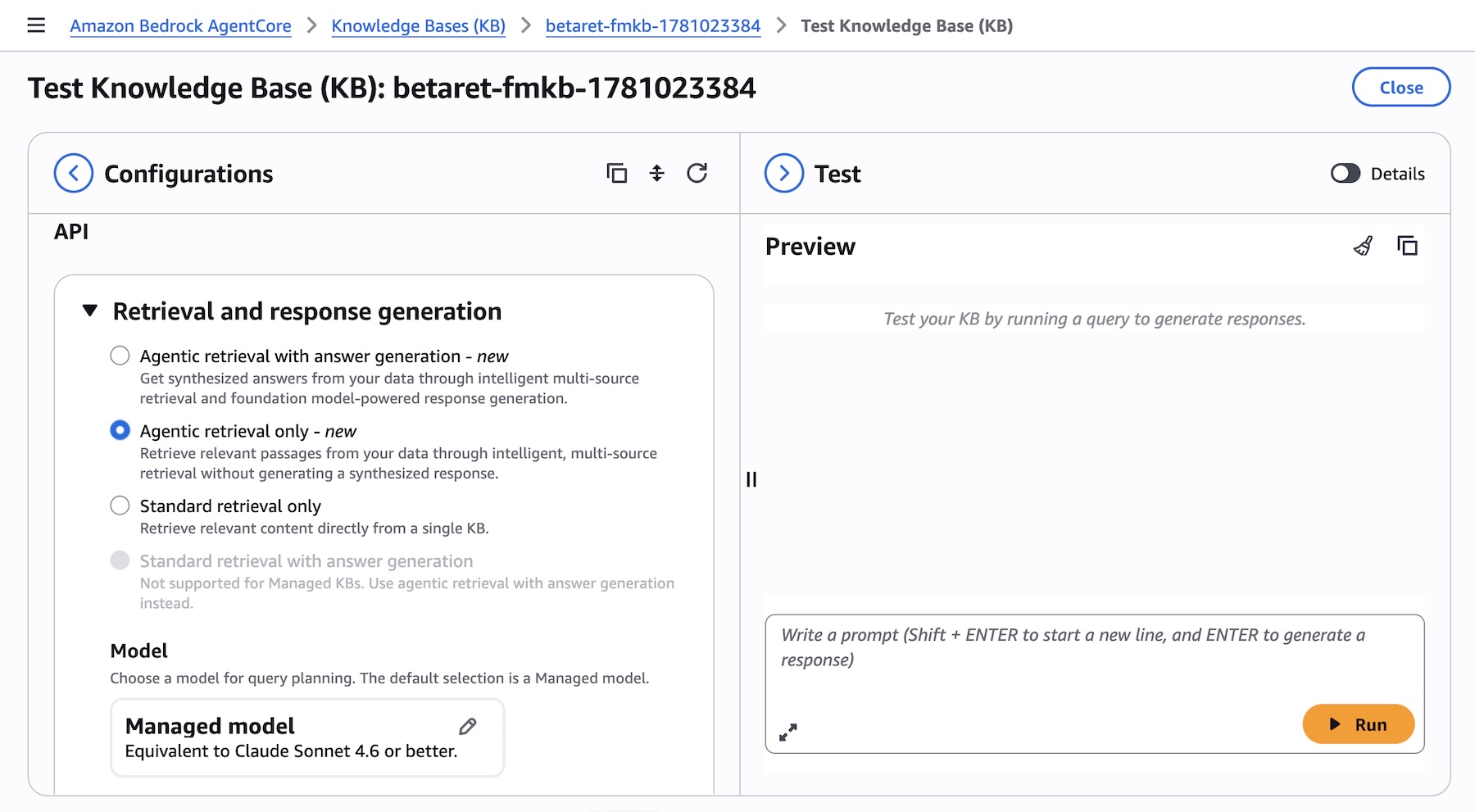
- Configure the Agentic Retriever in the test panel to evaluate accuracy.
- Expose the Knowledge Base via the AgentCore Gateway to connect to any MCP-compliant application.
As the industry moves from basic chatbots to truly autonomous agents, the infrastructure supporting them must become invisible, reliable, and intelligent. With the launch of the Managed Knowledge Base, AWS has provided a blueprint for how enterprise AI will be built for the remainder of the decade. By standardizing the RAG pipeline, the focus is finally shifting back to where it belongs: solving complex business problems and delivering real-world value.
 Neng Nana
  Lina Hope