A major upgrade to the ChatGPT Ads Manager signals OpenAI’s aggressive push into programmatic advertising, introducing sophisticated targeting tools, AI-assisted campaign creation, and geographical expansion into Japan and South Korea.
Main Facts: Deconstructing the ChatGPT Ads Manager Upgrades
In a direct communication sent to global advertisers, OpenAI announced a suite of comprehensive updates to its advertising ecosystem, ChatGPT Ads. The announcement, which details significant structural changes to both the advertiser-facing backend and the user-facing frontend, represents OpenAI’s most mature step yet toward establishing a viable, high-yield programmatic advertising platform.
The updates are designed to bridge the gap between traditional search engine marketing (SEM) and the emerging paradigm of conversational AI search. The rollout includes five core components:
1. Custom Audiences
Perhaps the most significant addition for performance marketers is the introduction of Custom Audiences. Until now, advertising on conversational AI platforms was largely restricted to contextual targeting based on the active prompt or user session. With Custom Audiences, advertisers can now leverage first-party data—such as customer lists, email hashes, and past interaction history—to target specific user segments within ChatGPT. This aligns OpenAI’s capabilities with legacy ad networks like Google Ads and Meta Ads, allowing for highly personalized retargeting campaigns.
2. The New Overview Tab
To streamline campaign management, OpenAI has redesigned the ChatGPT Ads Manager dashboard with a brand-new Overview Tab. This interface acts as a centralized command center, offering real-time data visualization of critical key performance indicators (KPIs). Advertisers can monitor spend, click-through rates (CTR), conversion metrics, and conversational engagement rates at a glance, allowing for more agile optimization.
3. Suggested Ad Drafts
In an ironic yet highly efficient loop of generative technology, OpenAI is integrating its own large language models (LLMs) directly into the ad creation pipeline. The new Suggested Ad Drafts feature automatically analyzes an advertiser’s landing page, historical performance, and target audience to generate tailored ad copy and creative recommendations. Advertisers can review, edit, and launch these AI-generated creatives with a single click.
4. Refreshed Ad Card Format
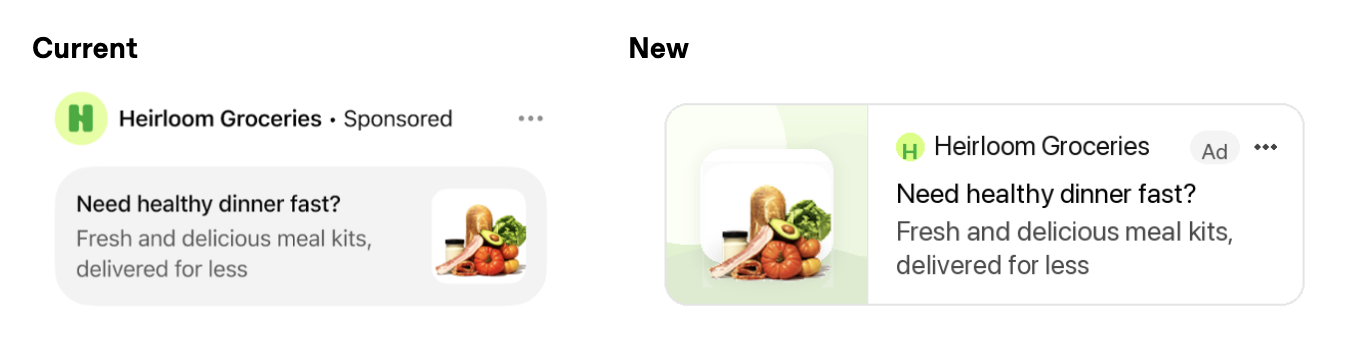
On the user interface (UI) side, OpenAI is rolling out a Refreshed Ad Card Format. Conversational ads must balance visibility with user experience to avoid disrupting the natural flow of dialogue. The new format offers a cleaner, more native appearance that seamlessly blends into the chat interface. These cards are designed to be visually distinct as "sponsored" content while maintaining a layout that mimics organic, highly helpful assistant responses.
5. Geographic Expansion: Japan and South Korea
Recognizing the rapid adoption of AI search in East Asia, OpenAI is officially expanding the availability of ChatGPT Ads to Japan and South Korea. Both nations represent highly lucrative, mobile-first advertising markets with incredibly high digital literacy and active engagement with conversational AI tools.
Chronology: The Evolution of OpenAI’s Monetization Engine
OpenAI’s transition from a research-focused non-profit to an ad-tech powerhouse has been swift, deliberate, and shaped by the massive operational costs associated with running frontier models.
[November 2022]  ChatGPT Launches (Ad-free, subscription & API-focused)
       │
[Late 2024]      SearchGPT Prototype (Testing real-time web search integration)
       │
[Early 2025]     Full Search Integration (ChatGPT merges conversational chat with web search)
       │
[Late 2025]      Initial ChatGPT Ads Beta (Limited testing with select brand partners)
       │
[Mid-2026]       The Present Update (Self-serve Ads Manager, Custom Audiences, Asian Expansion)
November 2022 (The Genesis): OpenAI launches ChatGPT. The platform is entirely ad-free, relying on a premium subscription model (ChatGPT Plus) and developer API fees to subsidize compute costs.
Late 2024 (The SearchGPT Prototype): OpenAI launches "SearchGPT," a temporary prototype designed to test real-time web search capabilities. This move signals a direct challenge to Google’s core business model and lays the groundwork for commercial placements.
Early 2025 (Integration into ChatGPT): SearchGPT features are fully integrated into the main ChatGPT interface. Users begin using the platform not just for writing and coding, but for transactional queries (e.g., "What are the best running shoes for flat feet?").
Late 2025 (The Alpha Ad Tests): Reports emerge that OpenAI is testing sponsored links and native ad units with a select group of enterprise partners, carefully monitoring user sentiment and opt-out rates.
Mid-2026 (The Programmatic Leap): OpenAI broadcasts its latest update to global advertisers. The introduction of Custom Audiences and a self-serve Ads Manager marks the platform’s transition from an experimental ad network to a sophisticated, programmatic competitor in the global digital advertising space.
Supporting Data: The Shift from Search Queries to Conversational Intent
The rapid expansion of ChatGPT’s advertising features is supported by shifting consumer behaviors and market dynamics.
The Performance of Conversational Ads
Traditional search engine results pages (SERPs) rely on static keyword matching. In contrast, conversational AI advertisements operate on deep contextual intent. According to industry benchmarks analyzing early LLM ad placements:
Higher CTRs: Native conversational ad placements show an average click-through rate (CTR) of 3.5% to 5.2%, compared to the average 1.9% seen on traditional search engine text ads.
Reduced Friction: Because the AI can qualify user intent over a multi-turn conversation, users clicking on a "Suggested Ad Card" are often further down the purchase funnel, resulting in a 15-20% increase in post-click conversion rates.
Metric
Traditional Search Ads (Average)
Conversational AI Ads (Early Benchmarks)
Average CTR
1.91%
3.50% – 5.20%
User Intent Precision
Single-query keyword match
Multi-turn contextual analysis
Ad Format
Text links / Shopping blocks
Native, interactive "Ad Cards"
Primary Markets
Global
Global (Rapidly expanding in JP/KR)
The Value of the East Asian Expansion
Expanding into Japan and South Korea is a highly calculated move.
Japan: Historically, Japanese consumers show a strong affinity for interactive and assistant-based technologies. The digital ad spend in Japan exceeded $22 billion USD in recent years, with a rapid migration toward mobile search.
South Korea: As one of the most hyper-connected nations in the world, South Korea’s search market has long been dominated by local giant Naver. By introducing highly localized, ad-supported ChatGPT experiences, OpenAI aims to capture market share from local incumbents who are also racing to deploy their own conversational AI search tools.
Official Responses and Platform Philosophy
In the email sent directly to registered advertisers, OpenAI highlighted its commitment to building an advertising model that respects the user experience while delivering unparalleled value to brands.
An excerpt from the announcement reads:
"Our goal with ChatGPT Ads is to create a commercial ecosystem that feels like a natural extension of the helpful, informative conversations users already have with our models. By introducing Custom Audiences and Suggested Ad Drafts, we are empowering businesses of all sizes to reach high-intent audiences efficiently, without compromising the integrity and speed of the ChatGPT experience."
The company’s messaging emphasizes a "user-first" ad philosophy. OpenAI has repeatedly stated that its ad formats will remain distinct from organic search results, clearly labeled, and designed to answer user prompts constructively. For instance, an ad for a hotel will only appear if a user is actively asking for travel recommendations or accommodation options in a specific city.
Strategic Implications for the Digital Marketing Landscape
The maturation of ChatGPT’s ad network has profound implications for advertisers, search engine optimization (SEO) professionals, and the tech giants that have dominated the digital ad space for decades.
1. The Redefinition of Search Engine Marketing (SEM)
For over twenty years, SEM has been synonymous with bidding on keywords via Google Ads. OpenAI is forcing a shift from keyword bidding to context matching. Marketers will need to optimize their campaigns not just for what a user types into a search box, but for the complex, multi-turn dialogues they have with an AI assistant. The introduction of Custom Audiences accelerates this shift, allowing marketers to blend behavioral targeting with real-time conversational context.
2. The Rise of "AIO" (Artificial Intelligence Optimization)
As paid placements take up valuable real estate within ChatGPT’s responses, the organic visibility of websites in AI search results will shrink. SEO professionals must adapt to Artificial Intelligence Optimization (AIO). This involves ensuring that brand information, structured data, and content are easily digestible by LLMs so they can be cited in organic answers, while simultaneously utilizing ChatGPT Ads to guarantee placement in highly competitive transactional queries.
3. A Direct Threat to Google’s Ad Duopoly
Google’s search dominance is built entirely on its highly profitable search advertising engine. While Google has rushed to integrate ads into its own AI-powered "Search Overviews" (formerly SGE) and Gemini, OpenAI’s rapid deployment of a self-serve Ads Manager with sophisticated targeting capabilities proves that the startup is ready to fight for a piece of the global digital advertising pie.
4. Privacy and First-Party Data in the Post-Cookie Era
With global privacy regulations tightening and third-party cookies phasing out, the ability to target users via Custom Audiences on a platform where users willingly share deep, detailed contextual prompts is incredibly valuable. Advertisers can match their CRM data (using privacy-compliant hashing methods) with ChatGPT’s user base, delivering highly relevant messages precisely when a user is seeking advice, solutions, or products.
Summary for Advertisers
As OpenAI continues to add new features, test novel ad formats, and expand its footprint in critical international markets like Japan and South Korea, digital marketers must act quickly. Staying on top of these changes, experimenting with the self-serve platform, and fine-tuning creative assets for conversational interfaces will be vital to securing a first-mover advantage in the next era of digital search.

 By Sagoh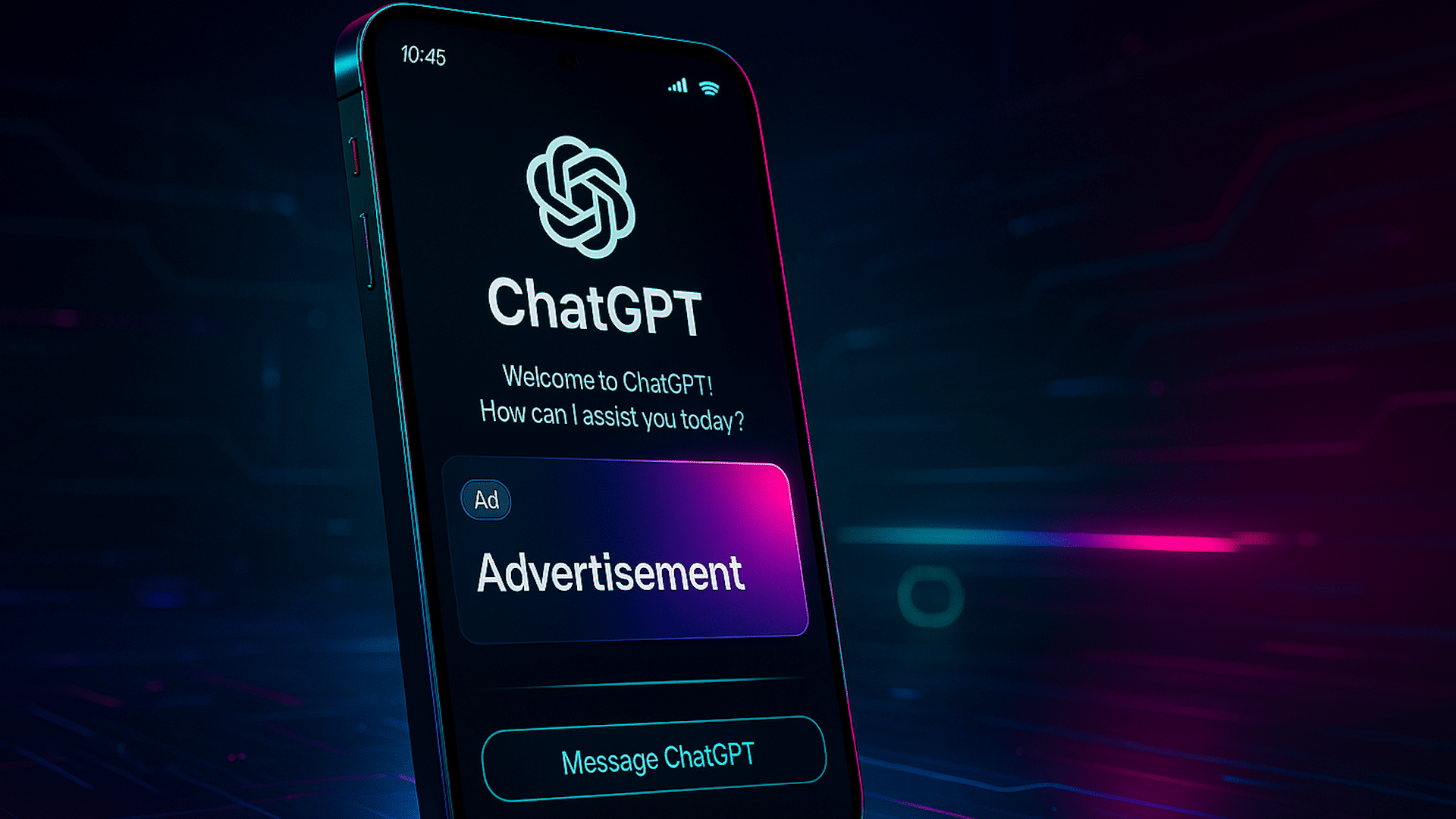

 Jia Lissa
  Nana Muazin
  Layla Zulfa