
 By Siti Muinah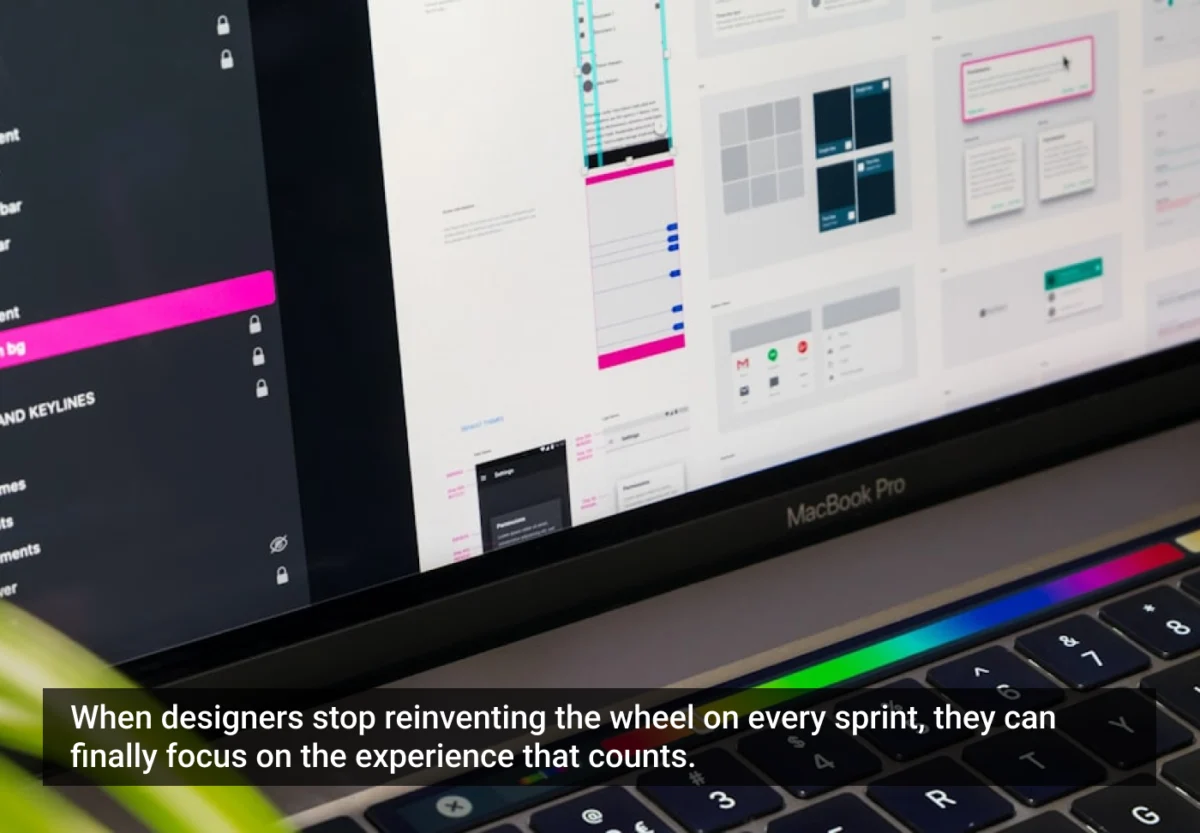
For many designers embedded in agile environments, the professional experience is defined by a relentless, high-velocity cadence. It is a world of perpetual motion: a feature is conceived, a sprint commences, a ticket is queued, and the cycle repeats. Even when a feature successfully ships, the labor rarely concludes; the modern agile mandate requires constant observation, user feedback loops, and iterative refinement.
For those on the front lines, this rhythm often feels less like a productive methodology and more like a treadmill. Designers frequently report a singular, pervasive grievance: there is never enough time. Amidst this pressure to deliver, the discipline of design—the craft of thoughtful problem-solving—is often sacrificed at the altar of speed. However, recent shifts in industry practices, championed by experts like Laura Klein, suggest that the antidote to this "agile fatigue" is not to work faster, but to change how the foundational work is handled. The solution lies in a tool that initially appears antithetical to the agile ethos: the design system.
Main Facts: The Friction of Iterative Development
The core tension in agile design stems from the disconnect between the desire for user-centric innovation and the technical necessity of visual consistency. In a typical agile workflow, designers are tasked with crafting pixel-perfect mockups for every incoming feature request. This process involves agonizing over button states, layout alignment, typography hierarchies, and navigation logic.
While this attention to detail is vital for the final product, performing it from scratch for every new feature is redundant and unsustainable. When designers are trapped in a cycle of "re-inventing the wheel" for every sprint, they fall into the dreaded "handoff" model—a linear process where designers produce documentation that engineers then laboriously translate into code. This creates a bottleneck that limits collaboration, keeps the team siloed, and leaves designers with little bandwidth to address the more complex, strategic problems of user experience.
Chronology: From Static Mockups to Living Systems
To understand why design systems have become the gold standard, one must look at the evolution of product design workflows over the last decade:
- The Pre-Agile Era: Design was often a waterfall process. Massive, comprehensive style guides were created at the start of a project, but these quickly became obsolete as the product evolved.
- The Early Agile Shift: As teams adopted Scrum and Kanban, design became a just-in-time activity. The focus shifted to "shipping now," which led to a rapid proliferation of disparate visual patterns—a phenomenon known as "design debt."
- The Rise of the Design System: Around the mid-2010s, industry leaders began codifying their interfaces. Organizations like Airbnb, Shopify, and IBM demonstrated that by treating design as an internal product, they could create a shared language between design and engineering.
- The Current Maturity: Today, design systems are no longer just static libraries. They are integrated, coded, and version-controlled ecosystems that serve as the single source of truth for entire product teams.
Supporting Data and Technical Implications
The impact of a robust design system on team velocity and product quality is quantifiable. Industry research indicates that teams utilizing a centralized design system reduce the time spent on "visual grunt work" by upwards of 40% to 60%.
The Efficiency Dividend
When a team maintains a library of pre-defined components—form fields, modals, navigation bars, and typography sets—the conversation shifts. The team no longer debates the border-radius of a button; they focus on whether that button is the right solution for the user’s specific goal.
Bridging the Engineering Gap
Design systems act as a bridge. When components are pre-coded and documented, a designer doesn’t need to provide a pixel-perfect mockup for every state. Instead, they can provide a set of instructions within a Jira ticket, referencing the system’s documentation. This reduces the ambiguity of the "handoff" and allows for a more fluid, collaborative relationship where engineers can assemble features using proven building blocks.
Official Perspectives: Redefining Design Excellence
Industry thought leaders, including Laura Klein, have been vocal about the necessity of moving beyond surface-level design in fast-paced environments. The consensus among design operations (DesignOps) professionals is that design systems are not merely a collection of assets, but a cultural shift.
"Design is not just about how something looks. It’s about how it works," says the sentiment often attributed to Steve Jobs. By automating the visual aspects of the interface, teams are effectively "buying back" time. This time is then reallocated to higher-order activities:
- Edge Case Analysis: Investigating the "what-ifs" that occur during error states or data failures.
- Complex User Scenarios: Mapping the broader user journey rather than focusing on the single-screen view.
- Strategic Research: Synthesizing user feedback to inform the next phase of the product roadmap.
Implications: Building for the Long Term
The integration of design systems has profound implications for how agile products are built and maintained.
1. Incremental Stability
Agile development is characterized by small, frequent releases. Without a system, this incremental growth is a recipe for chaos. Over time, buttons drift in style, navigation becomes inconsistent, and the user experience becomes fragmented. A design system acts as a stabilizing force, ensuring that the product remains coherent even when it is built by different teams, in different sprints, over several years.
2. A Change in Designer Mindset
For the designer, the shift is psychological as much as it is tactical. Moving from being a "pixel-pusher" to a "system architect" requires a different set of skills. Designers must learn to think in terms of modularity, scalability, and technical constraints. This elevated role allows designers to act as strategic partners to product managers and engineers rather than service providers.
3. Faster Prototyping and Learning
Perhaps the most significant benefit is the ability to test faster. Because the team can assemble a functional interface using existing components in a fraction of the time, they can put a prototype in front of a user much earlier in the sprint. This aligns perfectly with the core agile philosophy: learn faster than you build.
Conclusion: The Path Forward
The "Agile Trap" is real, but it is not inevitable. Designers who feel overwhelmed by the constant churn of feature requests should view the design system not as an extra task to manage, but as an essential infrastructure project.
By investing in a design system, teams can transcend the repetitive, tactical work that consumes their day-to-day existence. They create the space to think, the time to research, and the consistency to build products that users can actually trust. In an industry obsessed with speed, the most competitive advantage a design team can have is the ability to focus on the right problems. By automating the basics, designers can finally return to the most important part of their job: creating meaningful, effective, and delightful experiences for their users.
As the digital landscape becomes increasingly complex, the teams that succeed will not be the ones that work the fastest, but the ones that have built the best foundations. Design systems are the blueprint for that success.
 Ammar Sabilarrohman
  Neng Nana
  Sagoh
Sagoh 