
 By Ammar Sabilarrohman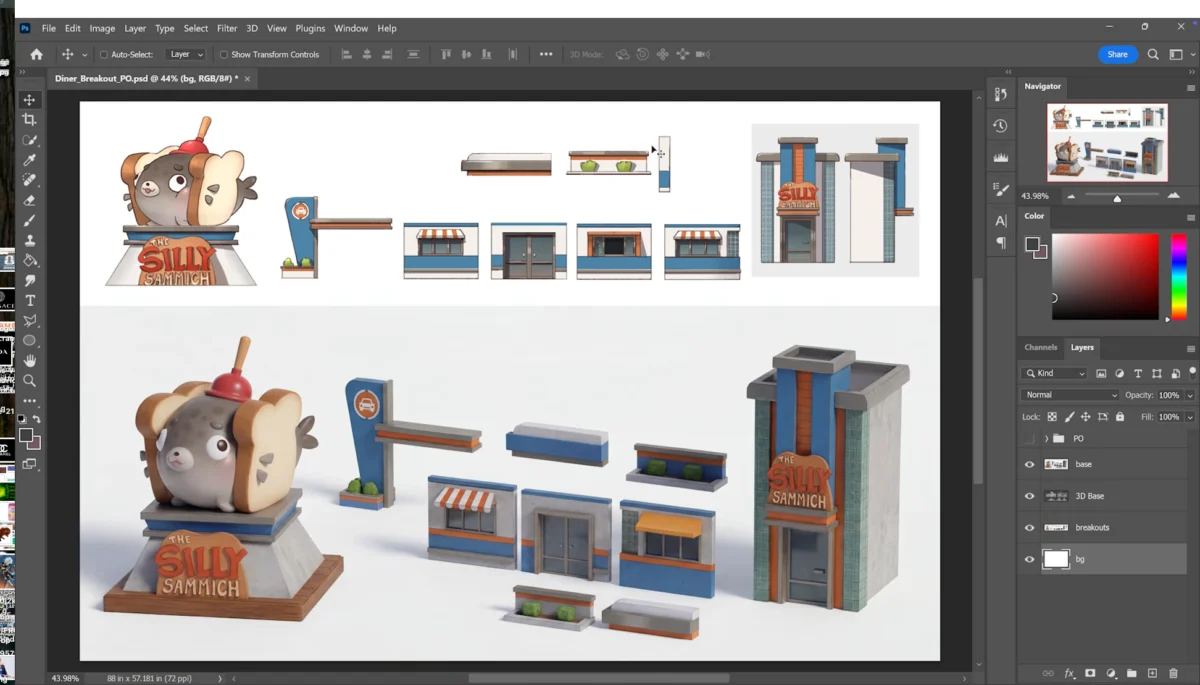
Main Facts
Epic Games, a titan in the video game industry renowned for titles like Fortnite and the powerful Unreal Engine, has found itself at the epicenter of a swirling controversy surrounding the integration of artificial intelligence (AI) into its creative workflow. The company’s recent decision to transparently showcase how its concept artists leverage generative AI tools has provoked a heated debate, dividing the creative community into starkly opposing camps. While Epic maintains that AI serves as an augmentative "starting point" for human artists, critics view it as an existential threat to artistic integrity, creative labor, and career stability.
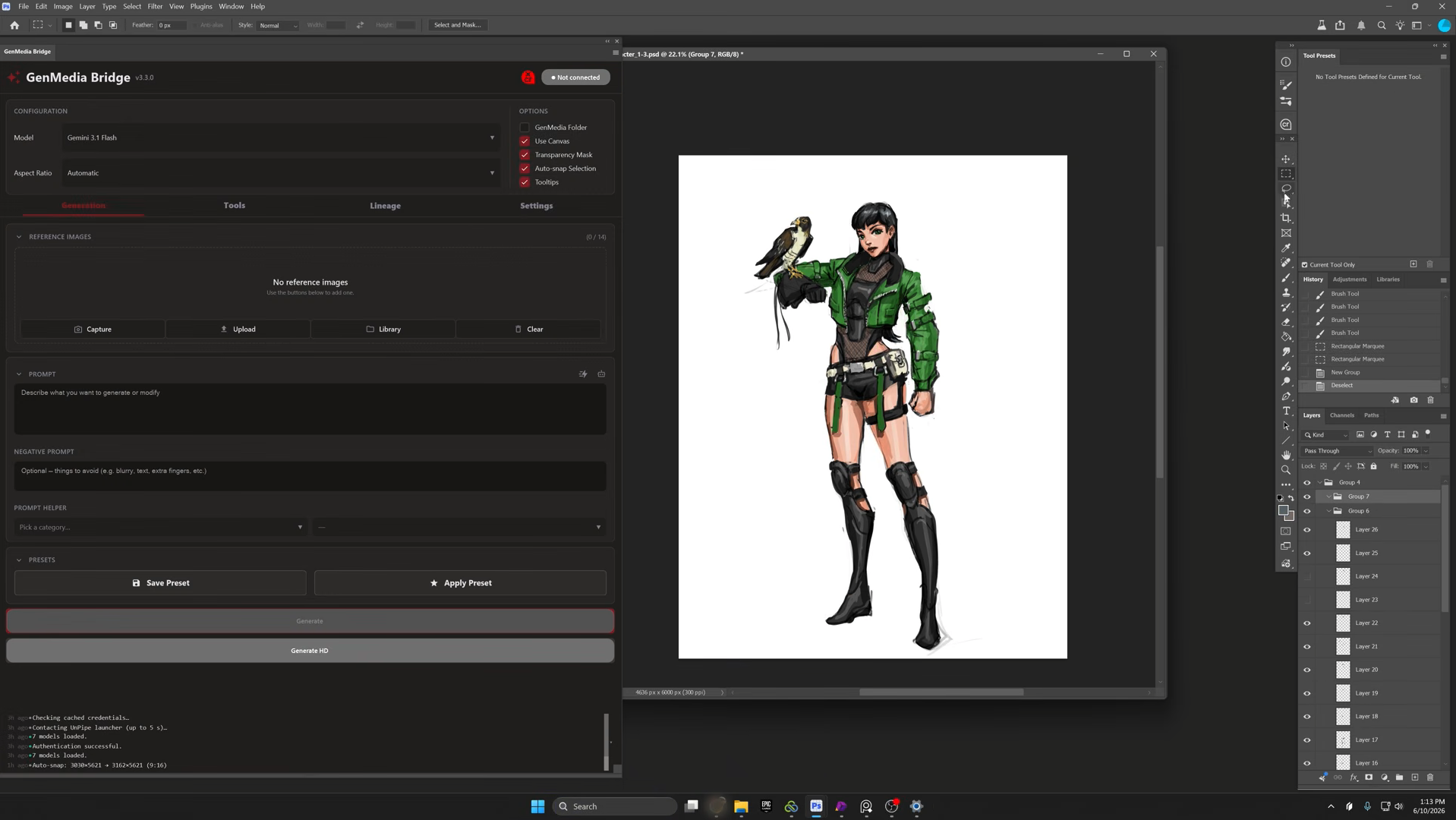
The focal point of this renewed contention is a video released by Epic Games, demonstrating its artists employing tools such as GenMedia for Photoshop and Nano Banana with Unreal to streamline the concept art creation process. The video meticulously details how human-made sketches are refined and transformed, with AI assisting in generating detailed renders and iterations. Epic’s intention, seemingly, was to foster understanding and transparency around its AI adoption. However, the response was far from universally accepting, instead revealing the deep-seated anxieties and ethical quandaries that generative AI poses for artists worldwide. The backlash intensified existing criticisms, particularly in light of Epic’s recent workforce reductions, fueling accusations that AI adoption directly correlates with job displacement.
Chronology
Epic Games’ journey with AI is not a sudden pivot but rather a gradual, calculated integration that has been unfolding for some time. The company has long been exploring advanced technologies to enhance game development, and AI, in its various forms, has been a natural progression. However, the broader creative industry’s sentiment towards AI has been fraught with tension, particularly since the widespread emergence of generative AI models capable of producing images, text, and even music.
Pre-Video Context: A Growing Unease
Before Epic’s recent demonstration, the landscape of AI in creative fields was already contentious. The past few years have seen a proliferation of AI art generators, leading to numerous debates and even lawsuits regarding copyright infringement, as these models are often trained on vast datasets of existing artwork without explicit consent or compensation to the original creators. Artists globally have expressed profound concerns about the potential for AI to devalue human skill, flood markets with algorithmically generated "slop," and ultimately render traditional artistic professions obsolete. Hashtags like #NoAI and #SupportHumanArtists have become rallying cries across social media platforms, underscoring a collective anxiety within the creative community.
Epic Games, to its credit, has attempted to navigate this complex terrain with a degree of transparency, acknowledging the "controversial topic" of AI. While specific prior statements are not extensively detailed, the article notes Epic’s "positive transparency" efforts, suggesting an awareness of the brewing storm and an attempt to communicate its approach proactively. Yet, despite these efforts, the underlying skepticism among many creatives remained potent.
The Video Release: A Detailed Look at AI in Action
The catalyst for the most recent wave of debate was a video published by Epic Games, ostensibly designed to demystify its artists’ creative process. The video featured Epic’s concept artists walking viewers through their workflow, from initial hand-drawn sketches to refined final concepts. Crucially, it highlighted specific points where generative AI tools were integrated.
Among the tools showcased were:
- GenMedia for Photoshop: This tool was demonstrated transforming 2D character concept art into more detailed, 3D-like images, enabling artists to quickly visualize how characters might appear in a three-dimensional space.
- Nano Banana with Unreal: Integrated within the Unreal Engine ecosystem, Nano Banana assisted in creating new render shots, allowing for rapid iteration and exploration of various visual possibilities for environments, objects, or characters.
The artists in the video were keen to emphasize that these AI tools were not autonomous creators but rather advanced assistants. They openly pointed out "discrepancies that appear, such as missing details and colour errors," underscoring the necessity of human oversight and correction. A pivotal quote from one artist encapsulated Epic’s intended message: "That’s why it’s a starting point, not a finish line." This statement aimed to position AI as a productivity enhancer, a means to accelerate early-stage ideation and iteration, rather than a replacement for the nuanced skill and critical judgment of a human artist.
Immediate Aftermath: The Digital Firestorm
Despite Epic’s transparent and measured presentation, the video’s release triggered an immediate and "heated response" across online platforms. Social media, art forums, and comment sections erupted with passionate arguments, illustrating a "strong ethical divide online."
The backlash was swift and severe. Critics lambasted the video, labeling the use of AI as "anti-art technology" and "shameless." Many felt personally affronted, with one commenter declaring, "You just literally… insulted the entire real artists community." The most potent accusations revolved around the concept of "theft of creative labor," with critics arguing that generative models exploit existing artwork without proper attribution or compensation, effectively undermining the livelihoods of human artists. "Exploiting the labor of others through generative models to pretend its ‘whats in your mind’ isn’t a lawful ground for the theft of creative labor," one critic passionately articulated.
Adding fuel to the fire were Epic’s recent staff layoffs, which saw the company shed around 1,000 employees. Critics drew a direct, albeit disputed, link between the company’s embrace of AI and its workforce reductions. "First you fire 1000 mostly valuable employees for a bulls**t reason, then proudly admit to using AI for your creative process? For the company that gave us Unreal Engine, I expected FAR better," one commenter stated, highlighting the perception of corporate hypocrisy and a disregard for human talent.
Conversely, a segment of the community welcomed Epic’s transparency, viewing it as a positive step in an otherwise secretive industry. These supporters argued that open dialogue, even about controversial practices, was preferable to clandestine AI adoption. "While I have criticisms about current use of AI in general, like the flood of slop spam it’s enabled, I have a lot less objections to how it’s being used at Epic. GenMedia took a sketch that was clearly drawn by hand and rendered it in a 3D-like style," one commenter noted, appreciating the specific application. Others saw the tools as genuine advancements for artists: "Generative AI when it’s used this way empowers traditional 2D and 3D concept artists to make more iterations and better work," and "this feels like concept art just got a cheat code," reflecting a view of AI as an empowering, efficiency-boosting aid rather than a replacement.
Supporting Data
To fully comprehend the depth of this debate, it’s essential to delve into the specifics of the AI tools involved, the broader industry context, and the complex ethical dilemmas at play.
The Tools and Their Mechanisms
The generative AI tools showcased by Epic Games, GenMedia for Photoshop and Nano Banana with Unreal, represent sophisticated applications of machine learning designed to augment creative processes.
-
GenMedia for Photoshop: This tool likely leverages advanced image-to-image translation models, possibly based on Generative Adversarial Networks (GANs) or diffusion models. When an artist feeds a 2D sketch into GenMedia, the AI analyzes the input, identifies key features, and then generates a more detailed, often three-dimensional interpretation. This is not merely adding texture or depth; it involves inferring lighting, material properties, and volumetric forms based on patterns learned from vast datasets of existing 3D models, renders, and concept art. For artists, this dramatically accelerates the iterative process of visualizing a character or object from different angles and with varying levels of detail, saving countless hours that would otherwise be spent on manual rendering or creating simple 3D block-outs. The "discrepancies" noted by Epic’s artists are crucial here, indicating that while the AI can generate impressive starting points, it often lacks the nuanced understanding of anatomy, perspective, or artistic intent that a human possesses.
-
Nano Banana with Unreal: The integration of Nano Banana within the Unreal Engine suggests its role in real-time or near real-time rendering and asset generation. Unreal Engine is already a powerhouse for 3D creation, and generative AI can further enhance its capabilities. Nano Banana could be used for tasks such as:
- Automated Material Generation: Creating textures and materials based on simple prompts or reference images.
- Environment Population: Rapidly generating variations of natural elements (trees, rocks) or architectural details to populate large scenes.
- Lighting and Shadow Suggestions: Proposing optimal lighting setups for specific moods or times of day.
- Asset Variation: Generating multiple versions of a single asset (e.g., different types of swords or armor) to give artists more options without manual creation.
The goal is to provide artists with a "render cheat code" – a way to quickly see their concepts realized in engine without painstakingly building every element from scratch, allowing them to focus on artistic direction and refinement.
The underlying technology for these tools relies on deep learning algorithms trained on massive datasets. The quality and ethical sourcing of these datasets are central to the "theft of creative labor" argument. If the AI models are trained on copyrighted artwork without permission, then any output, even if heavily modified by a human, can be seen as indirectly deriving from stolen intellectual property.
Broader Industry Context and Trends
Epic Games is not an anomaly in its pursuit of AI integration. The entire gaming and creative industries are grappling with the potential and pitfalls of AI.
- Unity AI: As mentioned in the original article, Unity, another major game engine developer, is also heavily investing in AI, with plans to allow users to "build entire games with just words." This signifies a broader industry push towards democratizing game development and accelerating content creation through AI-driven tools.
- Other Studios: Many studios are quietly experimenting with AI for tasks like procedural generation of environments, NPC behavior, animation assistance, and even scriptwriting. The competitive pressure to innovate and reduce development costs is immense, making AI an attractive proposition.
- Efficiency vs. Artistry: The core tension remains. While AI promises unprecedented efficiency and the ability to iterate at speed, there’s a growing fear that this comes at the cost of unique artistic vision, serendipitous discovery, and the human touch that defines truly memorable art.
- Economic Impact: Reports from consulting firms like PwC and McKinsey have consistently highlighted AI’s potential to transform industries, including creative ones, by automating routine tasks. While some argue this frees up human talent for higher-level creative work, others foresee significant job displacement, particularly for entry-level and mid-tier artists whose work might be more easily replicated by AI. The current economic climate, marked by widespread layoffs across the tech and gaming sectors, further exacerbates these fears.
Ethical Dilemmas: The Core of the Conflict
The debate around Epic’s AI use illuminates several critical ethical dilemmas:
- Copyright and Ownership: Who owns the output of generative AI? If the AI is trained on copyrighted material, does its output inherently carry a taint of infringement, even if significantly altered by a human? Current legal frameworks are struggling to keep pace with this rapidly evolving technology, leading to legal uncertainty for both creators and companies.
- The "Death of Craft": Many artists argue that the true value of art lies not just in the final product but in the process—the skill, dedication, and personal struggle involved in its creation. Relying on AI, even as a "starting point," can be perceived as devaluing this craft, making the artistic journey less meaningful and the resulting art less authentic. This concern is deeply rooted in the identity of many creatives.
- Job Displacement and Career Safety: This is perhaps the most immediate and visceral concern. If AI can generate concept art, textures, or even basic 3D models faster and cheaper, what becomes of the artists who specialize in these areas? The fear is not just about individual job losses but about a systemic erosion of career paths within the creative industries. The connection critics made between Epic’s layoffs and its AI adoption highlights this acute anxiety.
- Quality vs. Abundance: The ease of generating AI art raises questions about quality control. While AI can produce an "endless sea of concept art," will this abundance lead to a dilution of quality, where genuinely innovative and thoughtfully crafted pieces get lost in a deluge of algorithmically "average" content? The author’s concern about "drowning in the slop" resonates deeply here.
- Transparency and Trust: While Epic aimed for transparency, the strong reaction suggests that for many, transparency about using AI isn’t enough; the core issue is whether AI should be used in these capacities at all. Rebuilding trust between companies and the creative community will require more than just showing how AI is used; it will require addressing the fundamental ethical and economic concerns.
Official Responses
Epic Games’ public stance on AI, as gleaned from the article and general industry observation, emphasizes augmentation and efficiency, framed within a commitment to transparency. However, the controversy highlights the difficulty in communicating this message effectively to a wary creative community.
Epic Games’ Official Stance
Epic’s consistent message, reiterated through the video and implied by their "positive transparency," is that AI tools are meant to empower artists, not replace them. Their philosophy hinges on the idea that AI serves as a powerful accelerator for early-stage creative processes. The key phrase, "That’s why it’s a starting point, not a finish line," is central to their argument. It suggests that AI handles the tedious, repetitive, or exploratory aspects of creation, freeing human artists to focus on high-level artistic direction, problem-solving, and injecting unique creative vision. They position AI as a force multiplier, enabling artists to iterate faster, explore more options, and ultimately produce higher-quality work by refining AI-generated foundations.
Regarding the specific criticism linking AI adoption to the recent layoffs, Epic has not, to public knowledge, directly addressed this connection in the context of the AI video. The layoffs were officially attributed to "going through an internal restructuring" and "reducing operating expenses," impacting "employees across all areas of the company." While Epic has stated a commitment to its core business, the timing of the AI video amidst these layoffs inadvertently created a narrative among critics that AI was a contributing factor, even if Epic’s official stance doesn’t explicitly confirm it. This perceived correlation further eroded trust and amplified anxieties within the artist community.
Industry Bodies and Advocacy Groups
While no specific statements from industry bodies directly addressing Epic’s video are cited, the broader stance of various creative unions, artist advocacy groups, and professional organizations has been largely cautious, if not openly critical, of generative AI.
- The Animation Guild, IATSE: Organizations representing animators and other creative professionals have expressed strong concerns about AI’s potential to displace jobs and dilute creative control. They often advocate for robust protections, fair compensation, and clear guidelines regarding AI’s role in creative pipelines.
- Concept Art Association: Groups focused specifically on concept artists have initiated discussions and surveys among their members to understand the impact of AI on their profession, with many expressing apprehension about the future of their craft.
- Copyright Offices and Legal Entities: Governments and legal bodies worldwide are actively studying and debating the implications of AI on intellectual property law. This includes discussions on whether AI-generated art can be copyrighted, and the legal ramifications of training AI models on copyrighted data. These ongoing legal uncertainties add to the apprehension felt by artists.
These bodies generally call for ethical AI development, transparent data sourcing, and human-centric approaches that prioritize the livelihoods and creative rights of artists. They advocate for AI to be used as a tool for enhancement, not as a means to circumvent human labor or artistic originality.
Artist Community Leaders and Influencers
The online debate reflects a microcosm of views held by prominent artists and industry influencers.
- Proponents of AI as a Tool: Artists like Karla Ortiz (who has been outspoken about AI’s risks but also acknowledges its potential for efficiency if ethically sourced and used) or concept artists who embrace new digital tools often view AI as the next evolutionary step. They highlight its potential to automate mundane tasks, accelerate iteration, and enable more ambitious projects. They emphasize the need for artists to adapt, learn new skills, and direct the AI, asserting that the human artist remains the ultimate visionary.
- Staunch Opponents: Many established artists, particularly those who have built careers on unique styles and extensive skill, express profound moral objections. They view AI as a direct threat to the essence of art – the human spirit, emotion, and originality. They argue that AI lacks true understanding or consciousness, merely remixing existing data, and that its widespread adoption will lead to a homogenized, soulless aesthetic. They often advocate for boycotts of AI-generated content and call for stricter regulations to protect human artists.
- The Nuanced Middle Ground: A significant portion of artists finds themselves, much like the author of the original article, at an "intersection." They acknowledge AI’s potential for efficiency but harbor deep concerns about its ethical implications, copyright issues, and the erosion of craft. They call for careful, thoughtful integration, emphasizing that the human element must remain paramount and that AI should be a servant to creativity, not its master.
This diverse range of official and unofficial responses underscores that the conversation around AI in creative industries is far from settled, with Epic Games’ transparency serving as a stark illustration of these ongoing tensions.
Implications
The controversy surrounding Epic Games’ use of AI in concept art carries significant implications, not just for the company itself, but for the broader creative industry, individual artists, and the future of artistic creation.
For Epic Games:
Epic’s decision to be transparent about its AI integration, while laudable in principle, has proven to be a double-edged sword.
- Reputation Management: The company now faces the delicate task of managing its public image. While aiming to be seen as an innovator, it risks alienating a significant portion of the creative community – the very artists who utilize its Unreal Engine and populate its games. This could lead to a loss of goodwill, which is invaluable in an industry heavily reliant on creative talent.
- Competitive Advantage: If Epic can successfully integrate AI to accelerate its development cycles and produce high-quality assets more efficiently, it could gain a significant competitive edge in the fast-paced gaming market. This efficiency could translate into faster game releases, richer content, and potentially lower production costs.
- Talent Acquisition and Retention: The perception of a company’s stance on AI can profoundly impact its ability to attract and retain top artistic talent. Artists who feel their craft is valued and protected will be drawn to such environments, while those who fear displacement or devaluation may look elsewhere. Epic will need to clearly articulate its vision for artists within an AI-augmented workflow to ensure it remains an attractive employer.
For the Creative Industry:
The implications for the creative industry as a whole are transformative and far-reaching.
- Evolution of Creative Workflows: AI integration will necessitate a fundamental shift in how creative projects are conceived, developed, and executed. New roles may emerge, such as "AI prompt engineers" or "AI art directors," while existing roles will require artists to become proficient in directing and refining AI outputs. The focus will shift from manual creation to critical judgment, curation, and the ability to leverage AI effectively.
- Future of Education: Art and design schools will need to adapt their curricula to prepare students for an AI-augmented creative landscape. This will involve teaching not only traditional artistic skills but also prompt engineering, AI tool integration, ethical considerations, and critical evaluation of AI-generated content. The balance between craft and technology will be a constant pedagogical challenge.
- The AI Art Market: The proliferation of AI-generated content will continue to disrupt traditional art markets. The value proposition of human-made art might shift, emphasizing unique narrative, emotional depth, or the inherent human struggle behind its creation. The market for AI-assisted or purely AI-generated art will also grow, raising questions about pricing, authenticity, and legal provenance.
- Legal and Ethical Frameworks: The Epic Games debate underscores the urgent need for clearer legal and ethical guidelines regarding AI use in creative fields. This includes establishing standards for consent for training data, defining ownership of AI-generated works, and potentially implementing mechanisms for compensating original artists whose styles or works are used by AI. Industry-wide agreements or governmental regulations may become necessary to ensure a fair and equitable future.
For Artists:
Individual artists face perhaps the most immediate and profound implications.
- Adaptability and Skill Evolution: Artists who are resistant to adopting AI tools may find themselves at a disadvantage. There will be increasing pressure to learn how to integrate AI effectively into their personal workflows, viewing it as another tool in their arsenal alongside Photoshop or ZBrush. This requires a mindset shift from purely manual creation to intelligent direction and refinement.
- Re-evaluating Value Proposition: Artists will need to emphasize and articulate what makes human creativity uniquely valuable in an AI-saturated world. This includes aspects like emotional intelligence, cultural understanding, storytelling nuance, critical thinking, and the ability to break conventional patterns – areas where AI currently falls short. The focus may shift from sheer technical execution to conceptualization, vision, and the personal narrative embedded in the art.
- Advocacy and Collective Action: The strong online reaction to Epic’s video highlights the power of collective artist voices. Artists will continue to advocate for their rights, push for ethical AI development, and demand transparent practices from companies. Unionization, collective bargaining, and public awareness campaigns will be crucial in shaping the future of their profession.
Author’s Concluding Thoughts: Navigating the Abyss
As the author of the original article aptly stated, many of us find ourselves at an "intersection," struggling to reconcile the seemingly inevitable march of AI with deeply held values about craft and creativity. The debate stirred by Epic Games is not merely about a software update; it’s a profound philosophical discussion about the nature of art, human labor, and technological progress.
The concern about the "death of craft" is not a romanticized longing for a bygone era, but a legitimate fear about the erosion of intrinsic value. There is a profound satisfaction and human connection derived from the mastery of a skill, the deliberate stroke of a brush, or the painstaking rendering of detail. If AI can instantly generate what once required years of dedication, does it diminish the achievement, the struggle, and ultimately, the soul of the art? Just because AI can do something, doesn’t inherently mean it should, especially when the cost might be measured in human spirit and livelihood.
The specter of an "endless sea of concept art at the click of a button" raises the critical question of quality versus abundance. In a world awash with effortlessly generated imagery, will genuine innovation and artistic excellence become harder to discern? Will the sheer volume of "slop" drown out the truly meaningful contributions, leading to a homogenized, less inspiring creative landscape? The danger is not just that AI will produce bad art, but that its ease of production will make us complacent, losing our discerning eye and our appreciation for the arduous journey of human creation.
Ultimately, the future of AI in creative industries, as exemplified by the Epic Games debate, hinges on a delicate balance. It requires responsible innovation from companies, proactive adaptation from artists, and thoughtful regulation from governing bodies. The goal should not be to halt progress, but to steer it towards a future where AI serves to amplify human creativity, allowing artists to reach new heights, rather than reducing art to a mere algorithmic output. The human element – the vision, the passion, the unique story – must remain at the core, ensuring that while tools evolve, the craft, in its deepest sense, endures. Otherwise, we risk not just a sea of slop, but a silent, digital death of what makes art truly human.
 Lina Hope
  Layla Zulfa
  Lina Irawan