
 By Iffa Jayyana
In the fast-paced ecosystem of digital commerce, there is a pervasive myth that growth is synonymous with acquisition. Founders often exhaust their budgets on top-of-funnel traffic—pouring capital into paid ads and influencer partnerships—while ignoring the silent leak in their bucket: poor conversion rates.
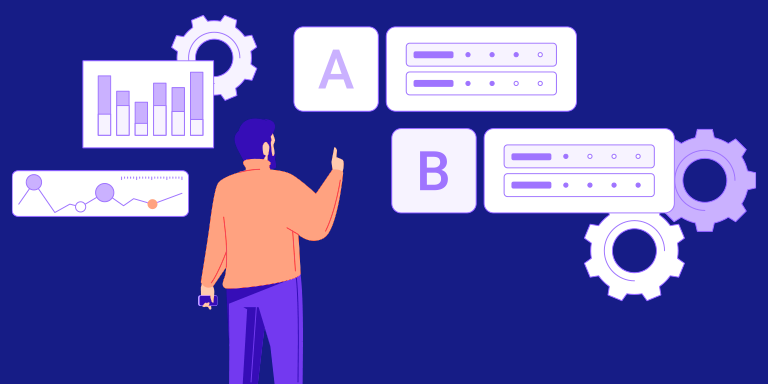
As the saying goes in digital marketing circles, "What worked yesterday won’t always work tomorrow." Consumer behavior is fluid, inbox competition is at an all-time high, and reliance on intuition is a fast track to irrelevance. This is where A/B testing shifts from a "nice-to-have" experiment to a non-negotiable operational standard. By systematically pitting variables against one another, smart entrepreneurs move from guessing to knowing, transforming their existing email lists into high-performance revenue engines.
The Core Mandate: Why A/B Testing is Essential
Most founders obsess over the size of their email list, but the true opportunity lies in the depth of engagement. If you have built an audience, you have already cleared the hardest hurdle. The challenge now is optimization.
Supporting Data: The Compounding Power of Small Wins
Recent industry analysis provides a compelling argument for the ROI of testing. According to data from Omnisend, average open rates among their merchants climbed from 22.9% in 2022 to 25.1% in 2023. More impressively, click-through rates saw a parallel rise from 1.2% to 1.5%. These gains were not the result of magic or a massive increase in ad spend; they were the direct consequence of rigorous testing and granular segmentation.
The efficiency of automated flows—such as welcome sequences and abandoned cart reminders—is even more striking. Data indicates that these triggered emails generate 52% higher open rates, 332% higher click-through rates, and a staggering 2,361% improvement in conversion rates compared to standard broadcast campaigns. However, these figures are not guaranteed; they are the upper ceiling reachable only by those who treat their automated flows as living, breathing experiments.
When you compound a 5% lift in open rates with a 10% boost in click-throughs, the financial impact is not merely additive—it is exponential. Omnisend clients who systematically tested their abandoned cart flows reported average monthly sales gains of roughly $5,000. In an era where customer acquisition costs (CAC) are skyrocketing, extracting more revenue from your existing audience is the most sustainable path to profitability.
Chronology of a Data-Driven Culture
To understand why testing is essential, one must look at how the digital landscape has evolved over the last decade.
- 2010–2015: The "Blast" Era. During this period, email marketing was largely about volume. The strategy was to send as many messages as possible to as many people as possible.
- 2016–2020: The Segmentation Shift. Brands began to realize that generic blasts were being flagged as spam. The focus shifted toward basic demographics and interest-based segmentation.
- 2021–Present: The Optimization Era. With the advent of sophisticated AI-driven tools, the standard has moved toward hyper-personalization. We are no longer just sending the right message to the right person; we are testing the delivery mechanism of that message in real-time.
Today, a "set it and forget it" strategy is a liability. Because 43% of recipients decide to open an email based solely on the subject line, and 69% of users will flag an email as junk based on the same, the margin for error is razor-thin. Testing provides the insurance policy against this "delete-or-junk" culture.
Strategic Areas for High-Impact Experimentation
A/B testing is not about aesthetic changes; it is about psychological resonance. To optimize effectively, founders should focus on these five high-leverage pillars.
1. Subject Lines: The Gatekeeper of Engagement
If your email is not opened, your copy, design, and offer are irrelevant.
- Test Variable: Curiosity vs. Direct Benefit.
- Test Variable: Length (Short vs. Long).
- Test Variable: Urgency/Scarcity vs. Social Proof.
2. Call-to-Action (CTA) Buttons
This is the transition point where interest turns into action.
- Test Variable: Button Text (e.g., "Get 20% Off" vs. "Claim My Discount").
- Test Variable: Button Color (Contrast against the background).
- Test Variable: Placement (Above vs. below the fold).
3. Send Timing and Frequency
The best content in the world will fail if it arrives at 3:00 AM or gets buried in a Monday morning inbox avalanche.
- Test Variable: Time of day.
- Test Variable: Day of the week.
- Test Variable: Frequency (Daily vs. Weekly vs. Bi-weekly).
4. Sender Identity and Preheaders
The "From" name sets the tone of the relationship.
- Test Variable: Person’s Name (e.g., "Jane from Company") vs. Brand Name.
- Test Variable: Preheader text (the snippet of text following the subject line).
5. Audience Segmentation
Blanket emails are conversion killers.
- Test Variable: VIP customers vs. one-time buyers.
- Test Variable: Geographic targeting.
- Test Variable: Past browsing behavior (e.g., viewing a specific category).
Official Perspectives: The Mindset of Success
Industry leaders emphasize that testing should be viewed as a system, not a tactic. "The most successful brands don’t test because they are failing," notes one marketing strategist. "They test because they have a culture of curiosity."
The implication here is clear: Your audience is dynamic. Preferences shift due to economic conditions, seasonal trends, and even the general sentiment of the digital climate. A subject line that performed exceptionally in the summer may fall flat in the winter. By maintaining an "always-on" testing mentality, you ensure that your brand voice stays in sync with the current needs of your consumer.
Practical Framework for Execution
To avoid the trap of "testing for the sake of testing," adopt a rigorous scientific approach:
- Formulate a Hypothesis: Start with a clear question. Instead of saying, "Let’s test a red button," state, "We believe a benefit-driven CTA will increase clicks by 10% over a generic CTA."
- Isolate Variables: Never test more than one element at a time. If you change the subject line, the button color, and the image simultaneously, you will never know which factor drove the performance lift.
- Choose the Right Metric: If you are testing a subject line, your primary metric is the open rate. If you are testing a CTA, it is the click-through rate.
- Ensure Statistical Significance: Avoid making decisions based on 50 emails. Most platforms recommend a minimum of 1,000 recipients per version. If your list is smaller, use a "20/20/60" split: send the two versions to 20% of your list each, wait for the winner, and send that version to the remaining 60%.
- Document and Iterate: Keep a "testing library." Even a failed test provides valuable data about what your audience dislikes. Over time, this library becomes a competitive advantage that allows you to predict outcomes with higher accuracy.
Implications for the Future of Ecommerce
The rise of AI and automation tools—such as those offered by platforms like Omnisend—has lowered the barrier to entry for professional-grade testing. Founders no longer need a dedicated team of data scientists to optimize their funnels.
The implication for the industry is clear: the gap between the "average" brand and the "market leader" is no longer defined by product quality alone, but by the efficiency of the communication loop. Brands that fail to optimize will find themselves paying more for traffic that converts less, while those that embrace continuous, data-backed experimentation will continue to capture more market share with the same resources.
By integrating these testing frameworks into your daily operations, you transform your marketing from a guessing game into a repeatable, scalable, and highly profitable system. The winners of the next decade will be the ones who stopped assuming they knew their customers and started letting the data speak for itself.
For those looking to accelerate their growth, Omnisend is currently offering Foundr readers 50% off their first three months with code FOUNDR50. Start testing, start learning, and start converting.
 Nana Muazin
  Ammar Sabilarrohman
  Azzam Bilal Chamdy