
 By Lina Hope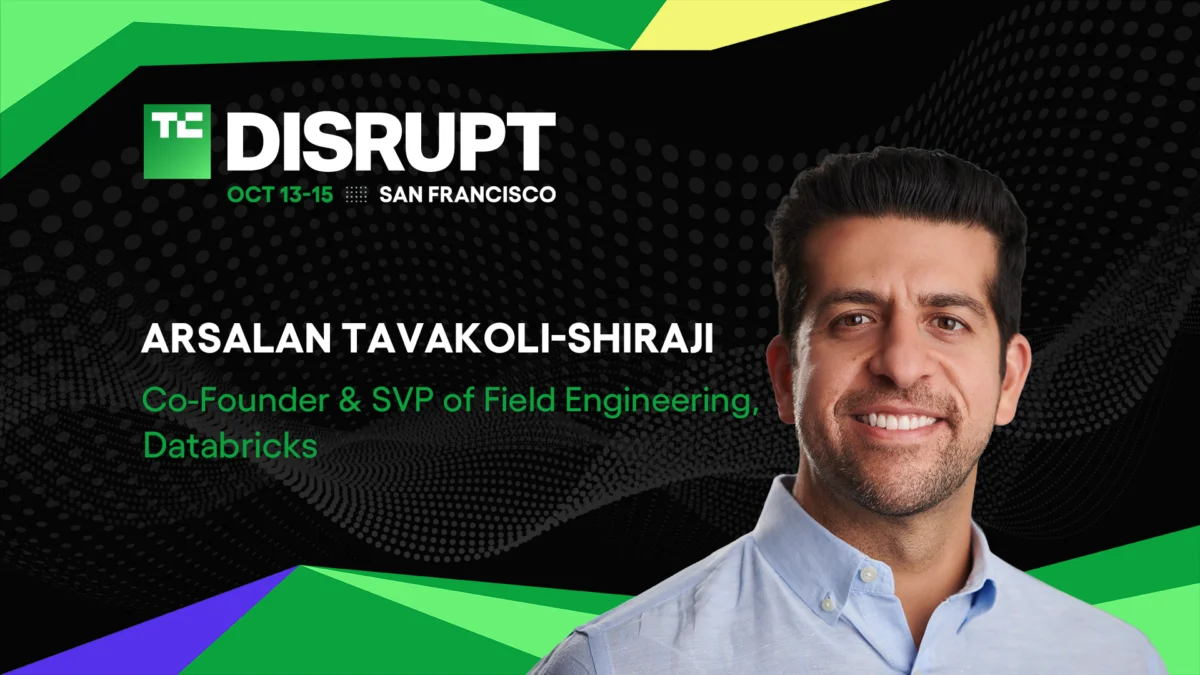
Enterprise organizations are no longer interested in the "wow" factor of generative AI. The era of the shiny, standalone demo is coming to a close, replaced by a much more pragmatic, risk-averse, and demanding environment. For founders and startup leaders, the message is clear: Enterprises are not rejecting artificial intelligence; they are rejecting the operational instability that often comes with it.
This shift represents a fundamental pivot in the market, distinguishing the companies that will achieve long-term, scalable success from those that will stall once the initial excitement of a pilot program fades. As we approach TechCrunch Disrupt 2026, held October 13–15 at Moscone West in San Francisco, this transition serves as the backdrop for a critical industry conversation. Arsalan Tavakoli-Shiraji, co-founder and SVP of field engineering at Databricks, will lead a featured session titled, "The Enterprise Isn’t Broken. Your Assumptions About It Are," designed to help founders navigate this new, disciplined landscape.
The Evolution of the AI Market: From Experimentation to Execution
The Pilot Phase: A False Dawn
For the past several years, the AI market has been fueled by a wave of experimentation. Startups were empowered by a "move fast and break things" mentality, where an impressive model, a slick interface, and a compelling vision were sufficient to secure pilot programs and venture capital interest. The goal was to prove that the technology could work.
However, many of these successful pilots have failed to graduate into full-scale production deployments. The failure, in these cases, rarely lies in the technology itself. Instead, it stems from the enterprise’s inability to absorb the operational, security, and governance consequences that come with integrating a new, unproven AI system into a complex legacy architecture.
The New Reality: The "Trust" Mandate
We have entered a second, more mature phase of enterprise AI. The primary question on the minds of C-suite executives and IT leadership has shifted from "Is this AI exciting?" to "Is this safe to deploy at scale?"
The modern enterprise is now prioritizing reliability over novelty. They are looking for AI that acts as a stable, predictable component of their infrastructure. If an AI product performs exceptionally well in a sandbox environment but introduces even a minor risk to operational stability, it is almost certain to be rejected. Founders who continue to optimize solely for "breakthrough" performance—at the expense of reliability, security, and integration—are building for a market that no longer exists.
The Anatomy of an Enterprise AI Failure
Why do so many promising startups see their enterprise deals die on the vine? According to industry experts, the reasons are rarely technical—they are almost always operational.
The Burden of Integration
An enterprise’s IT ecosystem is a massive, interconnected web of legacy systems, data silos, and strict compliance requirements. A startup that delivers a powerful AI model but fails to account for how that model interacts with existing data pipelines, authentication protocols, and change-management processes creates "workflow friction." This friction is often enough to kill a project.
The Governance Gap
Large organizations operate under intense regulatory scrutiny. They need to know exactly how data is being used, where it is stored, how the model makes decisions, and how to audit those processes. If a startup cannot provide transparency or fails to demonstrate robust governance, the enterprise cannot trust the tool.
The "Black Box" Problem
Trust is the most valuable commodity in enterprise sales. If an AI tool is a "black box"—meaning the logic behind its outputs is opaque or unexplainable—it becomes a liability for managers who need to answer to boards, regulators, and customers.
The Strategic Lens: Why Arsalan Tavakoli-Shiraji Sees the Market Differently
The upcoming session at TechCrunch Disrupt 2026 with Arsalan Tavakoli-Shiraji is particularly significant due to his unique vantage point. Tavakoli-Shiraji sits at the intersection of high-level enterprise strategy and deep technical architecture.
A Background of Expertise
Before his current leadership role at Databricks, Tavakoli-Shiraji served as an associate principal at McKinsey & Company. In that capacity, he advised major enterprises and public-sector organizations on cloud computing, next-generation IT infrastructure, and the complexities of enterprise-wide digital transformation. This, combined with his PhD in computer science from UC Berkeley—where he focused on networking and distributed systems—gives him a holistic view of the problem.
He understands that successful AI deployment is not just a coding challenge; it is a structural challenge. It requires a deep understanding of how technical systems interact with organizational behavior, procurement cycles, and institutional risk profiles.

The Core Thesis: "The Enterprise Isn’t Broken"
Tavakoli-Shiraji’s session aims to debunk the myth that enterprises are "slow" or "stuck in their ways." He argues that they are, in fact, doing exactly what they should be doing: protecting their operations. Founders who frame the enterprise as the obstacle are failing to understand the mission-critical environment they are trying to enter. The "broken" element is often the startup’s own set of assumptions about how to sell and deliver technology.
Implications for Founders and the Ecosystem
The maturation of the market has clear, direct implications for anyone building in the AI space.
1. Shift from "AI-First" to "Trust-First"
Startups that gain the most traction today are those that reduce uncertainty. They emphasize security, explainability, and ease of integration. While this may sound less glamorous than touting the latest model benchmarks, it is the only path to durable, recurring revenue.
2. Prioritizing Operational Adoption
Founders must ask themselves: "How does my product make the enterprise more stable?" If the product creates new workflows that require extensive retraining or introduces new points of failure, it will struggle. If it integrates seamlessly into existing systems and enhances current workflows, it has a much higher chance of success.
3. The Need for "Enterprise Readiness"
"Enterprise-ready" is no longer a marketing buzzword; it is a requirement. This means having the SOC2 compliance, the data residency options, the API documentation, and the support structure that an organization expects from a vendor.
The Future of Enterprise AI at TechCrunch Disrupt
TechCrunch Disrupt 2026 will bring together more than 10,000 founders, investors, and operators to grapple with these very questions. With over 250 sessions across six stages, the event is designed to move beyond the surface-level hype and delve into the operational realities of the next decade of technology.
The AI Stage, presented by Google Cloud, will focus on how AI agents and generative AI are reshaping SaaS, software economics, and enterprise infrastructure. Attendees will hear from the leaders who are currently navigating the transition from experimental pilot programs to, in some cases, global, mission-critical deployments.
Why You Should Attend
For founders, this is an opportunity to learn what distinguishes a successful AI strategy from a failed one. For investors, it is a chance to identify which companies have the operational maturity to survive the current market correction.
Key Highlights of the Upcoming Sessions:
- The Operational Shift: Understanding how to build for long-term integration.
- Governance at Scale: How to build AI that is audit-ready and transparent.
- The Future of Software Economics: How AI changes the way companies buy and manage software.
As the industry shifts away from pure novelty, the companies that will define the future of enterprise AI are those that can solve the "operational trust" problem. Understanding this shift is the most important step an AI founder can take in 2026.
Registration Information:
Ticket savings of up to $410 end on May 29 at 11:59 p.m. PT. Don’t miss the chance to gain the insights required to navigate this critical phase of the AI revolution.
Register for TechCrunch Disrupt 2026 here and ensure you are positioned to lead in the new era of stable, scalable, and trusted enterprise AI.
Note: This article contains affiliate links. When you purchase through these links, we may earn a small commission, which does not affect our editorial independence.
 Dwi Wanna
  Iffa Jayyana