
 By Asep Darmawan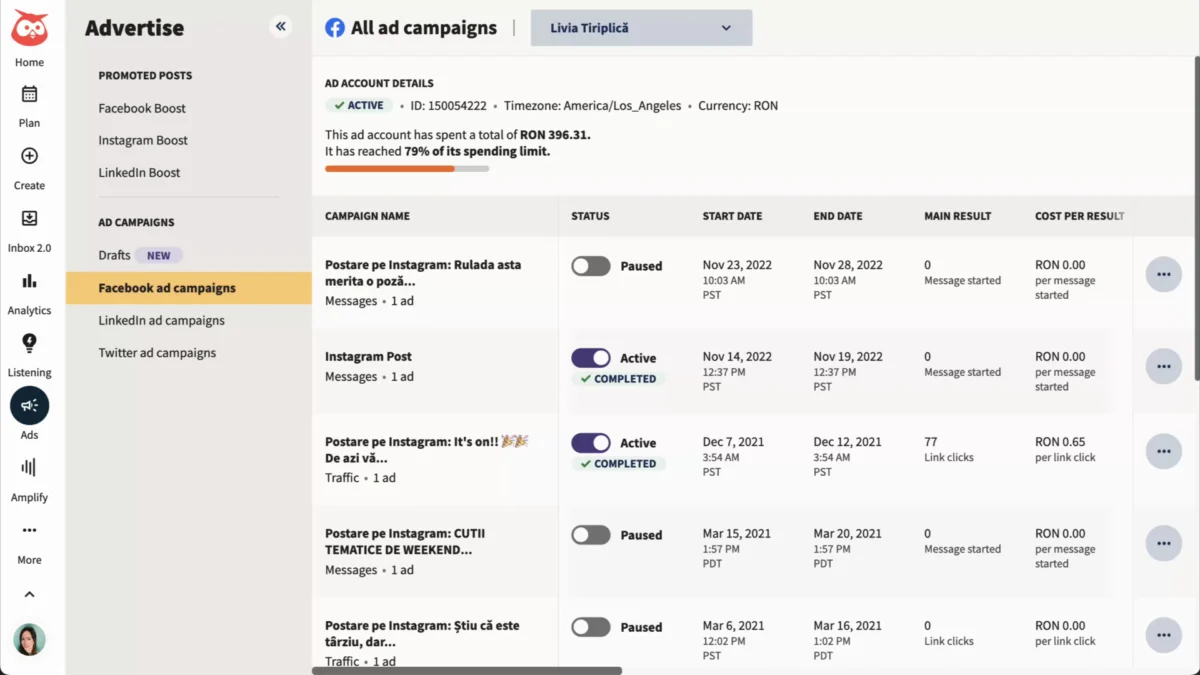
In the hyper-competitive landscape of digital marketing, the ability to effectively advertise on Facebook—and the broader Meta ecosystem—remains a foundational skill for businesses of all sizes. With billions of monthly active users across Facebook, Instagram, Messenger, and the Audience Network, Meta provides an unparalleled opportunity to reach specific demographics at scale.

As we navigate 2026, the mechanics of these campaigns have evolved from manual micro-management to sophisticated, AI-driven operations. This guide explores the strategic imperatives of modern Facebook advertising, the economic realities of current costs, and the technical workflows required to maximize your return on ad spend (ROAS).

The Strategic Foundation: What is Facebook Advertising?
At its core, Facebook advertising is the practice of deploying paid content—ranging from static images and carousels to immersive video—across Meta’s platforms to achieve specific business outcomes.
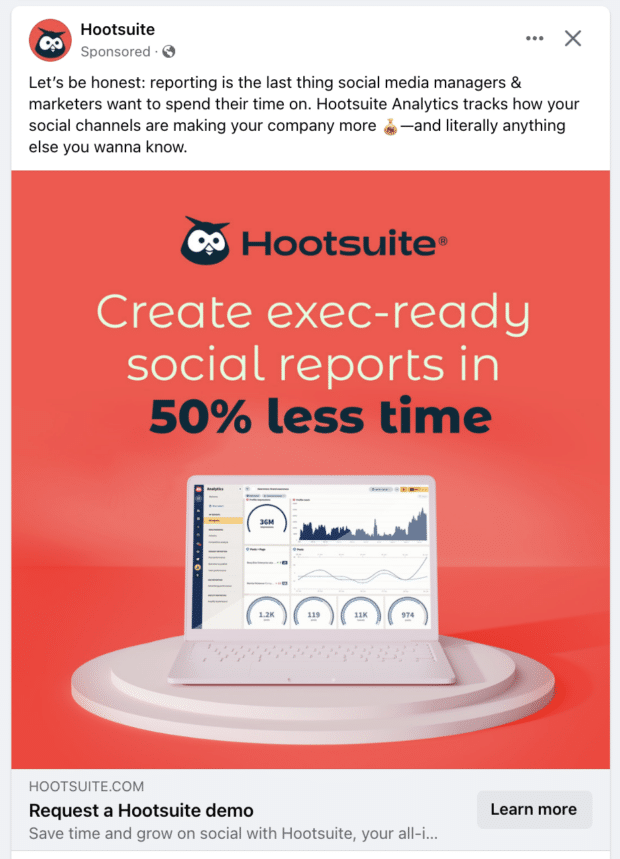
Unlike traditional display advertising, Meta operates on a dynamic auction system. When you launch a campaign, you define your objective (e.g., brand awareness, lead generation, or sales), your target audience, and your budget. Meta’s algorithm then evaluates your bid, the predicted likelihood of user interaction, and the quality of your creative assets. The goal is to match your content with the users most likely to engage, ensuring that your budget is spent efficiently without overpaying for ad inventory.
This combination of massive scale and granular control makes Facebook an essential channel for any growth-oriented marketing strategy.
Chronology of an Ad: The Path from Setup to Conversion
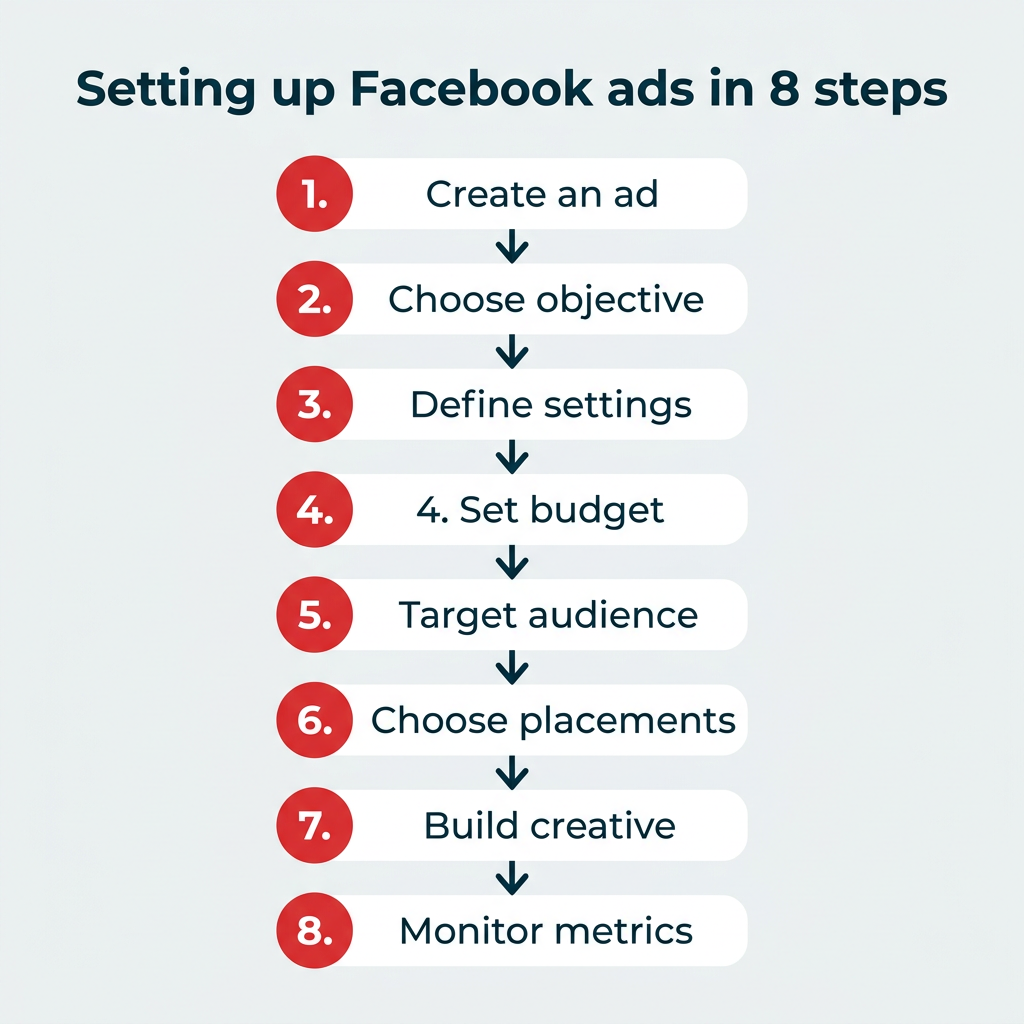
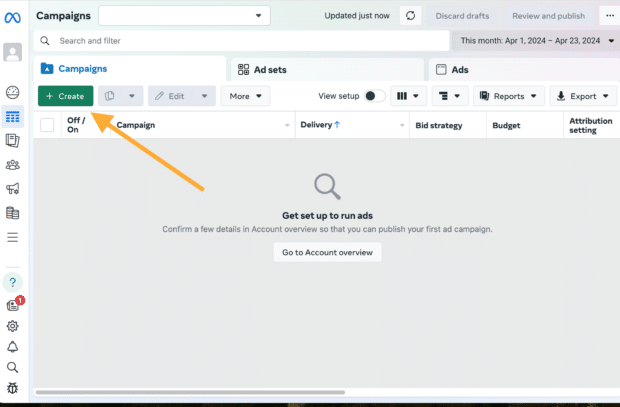
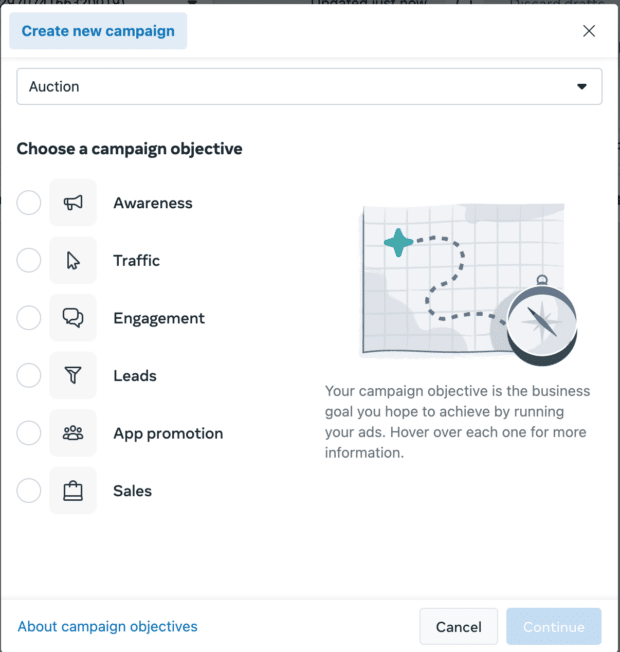
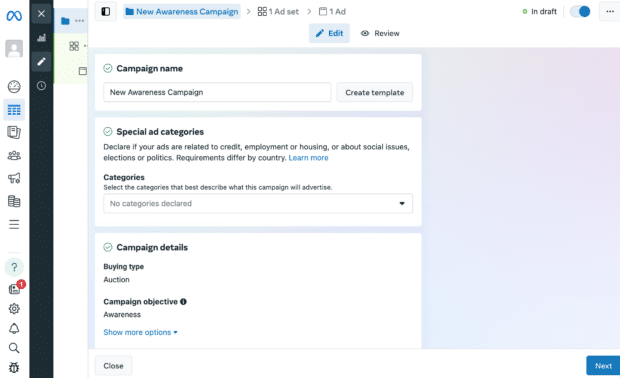
Launching a successful campaign is a structured process. Whether you are using Meta’s native Ads Manager or an integrated social media management suite like Hootsuite, the workflow remains consistent:
- Objective Selection: Define the "why." Are you driving traffic to a landing page, collecting leads, or converting users directly via a shop?
- Campaign Configuration: Name your campaign and declare if it falls under "Special Ad Categories" (e.g., credit, employment, or housing).
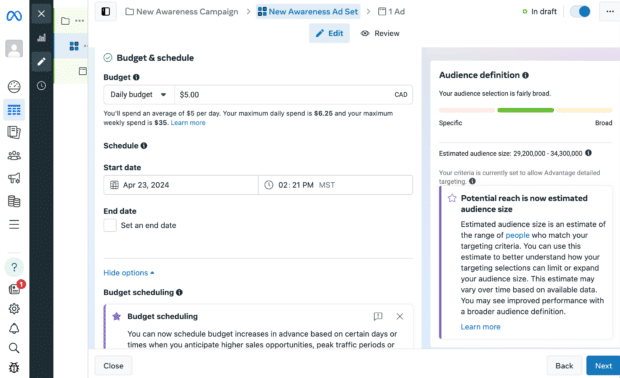
- Budgeting: Decide between a daily budget (ongoing, steady spend) or a lifetime budget (a set amount over a fixed duration).
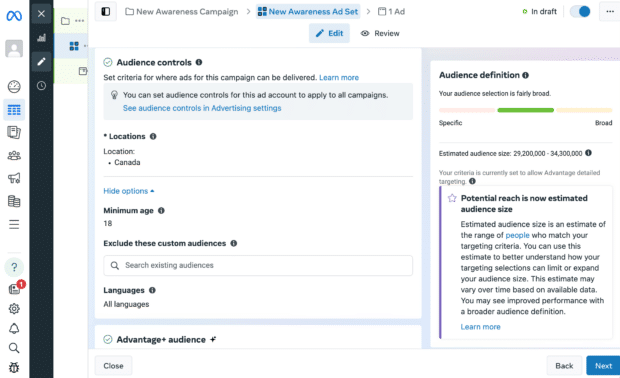
- Audience Definition: Choose between "Advantage+" AI-driven targeting or manual segments based on custom website visitors, email lists, or lookalike audiences.
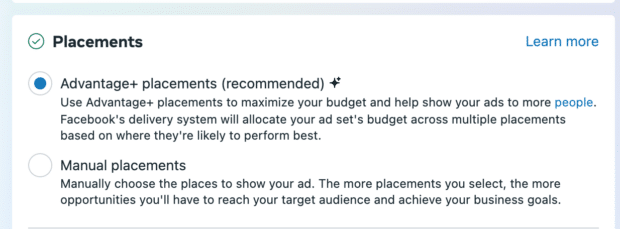
- Placement Strategy: Select where your ads appear. Beginners should start with "Advantage+ placements" to let the algorithm optimize across the best-performing inventory.
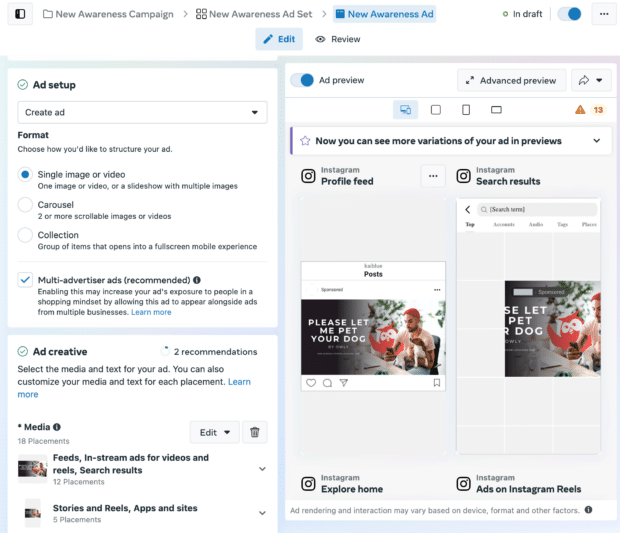
- Creative Execution: Upload your assets, write compelling copy, and finalize the Call to Action (CTA).
- Review and Launch: Use the preview tool to ensure visual integrity across mobile and desktop.
- Performance Monitoring: Once live, analyze key metrics—ROAS, Cost Per Acquisition (CPA), and frequency—to iterate on your strategy.
The Economic Reality: What Does Advertising Cost in 2026?
Budgeting remains a primary concern for marketing teams. In 2026, the average Cost Per Click (CPC) typically ranges between $0.50 and $2.00, though this fluctuates based on industry volatility and audience competitiveness.
Industry Benchmark Data (Estimates)
| Objective | Typical CPC | Typical CPM (per 1k) | Typical CPL (Lead) |
|---|---|---|---|
| Awareness | $0.40 – $0.90 | $5 – $9 | N/A |
| Traffic | $0.50 – $1.50 | $7 – $12 | N/A |
| Engagement | $0.30 – $1.00 | $6 – $10 | N/A |
| Leads | $1.00 – $2.50 | $9 – $15 | $5 – $25 |
| Sales | $0.80 – $2.00 | $10 – $18 | $10 – $40 |
Note: These are benchmarks, not guarantees. Your actual performance will depend on your creative quality, targeting precision, and market saturation.
Is a $5 or $10 daily budget sufficient?
Yes. A $5 to $10 daily spend is an excellent starting point for small businesses to test messaging and gather initial audience data. Once you identify which creative resonates, you can scale your budget to accelerate results.
Supporting Data: Choosing the Right Format
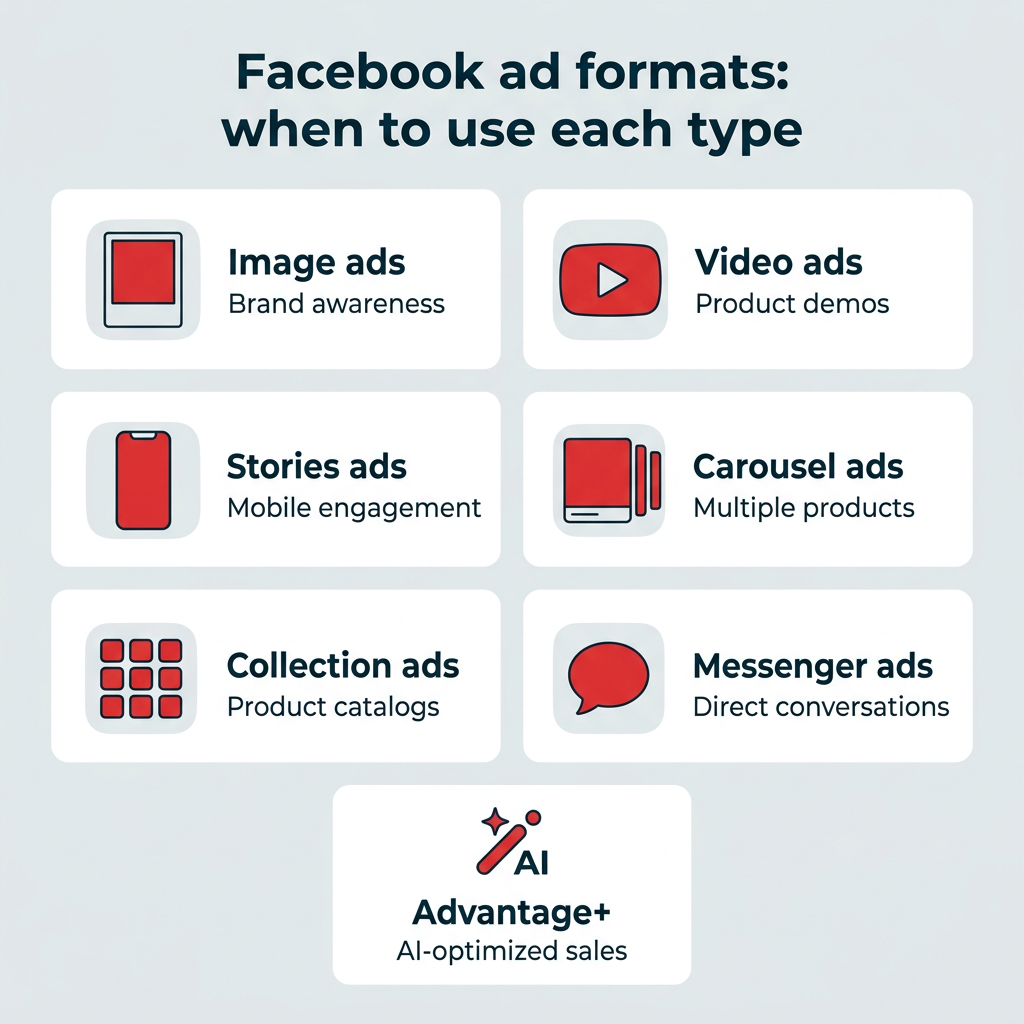
Your choice of ad format should align with your stage in the sales funnel.
- Image Ads: Best for simple, high-impact branding. Easy to create by boosting existing top-performing posts.
- Video Ads: Essential for product demos. Keep them under 15 seconds to maximize retention.
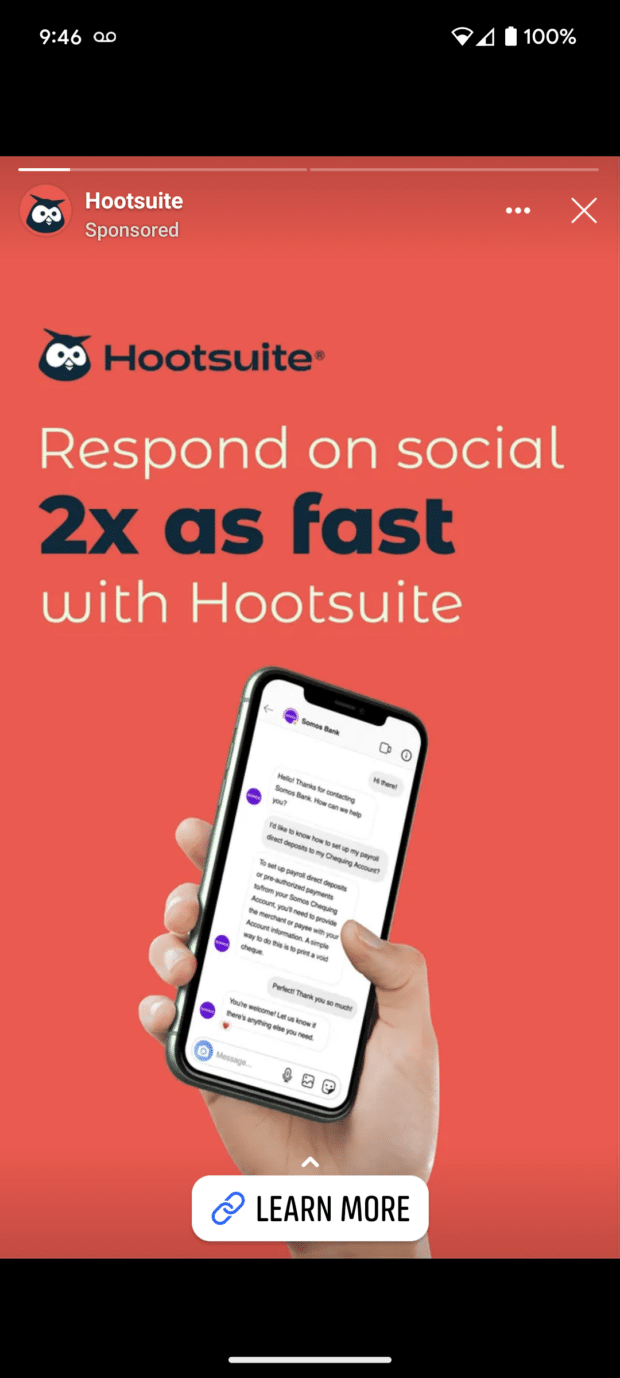
- Stories Ads: Full-screen, immersive, and highly effective for mobile-first audiences.
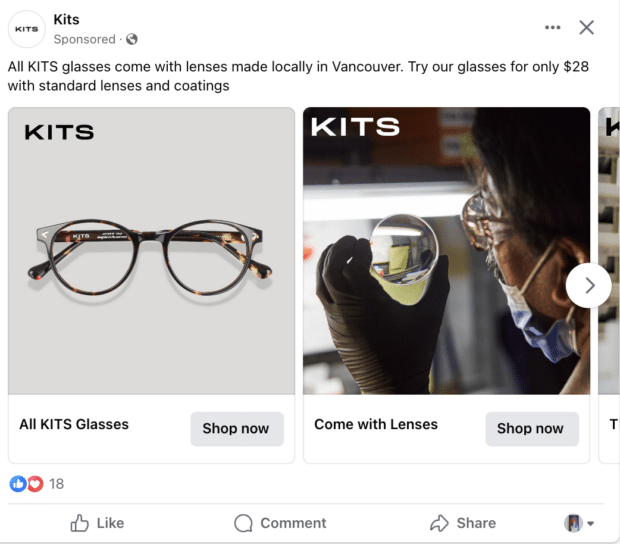
- Carousel Ads: Ideal for showcasing a range of products, with each card featuring a unique URL.
- Collection Ads: The "mobile window-shopping" experience, perfect for e-commerce brands allowing users to browse a catalog without leaving the app.
- Advantage+ Shopping Campaigns: Meta’s AI-driven solution that automates targeting and creative, often delivering a 20% lower cost per result by leveraging machine learning to test combinations in real-time.
Official Recommendations and Best Practices
Meta consistently advocates for an "AI-first" approach. By leveraging Advantage+ features, advertisers can offload manual testing to the algorithm. However, creative strategy remains in the human domain.
The "Pitch, Play, Plunge" Method
Facebook’s official recommendation for creative mix involves three phases:
- Pitch: A short, punchy introduction to the value proposition.
- Play: A video or interactive element that keeps the user engaged.
- Plunge: A deep dive into features or a strong, final call to action.
Critical Tips for 2026
- Mobile-First Design: Ensure all assets are vertical and optimized for mobile screens.
- Sound Optional: Always include captions, as many users browse with sound disabled.
- The 3-Second Rule: If your brand and primary benefit aren’t clear in the first three seconds, you have already lost the viewer.
- Retargeting: Always serve ads to those who have previously interacted with your brand. These users convert at significantly higher rates, lowering your overall CPA.
Implications for Future Growth
The shift toward AI automation (such as Advantage+ Shopping) has profound implications for marketing teams. In the past, success was defined by who could best manipulate manual targeting settings. Today, success is defined by who provides the best creative assets to the algorithm.
For Enterprise Teams: The integration of platforms like Hootsuite into your workflow is no longer optional. By centralizing paid and organic reporting, enterprise teams can ensure that Facebook ads align with their broader brand messaging and cross-channel goals. Integrating CRM data from Salesforce or HubSpot into your Meta campaigns allows for hyper-accurate tracking of the entire customer journey.
Troubleshooting Underperformance: If your campaigns fail, avoid immediate, knee-jerk changes. Check the following:
- Creative Fatigue: Has your audience seen this ad too many times? (Check frequency).
- Landing Page Mismatch: Is the user experience on your site as compelling as the ad?
- Audience Overlap: Are you accidentally competing against yourself with multiple ad sets targeting the same people?
Conclusion
Facebook advertising in 2026 is less about "hacking" the system and more about intelligent, data-informed creativity. By starting with a clear objective, leveraging AI for optimization, and maintaining a relentless focus on analytics, businesses can turn the Meta ecosystem into a predictable, scalable engine for growth. Whether you are a small business owner testing the waters with $5 a day or an enterprise marketer managing global campaigns, the fundamentals remain the same: target the right people, present a clear value, and measure everything.
 Suro Senen
  Jia Lissa