
 By Sagoh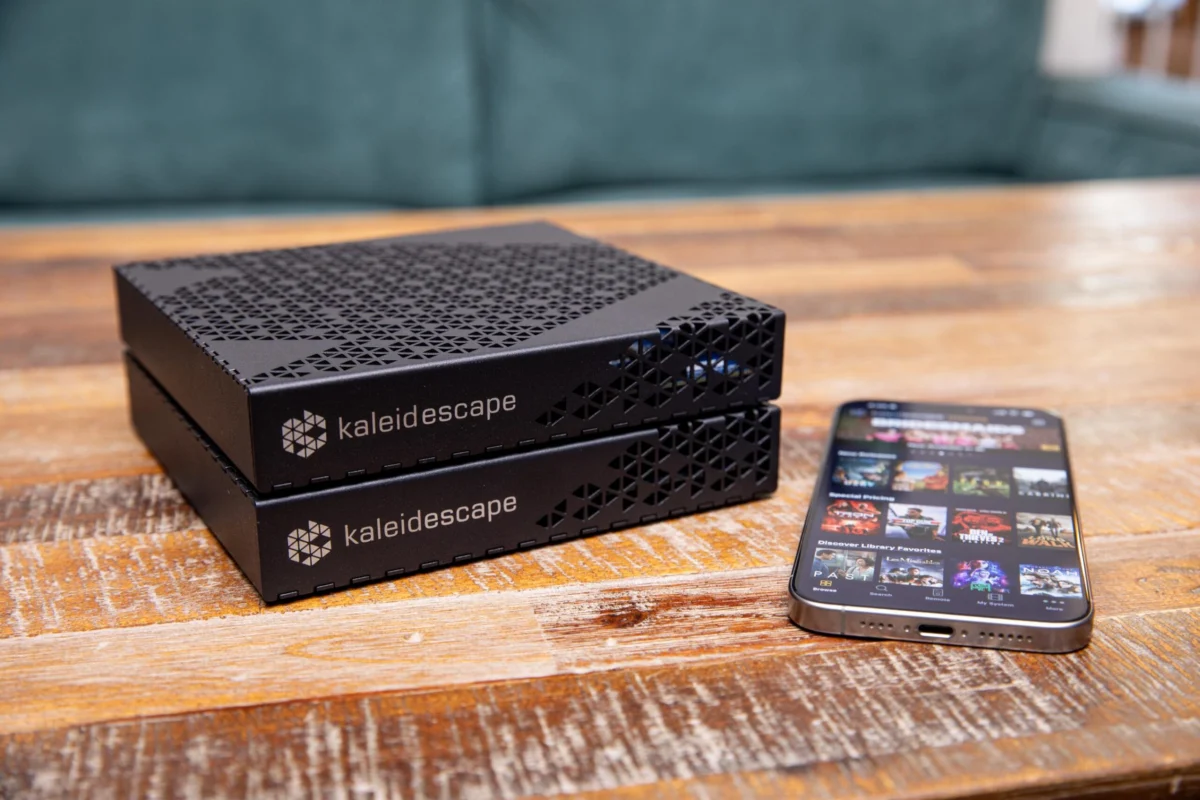
For the better part of the last 15 years, the home entertainment landscape has undergone a radical transformation. Driven by the convenience of platforms like Netflix, Amazon Prime Video, Disney+, and Apple TV, the cultural norm has shifted toward instant, internet-delivered consumption. We have largely abandoned the physical ritual of visiting a video rental store or waiting for a disc to arrive in the mail, accepting that the "best way" to watch movies is via a high-speed fiber connection.
However, this shift has come at a hidden cost: we have traded technical excellence for unprecedented convenience. While our television displays have evolved from standard HD to sophisticated, high-brightness 4K OLED and Mini-LED panels, the content we feed them remains largely throttled by aggressive bitrate compression. We are effectively parking a Ferrari in a driveway and fueling it with low-grade gasoline.
Now, Kaleidescape—the long-standing champion of high-end home cinema—is attempting to bridge the gap with its most accessible device to date: the Strato E. While priced at $2,995, it represents a departure from the company’s history of exclusive, custom-installed theater components. But in an era where streaming is king, does a "reference quality" media player still have a place in the modern home?

The Mechanics of Quality: Why Bitrate Matters
To understand the value proposition of the Strato E, one must understand the limitations of modern streaming. The average bitrate for a 4K stream on most major services hovers around 20Mbps, often dipping below 10Mbps during complex, high-motion sequences. In contrast, a 4K UHD Blu-ray disc can reach peaks of 144Mbps.
Compression artifacts—those tell-tale blocks, color banding in dark scenes, and "crushed" shadows—are the direct result of these low bitrates. They strip away the director’s intended grain structure and rob high-dynamic-range (HDR) images of their depth.
Kaleidescape operates on a different philosophy. By partnering directly with movie studios to obtain source files and performing their own high-fidelity encoding, they ensure that the data rate is only as high as the frame requires. For visually demanding films like Top Gun: Maverick or Mad Max: Fury Road, the Strato E can deliver bitrates exceeding 160Mbps. This is not just "better than streaming"; it is, in many cases, indistinguishable from or superior to the digital master of a 4K Blu-ray disc.

Chronology of a High-End Contender
The history of Kaleidescape is as tumultuous as it is prestigious. Founded in the early 2000s, the company built its reputation on the ability to rip and store physical media collections onto a centralized server, indexed by a sophisticated, intuitive user interface. This ambition put them on a collision course with the DVD Copy Control Association (DVD CCA).
A landmark lawsuit in 2004 over breach of contract regarding the digital copy protection of DVDs dragged on for a decade. The litigation was finally resolved in 2014, paving the way for the company’s current iteration of hardware. Since 2015, the focus has shifted from "ripping" to a secure, studio-sanctioned digital storefront. The release of the Strato E in 2026 marks the latest milestone, bringing the company’s proprietary architecture down from the "six-figure home theater" market into the "luxury living room" space.
Technical Data and Performance Metrics
The Strato E is not a streamer; it is a high-performance local playback engine. It features a built-in 480GB solid-state drive (SSD), providing enough capacity for five to six reference-quality 4K movies. The device supports HDMI 2.1, ensuring compatibility with the latest display technologies.

| Title | Average Bitrate | Maximum Bitrate | File Size |
|---|---|---|---|
| Top Gun: Maverick | 71Mbps | 166Mbps | 84.6GB |
| Incredibles 2 | 66.9Mbps | 160Mbps | 69.3GB |
| Mad Max: Fury Road | 68Mbps | 152Mbps | 69.6GB |
| Godzilla vs. Kong | 67.4Mbps | 143Mbps | 64.5GB |
| Pacific Rim | 70.7Mbps | 137Mbps | 78.1GB |
| Ghostbusters (1984) | 65Mbps | 123Mbps | 58.4GB |
When testing the device against streaming alternatives, the difference is stark. In Dune, the "spice-laden" desert scenes remain sharp and detailed in dark, shadowy areas where streaming services would typically introduce noise or banding. Audio performance also sees a massive upgrade; while streaming utilizes lossy Dolby Digital Plus, the Strato E provides lossless Dolby TrueHD and DTS-HD Master Audio, resulting in significantly better spatiality and clarity in the height channels for Atmos-enabled systems.
Official Responses and Strategic Limitations
Despite its brilliance, the Strato E is not without its controversies—particularly regarding its storage strategy. The onboard 480GB drive is non-upgradeable. If a user requires more space, they must purchase a separate Terra Prime server. Interestingly, adding a server disables the internal storage of the Strato player, as the company imposes a four-server limit per system.
When asked about these limitations, Andrè Floyd, Kaleidescape’s director of technical marketing, noted that the system is designed to prioritize stability over flexibility. "It is much more straightforward, once someone has filled a Terra server, to add another server to their system," Floyd explained. "Removing drives full of content and throwing them away to make room for larger drives… is not a supported operation."

The company maintains this "closed garden" approach to ensure a piracy-free, high-quality experience that satisfies the legal requirements of the studios they partner with. This is why, unlike a DIY Plex server, Kaleidescape cannot accept user-provided files, and why physical disc ownership only yields minor purchase discounts rather than digital rights.
Implications for the Future of Home Cinema
The existence of the Strato E raises a fundamental question about the future of media: are we entering a period of "digital bifurcation"?
On one side, we have the mass market—content with the convenience of Netflix and the "good enough" quality of 4K streaming. On the other, we have a small but dedicated contingent of enthusiasts who refuse to accept that their high-end home theater systems are being bottlenecked by internet infrastructure.

The economic reality is that streaming services are unlikely to significantly increase their bitrates. Providing 100Mbps+ streams to millions of concurrent users would require an overhaul of global internet infrastructure and massive increases in cloud storage costs, which would inevitably be passed on to the consumer in the form of higher subscription fees. As it stands, the average consumer neither notices nor cares about the artifacts that bother the cinephile.
For the enthusiast, however, the Strato E is a revelation. It effectively saves the movie-watching experience from the "convenience trap." While the price of entry—$2,995 for the player, plus $9,995 if one opts for the 8TB Terra Prime server—is undeniably exorbitant, it is consistent with the cost of other high-end audio-visual components.
Final Verdict
The Strato E is not for everyone. If you are watching on a mid-range television or using a standard soundbar, the technical benefits of the Strato E will be largely invisible. However, for those with a high-end sound system and a premium 4K display, the device offers a transformative experience.

It reminds us that there is a tangible difference between "watching a movie" and "experiencing a film." While we may have collectively sacrificed quality for the ease of an app-based interface, Kaleidescape proves that the technology to reclaim that quality exists—provided you are willing to pay the premium for it. As streaming continues to dominate, devices like the Strato E will remain the final, defiant stand of the purist, ensuring that even in a digital-first world, the cinematic vision remains intact.
 Azzam Bilal Chamdy
  Suro Senen
  Nana Wu