
 By Lina Irawan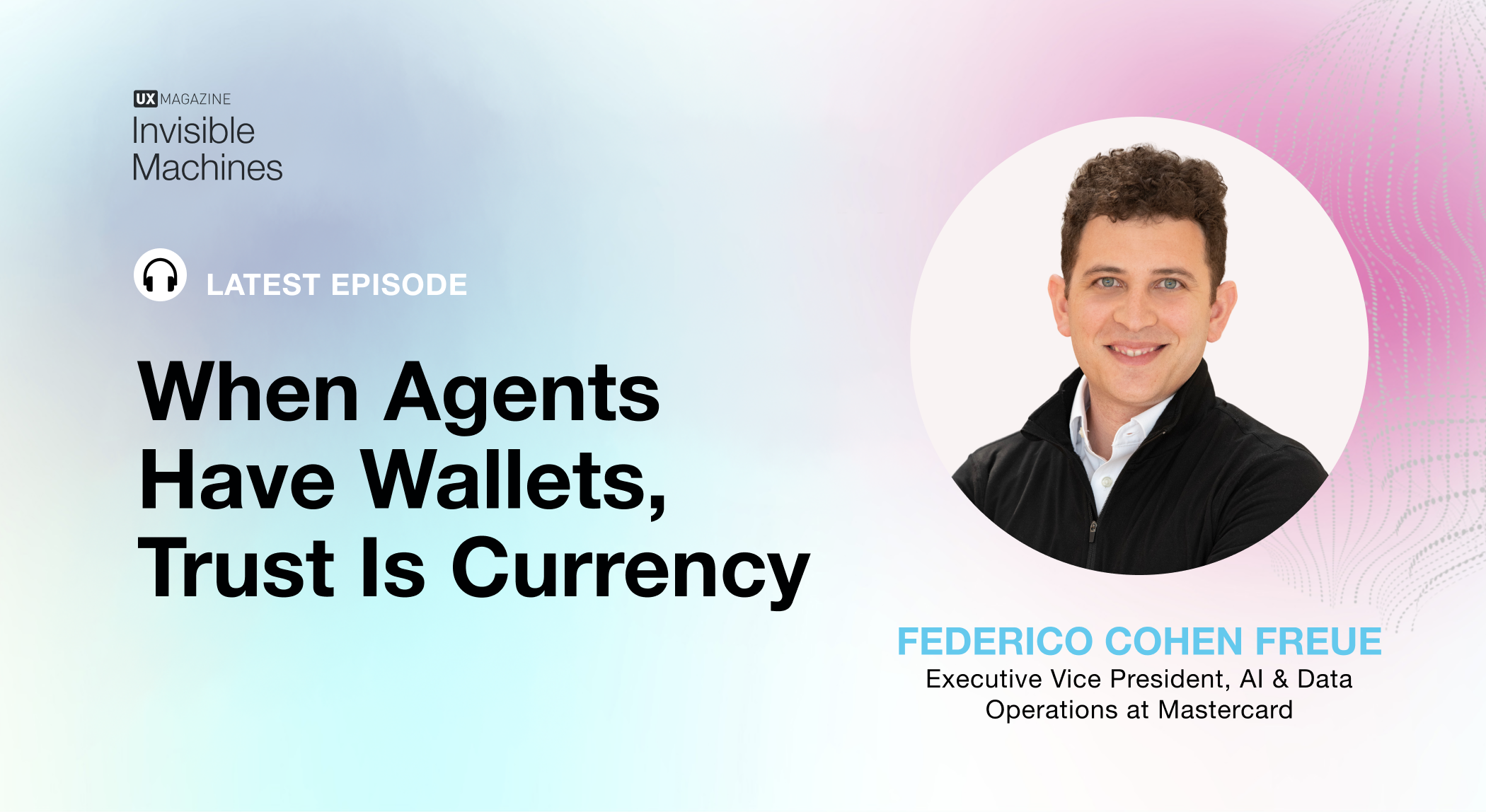
In the rapidly shifting landscape of enterprise technology, the transition from "generative" AI to "agentic" AI represents the most significant paradigm shift since the dawn of the internet. For most organizations, this evolution is a chaotic scramble to deploy chatbots and automated scripts. However, for Federico Cohen Freue—the lead of Mastercard’s central AI and data team—the challenge is not about the velocity of deployment, but the integrity of the architecture.
Each year, Cohen Freue’s team sifts through roughly 1,000 AI proposals from across Mastercard’s global operations. These aren’t just casual inquiries; they are strategic pitches from business units eager to leverage AI. A few years ago, the common denominator was a request for a chatbot. Today, that request has evolved into a mandate for "agents"—autonomous software entities capable of executing tasks, navigating workflows, and performing actions on behalf of a human user.
For Cohen Freue, this shift is a signal of institutional maturity. It marks the moment when employees stopped viewing AI as a passive oracle and started viewing it as a productive colleague. Yet, he offers a sobering caveat: the desire for agency is outpacing the readiness for it.
The Ball Bearing Problem: Why Demos Deceive
To understand why most AI initiatives fail, Cohen Freue invokes a precise analogy: the ball bearing. Imagine two ball bearings placed side-by-side. One is a masterwork of engineering—perfectly machined, durable, and reliable. The other is a cheap imitation, structurally compromised, and destined to shatter under pressure. To the naked eye, they are indistinguishable.
"You cannot tell the difference by looking at them," Cohen Freue notes. "Put the bad one in an airplane engine, and the engine fails."
In the corporate world, agentic AI demos function the same way. A polished, high-fidelity demonstration of an AI agent booking a flight or reconciling a ledger can look identical to a disaster waiting to happen. The visual interface masks the structural fragility beneath. Most enterprises, blinded by the "wow factor" of a working demo, proceed to deployment without ensuring the underlying "machining"—the data quality, the logical guardrails, and the edge-case testing—is sound.
At Mastercard, the strategy is intentionally counter-intuitive. Before the team is allowed to deploy, they must demonstrate "fluency." They must understand the conditions that make AI successful. By training the organization to identify what "correctly machined" AI looks like, the company empowers its teams to act as their own quality control, weeding out volatile projects before they ever reach production.
A Strategic North Star: The Power of Simplicity
With a thousand incoming ideas and an exponentially expanding technological toolkit, how does a global enterprise avoid "feature creep" or strategic drift?
Mastercard’s answer is a framework so simple it almost sounds reductive. Every AI project must satisfy a singular, four-part test:
- Security: Does it make commerce safer?
- Intelligence: Does it make the system smarter?
- Personalization: Does it provide a more tailored experience?
- Resilience: Does it make Mastercard stronger?
This framework functions as a strategic lens. It is not a bureaucratic checklist or a compliance hurdle; it is a shared language. When a team pitches an agentic solution, the conversation is no longer a negotiation of features—it is an evaluation of alignment. If an idea doesn’t map to these four pillars, it is discarded. By codifying these values, Mastercard ensures that even as AI capabilities explode, the company’s trajectory remains fixed on its core mission.
Trust as the New Global Currency
The stakes rise exponentially when moving from information-based agents to "agentic payments." As consumer demand for LLM-mediated shopping grows, the prospect of autonomous agents negotiating prices and executing financial transactions is becoming a reality.
In this new economy, the traditional "middleman" does not disappear—instead, they become the most critical node in the system. Mastercard’s approach to this reality is focused on the "base case": the rules infrastructure. Before dreaming of multi-vendor autonomous travel agents, the company is doubling down on:
- Agent Identity Verification: How does a merchant know they are transacting with a legitimate, authorized agent?
- Delegated Authority Frameworks: What are the boundaries of an agent’s power?
- Acceptance Standards: How does the ecosystem maintain trust when no human is manually pressing "approve"?
Cohen Freue puts it plainly: "Trust is the currency of innovation." As transactions become more complex, involving more parties and dynamic pricing, the role of a trusted, centralized network—a "digital arbiter"—becomes more valuable, not less.
Knowledge Management: Beyond the Chatbot
Perhaps the most radical departure in Mastercard’s philosophy is how it manages knowledge. The traditional enterprise approach is reactive: a company builds a vast repository of documents, then waits for employees to query it. This puts the burden of knowledge on the seeker.
Mastercard is exploring an "AI-first" alternative: a proactive, systemic approach to expertise. This system replaces the traditional document silo with a "knowledge model"—a structured, canonically correct map where each concept exists only once, linked to its context and history.
From this map, the system creates a "learning twin" for each employee—a dynamic representation of what the individual knows and where their knowledge gaps exist. It treats organizational learning like a "traveling salesman problem." Instead of forcing employees through a fixed, generic curriculum, the AI calculates the most efficient, personalized route to expertise, recalculating in real-time as the employee learns or as the business domain shifts. It is, in effect, a GPS for professional competence.
However, Cohen Freue acknowledges that the primary barrier here is cultural, not technical. "The technology can be ready before the culture is," he warns. Shifting an organization from a "one-time onboarding" mindset to a "continuous learning" flow requires a fundamental shift in how corporations reward readiness and expertise.
Implications: The Primacy of Sequence
The common thread through Mastercard’s AI strategy is the importance of sequence.
Most organizations fail because they start with the doing. They rush to build the agent, the bot, or the automation. They treat AI as a plug-and-play solution to business problems. Mastercard flips this: they prioritize the knowing. They build fluency, verify identity, and structure knowledge before they even consider the automation of a task.
This is a fundamental reframe of the enterprise AI narrative. It suggests that if an AI project fails, it is rarely a "technology problem." It is a "knowledge problem." If the system does not know enough, or if the people managing it lack the fluency to oversee it, the model is irrelevant.
By treating knowledge as core infrastructure rather than a byproduct of operations, Mastercard is creating a blueprint for the future of the enterprise. The message to leaders is clear: before you ask what your AI can do, you must first ask what your organization actually knows. Because in an agentic world, your agents are only as reliable as the knowledge they are built upon.
In the race to implement artificial intelligence, the winners will not necessarily be those who deploy the fastest, but those who understand the sequence of innovation. By mastering the "machining" of their systems, prioritizing trust as a foundational element, and treating knowledge as a dynamic map, Mastercard is positioning itself not just to participate in the AI revolution, but to provide the infrastructure upon which that revolution will run.
 Ammar Sabilarrohman
  Neng Nana
  Sagoh
Sagoh 