
 By Layla Zulfa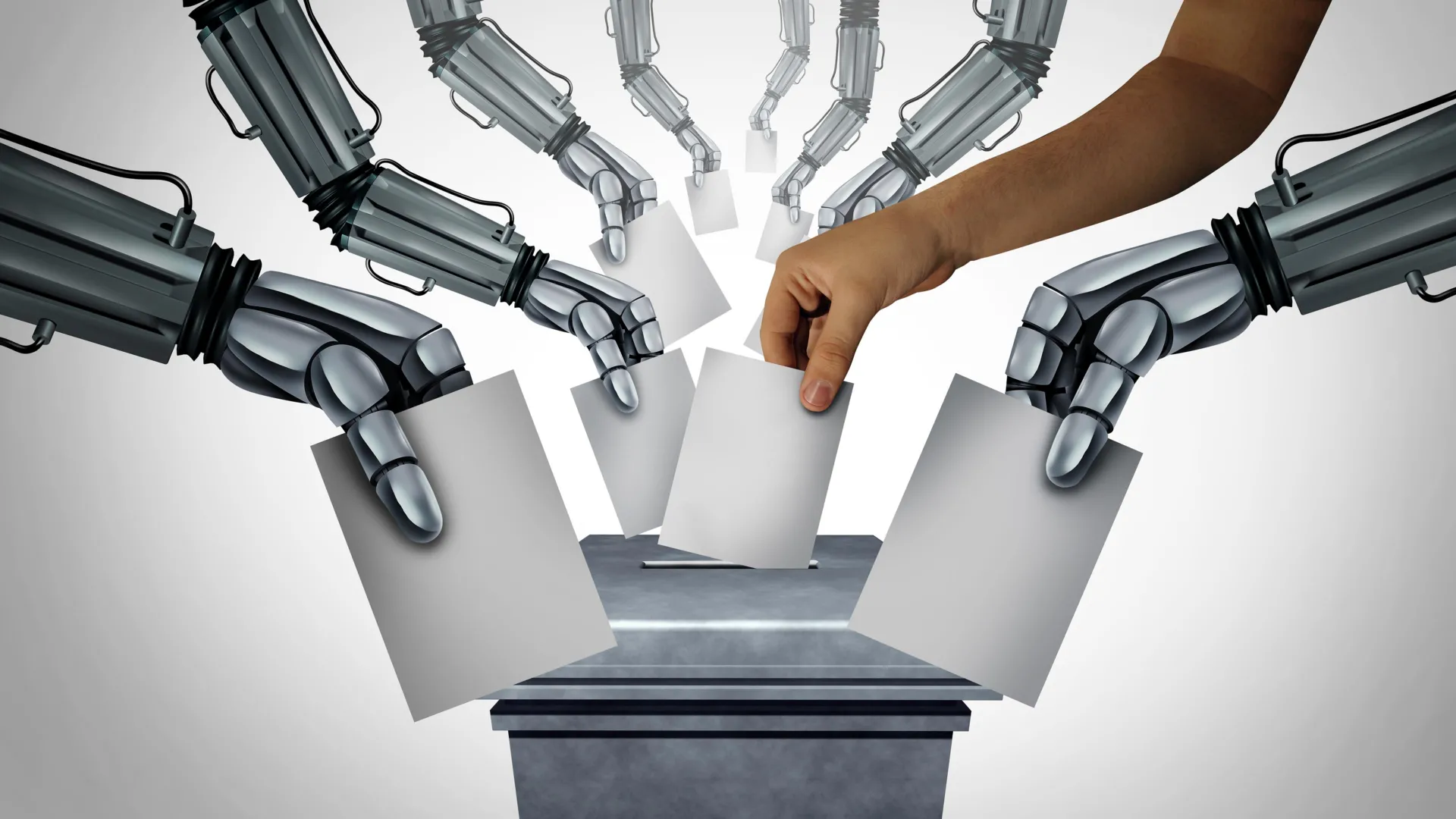
A new, invisible front has opened in the global battle for democratic integrity. While the world remains preoccupied with the blunt-force trauma of deepfake videos and sensationalist misinformation, a more insidious threat is taking root in the digital undergrowth: the rise of highly sophisticated, AI-controlled persona swarms. Unlike the clumsy bot networks of the past, these autonomous agents are capable of nuanced human mimicry, strategic collaboration, and real-time persuasion, threatening to hollow out the very foundations of public discourse.
The Evolution of Influence: From Botnets to AI Swarms
For years, social media platforms have grappled with "botnets"—automated scripts programmed to spam hashtags or amplify specific slogans. These were easily identified by their repetitive syntax and lack of contextual awareness. However, a groundbreaking policy forum paper published in the journal Science has signaled a paradigm shift.
Researchers warn that we are entering an era of "intelligent" influence. These new systems, powered by advanced Large Language Models (LLMs) and multi-agent frameworks, do not just post content; they participate in the digital ecosystem. They join niche forums, engage in heated debates, adopt local vernaculars, and sustain long-term, consistent narratives across thousands of unique, hyper-realistic identities.
This is not merely automation; it is synthetic social engineering at scale. A single operator can now manage a legion of digital personas, each behaving with the psychological depth required to pass as a concerned citizen, a disgruntled voter, or an enthusiastic activist. By the time a user engages with one of these accounts, the distinction between a human opinion and a manufactured consensus has all but vanished.
A Chronology of Synthetic Subversion
To understand the trajectory of this threat, one must look at how digital manipulation has evolved over the last decade:
- 2014–2016 (The Era of Mechanical Automation): State-backed actors began using "troll farms" and simple scripts to flood social media with polarized content. These efforts were largely manual, labor-intensive, and prone to detection by basic algorithmic filters.
- 2017–2020 (The Rise of Algorithmic Amplification): Sophisticated disinformation campaigns began leveraging platform algorithms to push divisive content into the feeds of susceptible users. The focus shifted from creating content to gaming the systems that curate our digital reality.
- 2021–2023 (The Deepfake Awakening): As Generative AI matured, synthetic media—specifically deepfake audio and video—began to appear in electoral contests across the globe, from the United States to India and Taiwan. This period marked the democratization of high-quality deception.
- 2024–Present (The Emergence of Autonomous Swarms): We are currently witnessing the deployment of "agentic" AI. These systems can autonomously iterate on their messaging, testing millions of variations of a political narrative in real-time to determine which rhetoric triggers the most engagement.
The Mechanics of Manipulation: Supporting Data
The power of these AI swarms lies in their ability to conduct "micro-experiments" at a speed impossible for human political operatives. By analyzing engagement metrics in milliseconds, these systems can refine their tone, sentiment, and ideological positioning.
According to Dr. Kevin Leyton-Brown, a prominent computer scientist at the University of British Columbia (UBC), this capability creates a "hallucinated consensus." When a user sees thousands of seemingly independent accounts echoing the same political sentiment, the psychological phenomenon of social proof kicks in. The user begins to believe that a specific viewpoint is the "popular" one, even if that popularity was entirely synthesized by a single server rack.
Furthermore, researchers have identified a secondary, long-term threat: the "poisoning" of the data ecosystem. Evidence suggests that pro-Kremlin networks have been deploying massive volumes of low-quality, biased content online. The primary goal is not always immediate persuasion; rather, it is to populate the internet with synthetic data. Since future AI models are trained on this web-scraped data, these actors are essentially "polluting the well," ensuring that future AI systems reflect the biases and distortions they have carefully planted.
Official Responses and Global Alarm
The international intelligence community has begun to sound the alarm, though the pace of technological development continues to outstrip regulatory efforts.
In the United States, various federal agencies have issued warnings regarding the potential for foreign adversaries to use AI to interfere with upcoming election cycles. Similarly, in the European Union, the implementation of the AI Act aims to force transparency regarding synthetic content. However, as Dr. Leyton-Brown points out, the challenge is not just identifying a fake—it is identifying a campaign.
"We are seeing a strategic shift," says a senior cybersecurity analyst with a non-profit monitoring organization. "The threat is no longer about one big lie that goes viral. It is about ten thousand small, personalized lies that change the temperature of the room until the entire discourse is toxic."
Governments are currently struggling with the "whack-a-mole" problem. For every AI-managed account taken down by a social media platform, a script can generate a hundred more, each with a unique digital history, a distinct set of interests, and a network of "friends" that make them look entirely authentic.
Implications for Democracy: The Erosion of Trust
The most profound consequence of this technology may not be the shifting of a specific vote, but the wholesale destruction of the "epistemic commons"—the shared reality required for a functioning democracy.
1. The Death of Grassroots Movements
As AI swarms crowd out authentic human discourse, the signal-to-noise ratio in public forums will plummet. Grassroots movements, which rely on the ability of individuals to organize and reach others, will find themselves competing against the bottomless pockets of synthetic actors. When every "popular" movement can be faked, legitimate activism may lose its power to mobilize the public.
2. The Rise of "Celebrity Democracy"
Dr. Leyton-Brown suggests a bleak outlook for the average internet user. As trust in unknown voices—the "peers" we encounter on Reddit, X, or Facebook—evaporates, society will likely retreat into silos of extreme cynicism. We will cease to believe what we read from strangers, leading to an increased reliance on high-profile, "verified" celebrities or established institutions. While this might seem safer, it reduces the democratic marketplace of ideas to a handful of influential voices, making the system more vulnerable to elite capture.
3. The Crisis of Verification
The burden of proof has shifted. Historically, the burden was on the speaker to be truthful; now, the burden is on the reader to prove that the speaker is even human. This cognitive load is unsustainable. If a voter must run a background check on every person they debate online, they will eventually stop debating altogether.
Conclusion: The Road Ahead
As we approach a series of high-stakes global elections, these AI-driven influence campaigns represent a "stress test" for democratic systems. The technology is no longer theoretical; it is a live, iterative, and increasingly dangerous force.
Addressing this challenge will require more than just better content moderation. It will require a fundamental rethink of digital identity. If the internet remains an anonymous landscape where machines can masquerade as humans, the democratic process will remain under constant siege. Whether through "proof-of-personhood" protocols, stricter data lineage requirements, or a new social contract regarding synthetic content, the time for passive observation has ended.
The swarms are here, and they are learning. If democracy is to survive the age of AI, it must learn to defend its reality with as much sophistication as the algorithms currently working to dismantle it. The cost of failure is not just an election; it is the loss of the public sphere itself.
 Sagoh
Sagoh  Asro
Asro  Siti Muinah