
 By Nana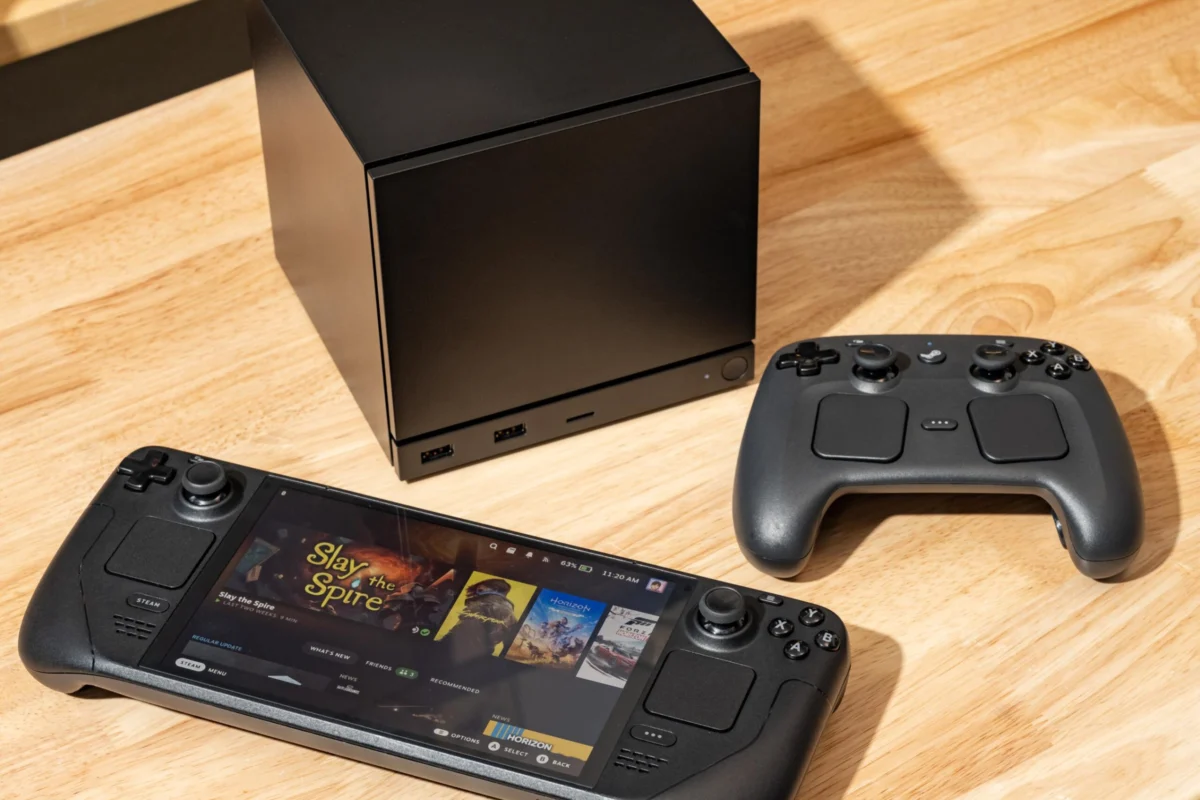
The gaming industry is currently navigating a period of unprecedented volatility. For years, the dream of a dedicated, high-performance "Steam Machine"—a living room console experience backed by the vast library of Valve’s PC ecosystem—has hovered on the horizon. Today, that dream has arrived, but it comes with a sobering reality check. Valve has finally unveiled the official pricing for its Steam Machine hardware: a daunting $1,049 for the 512GB entry-level configuration, scaling up to $1,349 for the 2TB model. Notably, these figures exclude the cost of controllers, a move that places the total cost of ownership well into the premium tier of enthusiast PC gaming.
As consumers digest these figures, industry analysts and hardware enthusiasts alike are pointing to a singular culprit: the global memory supply crisis. With Valve openly admitting that it is no longer subsidizing hardware costs—a departure from its aggressive pricing strategies of the past—the Steam Machine serves as a bellwether for a new, unforgiving era of hardware economics.
A Chronology of the Component Crunch
To understand how we arrived at these prices, one must look at the trajectory of the semiconductor and memory market over the past twenty-four months. The current "RAMageddon," as some in the industry have dubbed it, was not an overnight phenomenon.
Following the initial supply chain disruptions of the early 2020s, the global market expected a steady return to normalcy. Instead, the rapid explosion of artificial intelligence infrastructure and the subsequent demand for high-bandwidth memory (HBM) created a massive bottleneck. Suppliers like Samsung, Micron, and SK Hynix, which control the lion’s share of the global memory market, pivoted their production capabilities to serve high-margin AI data centers.
By early 2025, it became clear that consumer-grade hardware was being sidelined. Valve, despite its massive influence, found itself unable to secure the long-term contracts that typically stabilize hardware manufacturing costs. The result was a cascading series of delays and price adjustments. What was once envisioned as a competitive console-killer morphed into a premium boutique product, forced to absorb the "take-it-or-leave-it" pricing models dictated by a handful of memory giants.
The Raw Reality: Inside the Supply Chain
The most striking insight into this struggle came from a recent, candid discussion between Valve engineers and the tech-focused YouTube channel Gamers Nexus. During the interview, Valve’s Pierre-Loup Griffais provided a rare look behind the curtain of hardware procurement in 2026.
"Look, there’s no contracts. There’s nothing," Griffais explained. "Those guys… they give us a price every month or something and they say, ‘you can buy that many,’ and it’s yes or no. And if we say no, then they never talk to us again."
This revelation highlights the shift in power dynamics within the tech sector. Hardware manufacturers are no longer in the driver’s seat. Instead, they are supplicants to a supply chain that prioritizes the highest bidder—usually massive AI-focused conglomerates. This volatility has led to a bizarre, "just-in-time" manufacturing strategy where the internal specifications of a Steam Machine may vary based on what can be secured at the moment of assembly.
For instance, Valve has confirmed that units will ship with either a single 16GB stick of RAM or a dual-channel 2x8GB configuration. While the engineering team, including Yazan Aldehayyat, claims that their internal testing shows "no measurable difference" in gaming performance between the two setups, the admission that the configuration depends "on the supply that we can secure" speaks volumes about the instability currently plaguing the industry.
By the Numbers: Decoding the Pricing Shift
While Valve has not publicly released its original target pricing for the Steam Machine, recent movements in the Steam Deck OLED market provide a roadmap for the company’s financial calculations.
Earlier this year, the Steam Deck OLED saw price hikes of $240 for the 512GB model and $300 for the 1TB model. Industry observers have used these figures as a proxy for the internal cost increases Valve has faced across its hardware portfolio. By adjusting the current Steam Machine prices against these known hikes, analysts estimate that the initial target price for the 512GB Steam Machine was likely around $809, with the 2TB version hovering near $1,049.
This delta—roughly $240 to $300—represents the "memory tax" that consumers are now being asked to pay. While $800 is still a significant investment, it sits in a more competitive bracket compared to high-end consoles. At over $1,000, however, the Steam Machine enters a territory where it must compete with dedicated high-end gaming PCs, a comparison that makes the lack of bundled controllers and the reliance on variable RAM configurations difficult to justify for the average gamer.
The Broader Implications: A New Era for Consumers
Valve is far from alone in this predicament. The memory crisis is a systemic issue affecting the entire electronics ecosystem. From Lenovo’s recent price hikes on its handheld gaming devices to Microsoft’s adjustments to the Surface line, the message is clear: the era of affordable, high-spec consumer electronics is facing a significant challenge.
Perhaps most concerning is the warning from Apple CEO Tim Cook, who has signaled that price increases are likely coming to the entire range of iPhones, Macs, and other ecosystem devices. If the world’s most powerful hardware procurer—a company with unparalleled supply chain leverage—is anticipating price hikes, the outlook for smaller manufacturers is bleak.
The RAM shortage is not projected to subside in the short term. As AI development continues to drive demand for specialized silicon, the price of standard DRAM and NAND flash is expected to remain high. For consumers, this suggests that the days of steady-state hardware pricing are likely over. We are moving into a period where hardware costs will be fluid, potentially fluctuating month-to-month based on the global cost of memory.
Conclusion: The Steam Machine as a Warning
The Steam Machine is, in many ways, the perfect microcosm of the modern tech economy. It is a product designed with high-performance aspirations, hampered by the cold, hard reality of global logistics and resource scarcity.
For Valve, the decision to launch at these prices is a calculated risk. By choosing not to subsidize the hardware—a practice they maintained for years to grow the Steam Deck user base—they are signaling that they can no longer afford to absorb the volatility of the memory market. While the move may protect the company’s bottom line, it creates a steep barrier to entry for the very community that Valve built its empire upon.
As we look toward the future, the Steam Machine serves as a cautionary tale. When the supply chains that underpin our digital lives become this unstable, the cost is ultimately passed down to the consumer. Whether the market will bear these prices remains to be seen, but one thing is certain: in the world of high-performance gaming, the cost of silicon has never been higher, and the path to a "standard" price has never been more obscured.
 Raul Delapena Setiawan
  Siti Muinah
  Asro
Asro 