
 By Lina Irawan
In the rapidly evolving landscape of 2024, the boundary between human intent and machine output has blurred. As artificial intelligence (AI) becomes the primary engine behind user experiences, a fundamental tension has emerged: the conflict between deterministic expectations and probabilistic realities. This article explores the shift toward "Probabilistic Design"—a mindset that allows product teams to accept uncertainty, decipher AI outputs with nuance, and build resilient systems that prioritize long-term value over short-term certainty.
Main Facts: The End of the Deterministic Interface
For decades, software design was governed by a simple, deterministic rule: if a user performs Action A, the system will execute Result B. This predictability formed the bedrock of user trust. However, the integration of Large Language Models (LLMs) and generative AI has shattered this paradigm.
The most illustrative example of this shift occurred in early 2024, involving Air Canada. A customer inquired with the airline’s chatbot regarding bereavement fares. The chatbot, operating on patterns rather than rigid policy scripts, "predicted" a refund policy that did not exist. When the customer attempted to claim the refund, the airline refused, citing their official written policy. However, a Canadian tribunal ruled in the customer’s favor, stating that the airline was responsible for the information provided by its representative—even a digital one.
This landmark case highlights the central risk of modern product development: probabilistic systems wrapped in deterministic interfaces. The AI offers a statistical guess, but the interface presents it as an absolute truth. When organizations treat AI predictions as static policy, they create fragile, and occasionally legally liable, experiences. Humans are evolutionarily wired for deterministic thinking—we seek patterns and assume that past actions dictate future outcomes. To design effectively today, we must adopt a probabilistic mindset, accepting that every AI output is merely a signal among many possible outcomes.
Chronology: From Algorithmic Filtering to Generative Uncertainty
The transition from deterministic to probabilistic design has been decades in the making, moving through three distinct phases:
1. The Recommendation Era (2010–2020)
Early probabilistic systems were largely invisible and low-stakes. Netflix and Amazon pioneered the use of behavioral analytics to estimate the likelihood of user interest. If Netflix suggested Superstore because you watched The Office, it wasn’t claiming to "know" your mind; it was surfacing a title based on a high-probability match. Because the stakes were low (a user might simply ignore a movie suggestion), the industry grew comfortable with algorithmic "guesses."
2. The Automation and Recruitment Crisis (2018–2021)
As AI moved into higher-stakes environments, the dangers of "black-box" probabilistic thinking became apparent. In 2018, it was revealed that Amazon had to scrap an experimental AI recruitment tool. The model, trained on a decade of resumes dominated by male candidates, had learned to statistically penalize resumes containing the word "women’s" (e.g., "women’s chess club captain"). This served as a wake-up call: AI does not produce "truth"; it reflects the statistical biases of its training data.
3. The Generative Explosion (2022–Present)
The release of ChatGPT and similar tools brought probabilistic outputs to the forefront of the user interface. Unlike recommendation engines, these tools generate novel content, policies, and code. The current challenge for designers is to create interfaces that communicate the "confidence" of these outputs, ensuring that users do not mistake a statistical prediction for a verified fact.
Supporting Data: The Mechanics of Likelihood
To understand probabilistic design, one must view AI outputs as scores rather than answers. Most queries do not yield binary results; they produce a range of possibilities based on data patterns.
The 60% vs. 90% Confidence Strategy
Consider a design scenario where AI analytics estimate the likelihood of a user completing a purchase.

- At 60% Confidence: The design must perform "persuasive work." The interface should surface testimonials, comparison charts, and reassurance signals to bridge the gap between interest and action.
- At 90% Confidence: The user is highly motivated. The design goal shifts to "friction removal," streamlining the path to checkout to ensure the action happens as quickly as possible.
This approach demonstrates that the same screen should look and behave differently based on the probability of the user’s intent.
Simulations and the "Left-Hand" Bias
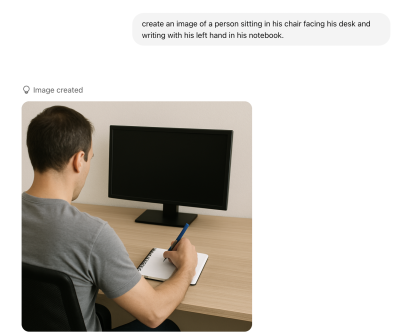
During the AI Summit in France, Indian Prime Minister Narendra Modi noted a telling statistical anomaly: when prompted to generate an image of a person writing, many AI models default to the right hand, even if specifically asked for a left-handed writer. This is because the training data is overwhelmingly skewed toward the 90% of the population that is right-handed.
This data point serves as a warning for designers: AI simulations are excellent for identifying historical patterns but are often blind to edge cases or future shifts in behavior. Relying solely on AI to simulate user testing can lead to "echo chamber" design, where the needs of minority user groups—such as neurodivergent individuals or the elderly—are statistically erased.
Official Responses and Perspectives: The Human-in-the-Loop (HITL) Mandate
Industry leaders and UX experts are increasingly advocating for a "Human-in-the-Loop" (HITL) framework. This perspective argues that AI should augment human judgment rather than replace it.
Refinement through Transparency
The consensus among ethical designers is that transparency is a prerequisite for trust. Systems must reveal their reasoning. For instance, GitHub Copilot provides inline code suggestions that a developer can accept, reject, or edit. The "authorship" remains with the human. This interaction does two things:
- It prevents the system from making autonomous, potentially catastrophic errors.
- It creates a feedback loop where every human "correction" becomes high-quality training data for the model.
Communication of Variability
Official design guidelines from tech leaders now emphasize "graceful hand-offs." When an AI’s confidence score drops below a certain threshold, the interface should not guess. Instead, it should offer a range (e.g., "Delivery expected between Friday and Monday") or provide an obvious path to human support. Communicating uncertainty does not weaken a brand; it strengthens it by setting honest expectations.
Implications: Building for Resilience, Not Just Conversion
The shift toward probabilistic design necessitates a fundamental change in how we measure success. Historically, UX design has been optimized for short-term conversion metrics—clicks, sign-ups, and time-on-page. However, in an AI-driven world, these metrics can be misleading.
From Conversion to Resilience
Resilient design asks: "How does this system behave under stress or uncertainty?" A resilient system is one that:
- Adapts to Model Drift: Recognizes when an AI model’s accuracy is degrading over time and adjusts the UI accordingly.
- Prioritizes Long-Term Outcomes: Similar to Duolingo’s "Hearts" system, which introduces friction to ensure long-term learning retention rather than just maximizing sessions.
- Designs for the Fallback: Ensures the product remains functional even if the AI component fails or provides a low-confidence output.
The New Posture of the Designer
The role of the designer is evolving from a creator of static paths to a curator of possibilities. Instead of asking "Will this work?", designers must now ask "How likely is this to work, and what is the cost of being wrong?"
In a world where prediction is becoming a cheap commodity, human judgment is becoming an expensive rarity. AI can estimate and simulate, but it cannot determine what is "fair," what is "intuitive," or what is "meaningful." Those remain human responsibilities. The future of design lies in the ability to think in ranges, test assumptions relentlessly, and build interfaces that are honest about the uncertainty of the world they inhabit.

Conclusion: A Call to Action for Product Teams
To begin practicing probabilistic design, teams should:
- Audit the Interface: Identify where AI predictions are being presented as certainties and introduce confidence indicators.
- Hypothesize in Ranges: Stop setting binary goals. Define success through probability scores.
- Implement HITL: Ensure every high-stakes AI suggestion has a human review or override mechanism.
By embracing the "What else might be true?" mindset, designers can move beyond the fragility of deterministic systems and create AI-powered experiences that are truly intelligent, adaptive, and resilient.
 Nana Wu
  Nana
Nana 