
 By Laily UPN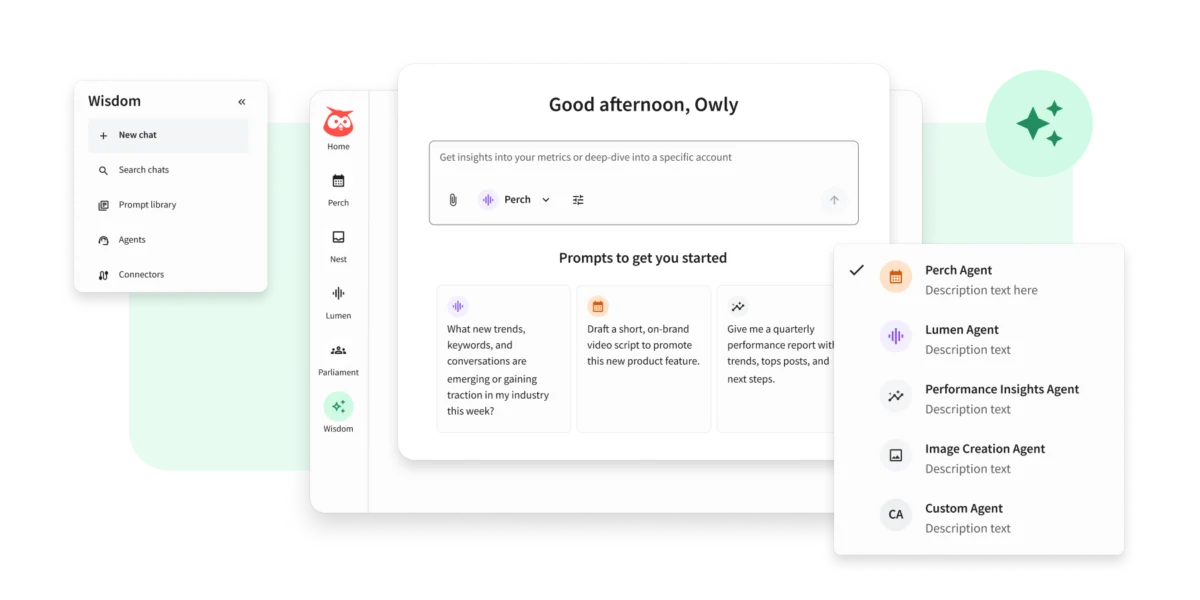
Eighteen years ago, Hootsuite emerged as a pioneer in the social media landscape, transforming how brands navigated the nascent world of online communication. Today, the company is undertaking its most ambitious evolution yet. Under the leadership of returning CEO Ryan Holmes, Hootsuite has officially unveiled its “Social OS”—a complete reconstruction of its platform architecture, designed to pivot away from static, historical data and toward a new paradigm of real-time, AI-driven action.
This isn’t merely a software update; it is a fundamental reassessment of how brands interact with the pulse of the internet. By discarding legacy workflows in favor of a “social-first” AI model, Hootsuite aims to bridge the widening gap between what brands know about their market and what is happening in the current moment.
Main Facts: A New Architecture for Real-Time Marketing
The launch of Hootsuite’s Social OS marks a departure from traditional social media management tools that rely on retrospective analytics. The core of this transformation rests on three pillars: Wisdom, Social OS, and MCP (Model Context Protocol) connectors.
At the heart of the new ecosystem is Wisdom, an AI agent that consolidates previous tools like OwlyGPT and Yeti into a single, cohesive interface. Wisdom allows marketers to query their data in plain language—such as asking for an analysis of current brand perception—and receive answers derived from live, real-time social signals.
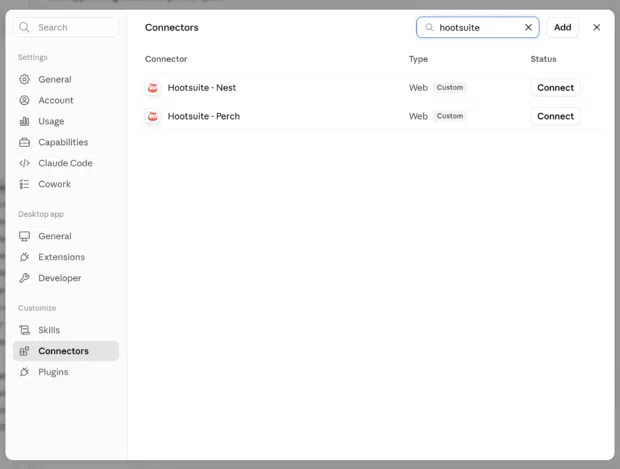
The Social OS itself functions as a unified operating system, integrating publishing, customer care, advocacy, and intelligence into one interconnected pipeline. Finally, the introduction of MCP connectors represents a “headless” evolution, allowing Hootsuite’s proprietary data to flow directly into third-party AI agents like ChatGPT, Claude, and Gemini, effectively bringing the platform’s intelligence to the environments where marketing teams already work.
Chronology: From Legacy Tooling to AI-First Integration
To understand the magnitude of this shift, one must look at the timeline of Hootsuite’s evolution:
- 2008: Hootsuite is founded with the core mission of helping brands “not miss the moment” during the early explosion of social media.
- 2008–2025: The company scales to become a global leader, building a massive data footprint spanning 150 million sources and 187 languages.
- Early 2026: Ryan Holmes returns to the CEO chair. Upon his return, he initiates an aggressive audit of the platform’s capabilities, identifying that existing products—while functional—were ill-equipped for the velocity of the AI-dominated future.
- Mid-2026 (The Reconstruction): The company makes the decision to dismantle and rebuild core workflows. Recognizing that traditional AI models are often "blind" to current events due to reliance on historical training data, the team shifts focus to building a "live signal layer."
- Today: The launch of Hootsuite Social OS and the integration of Model Context Protocol (MCP) standards.
Supporting Data: The "Signal Gap" in Artificial Intelligence
The primary driver behind this overhaul is what the company describes as the "Signal Gap." Many current AI vendors offer intelligence that is essentially glorified pattern recognition trained on static, outdated public data. While effective for summarizing past reports, these models fail to identify emerging trends or immediate crises.
Hootsuite’s advantage, according to the company, is its 18-year history of data collection. By leveraging this vast, live-signal layer, Hootsuite claims to provide the most accurate real-time read on market sentiment available in a commercial product. The transition from "general-purpose" AI—which tells you what was true—to "social-first" AI—which tells you what is true right now—is the critical differentiator in this new release.
By integrating these signals across publishing, care, and advocacy apps, Hootsuite is attempting to solve the fragmentation problem that plagues most enterprise marketing teams. When a customer interaction in "Nest" informs a content strategy in "Perch," or a social trend identified in "Lumen" triggers an advocacy campaign in "Parliament," the organization moves from reactive to proactive, shortening the time between insight and impact.
Official Responses and Strategic Philosophy
CEO Ryan Holmes has been vocal about the risks inherent in this pivot. "We took apart products that worked," Holmes stated in the official announcement. "Not because they were broken, but because ‘working’ wasn’t going to be enough for what’s coming. I’d rather risk confusion now than wake up irrelevant later."
The company is positioning this not as a "feature update," but as an "operating model shift." The adoption of MCP connectors is perhaps the most radical aspect of this strategy. By embracing an open standard that allows other AI agents to pull data from Hootsuite, the company is effectively decentralizing its own platform. This acknowledges a hard truth about modern productivity: users no longer want to spend their day jumping between dashboards. They want their tools to come to them.
In an effort to maintain transparency, Holmes has invited the user community to hold the company accountable. "I’m going to ask instead of announce," he noted, encouraging users to provide direct feedback on what the platform must retain during this transition.

Implications: The Future of the Social Media Manager
The implications for the industry are profound. If Hootsuite’s vision of a "headless" social platform succeeds, the role of the social media manager will evolve significantly.
1. From Manual Triage to AI-Orchestration
With Wisdom and MCP connectors, the repetitive tasks of social media management—triage, basic sentiment reporting, and routine scheduling—will likely be automated. This shifts the human role from “operator” to “strategist.” The marketer of the future will spend less time in the Hootsuite dashboard and more time directing AI agents to execute complex, brand-wide strategies.
2. The Rise of Interconnected Ecosystems
The "Social OS" model suggests that the era of the "point solution" is ending. Companies that provide isolated tools for listening, publishing, or care will struggle to compete with platforms that offer a unified data layer. By forcing these disparate functions to share a single AI brain, Hootsuite is setting a new standard for operational efficiency.
3. The Death of the "Dashboard Fatigue"
For years, "dashboard fatigue" has been a major pain point for marketing teams. By integrating social intelligence directly into the AI assistants (like Claude or Copilot) that teams already use, Hootsuite is essentially removing the barrier between insight and action. The value of a platform will no longer be measured by its UI, but by the quality of the signals it can feed into the user’s preferred workspace.
4. A New Definition of Brand Health
With the ability to capture real-time signals across 187 languages, brand health is no longer a quarterly metric. It is now a constant, fluctuating reality. Brands that adopt this technology will be able to pivot their messaging within hours of a market shift, while competitors who rely on traditional monthly reports will be left chasing ghosts of trends that have already passed.
Conclusion: A Gamble on Relevance
Hootsuite’s decision to rebuild its platform in the middle of a dominant market position is a high-stakes gamble. It acknowledges that the AI revolution is not just adding a chatbot to a website; it is an architectural challenge.

Whether this transition proves to be a masterstroke of foresight or a disruptive overreach remains to be seen. However, the message from the company is clear: the pace of social media is accelerating, and any tool that does not treat "now" as its primary data point is already on the path to obsolescence. For the marketing leaders watching these developments, the challenge now is not just to learn the new platform, but to redefine their own workflows to match the speed of this new social intelligence.
As the industry moves toward a future where AI agents hold the keys to brand communication, the integration of real-time signals into these agents will be the defining factor of success. Hootsuite has made its move; the rest of the industry will now have to decide whether to follow suit or risk being left behind in the static archives of the past.
 Reynand Wu
  Muslim
  Nila Kartika Wati