
 By Nila Kartika Wati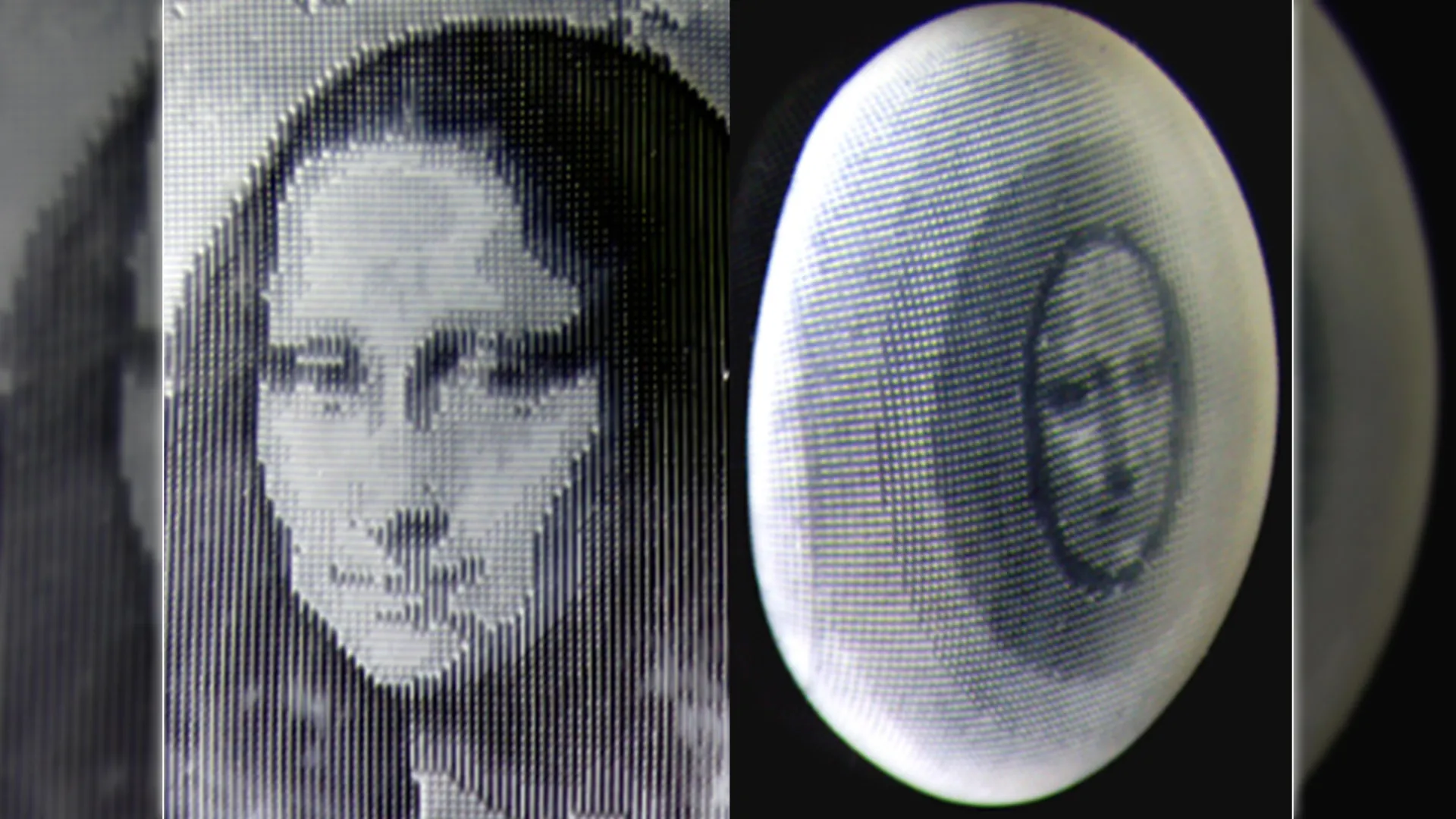
In the rigid world of traditional manufacturing, materials are typically born with a singular purpose. Metal is forged for strength, rubber for elasticity, and glass for transparency. Once these materials leave the factory floor, their mechanical properties are essentially fixed. However, a groundbreaking development from Penn State University is poised to upend this paradigm, introducing a new class of "smart synthetic skin" capable of adaptive, multi-tasking behavior that mimics the fluid intelligence of nature.
Led by Hongtao Sun, an assistant professor of industrial and manufacturing engineering (IME), a research team has successfully developed a fabrication technique that transforms passive hydrogels into programmable, multifunctional surfaces. By embedding digital instructions directly into the physical structure of these water-rich materials, the team has created a synthetic skin that can change its shape, texture, and visual appearance in response to environmental stimuli like heat, light, and mechanical stress.
The study, recently published in Nature Communications and selected for the journal’s prestigious Editors’ Highlights, represents a significant leap forward in the field of soft robotics, advanced camouflage, and secure information encryption.
The Chronology of an Adaptive Breakthrough
The journey toward this "smart skin" did not happen overnight; it is the culmination of years of rigorous experimentation at the intersection of material science and digital manufacturing.
From 3D to 4D: The Evolution of Materiality
The project builds upon the team’s earlier success with 4D-printed hydrogels. In previous iterations, the group explored how to program flat sheets to fold into three-dimensional structures upon exposure to water or heat. While these initial studies demonstrated the feasibility of self-morphing materials, they were limited in scope, often requiring multiple layers or different material compositions to achieve a desired transformation.
The Turning Point: Halftone-Encoded Printing
Recognizing the limitations of layered manufacturing, the Penn State team pivoted toward a novel approach known as "halftone-encoded printing." Borrowing a concept from the print media industry—where newspapers use tiny dots of varying density to create the illusion of a continuous image—the researchers translated this logic into the third dimension. By converting visual or structural data into a binary code of "ones and zeros," they were able to print varying densities of stimulus-responsive hydrogel. This allowed for precise, localized control over how different regions of the material would swell, shrink, or soften.
Empirical Validation
Throughout the development cycle, the team subjected their prototypes to various rigorous tests. From embedding complex images like the Mona Lisa into microscopic hydrogel matrices to observing the material’s transition from a flat, transparent film to a complex, 3D-curved structure, the researchers meticulously documented how the material responded to ethanol, ice water, and heat. The successful synchronization of these physical changes marked the birth of a truly multifunctional synthetic system.
Supporting Data and The "Mona Lisa" Demonstration
To truly grasp the capability of this technology, one must look at the specific data points of the team’s demonstrations. The "Mona Lisa" experiment served as the ultimate proof of concept for the material’s cryptographic potential.
Visual Information Encoding
The hydrogel film was encoded with a high-resolution image of the iconic painting. In its dormant state—when washed with ethanol—the material appeared entirely transparent, effectively hiding the information contained within its molecular architecture. However, when the film was introduced to a specific stimulus, such as immersion in ice water or controlled heating, the hydrogel’s internal patterns responded, revealing the image in striking detail.
Mechanical Sensitivity
Beyond mere visuals, the team proved that the material could store information detectable only through tactile interaction. By applying mechanical strain and using digital image correlation (DIC) analysis, researchers were able to read data encoded within the material’s deformation patterns. This capability implies that the material can act as a "secure lock," where the key is not just a password, but a specific physical interaction.
Structural Versatility
Unlike existing shape-shifting materials that require complex, multi-material assemblies to achieve curvature, the Penn State smart skin functions as a monolithic unit. Because the "instructions" for deformation are printed into the halftone patterns, a single sheet can simultaneously manage complex 3D shape-shifting and high-fidelity visual display, mimicking the coordinated movements of a cephalopod’s chromatophores and muscular tissues.
Official Perspectives: The Vision Behind the Science
The success of the research is rooted in the team’s interdisciplinary approach. By integrating expertise from biomedical engineering, the Materials Research Institute, and mechanical engineering, they have created a holistic framework for "intelligent" matter.
"Cephalopods use a complex system of muscles and nerves to exhibit dynamic control over the appearance and texture of their skin," explains Hongtao Sun, the project’s principal investigator. "Inspired by these soft organisms, we developed a 4D-printing system to capture that idea in a synthetic, soft material. In simple terms, we’re printing instructions into the material. Those instructions tell the skin how to react when something changes around it."
Haoqing Yang, a doctoral candidate in IME and the paper’s first author, emphasizes the practical utility of the discovery. "This behavior could be used for camouflage, where a surface blends into its environment, or for information encryption, where messages are hidden and only revealed under specific conditions," Yang noted.
The collaboration extended beyond Penn State’s borders as well, with H. Jerry Qi, a professor of mechanical engineering at the Georgia Institute of Technology, contributing to the development of the mechanics that govern these material transitions. This cross-institutional synergy has been vital in ensuring that the fabrication technique is not just theoretically sound, but also scalable and robust.
Implications: The Future of Smart Systems
The ramifications of this technology extend far beyond the laboratory. By enabling materials to "think" and respond to their environment, the Penn State team has unlocked doors in several critical industrial and scientific sectors.
Next-Generation Soft Robotics
Current soft robots are often limited by the need for external wiring and complex pneumatic control systems. Integrating this smart skin could allow robots to change their own shape or color to blend into an environment, enabling stealth in surveillance or adaptation in complex search-and-rescue terrains.
Biomedical Engineering
In the medical field, a material that reacts to specific chemical signals or temperature fluctuations could revolutionize drug delivery systems. For instance, a "smart patch" could be programmed to reveal medication or change its structural permeability only when it detects a fever or specific chemical biomarkers in a patient’s sweat.
Advanced Encryption and Security
The ability to hide and reveal information within a physical substrate provides a new frontier for data security. Unlike digital encryption, which is susceptible to hacking and interception, this physical "steganography" offers a tangible layer of security. Information can be hidden in plain sight, with the "key" to revealing it being a specific, reproducible environmental trigger.
Biomimetic Design
Perhaps most significantly, the research represents a major milestone in biomimetic engineering. As we move toward a future where human-made machines operate with the fluidity of biological organisms, the ability to replicate the coordinated, multi-responsive nature of cephalopod skin is a cornerstone achievement.
"This interdisciplinary research at the intersection of advanced manufacturing, intelligent materials, and mechanics opens new opportunities with broad implications for stimulus-responsive systems, biomimetic engineering, advanced encryption technologies, biomedical devices, and more," Sun concluded.
As the team moves toward creating a scalable platform for this technology, the promise of a world filled with "smart," adaptable materials seems less like science fiction and more like a looming industrial reality. Through the marriage of digital precision and biological inspiration, Penn State’s researchers have laid the groundwork for a new generation of materials that don’t just exist in the world—they interact with it.
 Sagoh
Sagoh  Asro
Asro  Siti Muinah