
 By rifanmuazin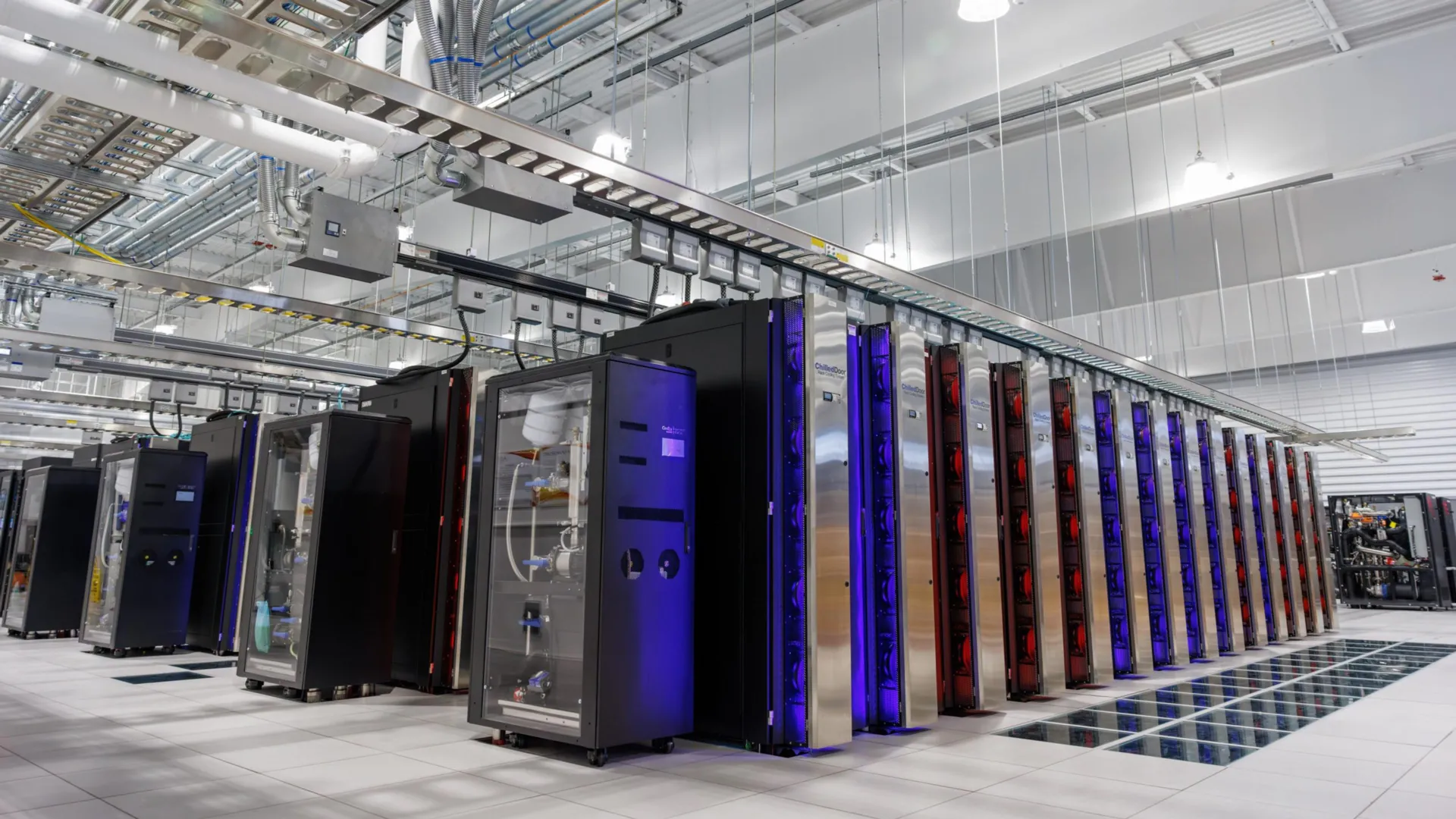
The rapid expansion of artificial intelligence (AI) has ushered in a new era of digital transformation, but it has brought a hidden, surging cost: an unprecedented demand for electricity. As data centers proliferate across the United States, the infrastructure required to power the next generation of generative AI and robotics is beginning to strain the limits of the national power grid. According to recent data from the International Energy Agency (IEA), AI systems and the expansive data centers that house them consumed approximately 415 terawatt-hours of power in 2024. This figure represents more than 10% of the country’s total electricity production—a staggering portion of national energy output that is projected to double by 2030.
This unsustainable trajectory has prompted a search for more efficient architectures. A team of researchers led by Professor Matthias Scheutz at the School of Engineering is pioneering a proof-of-concept AI system that could redefine how machines learn and operate. By utilizing a "neuro-symbolic" approach, this team has demonstrated that AI can not only perform more accurately but can do so with up to 100 times less energy consumption than current state-of-the-art models.
The Chronology of an Energy Crisis
The current energy dilemma is the result of a decade-long "brute force" approach to machine learning.
- 2010s: The Rise of Deep Learning: AI development moved toward massive, monolithic neural networks that relied on sheer data volume to "learn" patterns.
- 2020–2023: The LLM Explosion: The introduction of large language models (LLMs) like ChatGPT accelerated the demand for high-compute hardware. Data centers evolved from simple storage facilities into massive, power-hungry hubs filled with thousands of GPUs running 24/7.
- 2024: The Infrastructure Bottleneck: The IEA report confirms that the current power draw of AI is now a significant macroeconomic factor, with some individual data centers requiring as much electricity as small cities.
- May 2025: The Innovation Milestone: Professor Scheutz and his team are set to present their findings at the International Conference of Robotics and Automation (ICRA) in Vienna, marking a pivotal moment where the discourse shifts from "more power" to "smarter power."
The Mechanics of Neuro-Symbolic AI
To understand why current models are so inefficient, one must look at how they "think." Traditional Large Language Models (LLMs) and Visual-Language-Action (VLA) models function primarily through statistical prediction. They process vast datasets to guess the most likely next word or the next pixel in an image. When applied to robotics, these models treat physical tasks—like picking up a block—as a statistical guessing game.
Bridging the Gap: Neural Networks Meets Symbolic Logic
The innovation from Professor Scheutz’s laboratory lies in a hybrid methodology known as Neuro-Symbolic AI. This approach mirrors the human cognitive process by blending two distinct forms of intelligence:
- Neural Networks: These provide the machine with the ability to recognize patterns, process sensory input (such as visual data from a camera), and learn from experience.
- Symbolic Reasoning: This layer acts as a set of guardrails. It introduces rules, logic, and abstract concepts—such as the laws of physics, spatial relationships, and balancing constraints—that the neural network must adhere to.
By incorporating symbolic reasoning, the robot no longer has to "guess" how to stack blocks through millions of failed attempts. Instead, it operates within a logical framework that understands what a "tower" is and why it might collapse.
Supporting Data: Performance and Efficiency Gains
The research team tested their neuro-symbolic VLA against traditional deep-learning-based robotics using the classic "Tower of Hanoi" puzzle. The results were not merely incremental; they were transformative.
Accuracy Comparisons
In standardized testing, the neuro-symbolic VLA achieved a 95% success rate on the Tower of Hanoi, whereas traditional systems struggled to reach a 34% success rate. When tasked with a novel, more complex version of the puzzle—a "zero-shot" challenge the models had never seen before—the neuro-symbolic system maintained a 78% success rate, while the traditional models failed every single attempt.
Time and Energy Metrics
The efficiency gains are perhaps the most significant finding for the industry:
- Training Time: The new system learned the required tasks in just 34 minutes, a task that required over 36 hours (a day and a half) for conventional models.
- Energy Consumption (Training): The neuro-symbolic model required only 1% of the energy of a standard VLA system to train.
- Operational Efficiency: During active tasks, the system operated on just 5% of the power required by conventional counterparts.
The "Hallucination" and Inefficiency Link
Professor Scheutz notes that the current inefficiency of AI is intrinsically linked to its lack of "common sense." Because LLMs and VLAs are solely predictive, they are prone to "hallucinations"—generating false information in text or creating unrealistic physical errors in robotics, such as adding extra fingers to an image or failing to account for basic gravity.
"These systems are just trying to predict the next word or action in a sequence," Scheutz explains. "Their energy expense is often disproportionate to the task. For example, when you search on Google, the AI summary at the top of the page consumes up to 100 times more energy than the generation of the traditional website listings."
By moving toward neuro-symbolic architectures, we reduce the need for massive "trial and error" cycles, which in turn slashes the power required to train the model and the computational cost of running it.
Implications for a Sustainable Future
The implications of this research are broad, affecting everything from environmental policy to the future of consumer robotics.
1. Reevaluating Industrial Scaling
As companies race to build massive, power-intensive data centers, the neuro-symbolic approach suggests that we may be heading down a dead-end path. If AI can be made 100 times more efficient through better architecture, the current rush to expand electricity infrastructure might be largely unnecessary.
2. The Future of Robotics
For autonomous robots to move from controlled laboratory settings into homes and factories, they must be energy-efficient and highly reliable. A robot that consumes massive amounts of power to figure out how to open a door is not a viable product. Neuro-symbolic AI provides the "logic" necessary for robots to operate with the reliability of a machine and the reasoning of a human.
3. A Shift in Global Energy Policy
Governments and energy providers are currently struggling to keep up with the demand of AI-driven data centers. If the technology industry adopts more efficient, logic-based AI models, the burden on the national grid could be significantly alleviated. This would allow for the integration of AI into more sectors without necessitating the construction of new, carbon-heavy power plants.
Conclusion
The findings to be presented at the International Conference of Robotics and Automation in Vienna serve as a wake-up call to the technology sector. The "bigger is better" era of AI, characterized by enormous datasets and power-hungry neural networks, is hitting a physical wall.
By integrating structured, symbolic reasoning into the foundation of machine learning, researchers like Professor Scheutz are paving the way for a more sustainable, accurate, and intelligent future. The path forward for AI is not just about building bigger machines; it is about building smarter, more efficient systems that can do more with less. In a world where every watt of electricity is increasingly precious, this shift in philosophy may be the most important innovation in the history of artificial intelligence.
 Sagoh
Sagoh  Asro
Asro  Siti Muinah