
 By Asep Darmawan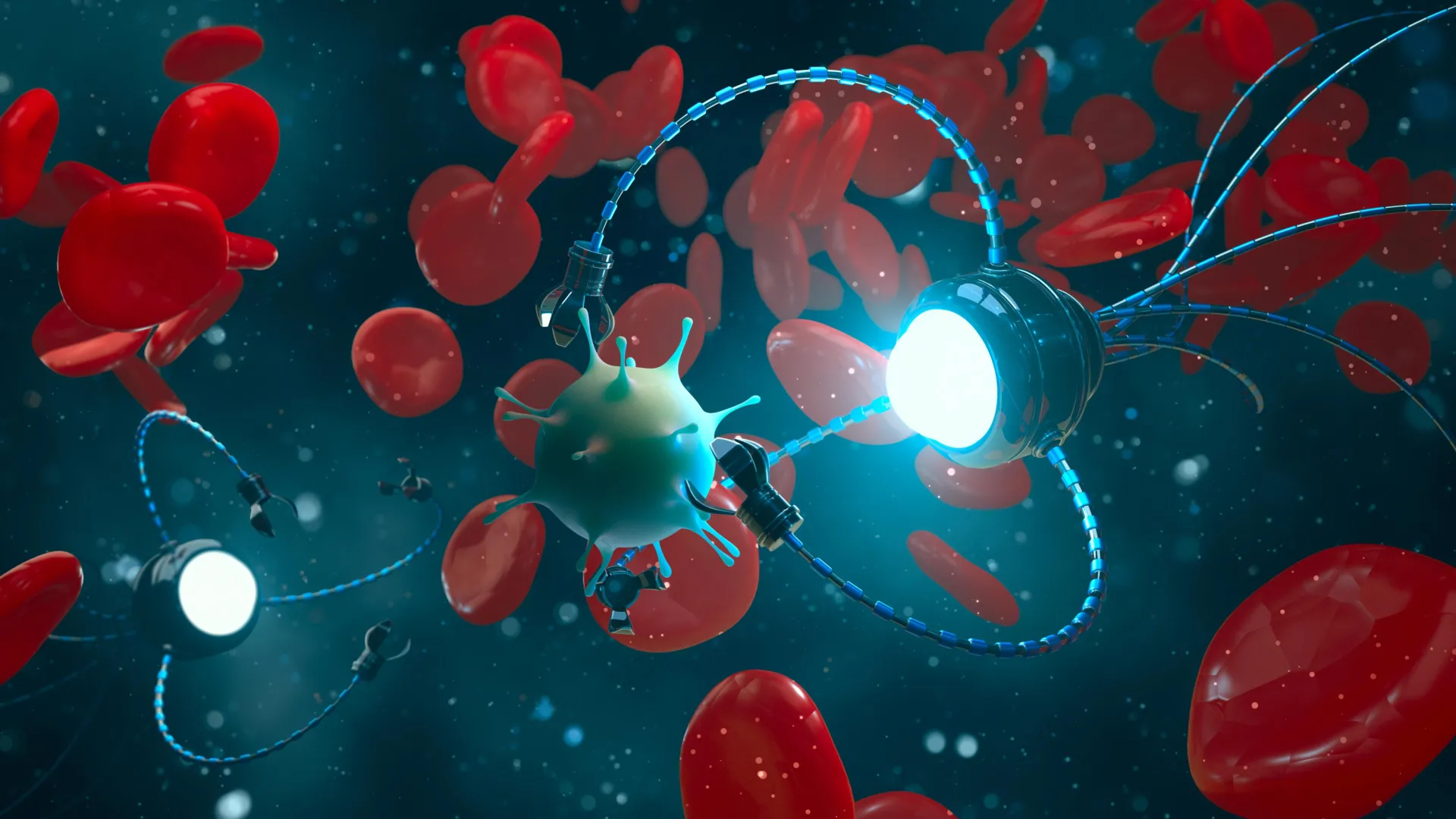
Imagine a medical intervention where the "surgeon" is a machine no larger than a virus, navigating the turbulent, crowded highways of the human bloodstream. It does not carry a scalpel, but a precise payload of medication, programmed to identify and dismantle a malignant tumor cell while leaving healthy tissue entirely undisturbed. This is no longer the domain of science fiction; it is the frontier of DNA nanotechnology. By harnessing the structural properties of the building blocks of life, scientists are creating a new generation of programmable, biological machines poised to revolutionize everything from oncology to molecular computing.
Main Facts: The Convergence of Biology and Engineering
At its core, DNA nanotechnology treats the double helix not merely as a carrier of genetic information, but as a robust construction material. Using a technique often called "DNA origami," researchers can fold long, single strands of DNA into intricate, two-dimensional and three-dimensional shapes. By precisely controlling the sequence of nucleotides—Adenine, Thymine, Cytosine, and Guanine—scientists can dictate how these strands bind, bend, and interlock.
These microscopic machines are essentially mechanical systems built from biochemical parts. They feature rigid joints, flexible hinges, and responsive "latches" that can open or close in response to environmental triggers. Unlike traditional robotics built from metal, silicon, and plastic, DNA robots operate within the fluid dynamics of the body, utilizing biochemical signals as their operating system. While currently confined largely to laboratory "proof of concept" environments, the ability to engineer these machines marks a fundamental shift in our capacity to manipulate matter at the atomic level.
Chronology: A Brief History of Molecular Construction
The evolution of DNA robotics is a testament to the rapid acceleration of biotechnology. The field traces its conceptual origins to the early 1980s, when Nadrian Seeman first proposed that DNA could be used as a structural material for self-assembling nanostructures.
- The 1980s-1990s (The Theoretical Foundation): Seeman and his contemporaries demonstrated that DNA molecules could be linked to form rigid, crystalline lattices. This provided the necessary proof that DNA could function as a structural scaffolding rather than just a biological blueprint.
- 2006 (The Origami Breakthrough): Paul Rothemund published a seminal paper detailing the "DNA origami" method. By using a long scaffold strand and hundreds of short "staple" strands, researchers could fold DNA into arbitrary shapes, such as stars, smiley faces, and boxes. This shifted the field from theoretical lattices to custom-designed nanomachines.
- 2010s (Dynamic Machines): Researchers moved beyond static shapes to create dynamic devices. This era saw the development of DNA "walkers" that could move across surfaces and molecular "tweezers" that could open and close based on chemical inputs.
- 2020s (Autonomous Systems): Current research focuses on autonomy and environmental integration. Scientists are now testing machines capable of identifying viral surfaces, such as the SARS-CoV-2 spike protein, and triggering a defensive response. We are currently in the phase of transitioning from "lab-bound prototypes" to "biocompatible platforms."
Supporting Data: Engineering at the Nanoscale
The mechanical complexity of DNA robots is staggering. To achieve controlled movement, engineers have adopted three primary strategies:
1. Biochemical Control via Strand Displacement
The most prominent mechanism is DNA strand displacement. In this process, a specific DNA sequence acts as "fuel." When it encounters a DNA machine, it triggers a conformational change by replacing one part of the structure with another. This allows the robot to "step" or "open" its cargo bay with high predictability, essentially creating a programmable logical gate.
2. External Physical Stimulation
When internal biochemical triggers are insufficient, researchers turn to external stimuli. DNA structures can be engineered to be light-sensitive, magnetic, or responsive to electric fields. For instance, a robot coated in magnetic nanoparticles can be steered through a blood vessel using an external MRI-style magnetic field, allowing human operators to "drive" the machine toward a specific lesion.
3. Scaling and Brownian Motion
A significant hurdle in the data supporting this field is the impact of Brownian motion—the random, jittery movement of microscopic particles in a fluid. At the nanoscale, everything is in constant, chaotic motion. DNA robots must be designed to overcome this "noise" to function. Current designs use multi-point anchoring systems to ensure that when a robot reaches its target, it can lock onto the surface securely, resisting the buffeting of molecular-level turbulence.
Official Responses and Expert Consensus
The scientific community maintains a balanced perspective on these developments. While enthusiasm is high, the consensus remains that we are at the "Wright Brothers" stage of nanorobotics.
"The robots of tomorrow won’t just be made of metal and plastic," says a lead researcher in the field. "They will be biological, programmable, and intelligent. They will be the tools that allow us to finally master the molecular world."
However, experts caution that moving from a beaker to a human patient is a monumental task. The primary concerns include:
- Immunogenicity: How does the human immune system react to artificial DNA structures? There is a risk that the body may flag these machines as viral invaders, triggering an inflammatory response.
- Standardization: Currently, every lab develops its own custom "parts library." To scale, the field requires standardized, modular DNA components that can be used universally, similar to how electrical engineers rely on standardized resistors and capacitors.
- Simulation Gaps: We currently lack the high-fidelity simulation tools to predict how a DNA machine will behave in the incredibly complex, crowded environment of human plasma, which is filled with thousands of competing proteins and enzymes.
Implications: A Future Built Atom by Atom
The implications of successful DNA robotics are profound and span multiple industries.
Medicine: The Age of the Nano-Surgeon
The most immediate application is targeted drug delivery. By arming DNA nanorobots with chemotherapy drugs that are only released when the robot detects the specific chemical signature of a cancer cell, doctors could theoretically eliminate systemic toxicity. The patient would receive the benefit of potent treatment without the debilitating side effects of traditional chemotherapy. Beyond oncology, these machines could function as "molecular scrubbers," clearing arterial plaque or trapping viral particles before they can enter healthy cells.
Manufacturing: Beyond the Silicon Limit
In the realm of materials science, DNA robots could act as programmable templates for sub-nanometer manufacturing. By positioning nanoparticles with extreme precision, they could build the next generation of optical devices—computers that operate at the speed of light or high-efficiency sensors capable of detecting a single molecule of a pollutant. This would effectively bypass the physical limits currently imposed by photolithography in the semiconductor industry.
What Needs To Happen Next: The Path to Practicality
For DNA robotics to evolve from experimental curiosity to clinical reality, a three-pronged approach is required:
- Interdisciplinary Collaboration: The field must bridge the gap between structural biologists, computer scientists, and roboticists. We need to treat DNA design with the same rigor used in aeronautical engineering.
- AI-Driven Design: The number of possible DNA sequences is effectively infinite. Artificial intelligence and machine learning are now being deployed to predict how specific sequences will fold and move, drastically reducing the time spent on trial-and-error laboratory experiments.
- Bio-Manufacturing Infrastructure: We need to develop the capacity to produce these machines at scale. Currently, creating a few milligrams of custom DNA nanostructures is a costly and slow process. Transitioning to automated, high-throughput bio-manufacturing will be the final hurdle before these machines reach the pharmacy shelf.
As we look toward the next decade, the convergence of AI, biotechnology, and robotics promises a revolution that is simultaneously invisible and earth-shattering. The microscopic machines of today are the harbingers of a new era—one where we no longer just observe the molecular world, but actively participate in its architecture, mending our bodies and building our technology from the bottom up, one DNA strand at a time.
 Sagoh
Sagoh  Asro
Asro  Siti Muinah