
 By Jia Lissa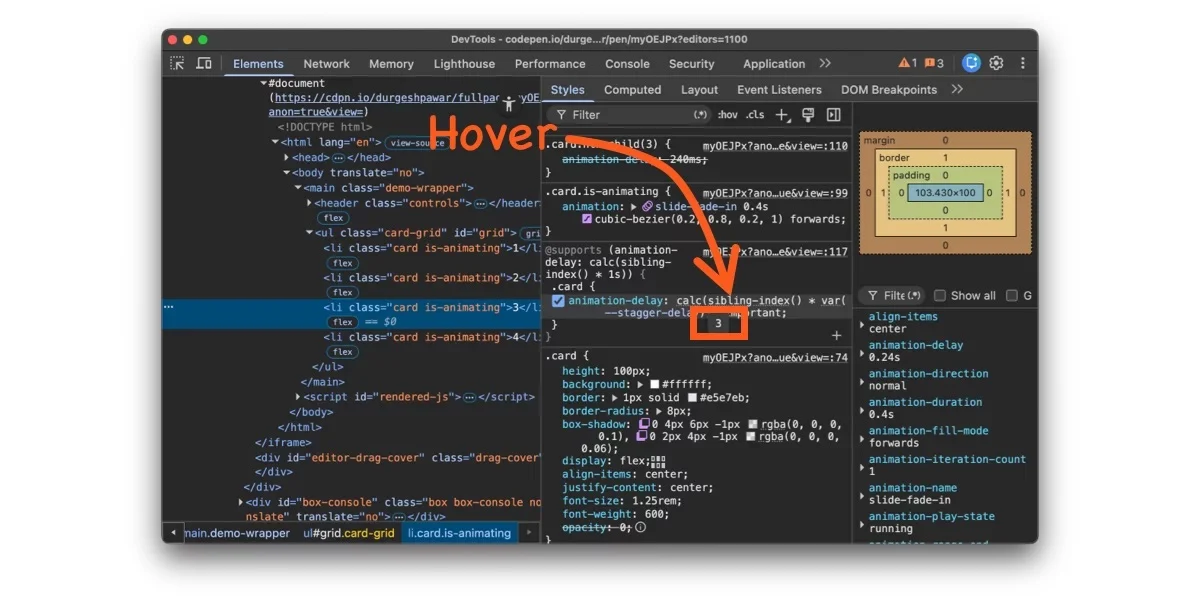
For decades, web developers have grappled with a fundamental irony: the browser knows exactly where an element sits within the DOM tree, yet CSS—the language of presentation—had no direct way to access that information. To create a simple staggered fade-in effect or a proportional grid, engineers were forced to rely on repetitive preprocessor loops or heavy JavaScript workarounds.
With the introduction of sibling-index() and sibling-count(), this limitation has finally been addressed. These functions, part of the CSS Values and Units Module Level 5, allow developers to write a single line of CSS to handle logic that previously required hundreds of lines of generated code.
Main Facts: A New Paradigm for Tree-Counting
The core of this update lies in two functions that resolve to <integer> values. Unlike the counter() function, which is restricted to the content property of pseudo-elements and returns a string, sibling-index() and sibling-count() provide raw numerical data that can be used inside calc(), min(), max(), and even trigonometric functions like sin() and cos().
sibling-index(): Returns the index of the current element among its siblings (starting at 1).sibling-count(): Returns the total number of sibling elements within the same parent container.
This shift marks a move from imperative "hacks" to a declarative "truth." Instead of telling the browser what index an element has via a hardcoded :nth-child() rule, the developer now asks the browser for the data it already possesses.
The Death of the :nth-child() Loop
Historically, a staggered animation for ten items required a Sass loop or manual entry:
li:nth-child(1)  --idx: 1;
li:nth-child(2)  --idx: 2;
/* ... and so on ... */
This approach was brittle. If the list grew to 11 items, the 11th item would either fail to animate or require a CSS rebuild. With the new functions, the same effect is achieved universally:
li
  animation-delay: calc(sibling-index() * 100ms);
This single line scales from five items to 5,000 without a single byte of extra CSS.
Chronology: From Proposal to Browser Implementation
The journey of these functions from a theoretical "wish list" to stable browser engines has been remarkably swift, driven by a growing consensus within the CSS Working Group (CSSWG) that layout logic should reside within CSS.
2020–2022: The Specification Phase
The proposal for tree-counting functions gained significant traction under CSSWG Issue #4559. Developers and browser engineers argued that the lack of index awareness in CSS was a primary driver of "CSS-in-JS" complexity. By mid-2022, the functions were officially integrated into the CSS Values and Units Module Level 5 draft.
2024: Experimental Implementation
Browser vendors began implementing the functions behind experimental flags. This period allowed the community to identify edge cases, such as how these functions should behave within the Shadow DOM and how they should interact with pseudo-elements.
June 2025: Stable Release
The "Baseline" for these features arrived in mid-2025. Chrome and Edge 138 were the first to ship the functions in their stable branches. Shortly thereafter, Safari 26.2 followed suit. As of late 2025, Mozilla’s Firefox has signaled a "positive" standards position, with active development tracked under Bugzilla issue #1953973.
Supporting Data: Technical Deep Dive and Use Cases
The power of sibling-index() and sibling-count() is best illustrated through their mathematical versatility. Because they return integers, they unlock complex layouts that were previously the sole domain of JavaScript-heavy libraries.
1. Proportional and Responsive Widths
Before these functions, creating a tab bar where each tab occupied an equal portion of the container required either Flexbox or manual percentage calculations. With sibling-count(), the math is handled natively:
.tab
  width: calc(100% / sibling-count());
If a user dynamically adds or removes a tab via a web component, the widths recalculate instantly without a ResizeObserver or a re-render of the virtual DOM.
2. Radial and Geometric Layouts
Distributing items in a circle has historically been a nightmare of absolute positioning and manual coordinate math. By combining tree-counting with CSS trigonometric functions, developers can now create dynamic radial menus:
.radial-item
  --angle: calc((360deg / sibling-count()) * sibling-index());
  --radius: 150px;
  left: calc(50% + var(--radius) * cos(var(--angle)));
  top: calc(50% + var(--radius) * sin(var(--angle)));
This layout remains a perfect circle regardless of whether there are four items (a square) or twelve (a clock face).
3. Dynamic Color Distribution
Using sibling-index(), developers can automate aesthetic harmony. For example, a list of "swatches" can be programmed to span the entire HSL color wheel automatically:
.swatch
  background-color: hsl(calc((360 / sibling-count()) * sibling-index()), 70%, 50%);
Official Responses and Technical Nuances
The standardization process highlighted several "gotchas" that developers must understand to use these functions effectively in production environments.

The Shadow DOM Security Boundary
One of the most debated aspects during the CSSWG discussions was how these functions should interact with Web Components. The committee decided that sibling-index() would operate on the DOM tree, not the flattened visual tree.
If a stylesheet inside a Shadow Root uses sibling-index(), it only counts elements within that specific Shadow Root. It cannot "see" elements projected into a <slot> from the light DOM. Furthermore, for security reasons, any attempt to use these functions via the ::part() pseudo-element from an external stylesheet will return a value of 0. This prevents external CSS from probing the internal structure of a third-party component.
The "Hidden" Element Problem
A critical distinction exists between the Layout Tree and the DOM Tree. Elements with display: none are removed from the layout tree, but they persist in the DOM.
- Official Behavior:
sibling-index()andsibling-count()read from the DOM. - The Consequence: If you have a list of ten items and hide the second one using
display: none, the third item still returns asibling-index()of3. It does not collapse to2.
This is a deliberate choice by the W3C to ensure performance. Calculating the index based on visibility would require a full layout pass before the index could be determined, potentially creating circular dependencies and performance bottlenecks.
Implications: Performance, Accessibility, and the Future
As with any major shift in the CSS landscape, the introduction of tree-counting functions carries implications for both performance and user experience.
Performance at Scale
Browser engines handle CSS recalculations during the "cascade" phase. When the DOM is modified—such as inserting a new node—the browser must update the indices of all subsequent siblings.
While this is significantly faster than running a JavaScript forEach loop and updating inline styles (which triggers multiple reflows), it is not free. For standard UI components like navigation bars or galleries, the performance cost is negligible. However, for "virtualized" lists containing tens of thousands of nodes, the CSSWG recommends continuing to use JavaScript-managed variables to avoid massive style recalculation storms.
The Accessibility Gap
A major concern raised by accessibility advocates is the potential for "visual-semantic mismatch." Because sibling-index() makes it easy to reorder items visually (using the order property or grid placement math), there is a risk that the visual order of a page will no longer match the DOM order.
Screen readers and keyboard navigation follow the DOM order. If a developer uses sibling-index() to place the "last" item in the DOM at the "first" position visually, a sighted user and a blind user will have fundamentally different experiences. Developers are urged to ensure that aria-posinset and aria-setsize are updated via JavaScript if the visual order deviates from the source.
The Roadmap: sibling-index(of <selector>)
The most anticipated update to this spec is the inclusion of a selector argument, currently tracked in CSSWG Issue #9572. This would allow for logic such as sibling-index(of .active).
This would solve the display: none issue mentioned earlier; by counting only elements that match a specific class, developers could create truly dynamic, filtered layouts that maintain sequential indexing even when some siblings are hidden.
Conclusion
The arrival of sibling-index() and sibling-count() represents a milestone in the maturation of CSS. By closing the gap between DOM structure and style declaration, the W3C has removed a significant layer of friction from the web development process. While browser support is still reaching its "Baseline" status, the shift toward mathematical, tree-aware layouts is inevitable. Developers can finally stop "teaching" the browser what it already knows and start focusing on the creative possibilities of the platform.
 Nana Wu
  Nana
Nana 