
 By Asro
For modern entrepreneurs, the digital storefront is the primary point of contact with customers. Yet, behind every successful "Add to Cart" button lies a complex web of financial infrastructure that determines how—and how quickly—a business gets paid. As we move further into 2025, the proliferation of payment service providers (PSPs) has created a paradox of choice. While small business owners have more options than ever, the task of selecting a provider that balances cost, security, and user experience has become increasingly daunting.
Whether you are launching your first startup or looking to migrate away from an inefficient incumbent, choosing the right payment system is a foundational decision that dictates your cash flow, your conversion rate, and your operational overhead.
What Defines a Modern Payment System?
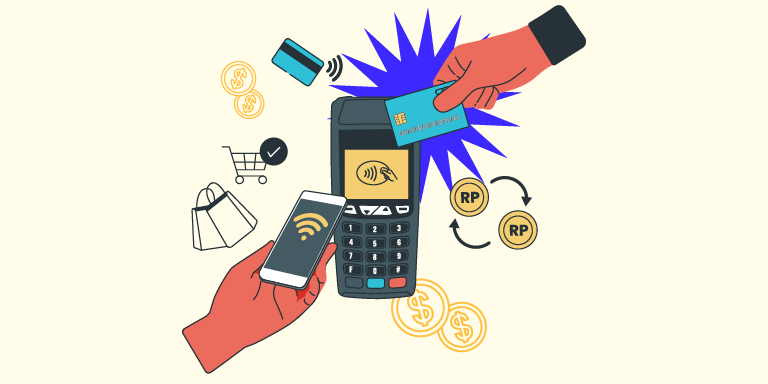
To make an informed decision, one must first demystify the terminology. A payment system is not merely a "card reader." It is the comprehensive digital architecture—encompassing platforms, networks, and secure gateways—that facilitates the transfer of value from a buyer to a seller.
In 2025, a robust payment system acts as the connective tissue between your customers and your business bank account. It handles the sensitive task of encryption, authorization, and settlement. It is important to note what these systems are not: they are not standalone accounting software, nor are they banks themselves. They are intermediaries designed to streamline the movement of funds in an era where consumers demand instant, frictionless transactions.
The Strategic Framework: 5 Pillars of Selection
Before committing to a provider, business owners must evaluate their specific operational needs. During our research, we identified five critical pillars that differentiate a subpar processor from a high-performance payment partner.
1. The Payout Velocity
Cash flow is the lifeblood of any small business. While traditional banking systems may hold funds for several days, modern fintech solutions have reduced settlement windows significantly. When analyzing a provider, look for "next-day" or even "instant" payout features, which can be the difference between meeting payroll and falling behind.
2. Frictionless Checkout
The "bounce rate" is the enemy of profit. If a payment gateway redirects a customer to a third-party site or requires too many clicks, you will lose sales. A superior system integrates seamlessly into your existing UI, keeping the customer within your brand environment.
3. Global Accessibility
Are you a local boutique or a global player? Payment habits vary wildly by geography. A provider that limits your ability to accept international currencies or specific local payment methods effectively caps your growth potential.

4. Pricing Transparency
The payment processing industry is notorious for "hidden" fees—interchange rates, assessment fees, and monthly minimums. Seek a provider that offers a transparent, predictable fee structure that aligns with your transaction volume.
5. Institutional-Grade Security
Compliance is non-negotiable. Every provider on this list adheres to PCI-DSS (Payment Card Industry Data Security Standard) requirements. Trust is your most valuable asset; a single data breach can permanently damage your brand’s reputation.
Top 6 Payment Systems to Consider in 2025
1. Stripe: The Developer-First Powerhouse
Stripe remains the industry benchmark for modern web-based businesses. It is lauded for its clean API, which allows for immense customization.
- Pros: Seamless integration; high-level customization; robust developer support.
- Cons: Advanced features often require technical expertise or a dedicated developer.
- The Verdict: If you are building a SaaS product or a custom eCommerce site, Stripe’s ability to keep the customer on-site during checkout makes it the gold standard for conversion.
2. PayPal: The Trusted Household Name
PayPal’s greatest strength is consumer ubiquity. Because millions of users already have a PayPal account, the "trust factor" is built-in.
- Pros: High consumer trust; wide range of international currencies; easy setup.
- Cons: Fees can be higher than competitors; redirecting users away from your site can hurt conversion.
- The Verdict: Ideal for businesses that want to provide a "safety net" option for customers who are hesitant to enter card details on a new website.
3. Authorize.net: The Legacy Choice for Security
As one of the oldest and most reliable gateways, Authorize.net is a staple for businesses that prioritize stable, long-term infrastructure.
- Pros: Exceptional fraud detection; highly reliable uptime; compatible with almost any merchant account.
- Cons: The interface feels dated compared to modern competitors; requires more configuration.
- The Verdict: Best for established small businesses that need a rock-solid, secure bridge between their store and a traditional bank.
4. Amazon Pay: Leveraging Brand Recognition
Amazon Pay allows customers to use the payment methods already saved to their Amazon account. It is the definition of convenience.
- Pros: Reduces checkout time significantly; leverages the massive trust associated with the Amazon brand.
- Cons: Can be restrictive regarding the types of goods sold; dependent on Amazon’s ecosystem.
- The Verdict: A high-conversion choice for eCommerce brands looking to lower cart abandonment rates by utilizing existing user data.
5. Square: The In-Person Champion
Square revolutionized the market with its hardware-first approach. If your business operates primarily at physical pop-ups, markets, or a brick-and-mortar storefront, Square is unmatched.
- Pros: Intuitive hardware; excellent POS software; seamless virtual terminal.
- Cons: Online-only businesses may find the feature set less tailored than Stripe.
- The Verdict: The undisputed leader for hybrid businesses that need to bridge the gap between physical retail and online sales.
6. SecurePay: The Versatile Contender
SecurePay provides a comprehensive suite of payment options, making it a compelling, if lesser-known, alternative.
- Pros: Offers a broad spectrum of payment methods; excellent trial programs.
- Cons: Lower brand awareness, which can occasionally lead to customer skepticism at checkout.
- The Verdict: A solid choice for startups looking for an all-in-one, easy-to-deploy solution that doesn’t require deep integration work.
Chronology and Evolution of Payments
The trajectory of payment processing has shifted from the clunky, bank-owned gateways of the early 2000s to the API-driven, "plug-and-play" ecosystems of today. In the early 2010s, the arrival of Stripe and Square signaled the "democratization" of payments, allowing a solopreneur to accept credit cards with nothing more than a smartphone or a few lines of code. As we look to 2025, the focus has shifted toward integrated financial services—where the payment provider also offers lending, inventory management, and tax reporting.
Implications for Future Growth
The choice of your payment system has profound implications for your business’s scalability. A system that works for your first 100 orders may become a bottleneck at 10,000 orders.
Strategic Considerations
- Operational Efficiency: Does your payment system "talk" to your accounting software (like QuickBooks or Xero)? Automated reconciliation saves hundreds of hours annually.
- Customer Lifetime Value (CLV): Subscription-based businesses should prioritize providers that offer "dunning management"—the ability to automatically retry failed card payments—which can recover up to 10% of lost revenue.
- Regulatory Compliance: As digital regulations tighten globally, working with a provider that stays ahead of compliance updates (such as GDPR or PSD2) shields your business from legal risk.
Frequently Asked Questions (FAQ)
What is the best software for a startup on a budget?
For most startups, Square or Stripe offer the lowest barrier to entry, as they typically feature no monthly subscription fees, charging only per-transaction.
How do mobile wallets impact checkout?
Integrating Apple Pay and Google Pay is no longer optional; it is essential. These methods allow customers to pay via biometric authentication, which is faster and statistically results in higher conversion rates.
Do I need a merchant account?
Not necessarily. Modern Payment Service Providers (PSPs) act as "aggregators." They hold the merchant account and process your payments under their umbrella, which is why setup is so much faster than traditional banking routes.
How often should I review my provider?
Review your fee structure annually. As your transaction volume grows, you may be eligible for lower "enterprise" rates that your provider won’t offer unless you ask.
Disclaimer: The pricing information provided reflects the market as of early 2025. Payment processing fees are dynamic and subject to change based on transaction volume, industry risk, and regulatory updates. Always consult the official documentation of your chosen provider before finalizing your integration.
 Dwi Wanna
  rifanmuazin
  Asep Darmawan