
 By Nila Kartika Wati
In the modern digital economy, the divide between physical retail and digital information products is stark. While an e-commerce brand selling physical goods can rely on the tangibility of a product—the ability for a customer to hold, feel, and inspect an item—the digital creator faces a unique existential challenge. When selling a course, an e-book, or a membership, there is no physical inventory to lean on. The product is a promise, and the medium of delivery—email—is the primary engine of trust.
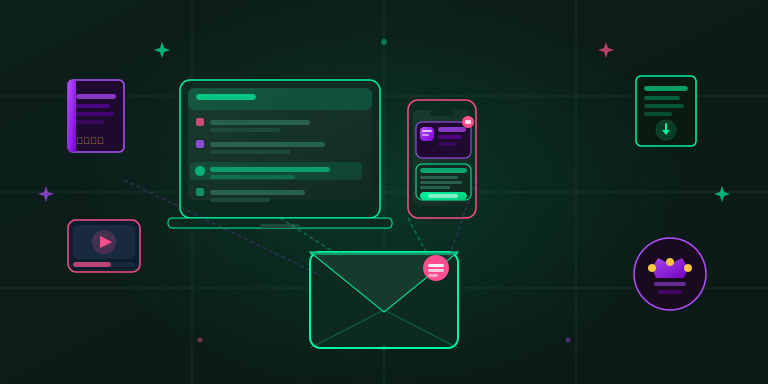
For digital entrepreneurs, email is not merely a marketing channel; it is the entire infrastructure of the customer journey. Unlike physical retail, where email often functions as a secondary tool for retention or abandoned cart recovery, the digital product creator’s email sequence is the funnel itself. It is the bridge between a stranger’s curiosity and a customer’s commitment.
The Paradigm Shift: Why Digital Requires a Different Approach
To succeed, founders must understand that the principles of physical commerce do not translate to digital information products. In physical e-commerce, the "thing" speaks for itself; the goal of the email is simply to drive traffic to the product page. In the digital realm, the email must perform the heavy lifting of value demonstration, objection handling, and relationship building.
This shift requires a fundamental change in philosophy: Trust before pitch. Education before offer. Relationship before revenue.
The Evolution of the Funnel
For the average digital creator, the funnel begins with a touchpoint—a podcast appearance, a viral social media post, or a referral. The prospect is curious, but they are rarely ready to buy. They sign up for a lead magnet, such as a free mini-course or a checklist, and they enter the creator’s ecosystem. From that moment forward, the relationship is entirely dependent on the quality of communication. There is no retargeting pixel that can replace the intimacy of a well-crafted email sequence that earns trust week after week.
Chronology of the Subscriber Journey
A successful email strategy for digital products is not a static set of templates; it is a chronological narrative that guides a prospect through stages of awareness.
1. The Opt-in and the Welcome Sequence
The lead magnet is often mistaken for the end of the exchange. In reality, it is merely the opening handshake. The welcome sequence is where the "earned" attention is solidified. Successful creators use this phase to introduce their story, establish their authority, and set expectations for the value they intend to provide.
2. The Nurture Sequence: Progressive Belief
The goal of a nurture sequence is to progressively build belief. It follows a distinct arc:
- The Problem: Validate the pain points the subscriber is experiencing.
- The Possibility: Illuminate the transformation that is possible if those problems are solved.
- The Proof: Introduce case studies, testimonials, and personal narratives to demonstrate that the methodology is credible.
By the time a pitch is made, the subscriber should feel that the course is not a product being sold to them, but a solution they have already logically concluded they need.
3. The Launch Window
When the cart opens, the tone shifts from educational to transactional. This is a contained period of urgency. Successful launches rely on:
- Storytelling over features: Explaining why the product exists rather than listing what it contains.
- Objection mitigation: Proactively addressing time constraints, financial concerns, or skepticism.
- Real urgency: Utilizing genuine deadlines rather than artificial scarcity, which can erode trust if discovered to be performative.
Supporting Data and Strategic Implementation
The effectiveness of this approach is backed by the success of platforms like Foundr. With a community of over 30,000 founders and a library of 30+ courses, Foundr’s model relies on the "free-to-paid" conversion loop. By providing substantial value through free trainings, they ensure that by the time a prospect encounters a $1 trial offer for their membership, the barrier to entry has been decimated by the trust already established through email.
The Role of Post-Purchase Engagement
A common failure point for many creators is the "post-sale silence." When the checkout process concludes, the relationship should be entering its most important phase.
- The One-Week Check-in: A simple, human-centric email asking how the student is getting on generates immense goodwill.
- Progress-based Automation: Using data to identify students who are stalling and offering encouragement. High completion rates are the ultimate marketing asset; a student who finishes a course is a student who provides the testimonials and referrals that fuel future growth.
Implications for the Digital Entrepreneur
The digital product landscape is increasingly volatile. Platform algorithms change, social media reach fluctuates, and advertising costs continue to rise. Building a business on an email list is one of the few truly "durable" models in modern entrepreneurship. It is an asset that the creator owns, independent of external platform whims.
However, the efficacy of this model is predicated on the quality of the communication. As the market becomes more saturated, "more emails" is no longer the answer. The winners in this space are those who prioritize better emails—messages that provide genuine utility at the exact moment the subscriber needs them.
Leveraging Automation
To manage this at scale, entrepreneurs are increasingly turning to sophisticated automation tools. Modern platforms, such as Omnisend, are designed to handle complex nurture sequences, launch flows, and post-purchase follow-ups without requiring manual intervention.
The ability to segment subscribers based on their behavior—knowing, for instance, who has consumed a specific piece of content or who has stalled in a course—allows for a level of personalization that was previously impossible. For founders looking to transition from other platforms, the market has evolved to lower the barrier to entry. Many services now offer free migration of lists and templates, often leading to significant cost savings—sometimes up to 35%—while simultaneously improving the sophistication of their automated marketing.
Official Perspectives on Growth
Industry experts consistently point to the same truth: the longevity of an online business is directly proportional to how well the founder treats the people on their list.
"The creators who do it best aren’t sending more emails; they’re sending better ones," notes one industry analyst. "When you view your email list as a community rather than a lead database, the entire dynamic of the sale changes. You move from being a vendor to being a partner in the customer’s success."
Conclusion: Building a Sustainable Future
The transition from a "transactional" email strategy to a "relational" one is the hallmark of a mature digital business. By focusing on the arc of the customer journey—from the initial sign-up to the post-purchase milestone—creators can build a resilient, algorithm-proof engine for revenue.
The tools exist to automate the heavy lifting, but the strategy must remain human. Whether it is a $49 e-book or a $2,000 flagship course, the fundamental requirement remains the same: the email must prove that the creator understands the subscriber’s struggle and has the roadmap to help them overcome it. In an age of digital noise, the most effective marketing is a clear, helpful, and timely conversation delivered directly to the inbox.
 Dwi Wanna
  rifanmuazin
  Asep Darmawan